Timisoara Electronics Manufacturing: How €60 Million in Automation Created the Hiring Problem It Was Supposed to Solve

Timisoara's electronics manufacturing sector shipped 92% of its output to Western European clients last year. German automotive OEMs depend on this city for body control modules, ECU assemblies, radar sensors, and increasingly, high-voltage EV powertrain components. The factories are running at 85 to 90% capacity utilisation. The constraint is not demand. Order books are full. The constraint is the people required to keep the lines running and the new automated systems optimised.
Between 2023 and 2024, Continental, Zollner, and Flex collectively invested more than €60 million in Industry 4.0 line upgrades and SMT expansion across Timisoara's industrial parks. The stated purpose was to offset labour shortages through productivity gains. It has not worked as intended. Hiring demand for senior automation engineers capable of programming, maintaining, and optimising those new lines rose 40% year-on-year through 2024, even as manual assembly headcount fell. The investment did not reduce the talent bottleneck. It moved the bottleneck upward, from roles the market could fill to roles the market cannot.
What follows is an analysis of how this dynamic is reshaping Timisoara's position as a European nearshoring hub for electronics manufacturing, where the specific talent gaps sit, what they pay, and what organisations hiring in this market need to understand before they commit to a search strategy that will not reach the candidates they need.
The Nearshore Hub That Outgrew Its Labour Market
Timisoara's electronics and industrial automation sector employs between 18,000 and 22,000 people across direct manufacturing and R&D functions. That figure represents roughly 12% of Timis County's industrial workforce. The city functions as a nearshore production base for German automotive supply chains, with average truck logistics lead times to Stuttgart running 18 to 20 hours. It is competitive with Hungary and Poland on transit time and has historically undercut both on labour cost.
The sector's centre of gravity is automotive electronics, not the discrete PCB fabrication or energy components some investors assume. Approximately 78% of Timisoara's EMS output serves automotive OEMs and industrial automation hardware clients, according to the ADR Vest Regional Economic Profile. Less than 8% serves energy infrastructure directly. The production mix runs toward electronic control units, body control modules, sensor systems, and a growing share of EV powertrain electronics including inverters and DC-DC converters.
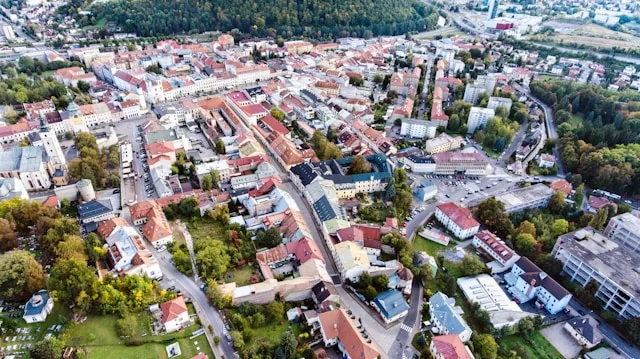
Contract manufacturers cluster in three zones: the Freidorf Industrial Zone, Chisoda Industrial Park, and Timisoara West Logistics Park. These house the primary operations for Flex, Zollner Elektronik, and Marquardt, alongside Continental's large-scale automotive systems facility. Expansion in any of these zones now faces a hard physical constraint. Available Class A industrial stock with cleanroom capabilities stood at just 3.2% vacancy as of late 2024, the lowest among major Romanian cities according to JLL's industrial market analysis. New entrants are already being directed to satellite locations in Giarmata, Ghiroda, or across the county line into Arad.
The combination of full order books, constrained physical capacity, and a labour market that cannot keep pace has created a market that looks highly productive from the outside and is quietly overstretched from the inside.
The Automation Paradox: Capital Moved Faster Than Human Capital Could Follow
This is the core tension running through Timisoara's manufacturing sector in 2026. Continental Automotive Systems invested €25 million in Industry 4.0 line upgrades during 2024, reducing manual assembly headcount by 15% while increasing output volume. Zollner completed a €12 million expansion of its Freidorf facility in Q4 2024, adding 8,000 square metres of SMT production space. Flex continued its own automation programme across its Chisoda operations.
The intention behind every one of these investments was to reduce dependence on a shrinking labour pool. The outcome has been the opposite.
Automated SMT lines, robotic assembly cells, and connected OT networks do not run themselves. They require a different category of worker entirely. Where a manual line needed assembly operators with basic technical training, an automated line needs PLC programmers, SCADA integration specialists, and process engineers who can diagnose faults in systems that combine mechanical, electrical, and software elements simultaneously. The 2024 ANOFM data showed 1,400 unfilled vacancies in electrical equipment and electronics manufacturing for Timis County alone. That figure represented a 34% year-on-year increase. The vacancy rate for skilled technical roles in Timisoara's EMS sector reached 12.4%, against 6.8% for general manufacturing and 3.2% nationally.
The investment in automation has not reduced the workforce. It has replaced one kind of worker with another that does not yet exist in sufficient numbers. Capital moved faster than human capital could follow. This is the analytical reality that every hiring leader in Timisoara's EMS sector must now contend with. The productivity gains are real but only realisable if the engineers who operate and optimise the new systems can be found.
The Time-to-Fill Problem at Senior Level
The average time-to-fill for a technical specialist role in Timisoara's EMS sector is 94 days. For a senior automation engineer, that figure extends to 140 days. These are not administrative delays. They reflect a market where approximately 85% of qualified candidates at the specialist and senior level are passively employed and not responding to job postings.
A production engineering manager search in this market typically runs three to four times longer than a comparable role in a less specialised sector. One pattern observed across German-owned EMS facilities during 2024, according to reporting in Business Review Romania, involved a senior embedded software architect position at a major automotive electronics employer remaining open for 11 months. The role required AUTOSAR expertise, ISO 26262 functional safety certification, and German language skills. It was ultimately filled through internal transfer from another Romanian facility, accompanied by a 22% retention premium and a full relocation package. External market recruitment had failed entirely.
This is not an isolated case. It is the shape of senior technical hiring across the entire sector.
Who Employs Timisoara's Electronics Workforce
The Anchor: Continental Automotive Systems
Continental's Timisoara facility is the largest single employer in the sector, with 4,200 to 4,500 employees. The operation produces body control modules, engine control units, and radar sensors. It also serves as the regional R&D anchor, with more than 600 engineers. Continental's R&D presence creates a concentration effect. It trains the engineers that the rest of the market wants to hire. It also pays competitively enough to retain most of them, which tightens availability for every other employer in the city.
The Contract Manufacturers
Zollner Elektronik employs 850 to 900 people at its Freidorf site, specialising in industrial control systems and automotive electronics. Its 40% SMT capacity expansion in 2024 increased both its output potential and its hiring requirements. Flex Romania runs 1,200 to 1,400 staff at Chisoda, serving medical and automotive clients. Jabil Circuit operates a smaller facility of 600 to 800 employees focused on precision electromechanical assemblies.
Marquardt, with 1,100 employees across Timisoara and Lugoj, produces switch systems and control panels for automotive interiors. BorgWarner, the successor to the former Delphi Technologies operation, employs 950 people manufacturing power electronics and mechatronic control units.
The Talent Pipeline: Politehnica University
Politehnica University of Timisoara (UPT) is the primary feeder institution, producing more than 400 graduates annually from its Faculty of Electronics, Telecommunications and Information Technology. The problem is retention. Only 60% of those graduates remain in the region. The remainder are drawn to Cluj-Napoca's higher-paying IT ecosystem, to Budapest, or to Germany and Austria directly. The Banat Automotive Cluster, a network of 47 companies including EMS providers, operates shared training programmes to address this leakage. The EU-funded ACEM cluster supports automation technology transfer between Timisoara firms and research institutes.
These institutional efforts matter, but they are not producing senior engineers with 10-plus years of experience in PLC programming or functional safety certification. That population simply does not exist in sufficient numbers in the region.
Where the Talent Flows Out
Timisoara's executive and senior technical talent market does not operate in isolation. It sits inside a multi-polar competitive field that pulls talent in directions the city cannot easily counter.
Cluj-Napoca: The Domestic Competitor
Cluj-Napoca offers 12 to 18% higher gross salaries for equivalent automation and embedded engineering roles. Its stronger software and IT ecosystem attracts embedded engineers who might otherwise stay in manufacturing. The perceived quality of life is higher. The flow is largely one-directional: Cluj-Napoca actively recruits mid-level engineers from Timisoara. Reverse movement is minimal.
Budapest: The Permanent Drain
Budapest represents a different category of threat. Senior Romanian engineers with 10 or more years of experience frequently relocate to Budapest or commute across the border. The compensation differential is 40 to 60% higher for senior engineering and executive roles. Hungary offers EU Blue Card accessibility and a German-speaking business environment that aligns with the German parent companies these engineers already serve. This is not cyclical movement driven by a single opportunity. According to the Romanian National Institute of Statistics and the German-Romanian Chamber of Commerce (AHK), it represents permanent talent leakage concentrated in the 25 to 35 age cohort with technical education.
The Cost of Living Compression
Timisoara's cost of living has risen 28% since 2021, driven primarily by housing. This erosion of the net salary advantage is critical. The gross salary gap between Timisoara and Budapest may be 40% at mid-level, but after adjusting for Timisoara's housing inflation, the real gap narrows enough that a Budapest recruiter's pitch becomes materially more attractive. At the VP Operations and Plant Director level, the gross compensation gap has already narrowed to 15 to 20%. A contract manufacturer operating on 3 to 5% EBIT margins faces a specific problem: its primary location value proposition is cost arbitrage, and that arbitrage is disappearing at exactly the seniority level where the most consequential decisions are made.
This is the compensation tension that receives too little attention. Timisoara is marketed to investors as a low-cost alternative. It remains low-cost for assembly operators. For the leadership and specialist engineers that determine whether an automated facility runs profitably, the gap is closing fast.
Compensation Benchmarks: What the Critical Roles Actually Pay
Understanding what roles command in this market is essential for any organisation planning a search. The figures below reflect 2024 data from Hipo.ro, Michael Page Romania, and Korn Ferry, with adjustments for the trajectory into 2026.
Automation and Control Systems
A Senior Automation Engineer with PLC, Siemens TIA Portal, Allen-Bradley, and SCADA integration skills commands €42,000 to €58,000 gross annual salary. At VP of Operations or Plant Director level, managing an EMS facility with 500-plus headcount and P&L responsibility, compensation sits at €130,000 to €190,000 gross annual, plus 20 to 40% bonus and potential equity or long-term incentives from multinational parent companies.
Embedded Systems and Hardware
A Senior Embedded Software Engineer with C/C++, AUTOSAR, and ISO 26262 functional safety expertise earns €45,000 to €65,000 gross annual. This role now commands only 15 to 20% less than an equivalent position in Budapest. The historical cost arbitrage that made Romania attractive for this skill set is narrowing year by year. At Head of R&D or Engineering Director level, compensation ranges from €110,000 to €160,000 gross annual.
Quality and Compliance
A Quality Manager with IATF 16949 and VDA 6.3 audit expertise earns €38,000 to €50,000 gross annual. The shortage here is acute not because of compensation but because of certification. Only 12% of quality professionals in the region hold current VDA 6.3 certification, according to TÜV Rheinland Romania training statistics. You cannot recruit experience that does not yet exist in sufficient quantity, and no salary premium resolves a certification bottleneck.
The New Role Nobody Can Fill
The EU NIS2 Directive, now in implementation, classifies EMS and industrial automation firms as "important entities" requiring cybersecurity management systems for OT networks. This has created demand for Industrial Cybersecurity Specialists. These roles do not currently exist in the local talent pool. Implementation costs per large facility run between €500,000 and €2 million, according to a Deloitte Romania survey. But the cost of the technology is less of a barrier than finding the person to manage it. Hiring for roles that did not exist two years ago requires a fundamentally different search approach than filling established positions.
Regulatory Pressure Is Adding Roles Faster Than the Market Can Fill Them
The NIS2 Directive is not the only regulatory force creating new hiring demand. German parent companies are pushing Corporate Sustainability Due Diligence Directive (CSDDD) compliance requirements onto Timisoara subsidiaries. This requires supply chain auditing capabilities and environmental footprint verification that mid-sized local suppliers have never needed before. The Carbon Border Adjustment Mechanism (CBAM) introduces reporting requirements from 2026 for energy-intensive SMT processes and aluminium component sourcing.
Each of these regulatory instruments creates headcount. Compliance officers, sustainability reporting specialists, OT cybersecurity engineers, and supply chain auditors are not fungible with the production engineers already on payroll. They represent entirely new categories of professional that must be sourced from outside the existing talent pool or developed internally over years.
The structural reality is that Timisoara's EMS sector is being asked to simultaneously automate its production lines, retool 30% of capacity for EV powertrain electronics by end of 2026, comply with three overlapping EU regulatory frameworks, and do all of this while its working-age population is projected to decline 8% over the next decade. No single constraint is unmanageable. Together, they compound into a market where the cost of a delayed or failed senior hire is measured not in recruitment fees but in production line delays, compliance exposure, and lost investment confidence.
What This Means for Hiring Leaders Targeting This Market
The traditional approach to filling roles in Central and Eastern European manufacturing markets relies on job advertising, recruitment agencies with local databases, and time. In Timisoara's EMS sector, this approach reaches at most 15% of the viable candidate population. The other 85% at senior specialist level are passively employed. They are not looking at job boards. They are not registered with local agencies. They are solving the same automation, compliance, and EV transition problems at a competitor's facility.
When a German-owned EMS producer conducted a six-month search for a senior automation engineer during 2024, according to patterns documented in the AHK Skills Gap Report, it yielded only three qualified candidates regionally. None accepted the offer. The company restructured the role into two junior positions and invested in upskilling internal technicians. This approach delayed line optimisation by four months.
Delays of this kind carry direct financial consequences for contract manufacturers operating on 3 to 5% EBIT margins. A quarter's delay in optimising an automated SMT line does not just cost the recruitment budget. It costs the margin improvement the line was designed to deliver.
KiTalent's approach to this market reflects the reality the data describes. Rather than advertising into a pool where the strongest candidates are invisible, KiTalent uses AI-enhanced talent mapping to identify passive senior engineers and manufacturing leaders across Timisoara, Cluj-Napoca, Sibiu, Budapest, and the wider Central European talent corridor. The model delivers interview-ready candidates within 7 to 10 days, with a pay-per-interview structure that removes upfront retainer risk.
With a 96% one-year retention rate across 1,450-plus executive placements, and an average client relationship exceeding eight years, KiTalent's track record reflects the difference between reaching active candidates and reaching the right ones.
For organisations competing to fill senior automation, embedded systems, or plant leadership roles in Timisoara's electronics manufacturing sector, where 85% of the candidates you need are not visible on any job board and a single failed search can delay a production line by a quarter, speak with our executive search team about how we approach this market.
Frequently Asked Questions
What is the average salary for a senior automation engineer in Timisoara?
A Senior Automation Engineer with expertise in PLC programming, Siemens TIA Portal, and SCADA integration earns between €42,000 and €58,000 gross annual salary in the Timisoara market as of 2025 data. This figure rises materially with specific certifications such as ISO 26262 functional safety. At VP Operations or Plant Director level, total compensation including bonus reaches €130,000 to €190,000. These benchmarks are narrowing relative to Budapest, where equivalent roles pay 40 to 60% more at senior level. Accurate salary benchmarking for manufacturing leadership roles is essential before launching any search in this market.
Why is it so hard to hire electronics manufacturing engineers in Timisoara?
Three forces converge. First, approximately 85% of qualified candidates at senior specialist level are passively employed and not responding to job postings. Second, the automation investments that were designed to reduce labour dependence have instead shifted demand from assembly operators to higher-skilled engineers in shorter supply. Third, Timisoara loses senior technical talent to Budapest, Germany, and Cluj-Napoca through permanent emigration, not just cyclical job movement. The result is a 12.4% vacancy rate for skilled technical roles in EMS, nearly four times the national average.
How does Timisoara compare to other Romanian cities for electronics manufacturing?
Timisoara is Romania's primary nearshore EMS hub, with 18,000 to 22,000 employees in the sector and 92% export orientation. Cluj-Napoca offers 12 to 18% higher salaries for equivalent engineering roles but has a stronger software than manufacturing identity. Sibiu hosts Continental's largest Romanian R&D centre with 3,000-plus staff. Oradea is emerging as an overflow location for firms that cannot secure Timisoara sites or talent, offering 20 to 25% salary discounts. For international searches targeting Romanian manufacturing talent, understanding these city-level dynamics is critical.
What regulatory changes are affecting EMS hiring in Romania?
Three EU regulatory frameworks are creating new hiring demand simultaneously. The NIS2 Directive requires OT cybersecurity management systems, creating demand for Industrial Cybersecurity Specialists who barely exist in the local market. The CSDDD is pushing supply chain auditing requirements from German parent companies onto Romanian subsidiaries. CBAM introduces carbon reporting for energy-intensive manufacturing processes from 2026. Each framework adds compliance and specialist roles that are new to the sector.
How can companies find passive engineering candidates in Timisoara?
Traditional job advertising and local recruitment databases reach approximately 15% of the viable candidate pool in Timisoara's EMS sector. The remaining 85% of qualified senior engineers and manufacturing leaders must be identified through direct sourcing methods. KiTalent uses AI-enhanced talent mapping to identify and approach passive candidates across the Timisoara, Cluj-Napoca, Sibiu, and Budapest corridor, delivering interview-ready shortlists within 7 to 10 days. The pay-per-interview model removes upfront retainer risk while ensuring access to candidates who are not visible through conventional channels.
What is the outlook for Timisoara's EMS sector in 2026?
The sector is projected to grow 6 to 8% in gross value added in 2026, moderating from 11% in 2024 as automotive market cyclicality takes effect. Employment growth will lag at 2 to 3%, reflecting continued productivity gains through automation. An estimated 30% of Timisoara EMS capacity is being retooled for high-voltage EV power electronics by end of 2026. Industrial land vacancy stands at 3.2%, with new entrants being directed to satellite locations. The primary risk is not demand but the ability to staff the new automated and EV-focused production lines fast enough.