Timișoara Automotive Hiring in 2026: €205 Million in Investment, Zero Mid-Career Engineers to Fill It
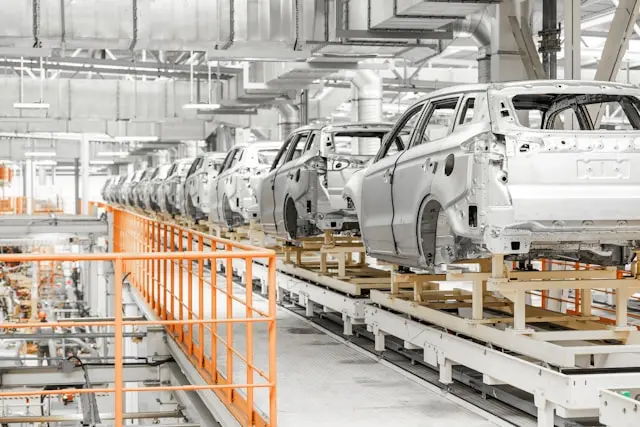
Timișoara's automotive electronics cluster is adding capacity at a pace that suggests confidence. Continental committed €120 million to radar sensor and high-performance computer production at its Timișoara plant. Dräxlmaier committed €85 million to expand high-voltage cable assembly. Together, these two investments alone require more than 1,000 new technical hires by the end of 2026. The money is moving. The buildings are going up. The engineers are not there.
The problem is not that Timișoara lacks engineering talent in absolute terms. Universitatea Politehnica Timișoara graduates roughly 2,100 engineers every year. The problem is where those engineers go after graduation, and what happens to the ones who stay. Only 35% of UPT graduates remain in Timiș County long-term. Of those who do stay, a material share leaves automotive manufacturing for IT within two to three years, drawn by salaries 25% to 35% higher for equivalent technical skills. The result is a talent pyramid with a solid base and a visible peak, but a hollow centre: the mid-career engineers with five to ten years of experience who actually design, validate, and deliver the products that Continental and Dräxlmaier are investing hundreds of millions to produce.
What follows is a ground-level analysis of Timișoara's automotive talent market in 2026. It examines where the gaps are most acute, why the conventional responses are failing, what the compensation data actually reveals, and what organisations operating in this cluster need to understand before they commit to their next senior hire.
The Cluster That Outgrew Its Talent Base
Timișoara hosts the densest concentration of automotive electronics manufacturing in Romania outside Sibiu. As of early 2025, the sector directly employed between 28,000 and 32,000 people in Timiș County. Continental's combined Timișoara operations accounted for roughly 6,200 of those, making it the single largest industrial employer in the county. Dräxlmaier followed with approximately 2,800 employees. Autoliv contributed around 1,500. Flex Romania added 1,200. Valeo rounded out the major employer list at approximately 900.
The manufacturing mix has shifted decisively toward electrification. Continental's Timișoara plants now produce body electronics, infotainment systems, and battery management control units for EV platforms. Dräxlmaier's facility produces high-voltage wiring systems and battery components for BMW and Porsche. Autoliv manufactures electronic control units for active safety systems. This is not a cluster assembling commodity parts. It is producing the electronic architecture that makes modern vehicles function.
The export orientation confirms the cluster's importance. Timiș County automotive exporters generated €4.2 billion in revenue in 2023, representing 18% of Romania's total automotive exports, according to APIA export statistics. The export ratio for the electronics sub-sector exceeds 92%, with Germany absorbing 45% of output and Hungary (as a transit point to Audi, BMW, and Škoda plants) taking 18%. Italy accounts for 12%.
This is a cluster that matters to European automotive supply chains. And it is a cluster where unemployment in Timiș County stood at 1.8% as of January 2025, meaning that for technical profiles, every qualified candidate is already employed somewhere.
The Missing Middle: Why 2,100 Graduates Cannot Solve a Mid-Career Shortage
The most important dynamic in Timișoara's industrial and manufacturing talent market is not a shortage of engineers entering the pipeline. It is the systematic hollowing out of the middle of the talent pyramid.
A Retention Problem Disguised as a Pipeline Problem
UPT produces 2,100 engineering graduates annually across its Mechanical, Electronics, Automation, and Computer Science faculties. On paper, this should be sufficient to sustain a cluster of 28,000 to 32,000 workers. In practice, it is not. According to UPT's own graduate tracking study, only 35% of engineering graduates remain in Timiș County long-term. Forty percent relocate to Cluj-Napoca or Bucharest. Twenty-five percent emigrate to Germany or Austria within five years.
The graduates who do stay in Timișoara's automotive sector face a specific calculation after two or three years of experience. Their embedded software skills, their automation knowledge, their familiarity with industrial protocols are all transferable. The IT sector in Timișoara, Cluj, and Bucharest will pay 25% to 35% more for the same technical profile. A Senior Embedded Software Engineer in automotive earns €45,000 to €60,000 gross annually. The same profile in fintech or enterprise software commands €60,000 to €85,000.
The Five-to-Ten Year Gap
The consequence is a "missing middle" that entry-level hiring cannot fix. The cluster can recruit junior engineers. It can, at great expense, recruit or promote executives. What it cannot easily produce is the mid-level engineer with five to ten years of automotive-specific experience: the person who understands AutoSAR architecture, who has implemented ISO 26262 functional safety processes, who has led a product validation cycle from prototype to series production. These engineers take years to develop. They cannot be fast-tracked. And the market is losing them faster than it replaces them.
This is the original analytical point that the raw data implies but does not state: Timișoara's automotive talent crisis is not a shortage at the point of entry or at the top. It is a missing generation in the middle. The investment decisions of Continental and Dräxlmaier assume a mid-career engineering workforce that the region's retention dynamics have steadily eroded. Capital moved faster than human capital could follow.
Three Roles That Define the Shortage
Not all hiring gaps are equal. Three role categories in Timișoara's automotive cluster represent the sharpest mismatches between demand and available talent.
Embedded Software Engineers (AutoSAR)
This is the most acute shortage in the cluster. An estimated 85% to 90% of qualified candidates are passive, with average tenure at their current employer of 4.2 years and response rates to job postings below 5%. According to Hays Romania's 2024 Salary Guide, auto-specific embedded software roles in Timișoara average 145 days to fill, compared to 67 days for generic software developers.
Continental's Timișoara electronics division reportedly maintained an open requisition for a Senior Embedded Software Architect for 11 months during 2023 and 2024, according to industry reporting, eventually filling it via internal transfer from the Sibiu plant after failing to secure local external candidates. This pattern illustrates why traditional job advertising fails to reach the candidates who matter most in this market. The people qualified for these roles are not looking. They are working.
Automation and Robotics Engineers
Professionals with expertise in Siemens TIA Portal and KUKA or ABB programming for automated assembly lines are in severe deficit. The ANOFM reports vacancy rates of 18.7% for automation technicians in the West Region, the highest in Romania. Seventy percent of qualified automation engineers are estimated to be passive candidates, held in place by project continuity bonuses that are now standard practice across the cluster.
The poaching dynamics are visible. According to industry reporting in HR Manager Romania, Dräxlmaier secured a Senior Automation Engineer from a competitor in Q2 2024, paying a 35% salary premium (from approximately €42,000 to €56,700 gross annual) plus relocation support from Cluj-Napoca. Sixty percent of Timișoara automotive manufacturers report having lost talent to direct competitors within the past twelve months, with automation profiles commanding the highest premiums.
Quality Managers with IATF 16949 Audit Experience
Quality leadership in automotive requires deep familiarity with IATF 16949 certification, VDA 6.3 process auditing, and Core Tools (APQP, PPAP, FMEA). These are not skills acquired in a university programme. They are built through years of supplier audits, customer quality interfaces, and process improvement cycles within the automotive supply chain. The pool of qualified candidates in Timiș County is small and almost entirely passive. At 95% or above, Plant Director and senior operations roles are filled exclusively through retained executive search, not public postings.
What these three shortages share is that none of them can be resolved by increasing the volume of junior hires. Each requires years of accumulated, sector-specific experience. The constraint is time, not headcount.
What the Compensation Data Actually Tells Hiring Leaders
Salary data in Timișoara's automotive sector reveals a market that is not just competitive but structurally misaligned with the sectors it competes against for the same people.
At the Plant Manager and Operations Manager level, compensation ranges from €72,000 to €96,000 gross annual, with bonus potential of 20% to 30%. At VP Manufacturing or Managing Director level, multi-site leaders earn €120,000 to €168,000 gross annual with long-term incentives. These figures are competitive within the automotive manufacturing world, according to PwC Romania's PayWell Survey 2024.
The problem lies one level below, at the engineering leadership and senior specialist tier. An Engineering Manager or R&D Group Lead earns €54,000 to €78,000. A Head of R&D or Technical Director earns €96,000 to €132,000. These figures are reasonable for automotive. They are not reasonable when the same person could earn 25% to 35% more in IT without managing a factory floor, without shift work, and often without leaving home.
Salary budgets for automotive manufacturing in Timiș County are projected to increase 8.5% to 9.2% in 2026, outpacing national manufacturing inflation of 6.1%, according to Mercer Romania's Total Remuneration Survey. But this projection sits uneasily next to the €205 million in new investment requiring 1,000 or more technical hires. Either the salary budgets are conservative estimates that will be exceeded under competitive pressure, or the companies are relying on pipeline solutions not yet visible to the external market, such as scaled university partnerships or accelerated non-EU recruitment.
For hiring leaders evaluating offers, the key insight is that compensation negotiation in this market is not a matter of matching a number. It is a matter of competing with an entirely different sector's economics. A 9% increase against last year's automotive salary still leaves you 20% below a mid-range IT offer for the same skills.
Four Forces Compressing the Talent Pool Further
Beyond the structural IT salary premium, four additional forces are tightening supply in ways that hiring leaders must factor into their 2026 plans.
The Cluj-Napoca Pull
Cluj competes directly for embedded software and hardware engineers, offering 15% to 20% salary premiums and a stronger remote-work culture. Bosch's Cluj engineering centre and Emerson's R&D facility have drawn an estimated 200 or more mid-level engineers from Timișoara automotive suppliers since 2022, according to industry reports. Cluj also offers superior international flight connectivity, including direct routes to Munich and London, and a younger demographic profile. For a mid-career engineer weighing options, Cluj offers more money, more flexibility, and a faster path to international visibility.
Continental's Own Internal Competition
Continental's Sibiu facility, employing approximately 8,000 people, competes internally for the same project allocations and talent. Sibiu offers a cost of living roughly 10% below Timișoara's but has a smaller overall labour pool. Timișoara reportedly loses approximately 8% to 10% of its senior engineering candidates to counter-offers from Sibiu operations, particularly for powertrain electronics roles. When your largest employer's other facility is your biggest competitor for the same candidates, the dynamics of any search change fundamentally. Understanding why counteroffers derail searches is essential for any hiring leader operating in this cluster.
The Hungarian Salary Gap
Audi's Győr plant and growing Slovakian automotive clusters in Žilina and Nitra offer net salaries 30% to 40% higher than Timișoara for equivalent engineering roles. This drives a steady emigration stream, with an estimated 500 Romanian engineers relocating to Hungarian automotive plants annually, according to the Hungarian Investment Promotion Agency. The proximity of the border makes this a frictionless move. For a Senior Automation Engineer earning €56,000 in Timișoara, a €75,000 offer in Győr, ninety minutes away by car, is not a career change. It is a commute decision.
The Bucharest Function Migration
While manufacturing stays in Timiș, strategic R&D functions are migrating to Bucharest. Continental's Bucharest R&D centre and Valeo's Bucharest tech hub have absorbed functions previously managed in Timișoara, offering executives 20% to 25% salary premiums and capital-city career visibility. This migration does not reduce Timișoara's manufacturing output. It reduces its ability to attract and retain the senior technical leaders who bridge R&D and production. When the career ceiling in your city drops, the mid-career engineers notice.
Energy, Regulation, and the Cost Advantage Under Pressure
Timișoara's automotive cluster was built partly on a cost advantage over Western European manufacturing. That advantage is narrowing.
Romania's automotive sector faces industrial electricity costs averaging €180 to €220 per MWh in 2024, eroding the differential against Hungarian and Polish competitors. The EU's Carbon Border Adjustment Mechanism Phase 2, which reaches implementation in 2026, threatens to increase raw material costs by 3% to 5% for Timișoara's stamping and cabling suppliers, according to a Deloitte CBAM readiness survey.
Labour regulation adds friction. Romania's work permit quotas for non-EU technical workers from Moldova, Ukraine, and Serbia remain capped. Only 12,000 new specialist work permits were issued nationwide in 2024, insufficient for automotive demand. Sectoral collective agreements negotiated by ACAROM mandate 15% night-shift premiums and restrict temporary work arrangements, reducing workforce flexibility compared to Serbian or Polish competitors.
Infrastructure constraints compound the challenge. The A1 Highway between Bucharest and the Hungarian border operates at 112% of designed capacity at the Timișoara to Lugoj segment. Rail freight capacity to Western Europe is constrained by an estimated 30% under-investment in the CFR network. For a cluster where 92% of output is exported, logistics reliability is a competitive variable, not a background condition.
None of these factors individually threatens the cluster's viability. Together, they erode the margin that historically compensated for Timișoara's distance from final assembly plants in Germany and Central Europe. And they make every hiring decision more consequential. When margins tighten, the cost of a bad executive hire becomes harder to absorb.
What This Means for Senior Hiring Leaders in 2026
The organisations investing in Timișoara's automotive electronics cluster are making a bet on a specific outcome: that the region's engineering talent base will scale to match the capital being deployed. The data suggests that bet is not currently supported by the talent market's trajectory.
Aggregate job postings for Timiș County's automotive sector increased 22% year-on-year in Q4 2024. Thirty-eight percent of those postings remained unfilled after 90 days, compared to 19% in Bucharest manufacturing. The candidates these postings need to reach are overwhelmingly passive. Eighty-five to ninety percent of qualified embedded software engineers are not looking. Ninety-five percent of plant directors and operations VPs will never see a job board posting.
The gap between traditional powertrain component manufacturing, which is shedding 5% to 8% of mechanical engineering roles, and the power electronics and software engineering functions growing at 15%, creates a further illusion. Headlines about automotive layoffs suggest talent availability. The reality is that the roles being eliminated and the roles being created require fundamentally different people. An ICE peripheral specialist and an AutoSAR architect are not interchangeable. The restructuring produces redundancies in one category and deepens shortages in another.
For any organisation planning a senior leadership search in this market, the practical implications are clear. Standard recruitment channels reach fewer than 5% of the qualified candidate pool for the roles that matter most. Time-to-fill for critical embedded software positions is more than double the rate for generic developers. And every month a role stays open, the probability increases that a competitor, or another city, or another country, solves the problem first.
Autoliv's restructuring of its Timișoara R&D centre to adopt a hybrid working model, which reduced software validation engineer attrition from 24% to 9% annually according to reporting on Digi24 Business, illustrates one response. But flexibility alone is not sufficient when the compensation differential with IT is 25% to 35%. The proposition required to move a passive, well-compensated, mid-career automotive engineer must address career trajectory, technical challenge, and total reward simultaneously. That proposition cannot be communicated through a job posting. It requires direct, targeted identification and engagement of specific individuals who are not visible on any platform.
KiTalent works with automotive and industrial manufacturers across Europe to identify and deliver interview-ready leadership candidates within 7 to 10 days, using AI-enhanced talent mapping to reach the passive professionals that conventional search methods miss. In a market where 38% of postings remain unfilled after three months and the average critical role takes 145 days to close, the difference between a search that reaches the right 5% and one that does not is measured in lost production schedules and delayed investment returns.
For organisations hiring plant operations leaders, R&D directors, or senior embedded software architects in Timișoara's automotive electronics cluster, where every qualified candidate is already employed and the cost of delay compounds weekly, start a conversation with our executive search team about how we approach this specific market.
Frequently Asked Questions
What are the hardest automotive roles to fill in Timișoara in 2026?
The three most acute shortage categories are Senior Embedded Software Engineers with AutoSAR experience, Automation and Robotics Engineers with PLC and KUKA or ABB expertise, and Quality Managers with IATF 16949 audit certification. Embedded software roles average 145 days to fill in Timișoara, more than double the time for generic software positions. Eighty-five to ninety percent of qualified candidates in these categories are passive, meaning they are employed and not responding to job postings. Filling these roles requires direct headhunting methodology rather than conventional recruitment advertising.
What do senior automotive engineers earn in Timișoara?
Compensation varies by seniority and function. A Senior Embedded Software Engineer earns €45,000 to €60,000 gross annually. Engineering Managers and R&D Group Leads earn €54,000 to €78,000. Plant Managers earn €72,000 to €96,000 plus 20% to 30% bonus potential. At executive level, a VP Manufacturing or Managing Director earns €120,000 to €168,000 with long-term incentives. These figures trail IT sector equivalents by 25% to 35% at senior specialist levels, creating persistent retention pressure.
Why is Timișoara losing automotive engineers to the IT sector?
The primary driver is compensation. A Senior Embedded Software Engineer in automotive earns €45,000 to €60,000 in Timișoara, while the same technical profile in fintech or enterprise software commands €60,000 to €85,000. IT roles also frequently offer full remote work and no shift requirements. Only 35% of UPT engineering graduates remain in Timiș County long-term, with 40% relocating to Cluj-Napoca or Bucharest where IT opportunities are more concentrated. The gap is widest at the mid-career level, creating a hollow middle in the talent pyramid.
How does Timișoara compare to other Romanian cities for automotive manufacturing talent?
Timișoara hosts the densest automotive electronics concentration in Romania outside Sibiu. However, it competes directly with Cluj-Napoca for embedded software engineers (Cluj offers 15% to 20% salary premiums), with Sibiu for internal Continental project allocations, and with Bucharest for senior R&D and executive functions. Internationally, Hungarian automotive plants in Győr and Sopron offer 30% to 40% higher net salaries, drawing an estimated 500 Romanian engineers annually.
What is the best approach to executive search in Timișoara's automotive sector?
Given that 85% to 95% of qualified candidates for senior technical and leadership roles are passive, job postings and active candidate channels are ineffective for critical hires. The market requires direct identification and engagement of specific individuals currently employed at competitors or adjacent sectors. KiTalent delivers interview-ready candidates through AI-enhanced talent mapping, reaching professionals who are not visible on any job board. With a 96% one-year retention rate across 1,450 or more executive placements, this approach directly addresses the retention risk that conventional hiring often creates.
What investment is planned for Timișoara's automotive sector through 2026?
Continental has confirmed €120 million in additional investment for radar sensor and high-performance computer production at its Timișoara electronics plant, creating an estimated 400 to 500 net new engineering and production roles. Dräxlmaier has committed €85 million to expand high-voltage cable assembly, targeting 600 new positions by Q3 2026. Combined, these investments require over 1,000 technical hires in a market where unemployment stands at 1.8% and 38% of existing automotive job postings remain unfilled after 90 days.