Wörthersee's Hospitality Boom Is Building Infrastructure for a Workforce That Does Not Exist
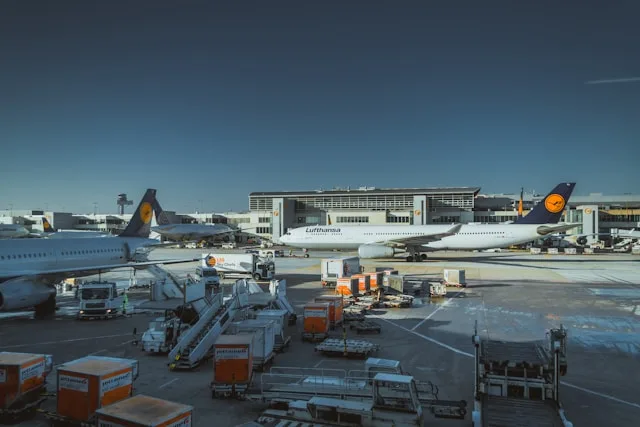
Klagenfurt Airport's terminal expansion will finish in mid-2026, increasing hourly passenger processing capacity by 40%. The A2 Südautobahn widening projects an additional 15% visitor carrying capacity. Advance bookings at four- and five-star lakeside properties for the 2025 summer season ran 18% above pre-pandemic baselines. By every infrastructure and demand metric, the Wörthersee leisure economy should be entering its strongest period in a generation.
It is not. Twelve per cent of regional hotel capacity sat dormant during shoulder seasons in 2024, not because of weak demand but because there were not enough people to run the rooms. The hospitality vacancy rate across the Klagenfurt-Velden corridor reached 16.4% in 2024, nearly triple the regional all-sector average. Executive chef searches at four-star properties now average 8.5 months. Hotel general manager vacancies run at 22% across Carinthia's tourism sector. The region is investing tens of millions of euros to bring more visitors to a destination that already cannot serve the ones it has.
What follows is an analysis of the forces driving this divergence between infrastructure capacity and workforce capacity. It examines where the hiring gaps are most acute, what is causing them, why conventional recruitment methods fail in this specific market, and what organisations operating in the Wörthersee leisure economy need to understand before committing to their next leadership search.
The Capacity Trap: More Visitors, Fewer Hands
The core tension in the Wörthersee hospitality market in 2026 is not a shortage in the conventional sense. It is a capacity trap. Public investment is expanding the destination's ability to receive visitors while the labour market is simultaneously contracting its ability to serve them.
The numbers tell the story in sequence. The Wörthersee leisure economy generated approximately 2.48 million overnight stays in 2023. Klagenfurt Airport handled 489,000 passengers that same year, a 22% year-on-year increase, with 78% of traffic concentrated between June and September. The airport terminal expansion completing in Q2 2026 will add another 40% to hourly processing throughput. Projections for 2026 indicate moderate volume growth of 3 to 4% in overnight stays, constrained not by demand but by the labour required to deliver service.
Against this demand trajectory, the Carinthian hospitality sector posted 4,800 vacancies in Q3 2024, with 68% concentrated in the Klagenfurt-Velden corridor. The registered accommodation base of 1,240 providers and 2,850 gastronomy businesses represents a mature ecosystem. But mature ecosystems can atrophy. When 12% of hotel capacity goes dark during shoulder seasons because there are no staff to operate it, the investment in airport terminals and motorway widening does not increase economic output. It increases the gap between what the destination promises and what it delivers.
This is the analytical claim that sits beneath the data: the infrastructure investment and the labour shortage are not parallel problems running on separate tracks. They are reinforcing each other. Better transport links attract more visitors, which increases peak-season pressure on an already overstretched workforce, which accelerates burnout and seasonal migration, which deepens the labour gap, which forces further operational hibernation. Capital is moving faster than human capital can follow, and every euro spent on physical infrastructure without a corresponding investment in talent strategy widens the trap.
Where the Gaps Are Deepest
Executive Chefs: A Market with Near-Zero Unemployment
The executive chef shortage in the Wörthersee region is not a recruitment challenge in the usual sense. It is closer to a structural absence. National unemployment among Küchenchefs sits at 0.8%. The passive candidate ratio runs at 4:1, meaning four qualified chefs are employed and not looking for every one who is actively on the market. Aggregate data from the WKO Gastronomie's 2024 workforce analysis indicates an average vacancy duration of 8.5 months for executive chef positions at four-star properties.
The consequences are tangible. Properties in the Velden-Pörtschach axis commonly experience executive chef searches extending beyond two summer seasons. Industry survey data, while anonymised for search confidentiality, describes a pattern of prominent four-star lakeside hotels operating with interim kitchen management for over a year. The operational result is menu standardisation, delayed restaurant reopenings, and a degraded guest experience that costs far more than the salary of the missing hire.
At the top of the market, five-star properties in Velden now offer executive chef packages approaching €100,000 including performance bonuses. The base range for a senior executive chef managing multiple outlets sits between €70,000 and €90,000. These figures have risen materially, but they have not solved the problem. The issue is not primarily about money. It is about a population of qualified professionals that is too small for the number of kitchens that need them.
Hotel General Managers: The 22% Vacancy Rate
The vacancy rate for Hoteldirektor and Betriebsleiter positions across Carinthia's tourism sector reached 22% in 2024. For context, a 5% vacancy rate is considered elevated in most professional categories. At 22%, the market is describing a systemic failure in talent supply.
Mid-scale properties in the 60 to 120 room range are adapting through workarounds rather than permanent hires. Shared management arrangements, where one executive oversees two properties simultaneously, have become common. Rotational managers from international hotel chains arrive on 12-month contracts at premiums of 25 to 30% above standard salaries. These are expensive interim solutions that solve the immediate operational problem while creating longer-term instability. A property run by a rotating cast of temporary managers does not build culture, does not develop its team, and does not retain its best mid-level staff.
The compensation range for unit-level directors managing 80 to 150 rooms runs from €72,000 to €95,000 base salary, with bonus potential of 15 to 25%. At the executive level, regional directors or GMs of luxury resorts above 200 rooms command €120,000 to €155,000 plus performance bonuses and accommodation allowances. These numbers are meaningful. But they trail Salzburg and Zell am See, where equivalent roles pay 15 to 20% more and come with year-round employment continuity.
The general manager market is overwhelmingly passive. Unemployment among hotel directors sits below 2%. Average tenure is 4.2 years. According to Hofmann Personalberatung's 2024 hospitality executive search analysis, 85% of placements in this category occur through executive search or direct headhunting rather than job board applications. A hotel group posting a GM vacancy on StepStone or karriere.at is reaching, at best, 15% of the viable candidate pool.
Event Management and MICE: The 3:1 Demand-Supply Ratio
The expansion of corporate events at venues including the Kärnten Messe exhibition centre and Velden Castle congress facilities has outpaced the availability of qualified Veranstaltungsmanager with bilingual German-English capabilities. The MICE market analysis conducted by Congrex Switzerland and Kärnten Messe in 2024 placed the demand-to-supply ratio at 3:1.
Senior specialist event managers earn between €45,000 and €60,000. At the executive level, a Head of Events at a venue or hotel group commands €75,000 to €95,000. The bilingual requirement is non-negotiable in a market where corporate clients are increasingly international. Slovenian border proximity adds a further language dimension, with German-Slovene capability in high demand for cross-border tourism coordination. Revenue management directors present a related scarcity. Seventy per cent of hires in this category come from competitor properties or adjacent industries such as airlines and car rental companies, where yield management skills transfer directly. The specialist nature of this role means that proactive talent mapping across adjacent sectors is not optional. It is the only method that reaches the candidate population.
The Double Seasonality Problem
The Wörthersee's talent challenges cannot be understood without confronting its fundamental structural disadvantage: unlike Tyrol, which offers winter skiing and summer hiking, or Salzburg, which supplements seasonal tourism with a year-round city economy and congress business, the Wörthersee offers limited winter employment. Current winter occupancy runs at roughly 22% of summer levels.
This creates the "double seasonality" problem identified in the AMS Kärnten seasonal labour market analysis. A hotel general manager in Salzburg works twelve months. A hotel general manager in Wörthersee works eight to nine months at full capacity and faces reduced winter hours or the prospect of seasonal unemployment. For a professional building a career, this is not a lifestyle choice. It is a financial and career penalty.
The data on talent migration confirms the consequence. Salzburg's hotel sector successfully recruits Carinthian mid-management talent with year-round contracts. The mechanism is straightforward: an operations manager earning €65,000 in a seasonal Wörthersee role is offered €78,000 in Salzburg with twelve months of full employment. The effective annual difference is not the €13,000 visible in the base salary. It is the €13,000 plus the three to four months of winter income the Salzburg role provides but the Wörthersee role does not. Vienna pulls commercial and operational talent through a different mechanism: international chain headquarters, revenue management centres, and clearer vertical career progression toward regional or corporate VP levels, typically offering €10,000 to €15,000 premiums alongside that trajectory.
The "Wörthersee Winterwelt" initiative launched in December 2025 aims to increase winter occupancy to 30% of summer levels by the end of the 2025/26 winter season. This is the right strategic direction. But even if fully successful, a 30% rate still leaves the region at a material disadvantage against year-round competitors for the professionals it needs most.
Regulation Is Protecting Assets and Eroding Talent
Here sits the paradox that makes this market unlike almost any other in European hospitality.
The revised Kärntner Seengesetz restricts new lakeside construction permits severely. In 2024, the Carinthian government rejected 14 of 17 hotel expansion applications on environmental grounds. The Wörthersee-Uferrandstreifen regulations prohibit new construction within 20 metres of the high-water mark and impose strict height limitations. Effective accommodation supply growth is capped at less than 1% annually through 2028.
For existing property owners, this is protective. Constrained supply sustains room rates. RevPAR in the Wörthersee region reached €127 in the 2024 summer season, a 14% nominal increase over 2023. Properties that are operating at full capacity with full staffing are profitable. The regulatory framework theoretically supports wage growth by protecting the revenue base from which wages are paid.
But the same regulations are quietly dismantling the region's talent pipeline. Data from FH Kärnten's alumni tracking shows that 34% of tourism graduates from the Fachhochschule Kärnten migrate to Salzburg or Vienna within three years. When surveyed, they cite "limited growth opportunities" as the primary driver. The traditional career ladder in hospitality runs from department head to assistant manager to general manager, often by moving to larger or newer properties. In a market where new properties are legally prohibited from opening, that ladder has missing rungs. A young professional looking at the Wörthersee sees a ceiling that does not exist in Salzburg, Tyrol, or Vienna.
The regulations designed to protect the Wörthersee's economic structure are eroding its human capital replenishment mechanism. This is not visible in this year's revenue figures. It is visible in the 34% graduate attrition rate and in the 22% general manager vacancy rate. The cause and the effect are separated by years, which is why the problem is easy to ignore until the symptoms become acute. As of 2026, they are acute.
The Competitive Geometry of the Carinthian Labour Market
The Wörthersee does not compete for hospitality talent in a vacuum. It operates within a specific competitive geometry that shapes every search.
The Austrian Axis: Salzburg and Vienna
Salzburg and Zell am See offer 15 to 20% higher base compensation for equivalent executive roles. A hotel GM earning €72,000 to €95,000 in the Wörthersee corridor would command €90,000 to €120,000 in the Salzburg region, with the additional security of year-round employment. Vienna competes on a different dimension. Career progression to regional or corporate VP levels is clearer in a capital city housing international chain headquarters and centralised commercial functions. When a passive candidate considers leaving a current role, the question is not just about immediate compensation. It is about the five-year trajectory.
The Cross-Border Dimension: Slovenia and Croatia
Slovenia's Portorož and Piran compete for bilingual German-Slovene middle management. The proximity allows cross-border commuting, and EU-funded development projects in the Slovenian Littoral offer modernised infrastructure that appeals to professionals who might otherwise consider Carinthia. Croatia's Istrian coast, particularly Poreč and Rovinj, competes for seasonal service staff with nominally lower net wages that combine with materially lower costs of living and coastal lifestyle appeal. Croatian resorts are increasingly targeting German-speaking Austrian hospitality students with internship-to-hire pipelines, intercepting talent before it reaches the Wörthersee labour market.
The competitive picture means that any executive search in this region must account for counter-forces pulling candidates in at least four directions. A search strategy that does not address the specific objections a candidate will raise about seasonality, career trajectory, and compensation relativity is a search strategy that will fail. The proposition required to move a passive candidate in this market is not simply a higher number. It must answer a structural question about long-term career viability.
What a Search Strategy Must Address in This Market
The data from Hofmann Personalberatung's 2024 analysis is unambiguous: 85% of hotel general manager placements in Austria occur through executive search or direct approach, not job boards. For executive chefs, with national unemployment at 0.8% and a 4:1 passive-to-active ratio, the proportion reached through conventional advertising is even lower. The Wörthersee is a market where traditional recruitment methods fail systematically.
Understanding why they fail requires understanding what a passive candidate in this market actually looks like. A qualified hotel general manager in Salzburg or Vienna is employed, well-compensated, working year-round, and progressing on a visible career path. The proposition to move them to the Wörthersee must overcome the seasonality disadvantage, the compensation gap, and the career trajectory concern simultaneously. A job posting on karriere.at does not begin to address these objections. It does not even reach the candidate.
The same logic applies to executive chefs. A Küchenchef running a kitchen at a five-star property in Tyrol is not monitoring job boards. They are solving daily operational problems and building a culinary reputation. The only way to reach them is to identify them directly, understand their specific career motivations, and present an opportunity that speaks to something their current role does not offer. In some cases, that is the prestige of the Wörthersee's luxury dining market. In others, it is creative autonomy, lakeside lifestyle, or proximity to the Italian and Slovenian culinary traditions that make Carinthian cuisine distinctive.
For organisations competing for executive talent in hospitality and luxury, the method matters as much as the message. KiTalent's approach to this market uses AI-enhanced talent mapping to identify the full population of qualified candidates across Austria's competing regions and cross-border markets, reaching the 85% who will never respond to an advertisement. The pay-per-interview model means organisations only invest when they are meeting candidates who have been qualified against the specific requirements of the role and the specific constraints of the Wörthersee market. With a 96% one-year retention rate across 1,450 executive placements, the methodology is designed for exactly the kind of market where a wrong hire or a stalled search costs more than the search itself.
What Happens Next: The 2026 Season as Stress Test
The 2026 summer season will function as a stress test for the Wörthersee's hospitality economy. The airport terminal expansion completing in Q2 2026 will increase the region's intake capacity. The revised Seengesetz will continue to cap accommodation supply growth. Collective agreement wage increases of 5.1% scheduled for 2025 are now embedded in operating costs. Real wage stagnation in Germany, the origin market for 42% of Wörthersee tourists, introduces demand-side uncertainty that the Statistisches Bundesamt's travel expenditure forecast has flagged for 2026.
Climate volatility adds a further dimension. The 2024 season saw two minor cyanobacteria advisories at Wörthersee. The "Alpine lake" quality positioning that underpins the destination's premium pricing requires water quality that increasing summer temperatures and algae bloom events may compromise. This is a medium-term risk, not an immediate one. But it introduces a reputational variable into an already constrained equation.
For hiring leaders in this market, the practical question is not whether these pressures will arrive. They are already here. The question is whether the talent strategy is keeping pace with the infrastructure strategy. Every euro invested in terminal expansions and motorway widening assumes that the service ecosystem on the other end of the journey is fully staffed. As of 2026, it is not.
For organisations filling leadership roles in the Wörthersee's hospitality sector, where the candidates who can run a five-star kitchen or a 200-room lakeside resort are not visible on any job board and the cost of an unfilled role compounds through every week of a lost season, speak with our executive search team about how KiTalent approaches this market. Interview-ready candidates, delivered within 7 to 10 days, through a process built for markets where 85% of the talent you need is not looking.
Frequently Asked Questions
How severe is the hospitality talent shortage in the Wörthersee region?
The hospitality vacancy rate across the Klagenfurt-Velden corridor reached 16.4% in 2024, nearly three times the regional all-sector average of 5.8%. Executive chef searches at four-star properties average 8.5 months. The hotel general manager vacancy rate across Carinthia's tourism sector stands at 22%. Twelve per cent of regional hotel capacity was operationally dormant during shoulder seasons in 2024 due to staffing shortages rather than demand weakness. These figures describe a market where the talent gap is the binding constraint on economic output, not visitor demand or physical infrastructure.
What do hotel general managers earn in the Wörthersee region?
Unit-level directors managing 80 to 150 rooms earn between €72,000 and €95,000 in base salary, with bonus potential of 15 to 25%. At the executive level, regional directors or GMs of luxury resorts above 200 rooms command €120,000 to €155,000 plus performance bonuses and accommodation allowances. These figures trail Salzburg and Zell am See by 15 to 20% for equivalent roles. Compensation benchmarking through a firm with current hospitality market data is essential before structuring an offer in this region.
Why is it so difficult to recruit executive chefs in Carinthia?
National unemployment among executive chefs in Austria sits at 0.8%, making this one of the tightest professional labour markets in the country. The passive candidate ratio is 4:1. Four qualified chefs are employed and not actively seeking a move for every one who is on the open market. The Wörthersee's seasonal employment pattern compounds the challenge, as competing regions like Salzburg and Tyrol offer year-round employment continuity. Reaching qualified candidates requires direct identification and approach rather than job advertising.
How does seasonality affect hospitality recruitment around Wörthersee?
The Wörthersee offers limited winter employment, with current winter occupancy at roughly 22% of summer levels. This creates a "double seasonality" problem where hotel managers and chefs face eight to nine month working seasons compared to twelve months in Salzburg or Vienna. Competing regions exploit this by offering year-round contracts to Carinthian mid-management talent. The Wörthersee Winterwelt initiative aims to lift winter occupancy to 30% of summer levels, but the gap with year-round competitors remains material for professionals making career decisions.
What role does executive search play in Wörthersee hospitality hiring?
Industry data indicates that 85% of hotel general manager placements in Austria occur through executive search or direct headhunting rather than job board applications. For executive chefs, the proportion is even higher given near-zero unemployment in the category. KiTalent's AI-enhanced direct headhunting methodology identifies and approaches passive candidates across competing Austrian regions and cross-border markets, delivering interview-ready leadership candidates within 7 to 10 days through a pay-per-interview model that eliminates upfront retainer risk.
How do environmental regulations affect the Wörthersee hospitality labour market?
The revised Kärntner Seengesetz and lakeside buffer zone regulations cap accommodation supply growth at below 1% annually through 2028. While this protects existing property values and room rates, it simultaneously limits career progression opportunities for hospitality professionals. Thirty-four per cent of FH Kärnten tourism graduates migrate to Salzburg or Vienna within three years, citing limited growth opportunities in a market where new properties cannot open. The regulations are protective for existing businesses but erosive for long-term talent pipeline development.