Ascoli Piceno's Hospitality Paradox: Why the City's Greatest Asset Is Also Its Biggest Hiring Problem
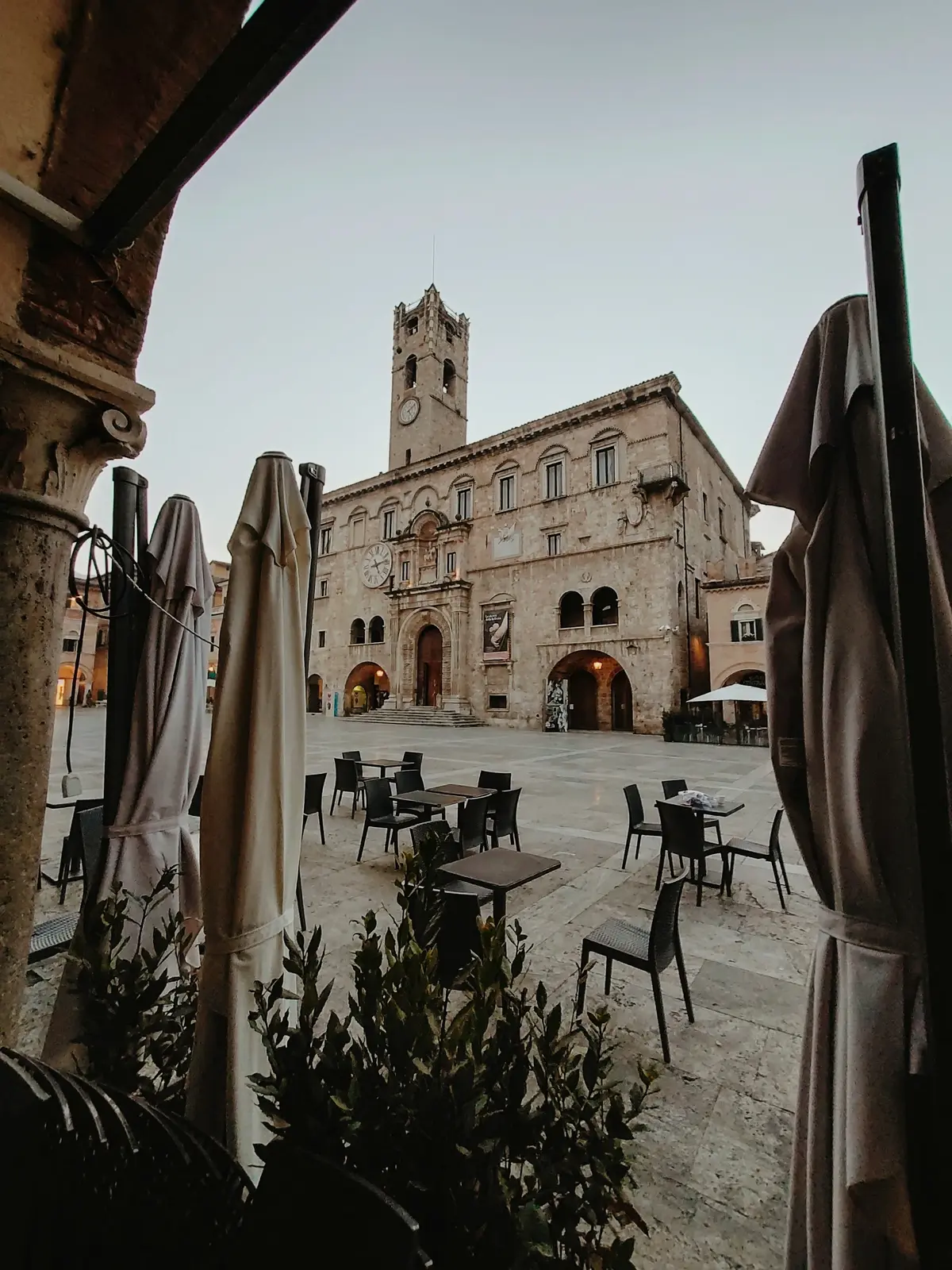
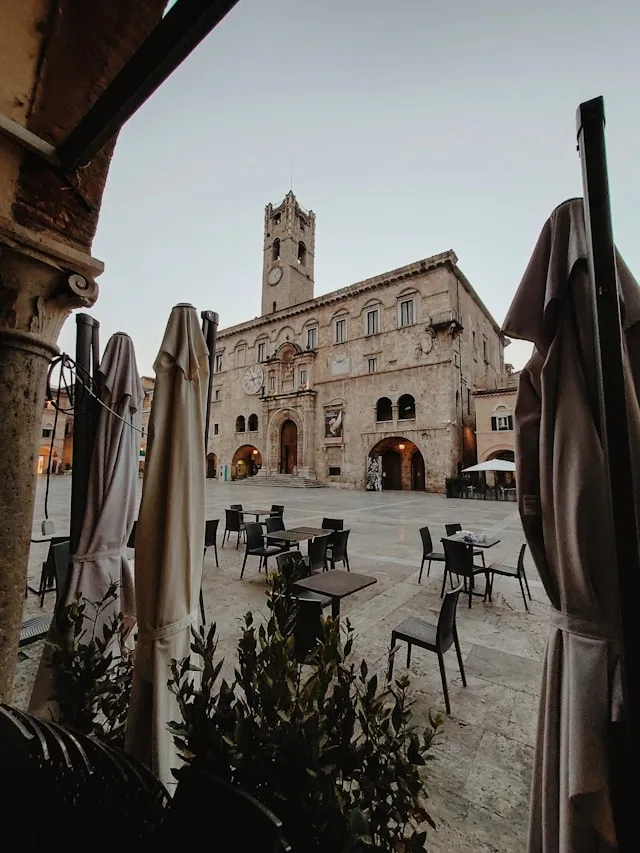
Ascoli Piceno's centro storico cannot legally add a single new hotel room. Since 2018, the Soprintendenza Archeologia, Belle Arti e Paesaggio for Marche has approved no new hotel builds within the historic walls, enforcing the Codice dei Beni Culturali with a rigidity that preserves travertine facades while capping commercial capacity at precisely the moment demand is rising. In a city where 68% of hotel inventory sits inside or immediately adjacent to those walls, that ceiling is not an inconvenience. It is the defining constraint of the entire hospitality economy.
The consequence is a talent market unlike any other in Italian hospitality. During the Giostra della Quintana weekends, when 45,000 to 50,000 spectators descend on a city of 47,000 residents, three-star room rates spike 180 to 220% above baseline. Yet year-round hospitality unemployment in the province sits at 12.4%. The same market that cannot find an executive chef for four months in summer cannot offer a front-desk manager stable employment in January. Ascoli's hospitality sector does not have a single hiring problem. It has two opposite problems operating on different calendars.
What follows is an analysis of the forces creating this split, the specific roles that hiring leaders in Ascoli Piceno's hospitality and cultural tourism sector cannot fill, and what organisations operating in this market need to understand before they commit to a search. The heritage conservation framework that makes this city worth visiting is the same framework that makes it extraordinarily difficult to staff. That paradox is the subject of this article.
The Heritage Ceiling: Conservation Rules That Cap Growth and Concentrate Pressure
The Decreto Legislativo 42/2004 governs structural modifications to properties within Ascoli Piceno's historic centre. In practice, any alteration to a building within the medieval walls, from a new window to a converted floor, requires approval from the regional Soprintendenza. Approval windows run 90 to 180 days. For hospitality operators, this means rapid capacity adjustments to demand spikes are not merely difficult. They are legally impossible.
The city operates 42 hotels with approximately 1,850 rooms. The only capacity increase projected for 2026 is the conversion of the former Ospedale di Santo Spirito into a 45-room boutique albergo diffuso, a scattered hotel model that distributes guests across restored historic properties. That project requires €4.1 million in restoration investment and remains subject to the same Soprintendenza approval timelines that constrain every other property within the walls.
The Supply Bottleneck During Peak Events
Meanwhile, municipal ordinance limits short-term rentals to 90 days annually for non-resident owners. This cap, introduced in 2023 to preserve housing stock, further constrains the accommodation supply exactly when it is most needed. During Quintana weekends, the overflow pushes visitors to San Benedetto del Tronto, 40 kilometres east on the Adriatic coast. Revenue that should stay in Ascoli leaks to coastal hotels with more rooms, longer seasons, and higher base salaries for their staff.
What the Ceiling Means for Talent
This is the mechanism that shapes every hiring decision in the market. A city that cannot build new hotel capacity cannot create the kind of large-scale, year-round employment that attracts and retains professional hospitality managers. The talent implications are direct: operators compete for a fixed pool of specialists who must deliver exceptional results within a physical infrastructure that was not designed for modern tourism volumes and cannot be expanded to meet them. The result is a market where the hidden majority of qualified candidates are already employed, not looking, and expensive to move.
Seasonal Overcrowding and Structural Underemployment: The Two-Speed Market
The Province of Ascoli Piceno recorded 1.02 million tourist arrivals in 2023. The municipality captured approximately 485,000 stays, concentrated heavily in the April to October window. But the distribution within that window is far from even. Sixty-four percent of annual tourism revenue lands in July, August, and September. The Giostra della Quintana alone generates an estimated €12 to €15 million in direct and indirect economic impact across its July and August editions.
This concentration creates what economists call a dual labour market. During the Quintana, the Hotel Palazzo dei Mercanti expands from 42 permanent employees to 65. Quintana S.r.l., the event management company, scales from 12 year-round staff to 120, drawing in seasonal technicians, historic costume artisans, and security personnel. The entire system surges.
Then it contracts. First-quarter hospitality unemployment in the province hit 12.4% in 2024. The gap between peak-season labour shortages and off-season structural slack is not narrowing. The Fondazione Carisap has committed €450,000 to extend 2026 cultural programming into November with the Ascoli Medievale autumn festival, an explicit attempt to flatten the seasonal curve. Whether a single new festival can redistribute enough demand to stabilise employment is an open question. What is clear is that the current distribution deters permanent hiring, which in turn deters the career-minded professionals the sector needs most.
A revenue management director considering Ascoli Piceno is not just evaluating salary. They are evaluating whether the role offers twelve months of meaningful work or eight months of intensity followed by four months of reduced relevance. That calculation, more than any compensation figure, is what makes these searches stall before they begin.
The Roles the Market Cannot Fill: Where Vacancy Duration Tells the Story
The province generated 2,140 net new job postings in hospitality during 2024, a 14% increase over 2023. Seventy-three percent were concentrated in food and beverage services. But aggregate posting volumes obscure the real problem, which is not the quantity of vacancies but the duration of the ones that matter most.
Executive Chefs Specialising in Marchigiana Cuisine
Employers in Ascoli Piceno face vacancy durations of 110 to 140 days for executive chef positions requiring expertise in traditional Marchigiana cooking. The national average for equivalent roles is 67 days. The gap is driven by a specific technical requirement that has no scalable training pipeline: certification in fritto all'ascolana, the traditional fried olive preparation that is both a culinary technique and a cultural institution. Ristorante Gino, the city's flagship dining establishment since 1962, employs eight specialised fry cooks dedicated to olive all'ascolana production alone.
An estimated 85 to 90% of qualified executive chefs in this speciality are currently employed and not applying to public postings. Average tenure among specialised culinary professionals in the province is 4.8 years, and unemployment in this category sits at 3.2%. The market is not merely tight. It is essentially closed to conventional recruitment methods. No job board reaches a candidate who has spent five years building a reputation at a single restaurant and has no reason to look elsewhere unless the proposition is compelling enough to justify the disruption.
Heritage Conservation Technicians
Only 12 licensed restorers specialising in travertine and pietra d'Ascoli work in the province. The passive candidate ratio exceeds 90%. Movement in this category occurs through network referral or academic recruitment from the University of Ferrara's conservation programme, not through job postings.
According to reporting in Il Resto del Carlino, confirmed by the ASCOM Ascoli president, one local restoration firm maintained an open position for a lead travertine restoration specialist for seven months before filling it by recruiting from a competitor in Fermo at an 18% salary premium. This is not an outlier. In a pool of 12 specialists, every hire is a competitive extraction from a known peer. The cost of a failed or delayed search in this category is measured not in lost revenue but in halted restoration projects that themselves constrain the hospitality infrastructure.
Revenue Management and Digital Marketing Directors
This is the role category where the skills mismatch is sharpest. Ascoli's hospitality operators are small to medium independent properties. No international hotel chains maintain branded properties in the municipality. The sector needs digital-era commercial leaders who can manage property management systems, channel distribution, and dynamic pricing, but offers them a career context defined by single-property, family-owned operations with limited vertical mobility.
According to a case study published by Federalberghi Marche, the Hotel Palazzo dei Mercanti created a hybrid Director of Revenue and Digital Experience role in 2024. The position remained unfilled for four months despite active recruitment. It was ultimately filled by relocating a manager from Rimini with a relocation package valued at €15,000 and a salary 12% above market rate. The average vacancy period for revenue management directors in Ascoli is 98 days, compared to 45 days for front-desk managers. That differential tells the story: the more strategic and digitally sophisticated the role, the harder it is to fill locally.
Compensation: What the Market Pays and Why It Loses
Ascoli Piceno's compensation structure is set against a competitive field that pulls talent in every direction except inland. The numbers clarify why.
A Hotel General Manager overseeing a 40 to 80 room property in Ascoli Piceno earns €38,000 to €48,000 in base salary under the CCNL Tourism framework, adjusted for the Marche regional cost-of-living index. At the executive level, multi-property oversight or albergo diffuso network leadership commands €55,000 to €72,000 plus bonus and accommodation benefits. Food and Beverage Directors range from €32,000 to €42,000 at the senior specialist level, rising to €48,000 to €62,000 for multi-outlet responsibility including events. Revenue Management and Digital Marketing Directors earn €35,000 to €45,000 at the specialist level and €50,000 to €65,000 at the executive level, with premiums of 15 to 20% above those bands for high performers in historic luxury properties.
These figures would be competitive if Ascoli Piceno existed in geographic isolation. It does not.
San Benedetto del Tronto, 40 kilometres east, offers 8 to 12% higher base salaries for equivalent managerial roles. Coastal hotels run longer seasons, April to October against Ascoli's May to September peak, and generate higher average daily rates across that extended window. Executive chefs and front-office managers routinely commute from Ascoli to coastal properties for the wage differential alone, creating a talent leakage from the inland historic centre that Federalberghi Marche documented explicitly in its 2024 workforce mobility report.
Ancona, 90 kilometres north, offers a 10 to 15% premium for revenue management and commercial roles, plus something compensation alone cannot replicate: career trajectory. The provincial capital houses larger corporate hospitality groups, port tourism operations, and international airport connectivity. A mid-career professional who has mastered dynamic pricing at a single 85-room property in Ascoli Piceno has limited options for advancement without leaving the city. Ancona offers the vertical mobility that Ascoli's SME-dominated market structurally cannot.
Perugia, 95 kilometres south-west, competes on lifestyle parity but adds a stronger university pipeline. The Università degli Studi di Perugia produces tourism graduates who tend to stay in a city with a larger international student population and more diverse hospitality experiences. Rimini, 120 kilometres north, functions as a training hub with major hospitality management schools, and Ascoli employers struggle to attract graduates who perceive small-scale historic hotels as a dead end relative to Rimini's resort complexes.
The compensation gap between Ascoli and its nearest competitors is not closing. It is widening fastest at the specialist and digital roles that the market needs most urgently. A 12% above-market offer plus a €15,000 relocation package to bring a single revenue manager from Rimini is not a sustainable hiring strategy. It is a distress signal.
The Original Paradox: Heritage as Both Magnet and Cage
Here is the observation that the data supports but that no single data point states directly.
Ascoli Piceno's heritage conservation framework does not merely constrain physical capacity. It constrains the entire talent ecosystem. The Soprintendenza rules that prevent new hotel construction also prevent the emergence of larger, more professionally managed hospitality operations that would offer the career structures and compensation scales needed to attract and retain senior talent. The conservation ceiling does not just limit rooms. It limits the organisational complexity that creates executive-level roles in the first place.
Consider the sequence. A city that cannot build new hotels operates only small independent properties. Small independent properties cannot justify the overhead of a dedicated Revenue Management Director, a Cultural Tourism Director, or an F&B Director with multi-outlet scope. When they do create these roles, as the Hotel Palazzo dei Mercanti did in 2024, they find that the candidates who could fill them are in larger markets with more room to grow. The heritage framework that makes Ascoli worth visiting is the same framework that makes it almost impossible to professionalise the hospitality workforce at the pace the market requires.
This is not a problem that higher salaries alone can solve. A revenue management director who relocates from Rimini for a 12% premium and a €15,000 package will stay only as long as the role remains challenging. If the property cannot expand, if the operating context remains a single 85-room hotel in a market with a five-month peak, the challenge has a ceiling. And that ceiling is, quite literally, made of travertine.
What 2026 Brings: Investment, Expansion, and the Same Constraints
The Piano Nazionale di Ripresa e Resilienza has allocated €3.2 million to Ascoli Piceno for pedestrianisation of the Ponte Romano approach and digital wayfinding systems in the centro storico. This is part of a broader €24.8 million allocation to Regione Marche for sustainable tourism infrastructure. Construction timelines indicate minimal capacity expansion before Q3 2026.
The Ospedale di Santo Spirito conversion represents the only meaningful accommodation pipeline: 45 new rooms in a boutique albergo diffuso format. That single project will require its own leadership team. It will need a general manager with experience in scattered hotel operations, a concept that is well established in destinations like Matera but novel in the Marche. It will need a revenue and digital strategy leader capable of managing distributed inventory across multiple historic buildings. And it will need heritage-trained operations staff who can maintain listed buildings while running a commercial hospitality business inside them.
These are not roles that can be filled by promoting from within the existing 42-hotel ecosystem. They require a deliberate, proactive search strategy that reaches professionals outside the province, outside the Marche, and potentially outside Italy entirely. The albergo diffuso model has attracted international interest from operators in Portugal, Croatia, and southern France. The talent pool for this format is small, geographically dispersed, and almost entirely passive.
The Fondazione Carisap's €450,000 commitment to the Ascoli Medievale autumn festival is a step toward flattening seasonality, but the talent implications are more immediate than the tourism ones. If the festival succeeds, it extends the operating season by six to eight weeks. That extension changes the employment proposition for every senior role in the market. A General Manager role with a seven-month meaningful operating window is a different proposition from one with a twelve-month window. The question is whether the festival creates enough demand to justify permanent senior hires, or whether it simply extends the seasonal contract cycle by a few weeks.
What Hiring Leaders in This Market Need to Do Differently
The conventional hospitality recruitment playbook fails in Ascoli Piceno for reasons that are specific and identifiable.
First, job postings do not reach the candidates who matter. With passive ratios of 85 to 90% for executive chefs and over 90% for heritage conservation specialists, the vast majority of viable candidates will never see a listing on a hospitality job board. They are employed, they are embedded in their current operations, and they require a direct, confidential approach that articulates a proposition they cannot find in their current role.
Second, the proposition itself must address the career ceiling, not just the salary. Relocating a professional from Rimini or Ancona requires more than a competitive compensation package. It requires a credible answer to the question: what will I be doing in three years that I could not do by staying where I am? For the Ospedale di Santo Spirito project, that answer might be genuine. Leading the launch of a new-format hospitality concept in a UNESCO-grade historic centre is a career-defining opportunity. For a replacement hire at a single established property, the answer is harder to construct.
Third, search speed matters disproportionately in a market this small. When the total pool of travertine restoration specialists in the province is 12, and the total pool of revenue management directors willing to consider relocation is perhaps two or three at any given moment, the traditional retained search timeline of eight to twelve weeks risks losing the only viable candidate to a competitor who moved faster.
KiTalent's approach to markets like this one, where the qualified candidate pool is extremely small, predominantly passive, and geographically dispersed, is built on AI-powered talent mapping that identifies viable candidates before a vacancy is even posted. In a province where 12 specialists constitute the entire supply, knowing exactly who they are, where they work, and what might move them is not a competitive advantage. It is a prerequisite. With a 96% one-year retention rate across 1,450 executive placements, the methodology is designed for precisely the kind of high-stakes, limited-pool search that Ascoli Piceno's heritage hospitality sector demands.
For organisations competing for leadership talent in Ascoli Piceno's cultural tourism and hospitality market, where the candidates are few, passive, and embedded in roles they have no reason to leave without a compelling proposition, speak with our executive search team about how we approach this market and deliver interview-ready candidates within 7 to 10 days.
Frequently Asked Questions
What are the hardest hospitality roles to fill in Ascoli Piceno?
Executive chefs specialising in traditional Marchigiana cuisine face vacancy durations of 110 to 140 days, nearly double the Italian national average of 67 days. Heritage conservation technicians, particularly travertine restoration specialists, are even harder to source, with only 12 licensed professionals in the province and a passive candidate ratio exceeding 90%. Revenue management and digital marketing directors also present acute challenges, with average vacancy periods of 98 days driven by the limited career progression available in Ascoli's small-property market. These three categories represent the most persistent talent gaps in the sector as of 2026.
Why is hospitality hiring in Ascoli Piceno different from coastal Italian markets?
Ascoli Piceno's heritage conservation laws prevent new hotel construction within the historic centre, capping physical capacity at 1,850 rooms across 42 properties. This limits the organisational scale that creates and sustains executive-level roles. Coastal competitors like San Benedetto del Tronto offer 8 to 12% higher base salaries, longer operating seasons, and larger properties with clearer career trajectories. The result is a consistent talent leakage from Ascoli's inland historic centre to the Adriatic coast, documented by Federalberghi Marche's workforce mobility research.
What does a Hotel General Manager earn in Ascoli Piceno?
Under the CCNL Tourism framework adjusted for the Marche regional cost-of-living index, a Hotel General Manager overseeing a 40 to 80 room property earns €38,000 to €48,000 in base salary plus performance bonus. At the executive level, covering multi-property oversight or albergo diffuso network leadership, compensation reaches €55,000 to €72,000 plus bonus and accommodation benefits. These figures are competitive within the province but trail Ancona by 10 to 15% and San Benedetto del Tronto by 8 to 12% for equivalent roles.
How does the Giostra della Quintana affect hospitality hiring demand?
The Quintana's July and August editions draw 45,000 to 50,000 spectators each and generate €12 to €15 million in economic impact. During event weekends, average daily rates for centro storico hotels spike 180 to 220% above baseline. Staffing surges are substantial: the Hotel Palazzo dei Mercanti expands from 42 to 65 employees, and Quintana S.r.l. scales from 12 to 120 staff. This acute seasonal demand coexists with 12.4% hospitality unemployment in the first quarter, creating a bifurcated labour market that deters permanent hiring.
How can executive search firms help hospitality employers in Ascoli Piceno?
In a market where 85 to 90% of qualified executive chefs and over 90% of heritage conservation specialists are passively employed, conventional job advertising reaches a fraction of viable candidates. KiTalent uses AI-enhanced talent mapping and direct headhunting to identify and approach professionals who are not on the market but could be moved with the right proposition. With interview-ready candidates delivered within 7 to 10 days and a pay-per-interview model that eliminates upfront retainer risk, the approach is designed for the small, passive, geographically dispersed talent pools that define Ascoli Piceno's hospitality sector.
What is the 2026 outlook for tourism investment in Ascoli Piceno?
PNRR funding of €3.2 million is allocated for pedestrianisation and digital wayfinding in the centro storico, with construction completion expected by Q3 2026. The only accommodation expansion is the 45-room Ospedale di Santo Spirito albergo diffuso conversion, requiring €4.1 million in restoration investment. The Fondazione Carisap has committed €450,000 to extend cultural programming into November 2026. These investments improve visitor experience and extend the season but do not address the fundamental capacity ceiling imposed by heritage conservation regulations.