Trebinje's Hydropower Cluster Pays Above-Market Wages and Still Cannot Keep Its Engineers
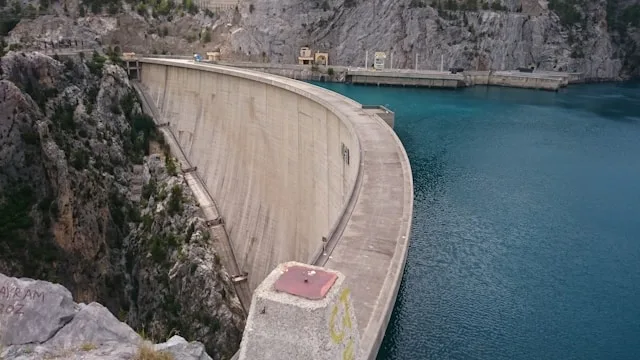
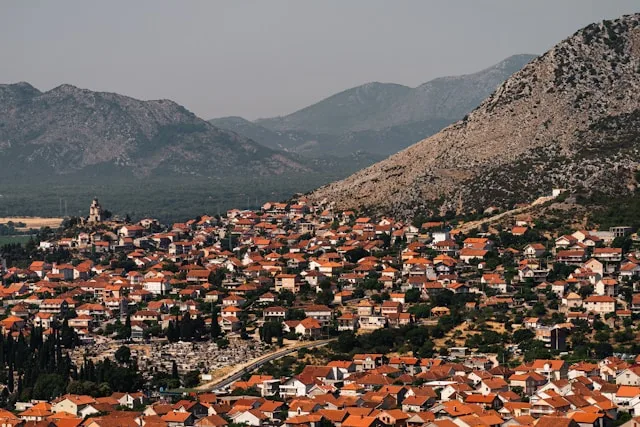
Trebinje sits at the southern edge of Republika Srpska, a small city whose economic identity is inseparable from the dams and turbines that line the Trebišnjica river basin. Hidroelektrane na Trebišnjici, known as HET, operates 520 MW of installed capacity across four facilities and employs roughly 850 people. Together with Elektromont and a handful of civil works contractors, the hydropower cluster accounts for approximately 18 to 20% of all formal employment in the municipality. By any measure, this is a company town built around water and electricity.
The problem facing this cluster in 2026 is not the one its political sponsors anticipated. Republika Srpska's strategic documents projected aggressive expansion: new dams at Dabar, Buk Bijela, and Bjelimići that would have driven construction employment and drawn technical talent into the region. Instead, Energy Community infringement proceedings, international arbitration with Croatia, and unresolved environmental litigation have frozen every major greenfield project. The cluster is not expanding. It is ageing, losing engineers to Zagreb and Belgrade, and trying to modernise a 1965-era power station with a workforce it cannot replace at market rate.
What follows is an analysis of how Trebinje's hydropower cluster arrived at this impasse, why conventional retention strategies are failing despite above-market compensation, and what the talent implications are for any organisation hiring specialised energy engineers in the Western Balkans. The dynamics at work here are not unique to Trebinje. They illustrate a pattern visible wherever legacy infrastructure assets meet EU regulatory convergence and cross-border talent mobility.
The Frozen Expansion Paradox Defining Trebinje's Energy Sector
The core tension in Trebinje's hydropower market is the gap between political ambition and legal reality. On paper, the RS government's capital investment plans describe a region on the verge of a construction boom. HPP Dabar, a 159 MW facility, sits at the centre of these plans. HPP Buk Bijela at 88 MW and HPP Bjelimići at 60 MW complete the pipeline. If built, these projects would have generated hundreds of construction jobs and established Trebinje as the engineering hub of Republika Srpska's energy future.
None of these projects are under construction. The Energy Community Secretariat initiated infringement proceedings against Bosnia and Herzegovina in 2023, citing non-compliance with the EU Water Framework Directive in the environmental impact assessment for Buk Bijela. Croatia has escalated a separate dispute to the Permanent Court of Arbitration, alleging that the Buk Bijela project violates the 1999 Agreement on Trebišnjica and Neretva water management, specifically regarding damage to the Hutovo Blato wetlands.
What "Frozen Expansion" Means for the Workforce
The practical consequence is a cluster that has been preparing for growth it cannot legally execute. HET has acquired land. ERS investment plans have been approved by the RS Government. Technical specifications exist. But main construction on Dabar is unlikely before 2027 at the earliest, contingent on the RS Ministry of Spatial Planning resolving outstanding EIA appeals. Buk Bijela faces an even longer timeline.
This creates what is best described as a frozen expansion scenario. Employment remains stable at 1,100 to 1,200 FTEs across the cluster. No one is being laid off. But the opportunity cost is escalating with every quarter of delay, because the technical talent that would have been retained by the promise of new projects is instead leaving for markets where that work actually exists.
The Arbitration Risk No One Is Pricing In
The Croatia arbitration introduces a second layer of uncertainty. A ruling against Bosnia and Herzegovina could mandate operational modifications to HPP Dubrovnik, the 240 MW facility located in Croatia but operated by HET under a bilateral agreement. Technical assessments submitted to the Permanent Court of Arbitration suggest that such modifications could reduce generating capacity by 8 to 12%. For a cluster whose identity and employment base depend on generating output, even a partial capacity reduction would ripple through every maintenance schedule and contractor engagement in the region. Hiring leaders working within or alongside this cluster need to understand that the hidden cost of a wrong executive hire is compounded here by the possibility that the role itself may be redefined by an external legal ruling.
Inside the Asset Base: Modernisation as the Real Employment Driver
With expansion stalled, the actual economic activity sustaining Trebinje's hydropower workforce in 2026 is rehabilitation. The centrepiece is the €45 million revitalisation of HPP Trebinje I, a 172 MW facility built in 1965. This project involves replacing two 86 MW Francis turbine units with modern high-efficiency models. Končar KET, the Croatian turbine manufacturer, holds the primary contract. Elektromont handles auxiliary electrical works.
This rehabilitation sustains approximately 150 indirect jobs in specialised maintenance and civil works. It is meaningful employment, but it is a finite 18-month cycle. Once the turbine replacement is complete, the maintenance workforce returns to steady-state operations. There is no second rehabilitation of comparable scale in the current pipeline.
ERS has allocated €12 million for 110kV and 35kV transmission upgrades in the Trebinje region, which will benefit local contractors through 2026 and beyond. Grid modernisation is a more durable employment source than single-asset rehabilitation, but it draws on a different skill set: substation maintenance and high-voltage switching rather than turbine engineering. The workforce that knows how to maintain a Francis turbine and the workforce that knows how to upgrade a 110kV transmission line overlap far less than outsiders assume.
The shift underway is from civil construction roles toward automation, SCADA maintenance, and environmental compliance. This is not a gradual drift. It is a hard pivot driven by the simultaneous pressures of EU regulatory convergence and infrastructure age. The skills that kept Trebinje's power stations running for three decades are not the skills required to bring them into compliance with Energy Community standards.
The Talent Gaps That Job Postings Cannot Close
Three role categories define the acute shortage in Trebinje's hydropower cluster. Each is characterised by a predominantly passive candidate market, meaning the professionals who could fill these roles are employed, not searching, and concentrated at a small number of regional employers.
Senior Dam Safety Engineers
Engineers with ICOLD-standard dam safety qualifications and 10 or more years of hydropower-specific experience represent the most constrained talent pool. Data from the Republika Srpska Employment Service shows that energy and water management engineering vacancies requiring this level of experience remain open for an average of 180 to 220 days. Comparable general electrical engineering roles fill in 45 days.
An estimated 85 to 90% of qualified dam safety engineers in the region are passive candidates. The RS Engineering Chamber reports under 2% unemployment among certified dam engineers with more than 15 years of experience. Average tenure at a single employer exceeds 12 years. These are not people browsing job boards. They are embedded in institutions. Reaching them requires direct headhunting methodology rather than advertising.
SCADA and Digital Automation Engineers
The modernisation of HPP Trebinje I demands expertise in Siemens SPPA-T3000 and Rockwell Automation systems. HET has been unable to fill two mid-level automation engineer positions advertised since March 2024, a vacancy duration now exceeding 10 months. The workaround has been contracted specialists from Sarajevo and Zagreb working on weekly rotation, a model that is expensive and unsustainable for permanent operational roles.
This vacancy pattern is consistent with a broader regional shortage. As AI and automation reshape industrial hiring requirements, the professionals capable of integrating digital control systems into legacy hydropower infrastructure occupy a niche that is too narrow for conventional recruitment and too specialised for generalist engineering markets to supply.
Environmental Compliance Specialists
The requirement for professionals who can manage EU Water Framework Directive compliance and Energy Community dispute procedures has outpaced local supply entirely. According to the Energy Community Secretariat's BiH monitoring report, HET has engaged Belgrade-based consultancies, notably the Jaroslav Černi Institute, at rates 30 to 40% above local salaries to fill EIA documentation gaps. This is not a temporary arrangement. It is a structural dependency on external expertise that reflects the absence of a local talent pipeline for EU-standard environmental regulation.
The common thread across all three categories is that the hidden 80% of passive talent is the only viable source. The active candidate market in Trebinje's energy sector consists of junior civil engineers and general electrical technicians. The senior specialists this cluster needs are not visible to any job board.
Why Above-Market Pay Is Not Solving the Retention Problem
Here is where the standard analysis breaks down. HET and Elektromont pay well by Republika Srpska standards. A senior maintenance engineer with 10 to 15 years of experience earns €24,000 to €32,000 annually gross, representing a 2.0 to 2.5x premium over the RS national average net salary of approximately €9,600 per year. An environmental compliance manager earns €28,000 to €38,000, with a 15 to 20% premium for EU regulatory expertise. At the director level, HET production directors and Elektromont technical directors earn €55,000 to €78,000 inclusive of performance bonuses.
These are not poverty wages. In a region where cost of living is modest and job security in state-backed enterprises is high, these packages should, by conventional labour market logic, retain talent.
They do not.
The reason is that Trebinje does not compete against the RS average. It competes against Zagreb, where Croatian energy sector salaries for equivalent roles run €35,000 to €45,000, a 2.5 to 3.0x multiple over Trebinje. It competes against Belgrade, where Elektroprivreda Srbije, Siemens Energy, and ABB offer a 1.5 to 1.8x multiple with access to larger-scale projects like the Đerdap revitalisation. It competes against Sarajevo, where Elektroprivreda Bosne i Hercegovine and international firms like Sweco and AF-Consult offer 15 to 20% salary premiums plus urban amenities and international schooling.
For a 35-year-old SCADA specialist weighing a move, the calculation involves more than money. Zagreb offers EU mobility rights. Belgrade offers career scale. Sarajevo offers a capital city's infrastructure. Trebinje offers a wage premium over the local median and the security of a state enterprise. For engineers in the 30 to 40 age bracket with international project experience, that trade is increasingly unattractive. The counteroffer dynamics that work in larger markets fail here because the pull factors are not just financial. They are institutional and lifestyle-driven.
This is the original analytical claim this article advances, and it is not stated anywhere in the aggregate data: Trebinje's retention crisis is not a compensation problem. It is a proposition problem. The cluster pays above-market for where it sits, but what it offers beyond salary, career progression within a frozen expansion pipeline, a small city in an economically depressed region, public-sector wage caps that prevent matching competing offers, cannot compete with the full package available 300 kilometres away. Capital investment has stalled, which means career ambition stalls with it. The engineers leaving are not chasing money. They are chasing work that does not yet exist in Trebinje and may not exist there for years.
The Demographic Cliff Approaching in 2027
Even if retention were solved today, the cluster would still face a replacement crisis. Approximately 35% of HET's technical workforce in the mechanical and electrical maintenance divisions is over 55. Concentrated retirements are projected for 2026 and 2027. The Republika Srpska workforce is ageing rapidly, and the dependency ratio in eastern Herzegovina is projected to reach 0.65 by 2026, according to the Agency for Statistics of BiH.
The collision of these two forces, emigration of mid-career engineers and retirement of senior engineers, creates a knowledge gap that cannot be closed by hiring alone. The professionals retiring from HET carry institutional memory of systems, structures, and operating procedures that exist in no manual. When a dam safety engineer who has monitored the same penstock for 25 years retires, the replacement hire does not simply need equivalent qualifications. They need years of site-specific learning that cannot be compressed.
HET's status as a public enterprise compounds the problem. The RS Decree on Wages in Public Enterprises imposes centralised wage scales set by the RS Ministry of Finance. Hiring freezes, common across RS state-owned entities, prevent the kind of anticipatory hiring that would allow overlapping tenures between retiring experts and their successors. By the time a retirement creates a vacancy, the knowledge has already walked out the door. Building a talent pipeline for critical roles in this environment requires starting years before the vacancy materialises, not months.
For organisations that depend on this cluster, whether as operators, contractors, or investors, the question is not whether to plan for succession. It is whether planning has already started too late.
The Western Balkans Energy Talent Market in Competitive Context
Trebinje does not exist in isolation. Its talent challenges are amplified by regional dynamics that are pulling specialised energy engineers toward a small number of employer hubs across the Western Balkans and the EU.
Croatia's energy sector is expanding its renewable integration programme. Hrvatska elektroprivreda and Končar KET are actively recruiting, and EU mobility rights make Croatian employers accessible to any BiH engineer willing to relocate. Serbia's Đerdap revitalisation programme offers large-scale hydropower project experience that Trebinje's frozen pipeline cannot match. Sarajevo's position as the headquarters of EPBiH and the regional offices of international engineering consultancies gives it a gravitational pull on young talent that Trebinje's isolation works against.
The competitive dynamics here differ materially from what hiring leaders encounter in Western European or North American energy markets. In those markets, the challenge is typically volume: too many roles chasing too few qualified candidates. In the Western Balkans, the challenge is directional flow. The qualified candidates exist. They are moving in one direction, toward EU-accessible markets and larger employers, and Trebinje sits on the wrong side of that flow.
Any organisation attempting to hire senior technical leaders in the industrial and energy sector of the Western Balkans must account for this directional asymmetry. A conventional search that posts a role and waits for applications will reach only the candidates who have chosen to stay, which is an increasingly small and increasingly senior subset of the available talent. The candidates who would bring the most value, mid-career engineers with both legacy system knowledge and digital skills, are exactly the ones most likely to have already moved.
This is where understanding why executive recruiting fails becomes operationally critical. The failure mode in Trebinje is not that searches attract the wrong candidates. It is that searches attract no candidates at all in the role categories that matter most.
What Hiring Leaders in This Market Need to Do Differently
The implications for any organisation hiring into Trebinje's hydropower cluster, or competing with it for the same engineering talent across the Western Balkans, are specific and actionable.
First, the search method must change. With 85 to 90% of senior dam safety engineers and the majority of Francis turbine specialists classified as passive, any hiring strategy that relies on advertised vacancies is reaching at most 10 to 15% of the viable market. Direct executive search that maps the full candidate market before approaching individuals is not a luxury in this sector. It is the only method that reaches the people you need.
Second, the proposition must extend beyond compensation. Trebinje's wage premium over the RS average is real, but it does not address the factors driving emigration. Career development, project ambition, international exposure, and lifestyle considerations all outweigh the salary differential for the candidates most in demand. Any offer constructed around base salary alone will lose to Zagreb or Belgrade. The package must articulate a trajectory, not just a number. Understanding how to negotiate with senior candidates who have multiple options requires acknowledging what they value beyond pay.
Third, succession planning must begin before the vacancy. With 35% of HET's technical workforce approaching retirement, every critical role should have a documented succession pathway and, ideally, an overlap period where institutional knowledge transfers directly. Talent mapping across the regional candidate market can identify potential successors before the retirement date, giving organisations time to build relationships rather than scrambling to fill gaps.
For organisations operating in or alongside Trebinje's hydropower cluster, the window for proactive action is narrowing. The retirements are on a fixed schedule. The emigration trend is accelerating. The frozen expansion pipeline offers no natural talent magnet on the horizon. The firms that build relationships with passive candidates now, before the demographic cliff arrives, will be the ones that maintain operational continuity through 2027 and beyond.
KiTalent works with energy and industrial organisations across emerging and transitional markets, delivering interview-ready candidates for specialised technical and leadership roles within 7 to 10 days. With a 96% one-year retention rate and a pay-per-interview model that eliminates upfront retainer risk, the approach is designed for exactly the kind of constrained, passive-dominant talent market that Trebinje represents. For organisations competing for hydropower engineering leadership in the Western Balkans, where the candidates you need are embedded in a handful of institutions and will not respond to a job posting, speak with our executive search team about how we approach this market.
Frequently Asked Questions
What is the average salary for a senior hydropower engineer in Trebinje?
A senior maintenance engineer with 10 to 15 years of hydropower-specific experience earns €24,000 to €32,000 annually gross in Trebinje's hydropower cluster. This represents a 2.0 to 2.5x premium over the Republika Srpska national average. Environmental compliance managers with EU regulatory expertise command €28,000 to €38,000. Director-level roles at HET or Elektromont range from €55,000 to €78,000 inclusive of performance bonuses. However, these figures are significantly below competitor markets: equivalent roles in Zagreb pay 2.5 to 3.0 times Trebinje levels, which is the primary driver of talent outflow. Effective market benchmarking for energy sector roles must account for this regional differential.
Why is it so difficult to hire SCADA engineers for hydropower projects in Bosnia?
The modernisation of legacy hydropower facilities requires expertise in specific platforms such as Siemens SPPA-T3000 and Rockwell Automation systems. This creates a niche talent pool too narrow for conventional recruitment. HET advertised two mid-level automation engineer positions in March 2024 that remained unfilled for over 10 months. The workaround of contracting weekly-rotation specialists from Sarajevo and Zagreb is expensive and unsustainable. Approximately 70% of qualified high-voltage protection engineers in the region are passive candidates who will not respond to job postings.
What are the main hydropower projects planned for Trebinje?
Three major projects have been planned: HPP Dabar at 159 MW, HPP Buk Bijela at 88 MW, and HPP Bjelimići at 60 MW. As of 2026, all three are stalled or delayed. Energy Community infringement proceedings cite non-compliance with the EU Water Framework Directive for Buk Bijela. Croatia has initiated international arbitration regarding water management impacts. Preparatory civil works for Dabar may commence in late 2026 if outstanding EIA appeals are resolved, but main construction is unlikely before 2027. The current employment driver is the €45 million rehabilitation of HPP Trebinje I.
How does Trebinje compete with Zagreb and Belgrade for energy sector talent?
It increasingly does not. Zagreb offers 2.5 to 3.0 times Trebinje salary levels for equivalent roles, plus EU mobility rights and access to Croatia's expanding renewable integration programme. Belgrade offers 1.5 to 1.8 times the salary with larger-scale projects. Sarajevo offers 15 to 20% premiums plus capital-city amenities. Trebinje's above-average local wages and public-sector job security are insufficient to retain mid-career engineers aged 30 to 40 who prioritise career progression and international exposure. This directional talent flow makes direct headhunting of passive candidates essential for any employer in this market.
What percentage of Trebinje's economy depends on hydropower?
Approximately 18 to 20% of Trebinje's formal employment depends directly or indirectly on the hydropower cluster, according to the Trebinje Economic Development Strategy 2022 to 2027. HET employs roughly 850 people. Elektromont adds 320. Core contractors and subcontractors bring the total to 1,100 to 1,200 FTEs. This concentration creates material economic dependence risk: any operational downsizing, capacity reduction from the Croatia arbitration, or further delay of the Dabar project would create localised recessionary pressure disproportionate to the cluster's national profile.
How can organisations find qualified hydropower engineers who are not actively job searching?
With 85 to 90% of senior dam safety engineers and the majority of turbine specialists classified as passive candidates, organisations must move beyond job advertising. KiTalent uses AI-enhanced talent mapping to identify and approach qualified professionals who are employed and not visible on any job board. The pay-per-interview model means clients only invest when they meet candidates who match their requirements. In markets like Trebinje where the total qualified candidate pool is small and concentrated at a handful of employers, this direct approach is the only method that consistently reaches viable candidates within a commercially reasonable timeframe.