Banja Luka's Manufacturing Paradox: 16% Unemployment and No One to Hire
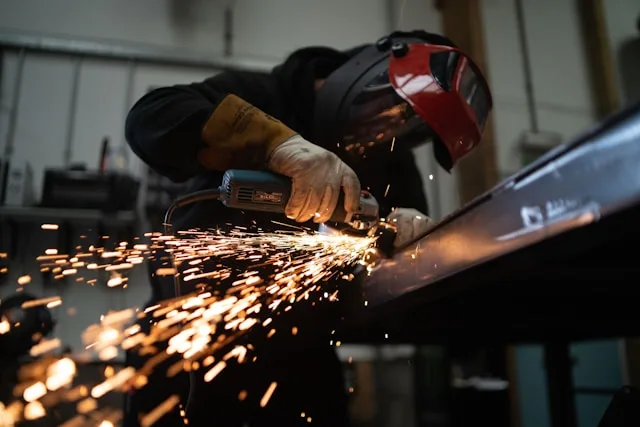
Banja Luka's manufacturing sector grew its metalworking exports to Germany by 18% in 2023. The city's general unemployment rate sits above 16%. On paper, this looks like a market with capacity to spare: willing workers, rising demand, and a cost base that undercuts every Eurozone competitor. The reality is the opposite. The workers the sector needs do not exist in the numbers required, and the ones who do exist are already employed, difficult to reach, and increasingly difficult to retain against competitors paying two to three times more across the Croatian and Slovenian borders.
The core tension shaping Banja Luka's industrial economy in 2026 is not a lack of demand. Nearshoring momentum from EU firms seeking alternatives to disrupted Eastern European supply chains has pushed order books higher. The problem is that rising demand has collided with a skills pipeline producing graduates who cannot operate the machinery the sector depends on, an equipment base older than many of the workers running it, and an emigration corridor that siphons the most capable technicians toward Zagreb, Maribor, and Graz before they complete their first decade of tenure.
What follows is a ground-level analysis of the forces reshaping Banja Luka's manufacturing talent market, the specific roles and skills in shortest supply, and what organisations operating in or hiring for this sector need to understand before committing to growth plans that depend on talent the local market cannot currently deliver.
A Sector Built on Subcontracting, Not Integration
Manufacturing accounts for roughly 22% of Banja Luka's GDP. Metal processing, including fabricated metal products and machinery, represents 38% of industrial output. Wood processing and furniture contribute 12%. These are not small figures for a secondary city in Bosnia and Herzegovina. They represent a genuine industrial base, one that employs thousands and generates the majority of the region's export revenue.
But the structure of that base matters as much as its size. Ninety-four percent of manufacturing entities in the Banja Luka Economic Region employ fewer than 50 workers. They cluster in three zones: Industrial Zone I at Zalužani, Industrial Zone II at Borik-Potrčanja, and the Čelinac-Potkozarje wood processing cluster. The dominant business model is subcontracting. Banja Luka's metalworking firms serve as Tier 2 and Tier 3 suppliers to automotive and HVAC supply chains anchored in Germany, Austria, and Italy, while furniture manufacturers sell overwhelmingly into Serbia, Croatia, and Montenegro.
This subcontracting position creates a specific talent problem. The skills required to fulfil a German automotive supply contract are not the same skills the local education system was designed to produce. CE marking, ISO 9001/14001 compliance, and the ability to communicate technical specifications in German are prerequisites for the contracts driving growth. Yet according to the Institute for Standardization of Bosnia and Herzegovina, only 12% of Banja Luka metalworking SMEs have completed CE marking certification. The gap between what the market demands and what the workforce can deliver is not closing. It is encoded in the structure of the sector itself.
The Nearshoring Opportunity and Its Limits
The World Bank's Bosnia and Herzegovina Country Economic Memorandum projects a 3.2% compound annual growth rate for manufacturing in the Banja Luka region through 2026, driven substantially by nearshoring as EU firms seek alternatives to Ukrainian and Belarusian metal subcontractors. This is real demand, not speculative. Banja Luka's metalworking exports to Germany climbed 18% year-over-year in 2023, and firms with the right certifications are securing new contracts.
The question is whether the growth is sustainable or temporary. The export increase occurred alongside data showing that 60% of exporting SMEs operate with machine tools manufactured before 2000. Average CNC machine age in Banja Luka sits at 14.3 years, compared to 8.1 years in Slovenia. This creates a fragile foundation: the city is winning contracts partly because Ukrainian competitors are offline, not because it offers a permanently superior production capability. When Eastern European capacity returns, Banja Luka firms running 20-year-old equipment without environmental management systems will be the first to lose contracts.
A Bifurcated Outlook
The outlook through 2026 splits cleanly in two. Larger firms with CE marking capabilities and ISO certifications are consolidating their position in German automotive supply chains. These are the firms that can afford the €8,000 to €15,000 per product line required for conformity assessment by notified bodies. They are also the firms most aggressively competing for the limited pool of qualified production managers and CNC programmers.
At the other end, traditional SMEs face consolidation pressure. The Regional Development Agency of Republika Srpska forecasts that 15 to 20% of micro-furniture workshops will exit the market by end of 2026, unable to meet EU Deforestation Regulation traceability requirements that cost €15,000 to €25,000 per firm to implement. For a micro-enterprise, that figure is prohibitive. The market is not shrinking. It is concentrating. And concentration intensifies the competition for every qualified worker who remains.
The Unemployment Illusion
Banja Luka's general unemployment rate of 16.2% suggests a labour market with slack. Youth unemployment for workers aged 18 to 29 is even more striking at 28%. A hiring leader reading those numbers from outside the region might reasonably assume that filling manufacturing roles should be straightforward: post the vacancy, offer a competitive local wage, and choose from a deep applicant pool.
That assumption would be wrong. According to the Chamber of Commerce of Republika Srpska's Business Climate Survey, 58% of manufacturing firms cite inability to fill skilled positions as their primary growth constraint. Sixty-two percent of metalworking SMEs report CNC operator vacancies remaining open longer than 90 days. A third report positions unfilled for over six months.
The contradiction resolves when you examine the composition of the unemployed population. The 16.2% figure is dominated by low-skilled workers and long-term unemployed individuals whose competencies have become obsolete. The skilled cohort, particularly CNC operators, PLC maintenance technicians, and production managers with EU standards knowledge, operates in a market with unemployment below 4%. These are two entirely separate labour markets sharing a single headline statistic.
This is the analytical claim that should anchor any hiring strategy for this region: Banja Luka's aggregate unemployment figures do not describe its manufacturing talent market. They describe a different economy entirely. The skilled manufacturing workforce is functionally at full employment, locked in by retention premiums and pension continuity concerns, while the unemployed pool consists of workers who cannot be trained into CNC competency within any commercially viable timeframe. Capital investment in new contracts has moved faster than human capital development could follow.
Where the Shortages Are Most Acute
The Employment Service of Republika Srpska's Occupational Needs Analysis identifies three role categories where demand far outstrips available supply. Each has a distinct dynamic that makes conventional recruitment approaches ineffective.
CNC Machinists and Programmers
An estimated 340 openings exist across the Banja Luka economic region for CNC machinists and programmers. The required competencies are specific: Heidenhain, Fanuc, and Siemens control systems. These are not interchangeable skills. A machinist trained on Fanuc cannot step into a Heidenhain-controlled shop without retraining.
Unemployment in this segment runs below 4%. Average tenure at current employers exceeds seven years, driven partly by pension continuity concerns and partly by informal skill-based hierarchies within workshops where seniority carries real authority. The active-to-passive candidate ratio, according to HILL International BiH's labour market analysis, is estimated at 1:4. Only 20% of qualified CNC professionals are actively seeking roles. The other 80% must be found through direct headhunting or competitor identification.
The education pipeline cannot close this gap at current output levels. The dual education system produces 220 metalworking technicians annually in the Banja Luka catchment area, but only 35% meet industry CNC competency standards upon graduation. The remainder require 12 to 18 months of remedial training. A firm with an open CNC programmer role today cannot wait 18 months for a graduate to become productive.
Industrial Maintenance Technicians
One hundred and eighty openings exist for industrial maintenance technicians, with particular demand for experience on Siemens S7 and Fanuc automation systems. This segment exhibits a pattern the research describes as "hidden employment": many qualified technicians operate as informal contractors servicing multiple SMEs while formally registered at one primary employer. They are technically employed, invisible to job boards, and unavailable through standard recruitment channels.
This hidden employment pattern means the effective talent pool is even smaller than vacancy data suggests. A technician servicing four SMEs informally has no incentive to formalise with a single employer unless the offer includes a material step change in compensation and stability. Standard job postings do not reach these individuals because they are not looking.
Production Managers with EU Standards Knowledge
The most constrained category. Between 45 and 50 openings exist at firms pursuing CE marking compliance, and the market for these professionals operates as what the research describes as a closed system. Professionals with successful EU certification project histories are universally employed. Public job postings for these roles yield fewer than 5% of successful hires. Recruitment occurs exclusively through executive search and personal networks.
The premium for this profile is substantial. A production manager with German language proficiency and automotive industry experience commands 20 to 30% above standard local wages. For a market where base production manager compensation ranges from €1,400 to €2,200 monthly gross, that premium represents the difference between a role that can be filled locally and one that requires recruiting from Tuzla or Sarajevo at considerable cost.
The Compensation Reality and the Emigration Corridor
Compensation in Banja Luka's manufacturing sector sits at a level that is locally competitive but regionally exposed. A production manager earns €1,400 to €2,200 monthly gross. A quality assurance manager with ISO and CE focus earns €1,200 to €1,800. A plant manager or operations director at a facility with 200 or more employees earns €3,000 to €4,500, with performance bonuses tied to export volume. A technical director with DACH region client relationships earns €2,800 to €4,000.
These figures tell only half the story. The other half is written in Zagreb, Maribor, and Graz.
For CNC operators and technicians, Zagreb and the Croatian Zagorje manufacturing belt offer net wages 2.5 to 3.0 times higher than Banja Luka: €1,800 to €2,200 compared to €700 to €900 monthly for equivalent roles. The BiH-Croatia bilateral agreement simplifies work permit processes, reducing the friction of cross-border movement for mid-career technicians aged 28 to 40. This is the demographic cohort that Banja Luka can least afford to lose: experienced enough to be productive, young enough to have decades of working life ahead.
For engineering graduates, the gap is even more dramatic. Maribor and Graz actively recruit from the University of Banja Luka's Mechanical Engineering Faculty, offering starting salaries above €2,500 for junior engineers. Local Banja Luka firms offer €600 to €800. The faculty graduates approximately 85 mechanical engineers and 60 wood technology engineers annually. A meaningful fraction of that output leaves the country before gaining any local industry experience.
For executive and senior operational talent, Belgrade and Sarajevo compete with larger team responsibilities and, in some cases, equity participation in regional manufacturing groups. Belgrade-based roles typically pay 40 to 50% premiums over Banja Luka equivalents, with better access to international supply chain networks. A plant manager considering a move from Banja Luka to Belgrade gains both compensation and career scope. The reverse move, from Belgrade to Banja Luka, requires an extraordinary proposition.
The compensation data reveals a market caught in a structural bind. Banja Luka's manufacturing firms cannot raise wages to match Zagreb or Belgrade without destroying the cost advantage that makes them competitive as subcontractors. Yet without raising wages, they cannot retain the skilled workers who make subcontracting viable. This is not a problem that salary benchmarking alone can solve. It requires a fundamentally different approach to how these firms identify, approach, and retain the talent they need.
Equipment, Capital, and the Hidden Constraint on Talent
The age of Banja Luka's machine tool base is not just a production problem. It is a talent problem.
Approximately 60% of machine tools in Banja Luka metalworking SMEs are over 20 years old. Commercial lending rates for manufacturing SMEs average 4.8 to 6.2%, with collateral requirements of 120 to 150% of loan value. Compare this to 2.5 to 3.5% in Eurozone competitor regions. The capital cost of modernisation is prohibitive for most small firms.
This matters for hiring because modern CNC programmers want to work on modern machines. A skilled operator trained on current-generation Siemens or Fanuc controls has limited interest in running a 1990s-era machine that cannot execute the programmes they know how to write. The equipment deficit creates a self-reinforcing cycle: firms cannot attract skilled operators because their equipment is outdated, and they cannot justify modernising equipment because they lack the skilled operators to run it. The firms that have invested in newer CNC centres become talent magnets within the local market, concentrating the best workers and leaving the rest of the sector fighting over an ever-smaller residual pool.
Energy costs compound the problem. Industrial electricity in Republika Srpska averaged €0.098 per kilowatt-hour in 2024, roughly 40% above German industrial tariffs. Banja Luka's manufacturers pay more for energy than their German clients while operating equipment a generation older. The margin pressure this creates limits the wage increases that might slow emigration.
The firms best positioned to hire are those that have broken this cycle through targeted capital investment. They are also the firms most likely to need executive talent capable of managing the transition from legacy operations to certified, export-ready production. The irony is that the leaders who could manage that transition are among the scarcest profiles in the entire market.
What a Hiring Strategy for This Market Actually Requires
The standard recruitment playbook fails in Banja Luka's manufacturing sector at nearly every level. Job board postings reach, at best, 20% of qualified CNC professionals. For production managers with CE marking experience, public postings yield fewer than 5% of successful hires. The 80% of candidates who are passive in this market are not passively considering a move. They are locked into roles by pension structures, informal hierarchies, and a rational calculation that changing employers locally offers marginal benefit while the disruption cost is real.
Reaching these candidates requires three capabilities that most internal HR functions in Banja Luka's SMEs do not possess.
First, market intelligence. Understanding which firms employ which specialists, what their contract situations look like, and what proposition might move them. In a market of firms with fewer than 50 employees, this intelligence is granular and relationship-dependent. It cannot be purchased from a database.
Second, cross-border reach. The best candidates for senior roles in Banja Luka are often not in Banja Luka. They are in Tuzla, Sarajevo, or Belgrade, where they manage larger operations and earn more. Recruiting them requires understanding what Banja Luka offers that those cities do not: lower cost of living, proximity to family, a chance to lead a company rather than manage a division. The proposition must be constructed around the candidate, not around the vacancy.
Third, speed. In a market where qualified candidates are approached by multiple competitors simultaneously, the difference between filling a role and losing a candidate often comes down to weeks. A 90-day search process in a market where CNC operators receive competing approaches monthly is a search process designed to fail.
KiTalent's approach to executive search in industrial and manufacturing markets addresses precisely this dynamic. Through AI-powered talent mapping, we identify and reach the passive candidates who never appear on job boards, delivering interview-ready shortlists within 7 to 10 days. Our pay-per-interview model means clients invest only when they meet qualified candidates, not before. In a market where 96% of placed candidates remain in role after one year, the cost of hiring correctly the first time is always lower than the cost of a failed search followed by a second attempt.
For organisations expanding manufacturing operations in the Western Balkans, competing for production managers and technical directors who can bridge the gap between Banja Luka's cost advantage and EU quality requirements, speak with our industrial sector team about how we source leadership talent in markets where conventional methods consistently fall short.
What Comes Next for Banja Luka's Manufacturing Workforce
The trajectory ahead for Banja Luka's manufacturing sector is not one of gradual improvement. It is one of accelerating divergence. The firms with certifications, modern equipment, and access to EU supply chains will continue to grow. They will absorb the best available talent. They will recruit production managers from Sarajevo and Tuzla at 25 to 35% premiums. They will offer the working conditions and career paths that slow emigration among their own workforce.
The firms without those assets will face a market that becomes harder each year. Raw material insecurity in the furniture segment, where sawmills operate at 65% capacity due to logging quota restrictions, adds supply-side pressure. The EUDR traceability requirements will remove the smallest workshops entirely. The skilled workers those workshops employed will either move to the surviving larger firms or leave the region.
For hiring leaders evaluating this market, the central question is not whether Banja Luka has manufacturing talent. It does. The question is whether the talent available matches the ambition. A firm planning to win German automotive supply contracts needs production managers with certification experience, CNC programmers trained on current-generation controls, and maintenance technicians who can keep ageing equipment running while newer capital arrives. That combination of skills does not walk through the door in response to a job posting. It must be found, approached, and persuaded, by people who understand exactly where to look.
Frequently Asked Questions
What is the average salary for a production manager in Banja Luka's manufacturing sector?
Production managers in Banja Luka's metalworking and machinery sector earn €1,400 to €2,200 monthly gross, equivalent to approximately €16,800 to €26,400 annually. Premiums of 20 to 30% apply for candidates with German language proficiency and automotive industry experience. Plant managers and operations directors at facilities with 200 or more employees earn €3,000 to €4,500 monthly gross, with performance bonuses tied to export volumes. These figures are competitive locally but sit well below Belgrade (40 to 50% higher) and Zagreb equivalents, which creates retention pressure for senior manufacturing talent.
Why is it difficult to hire CNC operators in Banja Luka?
CNC operator unemployment in the Banja Luka region runs below 4%, despite general unemployment of 16.2%. Only 20% of qualified CNC professionals are actively seeking new roles. The remainder must be sourced through direct outreach. Average tenure exceeds seven years, with pension continuity and informal workshop hierarchies discouraging movement. Meanwhile, the education pipeline produces 220 metalworking technicians annually, but only 35% meet industry CNC competency standards on graduation, requiring over a year of additional training. KiTalent's talent mapping methodology identifies and engages passive specialists who are invisible to conventional job advertising.
What are the main manufacturing exports from Banja Luka?
In 2023, 47% of metal and machinery exports from the Banja Luka Customs District went to Serbia and Croatia, with 31% reaching Germany, Austria, and Italy as Tier 2 and Tier 3 components for automotive and HVAC supply chains. Furniture exports are more regionally concentrated, with 68% going to Serbia, Croatia, and Montenegro. EU certification costs, including CE marking at €8,000 to €15,000 per product line, limit direct European market access for smaller firms. The nearshoring trend has increased German demand for Banja Luka metal products, with exports to Germany rising 18% year-over-year in 2023.
How does Banja Luka compete with Zagreb and Belgrade for manufacturing talent?
It struggles. Zagreb and the Croatian manufacturing belt offer CNC operators 2.5 to 3.0 times higher net wages than Banja Luka equivalents. Belgrade offers plant managers 40 to 50% premiums plus larger team responsibilities. Maribor and Graz recruit engineering graduates directly from the University of Banja Luka at starting salaries above €2,500, compared to €600 to €800 locally. Banja Luka's competitive advantages are lower cost of living, family proximity, and the opportunity to lead a business rather than manage a department within a larger group. Effective executive search in this market constructs propositions around these advantages rather than competing on salary alone.
What EU regulations are affecting Banja Luka's furniture manufacturers?
The EU Deforestation Regulation, effective from 2024 to 2025, requires geolocation traceability for timber products. Implementation costs of €15,000 to €25,000 per firm are prohibitive for micro-enterprises, and the Regional Development Agency of Republika Srpska forecasts that 15 to 20% of micro-furniture workshops will exit the market by end of 2026. Additionally, CE marking requirements for machinery exports cost €8,000 to €15,000 per product line, and only 12% of Banja Luka metalworking SMEs have completed this process. Firms seeking leaders who can manage regulatory compliance transitions benefit from specialised executive search that targets candidates with prior certification programme experience.
What role does executive search play in Banja Luka's manufacturing hiring?
For senior and specialised roles, executive search is not a premium option in this market. It is the only viable method. Production managers with CE marking experience are hired through search and personal networks in over 95% of cases. Public job postings generate negligible results for these profiles. KiTalent delivers interview-ready candidates within 7 to 10 days using AI-enhanced direct identification of passive professionals, with a 96% one-year retention rate for placed candidates. In a market where the wrong hire costs months of lost production capacity and certification delays, precision in sourcing is not a luxury.