Široki Brijeg Metal Fabrication in 2026: Why €4.2 Million in Automation Has Deepened the Hiring Crisis It Was Meant to Solve
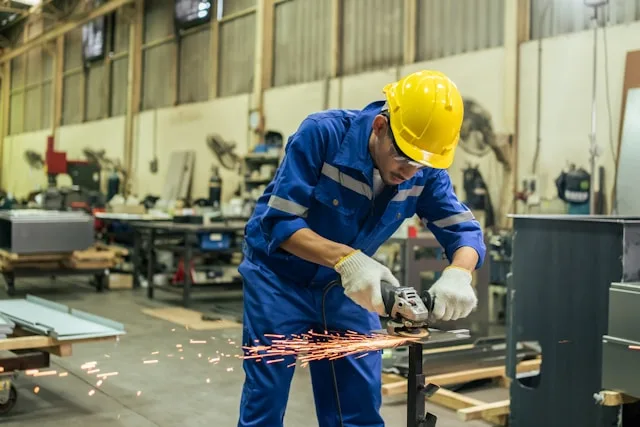
Široki Brijeg's metalworking cluster generated €142 million in aggregate turnover through 2025, with 78% of revenue flowing from EU export contracts. Production capacity sat at 92%. Order books were full. And yet the binding constraint on every major employer in the municipality was not demand, not capital, not even raw material access. It was people.
The 45 registered metalworking firms inside the Široki Brijeg Industrial Zone collectively invested €4.2 million in robotic welding cells, laser cutting systems, and CNC automation between 2022 and 2024. The conventional logic was that automation would relieve the labour pressure. Instead, vacancy durations for skilled positions lengthened. The average time to fill a certified welder role in West Herzegovina Canton rose from 3.2 months to 4.5 months across the same period. The machines arrived. The technicians who could programme and maintain them did not.
What follows is an analysis of the forces reshaping Široki Brijeg's industrial manufacturing sector: the talent deficit that automation has intensified rather than resolved, the certification barriers locking local firms out of higher-value supply chains, the cross-border competition draining the workforce at its most experienced levels, and what hiring leaders in this market need to understand before they attempt to fill the roles that matter most.
A Cluster Running at Capacity With No Room to Grow
The Široki Brijeg metalworking cluster is, by most operational measures, a success story. Approximately 1,850 people work in metal fabrication within the municipality, representing 11% of total formal employment in a town of 61,000. Revenue growth reached 12.4% year-on-year in nominal terms through 2024. The anchor employer, Metalis d.o.o., runs 220 to 240 staff across street lighting infrastructure, steel constructions, and environmental technology, exporting 80% of output to Germany, Austria, Switzerland, and Croatia.
The cluster operates as an informal network of subcontracting relationships. Metalis sits at the centre, with 40-plus micro-enterprises of 5 to 20 employees providing surface treatment, precision machining, galvanising, and powder coating. This structure is recognisable to anyone who has studied metalworking clusters in Varaždin or Maribor. The critical difference is that those Croatian and Slovenian clusters have formalised supplier associations, shared certification frameworks, and coordinated training programmes. Široki Brijeg's cluster has none of these.
The 92% capacity utilisation figure from early 2025 sounds healthy until you understand what constrains the remaining 8%. It is not a shortage of orders. German and Austrian buyers are actively seeking to diversify supply chains into the Western Balkans. It is a shortage of certified hands. Every firm in the industrial zone that wants to grow faces the same ceiling: there are not enough qualified people to staff additional shifts or take on additional contracts.
This ceiling is not temporary. The working-age population of West Herzegovina Canton is projected to decline 18% by 2035, according to BHAS population projections. The talent pipeline is not keeping pace with current demand, let alone the expansion that EU integration funds are designed to stimulate.
The Automation Paradox: Investing in Machines That Require Workers Who Do Not Exist
The central analytical tension in Široki Brijeg's metalworking market is this: the €4.2 million invested in robotic welding and CNC automation between 2022 and 2024 has not reduced the workforce requirement. It has replaced one category of worker with another that the local training system cannot produce fast enough.
Why Automation Increased Demand for Scarce Skills
Before automation, a fabrication shop needed manual welders with basic certifications. The work was physically demanding, repetitive, and paid modestly. These roles had high turnover, but the active candidate market supplied replacements, albeit slowly. With the introduction of ABB and Kuka robotic welding cells, the requirement shifted. The shop still needs welding expertise, but now it needs technicians who can programme robotic arms, calibrate laser cutting systems, and troubleshoot Fanuc and Siemens CNC controllers without external supervision.
The vocational training system in Široki Brijeg was designed for the first category. The Secondary Vocational School enrols approximately 120 students annually in metalworking tracks. These programmes produce competent manual operators. They do not produce robotic welding programmers or CNC technologists capable of running a Siemens SINUMERIK system independently.
The result is a market where entry-level, uncertified welders remain available through active channels, while the technicians required to operate the new equipment that was purchased specifically to offset labour shortages are themselves in acute shortage. The investment in automation has not resolved the aggregate labour constraint. It has shifted the constraint upward in the skill hierarchy, to a level where the local supply is even thinner.
The Metalis CNC Programmer Search: 11 Months With No External Hire
The most concrete illustration of this dynamic comes from Metalis itself. According to archived listings on MojPosao.ba, Metalis advertised a CNC Programmer/Operator position for its laser cutting and bending department continuously from March 2024 to February 2025. Eleven months. The role was posted across multiple platforms. No suitable external candidate was secured.
The resolution was not a successful hire. Metalis promoted a junior technician internally and funded external Siemens SINUMERIK certification at a cost of €4,200, as confirmed in a local media interview with Hrvatska riječ in October 2024. The promotion solved the immediate vacancy but did not add capacity. It moved a person from one role to another, leaving the original role open.
An 11-month vacancy duration for a single CNC position at the cluster's anchor employer is not an anecdote. It is a structural signal. If the largest, best-resourced firm in the industrial zone cannot attract an experienced external candidate, the probability of a micro-enterprise with 10 employees doing so is effectively zero. The implications for any organisation planning to build a sustainable talent pipeline in this market are severe.
The Certification Wall: Globally Competitive but Structurally Excluded
Široki Brijeg's metalworking cluster occupies an unusual position. It is competitive enough to sustain 78% export revenue concentration and strong demand from Germanic markets. Yet it is simultaneously excluded from the highest-value supply chains those same markets offer.
The reason is certification. Specifically, the gap between the quality standards Široki Brijeg firms currently hold and the ones their most valuable potential customers require.
EN 1090 and the Two-Tier Market
The European Commission's Growth Plan for the Western Balkans includes €40 million allocated to BiH industrial competitiveness, with metalworking modernisation tenders expected in Q2 2026. But access to these funds and to the supply chain positions they are designed to enable depends on compliance with EU norms that most local firms have not achieved.
An estimated 30% of Široki Brijeg workshops lack current CE compliance for structural steel under EN 1090-1, according to BAMIB's compliance audit preview for 2025. The initial audit cost for EN 1090-1 and ISO 3834 certification runs €15,000 to €30,000. For a micro-SME with 10 employees and annual turnover under €500,000, this is prohibitive without subsidy. The result is a two-tier market: firms like Metalis that hold comprehensive EN 1090-2 certification and can access premium European contracts, and a lower tier of workshops confined to domestic construction work or uncertified subcontracting.
The Automotive Ceiling: Zero IATF 16949 Holders
The more consequential exclusion is from automotive supply chains. Croatian and Slovenian tier-2 suppliers, including Rimac, Adient, and Prevent, represent the next logical step up for Široki Brijeg fabricators. According to Croatian Chamber of Economy supply chain mapping from 2024, these opportunities are real and growing. But they require IATF 16949 certification, the automotive quality management standard.
Zero facilities in Široki Brijeg currently hold IATF 16949.
This is not merely a paperwork gap. IATF 16949 requires embedded quality management systems, statistical process control, documented APQP procedures, and an internal audit capability that presupposes QA professionals with specific credentials. The professionals who hold CSWIP 3.1 welding inspection certificates or ISO 9001 lead auditor qualifications are among the scarcest in the entire West Herzegovina talent market. You cannot buy the certification without hiring the people who can implement it. And those people are either employed, emigrated, or commanding premiums that small firms cannot match.
This is the paradox at the heart of Široki Brijeg's export economy. The sector is globally competitive in volume terms but structurally excluded from the higher-margin work that would justify higher wages, which would in turn attract the talent needed to achieve the certifications that unlock those higher-margin contracts. The loop does not close without external intervention, either through institutional certification support or through targeted executive search that can identify and attract the rare professionals who break the cycle.
The Cross-Border Drain: Competing Against EU Membership
Every talent strategy discussion in Široki Brijeg must account for the geography. Split is 80 kilometres away. Zagreb is 130. Both are inside the EU, inside Schengen, and paying 40 to 60% more than local employers for identical skills.
Approximately 180 skilled metalworkers migrated from West Herzegovina Canton to Croatia in 2023 and 2024, according to the Croatian Employment Service's cross-border labour mobility report. The number is not enormous in absolute terms. In a market with 1,850 total metalworking employees, it represents nearly 10% of the workforce over two years.
The Welding Supervisor Poaching Pattern
The most damaging losses are not at the entry level. According to reporting in Poslovni dnevnik (Zagreb) in November 2024, a recurring pattern involves the poaching of certified welding supervisors from Široki Brijeg employers by Croatian firms. In Q3 2024, three welding supervisors moved to Konstruktor d.o.o. in Zagreb and Tigar d.o.o. in Split. The salary differential was stark: from approximately €1,200 net monthly in Široki Brijeg to €1,650 to €1,700 net in Croatia, plus accommodation allowances.
A 35 to 40% premium is difficult for a Bosnian SME to match when its wage bill is already under pressure from 22% welder salary inflation between 2022 and 2024. But the loss of a welding supervisor carries consequences beyond the salary line. These are the individuals who train apprentices, maintain quality standards on production lines, and hold the institutional knowledge of how a specific workshop's processes produce compliant output. When they leave, the hidden cost extends far beyond the direct replacement expense.
Why [Mostar](/mostar-bosnia-and-herzegovina-executive-search) Compounds the Problem
Croatia is not the only competitor. Mostar, only 30 kilometres east, offers a larger industrial base anchored by Aluminij and Soko Stark, with 10 to 15% salary premiums for equivalent metalworking roles. Critically, Mostar also offers the University of Mostar's Faculty of Mechanical Engineering, which provides career development pathways that Široki Brijeg's SME-only structure cannot replicate.
Mid-level technicians seeking career mobility outside the family-workshop model are drawn to Mostar's structured employers. The pull is not just financial. It is professional. A CNC operator in Široki Brijeg has limited upward mobility within a 15-person workshop. The same operator in a Mostar facility with 200 employees sees a pathway to shift supervisor, then production manager. Široki Brijeg's cost-of-living advantage over Mostar is only 12% in housing costs, not enough to offset the career gap.
The competitive radius creates a layered drain. Entry-level workers leave for Mostar. Mid-career technicians leave for Croatia. Master craftsmen of the 1980s and 1990s generation emigrated permanently to Austrian metalworking regions in Styria and Upper Austria, or Slovenian automotive clusters around Novo Mesto. According to the World Bank's 2023 migration assessment for Bosnia and Herzegovina, this generational loss has depleted the mentorship base for apprentices, creating a gap in knowledge transfer that no training programme alone can fill.
Compensation in Context: What Roles Pay and Why
The compensation structure in Široki Brijeg's metalworking sector reflects the interaction of scarcity, certification premiums, and cross-border competition. The data below draws on BAMIB compensation benchmarking for 2024 and regional salary surveys from ManpowerGroup Bosnia and Michael Page Balkans.
A Production Manager in metal fabrication commands €1,800 to €2,400 net monthly. This carries a 25 to 30% premium over equivalent roles in Sarajevo, driven specifically by scarcity and by the reality that Široki Brijeg is not a location that attracts candidates through lifestyle appeal. A QA Manager with EU certification credentials earns €1,600 to €2,200, with CSWIP 3.1 welding inspection certification adding a €300 to €400 monthly premium.
At the executive level, a Technical Director or Plant Director earns €3,200 to €4,500 net, placing these roles in the top 5% of industrial salaries in Bosnia and Herzegovina. According to a Korn Ferry regional compensation review cited in local reporting, these positions are frequently filled by expatriate Croatians or diaspora returnees rather than locally developed talent. VP Operations roles at multi-site scale, found essentially only at Metalis Group level, reach €4,000 to €6,000 net monthly and require international experience as a baseline.
Benchmarking these compensation levels against regional competitors reveals the core difficulty. A Production Manager at €2,400 in Široki Brijeg is competitive within Bosnia. Against a Croatian employer offering €3,500 plus EU social protections plus Schengen mobility, the Bosnian offer requires something beyond salary to be compelling. That something is typically equity-like incentives, housing assistance, or a role scope that cannot be found in a Croatian corporate hierarchy. The negotiation dynamics for senior manufacturing hires in this market are fundamentally different from those in larger, more liquid markets.
The Talent Pipeline That Does Not Connect
The Secondary Vocational School in Široki Brijeg enrols approximately 120 students annually in metalworking tracks. This is the primary formal pipeline for the sector. Against a projected deficit of 320 skilled technicians in West Herzegovina Canton by Q4 2026, the arithmetic does not work, even before accounting for the students who leave for Mostar or Croatia upon graduation.
The Dual Education Gap
The deeper problem is structural. Bosnia's legal framework supports dual education, the apprenticeship model where trainees split time between classroom and employer workshop. In practice, only 23% of metalworking trainees in West Herzegovina Canton participate in formalised dual education, compared to 65% in Croatia. The Federal Ministry of Education and Science's 2024 vocational education report confirmed this gap.
The consequence is that graduates emerge with theoretical knowledge but limited practical competence on the specific machines their future employers operate. The employer then bears the cost of practical training, which extends the effective onboarding period and reduces the return on a new hire in the first 12 to 18 months. For a micro-SME that needs a productive CNC operator now, not in 18 months, this timeline is untenable.
Why the Pipeline Cannot Be Fixed By Training Alone
The projected 320-technician deficit accounts only for current demand extended forward. It does not account for the additional capacity that EU Growth Plan funding is designed to stimulate, nor for the automotive certification opportunities that would require QA professionals the training system does not produce at all. The deficit is a floor, not a ceiling.
This is where the analysis connects to a broader point about how executive recruiting fails in specialised industrial markets. The conventional model assumes a pool of qualified candidates exists somewhere and needs to be found. In Široki Brijeg's metalworking market, for the most critical roles, that pool does not exist in sufficient numbers within the country. A CSWIP-certified welding engineer with current EN 1090 experience and technical German at B1 or above is not sitting in a database waiting for a job posting. That individual is employed, retained, and invisible to any active recruitment channel.
What Hiring Leaders in This Market Must Do Differently
The challenges described above are not temporary hiring difficulties that will resolve with economic cycles. They are embedded features of a market shaped by demographic decline, EU wage competition, and a training infrastructure that was designed for an earlier era of manufacturing. Organisations hiring in Široki Brijeg's metalworking cluster need to approach the market with that understanding.
The first requirement is accepting that the most critical roles, CNC programmers, certified welding engineers, QA managers with EU audit credentials, plant directors with multi-site experience, are 100% passive candidate markets. BAMIB's labour market analysis for 2024 found that certified welding engineers have an average tenure of 6.8 years at their current employer and effectively zero unemployment. The active candidate pool for CNC programmers represents less than 20% of qualified individuals. For plant directors capable of running facilities with more than 150 employees, the total addressable pool in West Herzegovina Canton is estimated at fewer than 15 individuals. All of them are passive.
This means that job postings, career fairs, and inbound applications will fill entry-level and general operator roles. They will not fill the roles that determine whether a firm can win an EN 1090 contract, pass a German buyer's supplier audit, or achieve IATF 16949 certification. Those roles require direct headhunting methodologies that reach into the employed, retained, non-visible population.
The second requirement is speed. In a market where Croatian competitors are offering 40 to 60% salary premiums and accommodation allowances, a qualified candidate who enters any kind of evaluation process is simultaneously being courted by employers across the border. The window between first contact and a compelling offer is narrow. Firms that take three months to move from shortlist to offer will find that the candidates they assessed have already accepted elsewhere.
KiTalent's approach to markets like this one combines AI-powered talent mapping with direct search execution, delivering interview-ready candidates within 7 to 10 days. In a market where the total qualified pool for senior roles numbers in single digits and every one of those individuals is passively employed, the ability to identify, approach, and present them before competitors move is the difference between filling a role and running an 11-month search that ends with an internal workaround.
For organisations operating in Široki Brijeg's metalworking cluster, where the talent deficit is structural, the competition is cross-border, and the candidates who matter most are invisible to conventional channels, start a conversation with our industrial executive search team about how we identify and reach the professionals this market cannot surface on its own. With a 96% one-year retention rate across 1,450-plus executive placements globally, KiTalent's model is built for exactly these conditions: small, specialised, high-stakes talent markets where precision matters more than volume.
Frequently Asked Questions
What is the average time to fill a skilled metalworking role in Široki Brijeg?
The average vacancy duration for a certified welder in West Herzegovina Canton reached 4.5 months in 2024, more than double the national Bosnian average of 2.1 months. For specialist roles such as CNC programmers with Siemens or Fanuc controller experience, searches can extend significantly longer. The anchor employer in the Široki Brijeg cluster ran a CNC Programmer search for 11 months before resolving it through an internal promotion rather than an external hire. These durations reflect genuine market scarcity, not recruitment inefficiency.
Why are metalworking salaries in Široki Brijeg rising so quickly?
Skilled welder salaries in Široki Brijeg increased 22% between 2022 and 2024. The primary driver is cross-border competition from Croatia, where EU membership enables employers to offer 40 to 60% higher net salaries plus accommodation allowances and Schengen mobility rights. Local employers must raise compensation to retain existing staff, even though matching Croatian offers fully is financially unfeasible for most Bosnian SMEs. This dynamic makes accurate market benchmarking essential before structuring any offer for a senior metalworking role.
What EU certifications do Široki Brijeg metalworking firms need?
The most critical certifications are EN 1090-1 for structural steel fabrication, ISO 3834 for fusion welding quality management, and ISO 9001:2015 for general quality systems. Firms aspiring to enter automotive supply chains through Croatian or Slovenian tier-2 suppliers also need IATF 16949. Currently, approximately 30% of Široki Brijeg workshops lack CE compliance for structural steel, and zero facilities hold IATF 16949. Certification costs range from €15,000 to €30,000 for initial audits, prohibitive for micro-SMEs without institutional support.
How does the demographic outlook affect manufacturing hiring in Bosnia?
The working-age population of West Herzegovina Canton is projected to decline 18% by 2035 according to BHAS population projections. This decline compounds an already acute skills shortage: the projected deficit in the canton is 320 skilled technicians by the end of 2026. Emigration to Croatia, Slovenia, and Austria removes experienced workers at mid-career and senior levels, while the local vocational training system produces approximately 120 metalworking graduates annually, insufficient to offset both attrition and growth demand.
Can executive search firms help hire technical specialists in Bosnian manufacturing?
Specialist technical roles in Bosnian manufacturing are overwhelmingly passive candidate markets. Certified welding engineers in West Herzegovina have zero effective unemployment and average 6.8 years of tenure at their current employers. CNC programmers show less than 20% active candidate availability. For senior roles such as Plant Director or VP Operations, the total qualified pool in the region numbers fewer than 15 individuals. These conditions require direct headhunting and AI-powered talent mapping rather than job advertising. KiTalent's methodology is designed for exactly these constrained, high-stakes markets.
What is the EU Growth Plan's impact on Bosnian metalworking?
The EU's Growth Plan for the Western Balkans is a €6 billion facility, with €40 million allocated specifically to Bosnian industrial competitiveness. Metalworking modernisation tenders are expected in Q2 2026. However, accessing these funds and the supply chain positions they enable requires compliance with EU quality norms that many local firms have not yet achieved. The opportunity is real, but capturing it depends on closing the certification gap and hiring the QA professionals who can implement the required standards.