Mostar's Wine and Agro-Food Sector in 2026: Investment Is Flowing, but the Talent to Deploy It Is Not
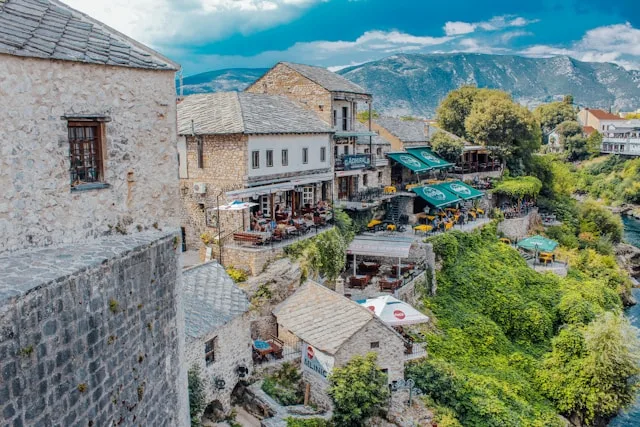
Herzegovina's vineyards are not short of sunlight. With 2,280 hours of annual sunshine, a microclimate that Mediterranean producers would envy, and indigenous grape varieties attracting growing international interest, the region around Mostar has every natural advantage a premium wine sector requires. EU pre-accession funding worth €12.7 million has been allocated to the Herzegovina-Neretva Canton for rural development between 2024 and 2026. Three cold-chain logistics hubs are in planning. Irrigation expansion targets have been set. Capital, in other words, is arriving.
The problem is human. Agricultural technician vacancies in the canton filled at only 43% within 90 days during 2024, according to the Federal Employment Service of BiH. Senior oenologists and export compliance managers sit overwhelmingly in passive candidate pools, held in place by multi-year tenures and the gravitational pull of Croatian and Serbian employers offering 40 to 60% salary premiums. The gap between what this sector needs and what it can recruit is not closing. It is widening at precisely the seniority levels where decisions about quality, compliance, and export readiness are made.
What follows is a structured analysis of the forces shaping Mostar's agro-food and wine sector in 2026: the investment environment, the structural barriers that predate it, the talent dynamics that are now the binding constraint on growth, and what hiring leaders in this market need to understand before their next search stalls.
A Sector Defined by Contradiction
The Herzegovina-Neretva Canton's agro-food sector generates approximately 8.5% of cantonal GDP, anchored by a production base of 4,847 hectares of vineyards and 1,120 hectares of olive groves concentrated south of Mostar. The indigenous Blatina and Žilavka grape varieties have attracted steady premium interest from export markets including Croatia, Serbia, and diaspora communities in Germany and Scandinavia. Roughly 35% of processed wine leaves Bosnia and Herzegovina, with olive oil production satisfying around 30% of domestic demand.
These are the figures that attract investment. The figures that should accompany them tell a different story.
The average agricultural holding in the canton is 2.4 hectares. Seventy-eight percent of holdings in Mostar municipality are smaller than three hectares. This is a legacy of inheritance laws that the Federation's Land Consolidation Law of 2016 was designed to address. That law remains unimplemented in the canton due to complex co-ownership structures and the absence of municipal cadastral digitisation, according to the World Bank's Bosnia and Herzegovina Country Economic Memorandum. The commercially viable estate, the unit of production that justifies mechanisation, digital monitoring systems, and the employment of a full-time senior agronomist, barely exists here.
The sector is therefore bifurcated. Forty-seven registered wineries operate in the canton, three of which run bottling facilities of material scale within 30 kilometres of Mostar. Behind them stand over 200 micro-producers selling bulk or unbranded product. The talent implications of this split are severe. The three scaled producers need precision viticulture specialists, ERP-literate supply chain managers, and export compliance officers. The 200 micro-producers need none of these roles and cannot afford them. The talent market serves neither group well: it produces generalists the scaled producers cannot use and specialists the micro-producers cannot hire.
The Irrigation Paradox: Water Exists, but Infrastructure Does Not
One of the most consequential misreadings of this market concerns water. The Neretva basin provides sufficient volume to irrigate 100% of the canton's agricultural demand, according to the Federal Ministry of Agriculture's Water Balance Report. Herzegovina does not have a water scarcity problem. It has a governance problem dressed in the language of climate risk.
Only 11.8% of the canton's utilised agricultural area has access to drip or sprinkler irrigation. Non-irrigated parcels saw a 22% reduction in grape yields in 2024 compared to the five-year average. The FAO's climate adaptation planning for BiH agriculture projects temperature increases of 1.5°C by 2030, threatening the acidity balance of Žilavka grapes and potentially requiring vineyard relocation to higher altitudes.
IPA Funds Have Not Translated into Irrigated Hectares
Since 2021, €4.2 million in IPA funds has been allocated for irrigation in the canton. Bureaucratic delays have delivered only 180 hectares of new coverage against a target of 600. The Federal Ministry's 2025-2027 Irrigation Action Plan targets an additional 800 hectares, but implementation depends on municipal co-financing that remains uncertain. For hiring leaders in this sector, the implication is direct: any role involving production planning, yield forecasting, or vineyard management requires a professional who can operate in a context of deep infrastructure unpredictability. This is not a skill taught in a standard agronomy programme.
Climate Adaptation Is Now a Core Hiring Criterion
The 2024 drought losses were not an anomaly. They were a data point on a trend line. Producers who survived them best were those with precision viticulture capacity: GIS mapping, drone-based canopy monitoring, variable-rate fertilisation. These are the competencies the market most urgently needs and least reliably produces. The University of Mostar's Faculty of Agriculture and Food Sciences graduates approximately 85 bachelor-level students annually. Sixty-eight percent of canton agro-employers rated those graduates' preparedness as "insufficient" for modern cellar management in HEPOK's 2023 Sector Skills Survey. The university reports a 94% employment rate within one year. Both figures are true. The reconciliation is that graduates are being absorbed into roles beneath their qualification level, performing general agricultural work rather than the specialised technical functions that scaled producers require.
Where the Talent Actually Goes
The compensation arithmetic facing Mostar's agro-food employers is unforgiving. A senior oenologist or head winemaker in the canton earns between 2,800 and 4,200 BAM net monthly, approximately €1,430 to €2,150. This represents a 35 to 50% premium over the Federation's industrial average. It sounds competitive until you look across the border.
Croatian wine regions in Istria and Dalmatia offer the same professional between 6,000 and 9,000 BAM equivalent, a premium of 40 to 60% over Mostar rates. Croatian employers also offer something no salary figure can match: EU regulatory frameworks, Schengen mobility, and career structures embedded in a mature single-market economy. For an oenologist with spontaneous fermentation expertise or a food safety manager with EU audit credentials, the economic logic of remaining in Mostar is difficult to construct.
Serbia's agro-industrial conglomerates present a different but equally potent pull. MK Group, Delta Agrar, and similar operators recruit BiH-trained professionals into regional expansion roles, offering 25 to 30% salary premiums and multi-market career trajectories that Mostar's SME-dominated sector simply cannot replicate. Even Sarajevo draws administrative and financial talent from Mostar with compensation premiums of 15 to 20%, though the cost-of-living differential partially offsets this.
The result is a passive candidate market at the senior specialist level. Qualified oenologists and export compliance managers in the canton hold tenures of four to seven years with their current employers. They are not on job boards. Unemployment among certified oenologists runs at 3.2%, compared to 12.4% for general agricultural workers. The talent that matters is employed, stable, and being courted by competitors who can offer more. Reaching these professionals requires direct identification and headhunting methods that the sector's typical hiring approach, which relies on intra-regional networking and word of mouth, does not provide.
The Roles This Market Cannot Fill
Three categories of role represent the most acute hiring pressure in the canton's agro-food sector as of 2026.
Precision Viticulture Technicians
The demand here is not for traditional agronomists. It is for professionals who combine vineyard science with digital competency: GIS mapping, drone operation, sensor-based soil monitoring, and variable-rate input application. Seventy percent of current mid-level managers in the sector lack proficiency in ERP and supply chain platforms, according to HEPOK's skills survey. The gap is not merely digital literacy in the abstract. It is the specific intersection of agricultural science and technology deployment that defines modern viticulture management. Producers investing in climate adaptation cannot execute their plans without this profile.
Food Safety and Export Compliance Managers
Entry into EU export markets requires compliance with EU 2018/848 organic standards, HACCP protocols, and GlobalGAP certification. The average investment required for a small winery to achieve these standards is €25,000 to €40,000 in laboratory and documentation upgrades. Sixty-eight percent of canton wineries have annual turnover below €500,000, making this a material capital allocation decision. The compliance manager who oversees this transition is not a junior hire. They need direct experience with EU audit processes, lot traceability systems, and the regulatory architecture of target export markets. This profile earns between €1,230 and €1,840 monthly in the canton. The same profile commands substantially more in Zagreb. The cost of failing to fill this role is not just a delayed hire. It is a delayed market entry that competitors in Croatia and Slovenia are not waiting for.
Mechanical Maintenance Engineers
Processing equipment in cellars and bottling lines requires specialist maintenance knowledge that the local vocational training system does not adequately supply. Cold storage and cellar operations already face electricity costs 18% higher than the EU average for comparable agri-processors, according to the Energy Regulatory Commission of FBiH. Equipment downtime compounds these margin pressures. The maintenance engineer role is not glamorous, but its absence is felt directly in production output and product quality.
One Original Analytical Claim
The investment flowing into Herzegovina's agro-food sector has exposed a talent market that was previously invisible because it was irrelevant. When the sector consisted of micro-producers selling bulk wine domestically, the absence of precision viticulture specialists and export compliance managers did not matter. The product did not require them. EU pre-accession funding, premium brand development, and export market ambition have changed the specification of every mid-level and senior role in the sector, but the talent supply chain has not changed at all. Capital has created demand for a workforce that the local education system was never designed to produce, the local compensation structure cannot retain, and the local hiring infrastructure cannot reach. The shortage is not cyclical. It is a first-generation problem: the roles are new, the professionals are few, and they are disproportionately located outside Bosnia and Herzegovina's borders.
This is the analytical spine of the current market. Growth capital and EU structural funds are accelerating demand for skills that do not yet exist in sufficient quantity within the canton. The 85 graduates per year from the University of Mostar are being absorbed into generalised employment. The specialists the sector needs are either in Croatia earning 40 to 60% more, in Serbia building multi-market careers, or embedded so deeply in their current employers that only a direct, targeted approach to passive candidate identification can surface them.
The Concrete Evidence of Hiring Failure
According to reporting in the Mostar daily Dnevni List, Vinarija Nuić postponed the launch of a new premium label in the second quarter of 2024 because it could not secure a permanent oenologist with spontaneous fermentation experience. The winery ultimately contracted a consultant from Zagreb on a quarterly retainer, a solution that is more expensive per hour, less embedded in the production cycle, and inherently temporary. This is not an isolated incident. It is the structural pattern for any specialised hire in this market.
Industry reporting in Poslovne novine described a pattern consistent with the experience of a major Herzegovina winery that restructured its technical hierarchy in late 2023, creating a dual-role "Viticulture & Digital Systems Manager" position to retain a senior agronomist who had received an offer from a Croatian producer. The restructuring included a 35% salary premium and profit-sharing terms not previously offered to technical staff. The counteroffer dynamic here is instructive. The employer did not simply match a higher number. It invented a new role to make staying more attractive than leaving. That level of structural accommodation for a single retention case signals the severity of the underlying market pressure.
At the executive level, the general manager or director of operations at a mid-size winery with capacity above 500,000 litres commands between 5,500 and 8,500 BAM net monthly, approximately €2,820 to €4,360, inclusive of performance bonuses tied to export revenue. The commercial director role in an export-focused operation commands between €2,560 and €3,840. These are meaningful compensation levels by Bosnian standards. They are not competitive with equivalent roles in Croatian or Serbian agro-industrial firms. Executive search in this sector must therefore build a proposition that goes beyond salary: the autonomy of a smaller operation, the prestige of working with autochthonous varieties attracting international attention, and the career differentiation that comes from building something rather than maintaining it.
What the 2026 Market Requires of Hiring Leaders
The Federal Employment Service projects a 15% gap between seasonal agricultural labour demand and domestic supply for the 2026 harvest. This headline figure understates the problem at the specialist level. Seasonal labour shortages can be addressed through temporary migration schemes or mechanisation. The shortage of senior oenologists, compliance managers, and precision viticulture specialists cannot.
Hiring leaders in Mostar's agro-food sector face a market with four defining characteristics. First, the candidate pool for critical roles is overwhelmingly passive. Certified oenologists are effectively at full employment. Second, the competitive set extends beyond Bosnia and Herzegovina's borders, with Croatian and Serbian employers offering compensation and career structures that Mostar's SME sector cannot match on salary alone. Third, the educational pipeline produces volume but not the specific competency mix that scaled producers need. Fourth, traditional recruitment methods that rely on job postings and network referrals reach at most the active 3.2% of the specialist talent pool. The other 96.8% must be identified, assessed, and approached directly.
For organisations operating within this market, the question is not whether specialised search capability is needed. It is whether the organisation can afford to operate without it. A winery that cannot fill its head oenologist role postpones product launches. A processor that cannot hire an export compliance manager cannot enter EU markets. A vineyard operation without precision viticulture capacity cannot adapt to the climate conditions that are already reducing yields.
KiTalent works with agro-food and FMCG businesses facing exactly this profile of challenge: specialised leadership roles in markets where the best candidates are employed, passive, and often located in a neighbouring country. Through AI-enhanced talent mapping, KiTalent identifies candidates who are not visible through conventional channels, delivering interview-ready shortlists within 7 to 10 days. The pay-per-interview model means organisations invest only when they meet qualified candidates, removing the upfront retainer risk that smaller producers in this sector cannot justify.
With a 96% one-year retention rate across 1,450 executive placements, KiTalent's approach is built for markets where getting the hire right the first time is not a preference but a necessity. For hiring leaders in Herzegovina's wine and agro-food sector competing against better-resourced employers in Zagreb, Belgrade, and beyond, start a conversation with our executive search team about how to reach the candidates this market cannot surface on its own.
Frequently Asked Questions
What are the biggest hiring challenges in Mostar's agro-food and wine sector?
The primary challenge is a severe shortage of mid-level and senior specialists, particularly precision viticulture technicians, food safety and export compliance managers, and mechanical maintenance engineers. Agricultural technician vacancies in the Herzegovina-Neretva Canton filled at only 43% within 90 days during 2024. Senior oenologists operate in a near-full employment market, with only 3.2% unemployment among certified professionals. Croatian and Serbian employers offer 40 to 60% salary premiums, drawing experienced talent out of the canton. These shortages directly constrain product launches, export market entry, and climate adaptation investments.
What does a senior oenologist earn in Herzegovina compared to Croatia?
A senior oenologist or head winemaker in the Herzegovina-Neretva Canton earns between 2,800 and 4,200 BAM net monthly, approximately €1,430 to €2,150. Equivalent roles in Croatia's Istria and Dalmatia regions offer 6,000 to 9,000 BAM equivalent, a premium of 40 to 60%. Croatian employers also provide EU regulatory frameworks and Schengen mobility. This differential makes retention of experienced oenological talent one of the most pressing challenges for Herzegovina's premium wineries and often requires non-monetary incentives such as equity participation or profit-sharing arrangements.
How does EU pre-accession funding affect agro-food hiring in Herzegovina?
IPA III rural development grants worth €12.7 million have been allocated to the Herzegovina-Neretva Canton for 2024 to 2026, funding cold-chain logistics hubs, irrigation infrastructure, and processing upgrades. This capital creates demand for technical and managerial roles that the local talent market has not previously required at scale, including compliance specialists for EU organic certification and supply chain managers with ERP proficiency. The funding is accelerating a skills gap that the local education system, which graduates 85 agriculture students annually, cannot close at the required pace or specialisation level.
Why is land fragmentation a hiring issue for Herzegovina's wine sector?
Land fragmentation prevents the formation of commercially viable estates. With 78% of agricultural holdings in Mostar municipality smaller than three hectares, most operations cannot justify employing a full-time senior agronomist, compliance manager, or digital viticulture specialist. Only the few scaled producers with significant bottling capacity generate the revenue to attract and retain specialist talent. This concentrates hiring demand among a small number of employers while the majority of the sector operates below the threshold where professional talent management becomes relevant, shrinking the addressable market for specialists even further.
How can executive search firms help agro-food businesses in Bosnia and Herzegovina?
Specialist roles in Herzegovina's agro-food sector exist in a predominantly passive candidate market. Qualified professionals hold tenures of four to seven years with current employers and do not appear on public job boards. KiTalent uses AI-powered talent mapping and direct headhunting methods to identify and approach these candidates across Bosnia and Herzegovina, Croatia, Serbia, and diaspora markets. The pay-per-interview model eliminates upfront retainer costs, and shortlists of interview-ready candidates are delivered within 7 to 10 days, enabling smaller producers to compete for talent they could not otherwise access.
What skills are most in demand for Herzegovina's wine export market?
Export-oriented wineries need professionals with direct experience in EU 2018/848 organic certification, HACCP protocols, GlobalGAP standards, and lot traceability systems such as SAP Business One. Business-level English or German is essential for export-facing roles, alongside deep familiarity with the regulatory requirements of target markets in the EU and Scandinavia. The compliance investment required for small wineries ranges from €25,000 to €40,000, making the hire of a qualified food safety and export compliance manager a prerequisite for market entry rather than a discretionary addition.