Mostar's Aluminum Revival Needs Workers It Cannot Find: The Collision of Carbon Regulation, Emigration, and a Passive Talent Pool
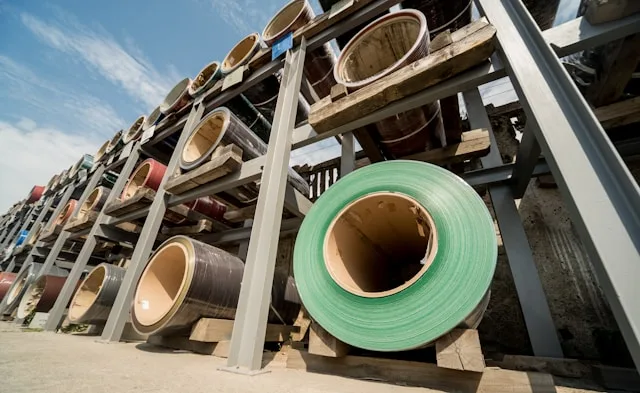
Mostar's sole integrated aluminum smelter is producing again. After bankruptcy, asset acquisition, and a phased restart under the M.T. Abraham Group consortium, Aluminij d.d. Mostar reached approximately 45,000 to 50,000 tonnes of primary aluminum output in 2024. That figure represents roughly 40% of the plant's 120,000-tonne nameplate capacity. Management targets 75,000 to 80,000 tonnes by late 2026. The restart is real. The question is whether the workforce required to sustain it exists.
The answer, for the roles that matter most, is that it largely does not. Electrolysis cell supervisors with five or more years of Hall-Héroult experience sit in open requisitions for 90 to 120 days. High-voltage maintenance electricians are being poached across employers at 25 to 30% premiums. Bilingual supply chain managers capable of handling EU customs documentation stall searches for 60 to 90 days before organisations resort to external consultants. These are not entry-level gaps. They are the supervisory and specialist roles on which safe, continuous smelter operation depends. And the talent pool from which they can be drawn is small, aging, and increasingly mobile toward EU labour markets that pay 35 to 45% more for the same skills.
What follows is an analysis of the forces converging on Mostar's industrial sector in 2026: a carbon regulation regime that will impose new costs without the transition financing available to EU competitors, a demographic outflow that is thinning the technical workforce at exactly the wrong moment, and a hiring environment where the most critical candidates are passive, employed, and reachable only through direct search. For any organisation investing in this market, the talent question is no longer secondary to the production question. It is the production question.
A Smelter Running at Half Capacity in a Market That Demands More
Aluminij d.d. Mostar occupies a singular position. It is the only integrated primary aluminum producer in Southeast Europe outside the European Union, excluding Serbia. Its output feeds EU markets almost exclusively: 85% of production flows to Germany, Italy, and Slovenia, shipped through the Croatian Port of Ploče, 80 kilometres distant. The remaining 15% serves regional buyers in Serbia and Croatia.
The plant's restart has proceeded in stages. Potlines 3 and 4, each comprising 120 cells, are operational. Potlines 1 and 2 remain mothballed, awaiting both power price stabilisation and capital investment estimated at €40 to €50 million across 2025 to 2027. That investment is earmarked for anode production facility modernisation and casthouse automation, according to the post-bankruptcy restructuring plan filed with the Federation of Bosnia and Herzegovina's Ministry of Industry and Energy.
The operational constraint is electricity. Aluminum smelting consumes approximately 13.5 to 14.5 MWh per tonne of output, according to the International Aluminium Institute's benchmarking data. Aluminij operates under a power purchase agreement with Elektroprivreda HZ HB (EPHZHB), the Herzegovina utility, at roughly €55 to €65 per MWh for 2024 to 2025. That rate is nearly double the €30 to €40/MWh subsidised prices the plant enjoyed in the 2000s. It places Mostar at a cost disadvantage against smelters in the Gulf states or Iceland, though it remains broadly comparable to other Southeast European producers.
Grid reliability compounds the price problem. Herzegovina's aging 110kV and 400kV transmission infrastructure caused 14 unplanned outages exceeding 15 minutes in 2023, according to the State Electricity Regulatory Commission (DERK). Each outage risks a "frozen pot" incident. The cost of restarting a single frozen electrolysis cell runs between €300,000 and €500,000. The financial exposure from infrastructure that the smelter does not control is material.
This is the industrial context into which every hiring decision falls. Every senior technical role at this facility carries operational risk that extends well beyond normal manufacturing. The people who manage electrolysis cells, maintain high-voltage systems, and coordinate logistics through non-EU border crossings are not interchangeable with general manufacturing professionals. They require specific, scarce expertise. And the market they must be drawn from is under pressure from every direction.
The CBAM Collision: Full Carbon Costs Without EU Transition Support
The EU Carbon Border Adjustment Mechanism enters full implementation in 2026. For Mostar, CBAM is not an abstract policy development. It is a direct cost imposed on the smelter's primary revenue stream.
What CBAM Means for Mostar's Cost Base
Bosnia and Herzegovina's electricity grid carries a carbon intensity of approximately 450 to 500 grams of CO2 per kilowatt-hour, driven by its heavy reliance on lignite-fired generation. At Aluminij's energy consumption rates, this translates to an estimated CBAM liability of €120 to €150 per tonne of aluminum exported to the EU, according to the European Commission's CBAM Implementation Regulation and the Energy Community Secretariat's decarbonisation analysis for BiH.
Applied to the 2026 production target of 75,000 to 80,000 tonnes, the implied annual carbon cost sits between €9 million and €12 million. Management's own estimates, referenced in EBRD country strategy documents, point to a range of €12 to €15 million annually once full verification and reporting cycles are factored in.
The Compliance Gap No Job Board Can Fill
This is where the talent dimension intersects carbon regulation directly. CBAM requires embedded emissions reporting verified by EU-accredited auditors. BiH lacks sufficient accredited verification bodies, forcing reliance on Croatian or Slovenian auditors at €8,000 to €12,000 per verification cycle. But the internal capability gap runs deeper than auditor access.
The smelter needs professionals who understand both metallurgical process emissions and EU regulatory frameworks. A Quality Assurance Manager who can run spectrometry and ultrasonic testing is necessary but insufficient. The same role must now incorporate carbon accounting, REACH compliance documentation, and EU customs reporting that did not exist when the plant last operated at scale. These are hybrid competencies. The people who hold them are rare in Western Europe. In Herzegovina-Neretva Canton, they are functionally absent.
Bosnia and Herzegovina's formal EU candidate status, granted in December 2022, is driving regulatory harmonisation toward the EU Emissions Trading System. But the country does not yet qualify for EU structural funds or cohesion policy support. The result is what EBRD analysts have identified as a "compliance cost gap": the plant faces the full weight of carbon regulation without access to the transition financing that competitors in EU member states like Croatia or Slovenia can draw on. This asymmetry will shape every operational and hiring decision the plant makes through the rest of this decade.
The Demographic Drain That Makes Every Vacancy Harder to Fill
The talent challenge in Mostar is not simply a matter of compensation competitiveness, though compensation matters. It is a demographic problem with a direction and a speed that make it progressively worse each year.
The Herzegovina-Neretva Canton records a net outflow of 25 to 34 year-olds of approximately 3.5% annually, according to BiH Agency for Statistics migration data. The destinations are predictable: Germany, Austria, and Croatia. The 2024 implementation of full labour mobility rights for BiH citizens in the EU has accelerated a trend that was already well established.
The local technical workforce is aging in parallel. Forty-two percent of registered metalworkers in the canton are over 50, according to the FBiH Employment Service's skills inventory. The pipeline that should replace them is inadequate. While BiH implemented dual education reforms in 2019, the curricula for "Metalworker" and "Toolmaker" trades lack specific modules on aluminum electrolysis and modern casthouse automation. The European Training Foundation's Torino Process Assessment estimates a 12 to 18-month on-the-job training gap before a vocational graduate can perform at the level required for smelter operations.
The Faculty of Mechanical Engineering at the University of Mostar remains the primary source of metallurgical and mechanical engineering graduates. But graduation into a local industrial role is not the default path. The compensation differential with Zagreb, just 150 kilometres northwest, runs 35 to 45% higher for equivalent engineering roles. Croatia's Schengen access since 2023, its EU membership, and the presence of employers like Rimac Automobili and Končar make the pull tangible. For an engineer under 35, the economic case for staying in Mostar requires either deep personal attachment or a compensation package that closes most of the gap.
The qualified population of senior metallurgical engineers with ten or more years of electrolysis experience in all of BiH is estimated at 80 to 100 individuals. They are employed at Aluminij, the Zenica Steel Mill (ArcelorMittal), or abroad. Fewer than 15% are active job seekers.
This is a market where the hidden majority of qualified candidates are invisible to any conventional job posting.
Production Up, Headcount Down: The Automation Tension
Here is the analytical claim that does not appear in any single data point but emerges from combining several: the political narrative around Aluminij's restart and the operational reality of the restart are pulling in opposite directions on the question of employment, and this divergence is creating a talent mismatch that neither side acknowledges.
Public discourse frames the smelter's revival as a job creation story. The pre-bankruptcy workforce peaked at 1,150 full-time equivalents. Current direct employment stands at 620 to 680. The 2026 production target of 75,000 to 80,000 tonnes would represent roughly 60% of historical output. But reaching that output requires only about 55% of the historical headcount. Automation in pot tending, casthouse DC casting, and PLC-controlled feeding systems has decoupled production volume from employee numbers. Capital has moved faster than the workforce narrative has adjusted.
The implication for hiring is specific and consequential. The plant does not need more workers. It needs different workers. The roles that remain are more technical, more specialised, and harder to fill than the roles they replaced. A PLC programmer fluent in Siemens S7 and Allen Bradley platforms who also understands alumina feeding optimisation is not the same hire as a general maintenance technician. The compensation expectations are different. The search methodology is different. The candidate pool is a fraction of the size.
This tension explains why a 22% year-on-year increase in registered vacancies in "Manufacture of Basic Metals and Fabricated Metal Products" for Herzegovina-Neretva Canton in Q3 2024 does not translate into proportional hiring. The vacancies are growing because the roles are harder, not because there are more of them. The cost of leaving these positions unfilled extends beyond productivity loss. In a smelter environment, an unfilled electrolysis supervisor position is a safety and asset protection risk measured in hundreds of thousands of euros per incident.
Where the Competition for Talent Actually Sits
Mostar does not compete for talent in isolation. The relevant competitive set includes three cities, each with distinct advantages that Mostar must offset.
Zagreb: The EU Gravity Well
Zagreb sits 150 kilometres northwest and offers the most direct competitive threat. Engineering roles in Croatia command 35 to 45% higher gross salaries. But compensation is only part of the draw. EU membership provides regulatory stability, access to EU-funded research programmes, and the Schengen zone mobility that young professionals value. Croatia's industrial base, including the electrical engineering capacity built around Končar and the automotive technology ecosystem around Rimac, creates career trajectory options that a single-employer town cannot match.
Kidričevo and the Slovenian R&D Advantage
Talum d.d. in Kidričevo, 350 kilometres northwest, has reduced to secondary and remelt operations but retains R&D functions. It offers senior metallurgists €45,000 to €60,000 for specialist roles, compared to €30,000 to €40,000 in Mostar. The deeper draw is institutional. University of Maribor linkages provide career development pathways and research engagement that the University of Mostar cannot yet replicate at the same scale.
Belgrade: Scale and Multinational Presence
Belgrade, 300 kilometres east, offers 15 to 20% higher managerial compensation and a materially larger labour market for supply chain professionals. The presence of regional headquarters for Siemens, ABB, and other multinational industrial firms creates a career architecture that single-facility employers struggle to compete with.
Mostar's counter-argument is cost of living, which runs 30 to 40% below Zagreb's. But the data is clear: the wage premium in Croatia is sufficient to induce net migration among engineers under 35. For senior candidates with families, the calculation is more complex. Quality of life, housing costs, and community ties create retention forces. But those forces weaken with each year that the compensation gap persists.
For organisations hiring into Mostar, the competitive reality means that compensation alone will not secure the candidates they need. The proposition must address career development, role complexity, and the specific professional challenge that this facility offers. Counteroffer dynamics are particularly acute in a market this small, where every employer knows exactly who the other employers are trying to hire.
What Hiring Leaders Need to Understand About This Market
The executive and senior specialist roles at Mostar's aluminum operations sit in a category that conventional recruitment methods cannot reach. This is not a hypothesis. It is a structural feature of the market.
Plant Directors and General Managers with aluminum smelting experience represent an entirely passive candidate market. Every viable candidate is currently employed. At the compensation levels this market commands, a Plant Director role carries a gross annual package of €65,000 to €95,000 plus performance incentives. That figure includes a 20 to 25% premium over standard BiH manufacturing rates, reflecting hazardous industry classification and restart complexity. But it still falls below what the same candidate could earn in an EU jurisdiction.
The search for a Chief Technical Officer at group level commands €75,000 to €110,000 gross annually. A VP of Compliance or EHS sits at €60,000 to €80,000. These are competitive figures within BiH and the Western Balkans. They are not competitive with Zagreb, Ljubljana, or Munich.
This means that every senior search in this market must answer two questions simultaneously. First, can the role be found? The answer depends entirely on whether the search reaches the passive pool, which constitutes 85% or more of the qualified talent for senior metallurgical and operational roles. Second, can the candidate be moved? The answer depends on whether the proposition addresses the specific objections a passive candidate in this market will raise: energy reliability risk, CBAM uncertainty, limited career trajectory beyond a single facility, and the broader question of BiH's EU integration timeline.
A search that relies on posted vacancies and inbound applications will reach the 15% of this market that is actively looking. That 15% does not contain the calibre required for the roles in question. The methodology that reaches the other 85% is direct, proactive, and built on market intelligence rather than advertising.
Reaching the Candidates This Market Requires
The convergence of CBAM compliance pressure, demographic outflow, and automation-driven skills escalation makes Mostar's aluminum sector one of the most demanding industrial manufacturing hiring environments in Southeast Europe. The candidate pool is small. It is concentrated. And it is overwhelmingly passive.
For a market of this specificity, the margin for error in a senior search is functionally zero. A failed executive search in a facility where frozen-pot incidents cost €300,000 to €500,000 per cell is not an inconvenience. It is a direct threat to asset integrity.
KiTalent's approach to markets like this uses AI-powered talent mapping to identify and engage the passive professionals who do not appear on any job board. In a talent pool of 80 to 100 qualified senior metallurgical engineers across all of BiH, precision matters more than volume. KiTalent delivers interview-ready executive candidates within 7 to 10 days, on a pay-per-interview model that removes the upfront retainer risk that makes search firm engagement prohibitive for mid-market industrial employers. The firm's 96% one-year retention rate reflects a methodology built around candidate-role fit rather than speed to fill.
For organisations operating in Mostar's metals sector, or considering investment in this market, the hiring strategy is not separate from the business strategy. The talent you need is employed, passive, and reachable only through direct executive search. Every month a critical technical or leadership role sits unfilled compounds the operational risk in a facility already managing energy volatility, regulatory transition, and capital constraint simultaneously.
If you are hiring senior operational, technical, or compliance leadership for aluminum or metals manufacturing in Southeast Europe, begin a conversation with KiTalent's industrial search team about how we identify and engage the candidates this market requires.
Frequently Asked Questions
What is the current state of aluminum production in Mostar?
Aluminij d.d. Mostar, operating under the M.T. Abraham Group consortium, produces approximately 45,000 to 50,000 tonnes of primary aluminum annually as of late 2024. This represents about 40 to 45% of the plant's 120,000-tonne nameplate capacity. Two of four potlines are operational, with management targeting 75,000 to 80,000 tonnes by late 2026, contingent on securing a long-term power purchase agreement at or below €60/MWh and completing potline refurbishment. The smelter is the only integrated primary aluminum producer in Southeast Europe outside the EU, excluding Serbia.
Why is it so difficult to hire metallurgical engineers in Bosnia and Herzegovina?
The qualified population of senior metallurgical engineers with ten or more years of electrolysis experience across all of BiH is estimated at only 80 to 100 individuals. Fewer than 15% are actively seeking new roles. The remainder are employed at Aluminij, ArcelorMittal's Zenica Steel Mill, or have emigrated. Annual net outmigration of 25 to 34 year-olds from Herzegovina-Neretva Canton runs at 3.5%, and 42% of registered metalworkers are over 50. This combination of a small, passive, and aging talent pool makes direct headhunting the only viable method for filling senior technical roles.
How will EU CBAM affect Mostar's aluminum exports?
CBAM's full implementation in 2026 imposes carbon costs on aluminum imports into the EU based on embedded emissions. BiH's lignite-heavy grid carries a carbon intensity of 450 to 500 grams of CO2 per kilowatt-hour, implying a CBAM liability of €120 to €150 per tonne of aluminum. With 85% of Mostar's output exported to EU markets, the annual cost impact is estimated at €9 to €15 million. BiH does not yet qualify for EU structural funds that could subsidise the transition to renewable energy sourcing, creating a compliance cost gap versus EU-based competitors.
What do senior manufacturing roles pay in Mostar compared to Zagreb or Ljubljana?
A Plant Director in Mostar earns €65,000 to €95,000 gross annually, while a specialist Plant Metallurgist earns €28,000 to €36,000. Equivalent engineering roles in Zagreb command 35 to 45% higher gross salaries, and senior metallurgist positions at Slovenia's Talum d.d. in Kidričevo offer €45,000 to €60,000 versus €30,000 to €40,000 in Mostar. The cost of living in Mostar runs 30 to 40% below Zagreb, but the wage premium in Croatia is sufficient to drive net migration among engineers under 35. Senior-level compensation benchmarking is essential for structuring competitive offers.
How can companies hire passive senior candidates in Mostar's metals sector?
Plant Directors and General Managers with aluminum smelting experience constitute an entirely passive market in this region. Every viable candidate is currently employed. Traditional job postings reach at most 15% of the qualified pool. Engaging the other 85% requires direct, proactive executive search methodology built on precise talent mapping. KiTalent delivers interview-ready candidates within 7 to 10 days using AI-enhanced identification of passive professionals, with a pay-per-interview model that removes upfront retainer risk.
What structural risks should investors consider before hiring into Mostar's industrial base?
Key structural risks include energy price volatility under the EPHZHB power purchase agreement, grid instability causing costly frozen-pot incidents, CBAM compliance costs without access to EU transition financing, and unresolved property restitution claims from pre-privatisation that deter international equipment financing. On the talent side, the 12 to 18-month training gap for vocational graduates entering aluminum-specific roles, combined with sustained emigration to EU labour markets, means that workforce planning must begin well before production scaling. Organisations entering this market should treat talent pipeline development as a prerequisite, not a follow-on activity.