Parma's Agri-Food Cluster Is Splitting in Two: The Talent Fracture Hiring Leaders Cannot Ignore
Parma's agri-food sector accounts for 37% of the province's manufacturing GDP and employs roughly 18,400 workers directly. Behind that headline figure sits a more complex reality. Two labour markets now operate in the same province, under the same "Food Valley" brand, drawing from the same population, yet requiring entirely different people with no overlap between them.
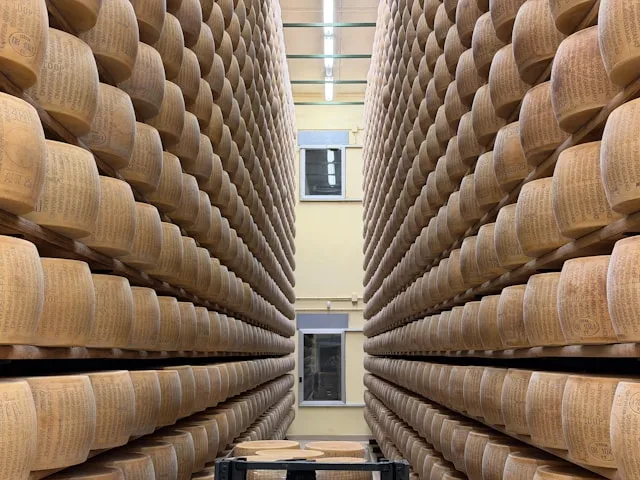
The fracture runs along a line that most external observers miss. On one side, Barilla and Mutti are investing more than €140 million in automation, AI-driven quality control, and clean-label R&D. They need digital engineers, formulation scientists, and sustainability specialists who can operate across global supply chains. On the other side, 329 Parmigiano-Reggiano dairies and 150 prosciutto curing houses are governed by DOP regulations that legally prohibit mechanisation of their core processes. They need master cheesemakers, artisanal salters, and curing specialists whose skills are transmitted through apprenticeship, not education. The first market faces a skills obsolescence problem. The second faces demographic collapse. Neither can solve the other's shortage.
What follows is a ground-level analysis of how this bifurcation is reshaping hiring at every level of Parma's agri-food economy, what it means for the executives responsible for filling these roles, and why the methods that work in one half of this cluster fail entirely in the other.
The Cluster That Built "Food Valley" Is No Longer One Market
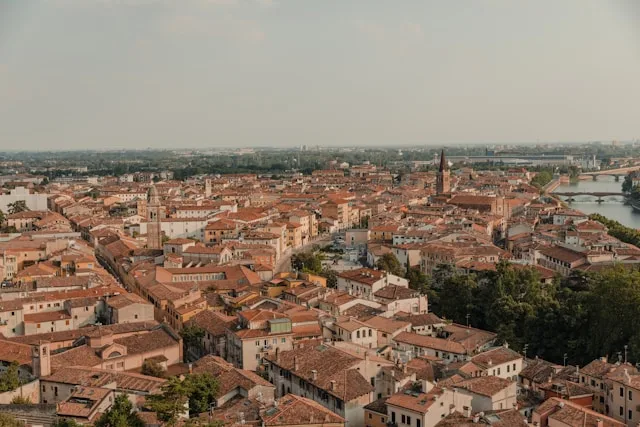
Parma earned its reputation as Italy's food capital through density. Within a 30-kilometre radius of the city centre sit Barilla's global headquarters and Pedrignano plant, Mutti's processing facility in Montechiarugolo, Parmalat's dairy operations in Collecchio, roughly 329 Parmigiano-Reggiano dairies, and approximately 150 approved Prosciutto di Parma curing houses. The University of Parma's Department of Food and Drug produces around 300 food technology graduates annually. Tecnopolo Parma houses 45 agri-food tech startups. The CIBUS international exhibition draws 80,000 professional visitors every two years.
This density created the illusion of a unified talent pool. For decades, the assumption held. A food technologist who spent five years at Barilla could move to a dairy consortium role. A plant manager at Parmalat could advise a prosciutto facility on production efficiency. Skills transferred across the cluster because the core competencies overlapped: food safety, process optimisation, quality assurance.
The divergence that regulation enforces
That overlap has eroded to almost nothing. The DOP designation system, which protects both Parmigiano-Reggiano and Prosciutto di Parma, mandates specific traditional processes that cannot be automated. Parmigiano-Reggiano must be made by hand in copper vats following a codified sequence that has changed little in centuries. Prosciutto di Parma's curing and salting stages require manual assessment by experienced craftsmen. These are not cultural preferences. They are legal requirements enforced by consortium inspectors.
Meanwhile, Barilla's "Smart Factory" initiative targets 30% automation of quality control lines by the end of 2026, requiring retrofit of its Parma plants with AI-driven optical sorting systems. Mutti inaugurated a €40 million photovoltaic-covered processing line designed to meet Scope 1-2 carbon neutrality targets. These firms need Python-literate process engineers, not apprentice cheesemakers.
The result is a province where two hiring markets share a postcode but nothing else. A talent mapping exercise that treats Parma as a single agri-food labour market will miss this completely.
The Demographic Collapse in Artisanal Production
The numbers are stark. According to the Consorzio del Formaggio Parmigiano-Reggiano, 30% of active master cheesemakers in Parma province are over 55. The replacement pipeline produces fewer than 50 qualified apprentices annually against a need of 90 to 100. Dairies are offering €45,000 to €55,000 for entry-level cheesemakers and €70,000 or more for masters. The roles still go unfilled.
This is not a compensation problem. It is a pipeline problem.
The master cheesemaker role requires years of supervised apprenticeship inside a working dairy. There is no university degree that substitutes for it. The knowledge is embodied: the feel of the curd, the sound of the wheel when tapped, the visual assessment of ageing progression. Formal training programmes produced fewer than 50 graduates in both 2023 and 2024 combined. Even those graduates require several additional years before they can work independently.
Vacancy durations that reveal the depth of the shortage
The pattern reported by Coldiretti Parma is telling. Dairies such as Caseificio Poggioli and Società Agricola Montanari have experienced vacancy durations exceeding 180 days for master cheesemaker roles. In nearly every case, the position was eventually filled not by external recruitment but by promoting an internal assistant cheesemaker. This means the vacancy at the master level cascades into a vacancy at the assistant level, which cascades into a gap on the production floor.
The prosciutto segment faces an analogous crisis. The average age of salatori (the salters who hand-apply salt to raw legs and assess curing readiness) exceeds 50. There is no formal vocational training pathway replacing them. According to CNA Parma, this demographic trajectory risks creating production bottlenecks by 2027. Every retirement removes not just a worker but a set of skills that cannot be formally documented or transferred through recruitment.
The passive candidate ratio in artisanal roles confirms why conventional search methods fail here. Among master cheesemakers, 95% are passive. Employment relationships average 12 to 15 years with a single dairy. Recruitment occurs exclusively through closed personal networks or internal promotion. No job advertisement, no LinkedIn campaign, and no standard executive search process reaches these individuals.
The Industrial Side: Different Shortage, Same Urgency
Barilla and Mutti face a talent challenge that looks nothing like the artisanal crisis but is equally acute. Their investment in automation, sustainability compliance, and clean-label R&D has created demand for roles that did not exist in Parma five years ago. The candidates qualified to fill them are almost never local.
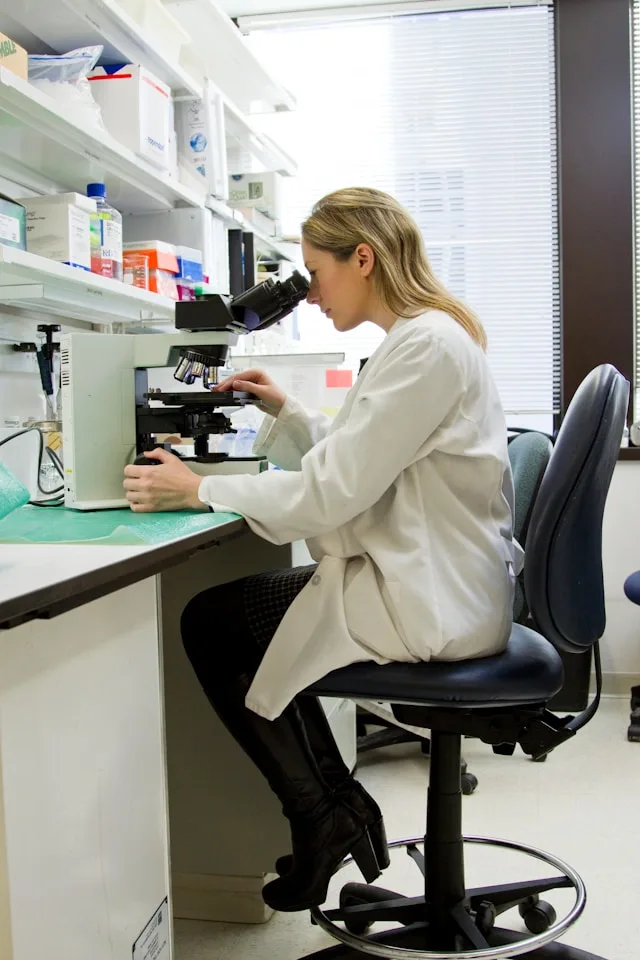
Senior food formulation scientists specialising in clean-label preservation and plant-based formulation represent the sharpest edge of this shortage. Executive search firms report that Barilla and Mutti maintain six to nine month active search cycles for these roles. Candidates with a decade or more of experience in tomato or pasta matrices are passive 85% of the time. Finding them requires direct headhunting approaches that reach into competing firms in Modena, Bologna, or international R&D centres in Switzerland and the Netherlands.
The compensation arithmetic makes this harder. Parma's executive pay sits 15 to 20% below Milan benchmarks for equivalent roles, according to Mercer's 2024 Total Remuneration Survey for Italy. The cost of living is roughly 25% lower, which partially offsets the gap. But for candidates relocating from Nestlé in Vevey or Unilever's Colworth House facility in the UK, the differential is not 15 to 20%. It is 40 to 60%. Recruiters report that candidates making this move command 30 to 35% salary premiums above standard Parma rates simply to accept a local industrial role.
The automation skills gap within existing workforces
Barilla's Smart Factory programme and Mutti's next-generation processing lines require workers who can operate alongside collaborative robotics and interpret data from AI-driven optical sorting systems. The existing plant workforce, trained in mechanical process operation, largely lacks these competencies. Operations managers with Industry 4.0 experience are predominantly passive candidates. The active applicant pool for these roles tends to lack the digital fluency that makes the role worth filling.
This creates a double hiring problem. The firm must recruit externally for skills it cannot develop internally quickly enough, while simultaneously retraining a workforce whose roles are changing beneath them. The cost of getting this wrong at the executive level is compounded by the speed at which the automation investment demands returns.
Compensation in Context: Why Parma's Numbers Mislead External Observers
The headline compensation figures for Parma's agri-food sector can create a misleading impression. A Senior Food Technologist with ten or more years of formulation experience earns €68,000 to €85,000 base plus a 10 to 15% bonus. A Plant Operations Manager at industrial scale earns €75,000 to €95,000 base with a car allowance. At executive level, an R&D Director commands €130,000 to €170,000 base with long-term incentive participation, with Barilla and Mutti's top quartile reaching €180,000 to €220,000.
These numbers look modest against international benchmarks. They look modest against Milan. But they need to be read alongside two realities that change the calculation.
First, the cost of living differential is genuine. Housing in Parma province runs roughly 25% below Milan. A senior professional accepting €85,000 in Parma retains more disposable income than one earning €105,000 in central Milan. The salary negotiation for Parma-based roles must therefore be framed around total value, not headline figure.
Second, the premium structures reveal where scarcity is most acute. A 20% premium attaches to food technologists with dual digitisation expertise. A 15% premium applies to multilingual plant managers coordinating export operations. These premiums are not discretionary. They reflect the market's verdict on which skills are genuinely scarce versus merely in demand.
The sharpest compensation gap sits at the VP level. A VP of Manufacturing or Supply Chain at Barilla or Mutti earns €140,000 to €190,000 base with 25 to 40% variable compensation. The equivalent role at an artisanal SME caps at roughly €90,000. This gap means the same province contains two entirely separate executive labour markets. A search for a VP-level manufacturing leader at Barilla and a search for a production director at a mid-sized prosciutto operation require different candidate pools, different compensation packages, different search methods, and different timelines.
The Regulatory Pressure That Creates New Roles Faster Than the Market Can Fill Them
Three regulatory forces are converging on Parma's agri-food cluster simultaneously, and each one creates hiring demand for specialists who barely existed as a professional category five years ago.
EU Deforestation Regulation and supply chain traceability
Full implementation of the EUDR required traceability investments of €2 to 5 million per mid-sized processor for geolocation tagging of wheat and tomato supply chains. For the 150-plus small prosciutto curing houses that lack IT infrastructure, even the lower-bound compliance cost of €50,000 to €200,000 per SME producer represents a serious burden. According to Federalimentare's position paper on the regulation, these costs demand professionals who understand both regulatory compliance and agricultural supply chain technology. Parma does not produce these professionals in any quantity.
FDA FSMA 204 and blockchain-enabled traceability
For export-oriented firms like Barilla and Mutti, the US Food Safety Modernisation Act's traceability requirements add a second layer. Compliance requires blockchain-enabled supply chain architecture. The skills needed to implement and manage these systems sit at the intersection of food safety expertise, IT architecture, and regulatory knowledge. This intersection is sparsely populated anywhere. In Parma, it is nearly empty.
Nutri-Score and front-of-pack labelling
Pending EU harmonisation of front-of-pack nutrition labelling may force reformulation of traditional Parma products with high salt and fat content. The R&D investment required to reformulate without destroying the sensory profile that defines these products is beyond what artisanal SMEs can absorb. It also requires food scientists with reformulation expertise in traditional Italian matrices, a specialisation so narrow that it requires targeted executive search rather than conventional recruitment.
The cumulative effect is this: every regulatory change creates demand for a new type of professional. The training pipelines have not caught up. The result is that Parma's agri-food firms are competing for people whose professional category is still being defined.
The Original Synthesis: Parma's Two Labour Markets Cannot Help Each Other
Here is the observation that the data points toward but does not state directly.
Most talent shortages in a geographic cluster eventually self-correct through internal mobility. When one segment of an industry faces a hiring crisis, adjacent segments in the same region supply talent that can be retrained. A financial services professional in New York can move from banking to fintech. A software engineer in Austin can shift from enterprise to consumer. The skills transfer because the underlying competencies overlap.
In Parma, this mechanism is broken. The artisanal DOP segment and the industrial processing segment share a province, a supply chain, and a trade fair. They do not share a single transferable skill at the level where shortages are most acute. A master cheesemaker's expertise is embodied, manual, and governed by consortium regulation. A food formulation scientist's expertise is digitised, laboratory-based, and governed by EU regulatory frameworks. Neither can do the other's job. Neither can be retrained into the other's job. The geographic proximity that defines "Food Valley" as a cluster creates the expectation of a unified labour market. The regulatory and technical reality delivers two isolated pools.
This means every workforce planning assumption built on the idea that Parma's 18,400 agri-food workers represent a single talent ecosystem is wrong. The cluster's brand strength masks its labour market fragmentation. Firms hiring in one half of this market gain no advantage from the talent density in the other half.
For organisations seeking leadership talent in this sector, this fragmentation is the single most important structural fact to understand before initiating a search.
The Competitive Geography: Where Parma Loses Talent and Where It Wins
Parma competes for specialised agri-food talent against three distinct geographies, each pulling a different segment of the workforce.
Milan dominates corporate R&D and marketing functions. It offers 25 to 35% salary premiums for food technologists and brand managers. The 90-minute commute or full relocation requirement is a real barrier, but for mid-career marketing professionals, the pull is strong. Barilla and Mutti lose talent at this level to Milan-based FMCGs despite offering hybrid work arrangements. The counteroffer dynamic is well established: a Parma-based firm matches the salary but cannot match the career velocity that Milan's larger corporate ecosystem provides.
Bologna competes fiercely for automation engineers and food packaging technologists. The "Packaging Valley" machinery cluster around IMA and Marchesini offers comparable salaries with superior urban amenities. For younger technical talent weighing quality of life against career options, Bologna's advantage is meaningful.
At VP level and above, the competition becomes international. Wageningen University and Research in the Netherlands and Nestlé's Vevey headquarters in Switzerland offer 40 to 60% compensation premiums and English-speaking professional environments. Parma-based firms filling R&D Director or VP Innovation roles at this level typically rely on one of two strategies: recruiting "returnee" Italian talent who have spent a decade abroad and want to come home, or assembling expensive expatriate packages. Both strategies are slow. Both require search methods that reach deeply into international passive candidate pools.
Where Parma wins is in the niche it owns. No other geography in the world produces Parmigiano-Reggiano or Prosciutto di Parma. The professionals who understand these products at the deepest level are in Parma because there is nowhere else to be. This is a retention advantage, not a recruitment advantage. The talent is already there. The question is whether enough of it will remain as the current generation retires.
What This Means for Hiring Leaders in 2026
The trajectory established through 2025 has continued into 2026. Federalimentare projects 4.2% nominal growth for Emilia-Romagna's food exports this year, with Parma-based firms capturing a disproportionate share due to DOP pricing power. Growth is not the problem. Staffing the growth is.
For industrial employers, the critical hires over the next 12 months are sustainability compliance officers who can manage EUDR and FSMA 204 implementation, food formulation scientists with clean-label and plant-based expertise, and automation engineers capable of integrating AI-driven systems into established production environments. These searches will run six to nine months if conducted through conventional channels. They will require compensation packages that close at least part of the gap with Milan and international benchmarks.
For artisanal DOP producers, the challenge is existential rather than competitive. The retirement wave among master cheesemakers and prosciutto salters cannot be solved by recruitment because the pipeline does not produce enough qualified people. Consortium-level intervention in apprenticeship programmes is necessary. Individual dairies and curing houses acting alone will not reach the 90 to 100 annual apprentice completions the system needs.
For both segments, the common thread is that the candidates who matter most are not visible on any job board. They are not reading advertisements. They are employed, passive, and reachable only through direct identification and approach. In the artisanal segment, this means closed networks and consortium relationships. In the industrial segment, it means structured executive search that maps competitor organisations in Parma, Bologna, Milan, and across Northern Europe.
KiTalent works with organisations across Europe's agri-food and industrial sectors to identify and deliver interview-ready leadership candidates within 7 to 10 days. With a 96% one-year retention rate across 1,450 or more executive placements and a pay-per-interview model that eliminates upfront retainer risk, KiTalent's approach is built for markets where passive candidate ratios exceed 80% and conventional methods fail. For organisations hiring senior food technology, sustainability, or manufacturing leadership roles in Parma's agri-food cluster, where the real candidate pool is invisible and the cost of a prolonged vacancy compounds monthly, start a conversation with our executive search team about how we approach this market.
Frequently Asked Questions
What is the average salary for a Senior Food Technologist in Parma?
A Senior Food Technologist with ten or more years of formulation experience in Parma earns €68,000 to €85,000 base salary with a 10 to 15% annual bonus. Candidates with dual expertise in digitisation and traditional food science command a 20% premium above these ranges. These figures sit 15 to 20% below equivalent roles in Milan, though Parma's cost of living is roughly 25% lower. Candidates relocating from international R&D centres in Switzerland or the Netherlands typically negotiate 30 to 35% premiums above Parma market rates, reflecting the international compensation gap that Parma employers must close to attract top-tier formulation talent.
Why is there a shortage of master cheesemakers in Parma?
Thirty percent of active master cheesemakers in Parma province are over 55 years old. The apprenticeship pipeline produces fewer than 50 qualified cheesemakers annually against a replacement need of 90 to 100. The role requires years of hands-on training inside a working dairy. No university degree substitutes for this embodied knowledge. Dairies offer €45,000 to €55,000 for entry-level cheesemakers and €70,000 or more for masters, yet vacancies routinely exceed 180 days. KiTalent's direct headhunting methodology reaches passive specialists in closed professional networks where 95% of qualified candidates are not actively seeking new roles.
How does Parma's agri-food sector compare to Milan for executive hiring?
Milan offers 25 to 35% salary premiums for equivalent food technology and marketing roles and provides access to a broader corporate ecosystem. Parma's advantage lies in its unique DOP product clusters and lower cost of living. At VP level, Parma's industrial employers offer €140,000 to €190,000 base with 25 to 40% variable compensation, competitive with Milan for candidates who value proximity to production and R&D facilities. The key difference is candidate sourcing: Parma's specialised talent pool is smaller and more passive, requiring structured executive search rather than job advertising.
What regulatory changes are affecting Parma's food manufacturers in 2026?
Three regulatory forces are converging. The EU Deforestation Regulation requires geolocation traceability of agricultural supply chains, costing €2 to 5 million per mid-sized processor. The US FDA FSMA 204 rule demands blockchain-enabled traceability for export products. Pending EU harmonisation of Nutri-Score front-of-pack labelling may force reformulation of traditional high-salt and high-fat products. Each regulation creates demand for compliance specialists, supply chain technologists, and reformulation scientists that Parma's existing talent pipeline does not produce in sufficient numbers.
How can companies find passive food science candidates in Italy?
In Parma's agri-food sector, 85% of senior R&D food scientists and 95% of master cheesemakers are passive candidates. Traditional job advertising reaches fewer than 15% of qualified professionals. Effective recruitment requires systematic talent mapping of competitor organisations across Parma, Modena, Bologna, and international R&D centres, followed by confidential direct approach. KiTalent delivers interview-ready executive candidates within 7 to 10 days using AI-powered identification of passive talent, with a pay-per-interview model that eliminates retainer risk for the hiring organisation.
What is the biggest workforce risk facing Parma's DOP food producers?
Demographic collapse in artisanal roles represents the most serious risk. The average age of prosciutto salters exceeds 50, with no formal vocational training pipeline replacing retiring craftsmen. Parmigiano-Reggiano dairies face parallel retirement acceleration among master cheesemakers. CNA Parma projects production bottlenecks by 2027 if current trends continue. Because DOP regulations legally prohibit mechanisation of core processes, automation cannot substitute for these roles. The only solutions are expanded apprenticeship programmes and proactive retention strategies for the remaining experienced workforce.