Parma's Packaging Machinery Sector Is Growing Globally and Running Out of Engineers Locally
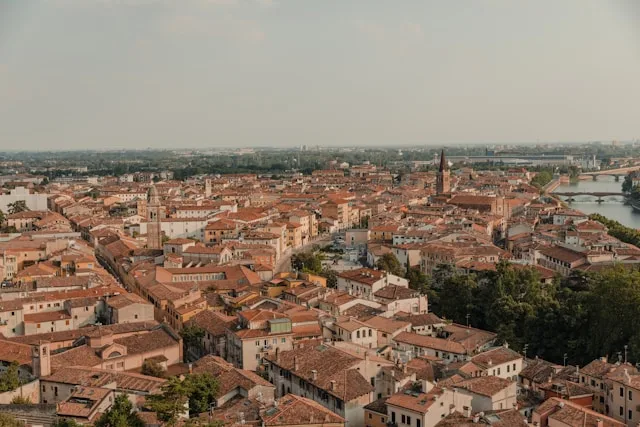
Parma's packaging automation sector entered 2026 with order books stretching six to nine months into the future, export revenues climbing, and a new wave of EU sustainability regulation creating demand for machinery that most of the installed base cannot yet deliver. By every conventional measure, this is a sector in excellent health. Revenue growth in the specialised end-of-line segment is outpacing the broader Italian machinery market, and nearshoring trends have shifted procurement decisions back toward European suppliers and away from Asian competitors.
Yet beneath these headline figures sits a structural constraint that no amount of commercial success can resolve on its own. The sector cannot hire fast enough to match its own growth. Job vacancy rates in Parma's machinery sector reached 4.2% in the final quarter of 2024, double the provincial average. Senior robotics integration roles sit unfilled for six to nine months. The University of Parma graduates roughly 200 relevant mechatronics engineers annually into a market that needs 450. The maths does not work, and it has not worked for several years.
What follows is a ground-level analysis of why Parma's packaging machinery and industrial manufacturing sector faces a talent constraint more complex than a simple shortage, what it means for the firms competing in this market, and what hiring leaders must do differently to secure the engineers, architects, and commercial leaders this sector requires.
The Packaging Valley Paradox: Full Capacity, Half the Talent
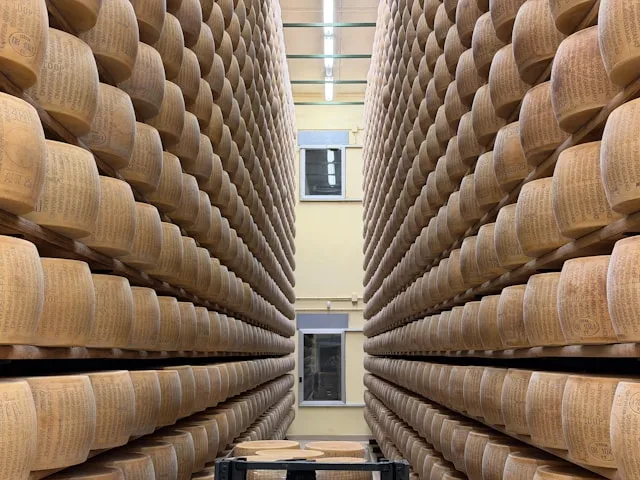
The corridor stretching from Bologna to Parma, known locally as the Distretto della Meccanica e dell'Imballaggio, produces approximately 60% of Italy's packaging machinery. According to Confindustria Emilia's 2024 district report, 450 specialised enterprises in Parma province alone employ roughly 12,000 workers directly in machinery production, with a further 8,000 in ancillary engineering services. The sector exports 78% of its output, with North America, Southeast Asia, and the Middle East representing the fastest-growing destinations.
This is not a sector struggling for demand. UCIMU's 2025-2026 forecasting report projects 4-5% revenue growth for Parma's specialised end-of-line segment, outperforming the broader Italian packaging machinery market's 2.5-3.0% trajectory. The nearshoring trend has been particularly favourable. European food and beverage manufacturers are pulling automation procurement back from Asian suppliers, and Parma's firms are the direct beneficiaries.
The paradox is that commercial success is accelerating faster than the workforce can expand to deliver it. Industry 4.0 adoption reached 64% among mid-to-large firms in the district through 2024, up from 51% in 2022. Every percentage point of that adoption requires engineers the local market does not have in sufficient numbers. A senior robotics integration search in this market now typically takes six to nine months for mid-market firms, compared to three to four months for an equivalent search in Milan. The difference is not about qualification standards. It is about the ratio of employed specialists to open positions in a geography where unemployment among experienced automation engineers effectively stands at 0.8%.
Why the Shortage Is a Skills Mismatch, Not a Labour Shortage
The public narrative around Emilia-Romagna's machinery sector emphasises record order books and near-full employment. Regional unemployment sits at 3.2%, compared to Italy's national figure of 7.1%. At first glance, this looks like a market where everyone who wants to work is working, and the solution is simply to pay more to attract people from adjacent sectors.
That framing misses what the vacancy duration data actually reveals.
The 90-Day Threshold
According to Unioncamere's Excelsior vacancy duration analysis, 35% of unfilled positions in Parma's machinery sector have remained open for 90 days or longer. This is not a symptom of low pay or poor employer branding. It is a symptom of demand for skills that did not exist five years ago in the combinations now required.
The packaging machinery sector was, until recently, a hardware business. Firms designed mechanical systems, manufactured them, shipped them, and provided maintenance. The transition to Industry 4.0 and the emerging "as-a-service" business model has created a new category of role that sits at the intersection of mechanical engineering, software development, and IoT connectivity. Deloitte Italy's 2025 manufacturing outlook estimates that the shift to servitisation models alone requires a 25-30% headcount expansion in software engineering and IoT integration roles for firms that were, until recently, almost entirely hardware-centric.
Where the Graduates Are and Where They Are Not
The University of Parma's Department of Engineering and Architecture produces approximately 200 graduates annually in mechatronics and industrial automation disciplines. The Packaging Valley's projected demand for mechatronics engineers through 2025 exceeded 450 positions across the district. The deficit is not marginal. It is systemic.
Worse, the graduates the university does produce are entering a market where they are immediately recruited by the largest employers. Firms like Ocme, with 650 Parma-based employees, and IMA's 400-person Parma facility can offer career paths, international project exposure, and compensation packages that Parma's 85-person and 120-person specialists cannot match. The mid-market firms where much of the sector's innovation happens are left competing for a diminishing share of an already insufficient graduate pool.
This is the dynamic that separates Parma's challenge from a conventional talent shortage in a growing sector. The sector is not short of workers. It is short of a specific kind of worker who combines mechanical engineering foundations with digital skills, and the training pipeline has not yet adapted to produce them in the volume required.
The Compensation Reality: What Roles Actually Pay and Why the Gaps Exist
Compensation in Parma's packaging automation sector tells two stories simultaneously. For hiring leaders accustomed to benchmarking against Milan or Germany, the headline salary figures appear moderate. For the firms inside the district competing against each other, the escalation over the past three years has been material.
An Automation Engineering Manager in Parma province now commands €58,000 to €75,000 in base salary, a 12-15% premium over the national Italian average for equivalent roles. According to the Hays Italy Salary Guide 2024, a Senior Robotics Integrator earns €52,000 to €68,000 base, with total compensation reaching €75,000 to €85,000 when project bonuses are included. These figures reflect the F&B specialisation premium that Parma's sector commands.
At the executive tier, the numbers shift considerably. An Operations Director at a mid-size machinery firm with €50-200 million in revenue earns €95,000 to €125,000 base, with total packages reaching €140,000 to €170,000. A Chief Technology Officer with automation focus commands €120,000 to €160,000 base. According to Spencer Stuart's Industrial Technology Practice, the CTO role carries an 18-22% premium over equivalent positions in Milan, driven specifically by the scarcity of packaging automation expertise at that level.
The VP of Sales covering EMEA sits at €110,000 to €140,000 base plus 40-60% variable compensation, with growing emphasis on aftermarket service revenue, a reflection of the servitisation trend reshaping every commercial role in the sector.
The Competitor Premium Problem
These figures look competitive until placed beside what Germany offers. Munich and Stuttgart machinery manufacturers pay 40-50% salary premiums for automation engineers, according to Germany's Federal Employment Agency. That differential is pulling Parma's most mobile senior technical talent, particularly professionals aged 30-40 who have acquired enough experience to be internationally marketable but have not yet built the family ties and property commitments that anchor people to a geography.
Language barriers and what the data describes as less flexible work arrangements in Germany limit this outmigration to approximately 8-10% of mobile engineering talent annually. But 8-10% of a small, highly specialised pool is not a rounding error. It is a persistent drain on the talent Parma's firms most need to retain.
Milan, 100 kilometres west, offers 20-25% salary premiums for equivalent engineering roles and the career diversification that comes with a larger metropolitan economy spanning fintech, automotive, and consulting. The cost of living is 35-40% higher, partially offsetting the wage advantage, but for a mid-career engineer weighing a move, the headline salary comparison is what captures attention first. The nuance of cost-of-living adjustment comes later in the negotiation, and by that point, Parma's firms may have already lost the candidate's interest.
The Regulatory Wave Creating Demand the Workforce Cannot Yet Meet
Two overlapping EU regulatory mandates are about to accelerate hiring pressure in a market already operating beyond its talent capacity.
PPWR and the Replacement Cycle
The EU Packaging and Packaging Waste Regulation requires mandatory recyclability targets that will force the replacement or significant modification of approximately 30% of the installed packaging machinery base by 2026. For Parma's firms, this is simultaneously an enormous commercial opportunity and a workforce crisis. Redesigning handling systems for lightweight and recyclable material formats requires R&D reinvestment equal to 3-4% of annual revenue, according to Federalimentare's implementation guide. That reinvestment translates directly into demand for engineers who understand both packaging mechanics and material science, a combination even rarer than the mechatronics-plus-software hybrid the market already cannot find.
Ecodesign Compliance and the SME Squeeze
New machinery must meet enhanced energy efficiency standards under the EU's Ecodesign framework. Compliance costs for Parma's SME suppliers are estimated at €50,000 to €150,000 per product line, according to the European Commission's Ecodesign Working Document. For firms with revenue under €20 million, these costs threaten margins directly. The firms that can absorb these costs are the ones large enough to invest in the engineering talent needed to redesign product lines. The firms that cannot are the ones most likely to lose their best engineers to larger competitors offering more interesting work on better-funded projects.
This regulatory pressure is not distant. It is the current operating environment. The firms that have already begun hiring for PPWR compliance and Ecodesign adaptation have a 12-18 month head start on those that have not. In a market where senior roles take six to nine months to fill, that head start may prove decisive.
The Original Tension: Global Growth Decoupling from Local Talent
Here is the analytical claim this data supports but does not state directly. Parma's packaging automation sector is globalising its revenue while depleting its local talent base, and the geographic brand that made Packaging Valley valuable, the concentration of specialised expertise in a tight corridor, is becoming the constraint that limits what that brand can deliver.
The evidence is visible in two simultaneous trends that point in opposite directions. Ocme has pursued Southeast Asian joint ventures. According to Il Sole 24 Ore's reporting, Aetna Group has acquired ARPAC to expand its North American presence. These are global growth strategies that require Parma-based R&D capacity to design and adapt systems for new markets, new materials, and new regulatory environments.
Meanwhile, engineering enrolment in the University of Parma's relevant mechatronics programmes has plateaued since 2020. The demographic trajectory is worse. Parma province's working-age population between 25 and 54 declined 1.2% in 2023, with projections of 0.8% annual decline through 2030.
The sector's global ambition and its local talent supply are moving in opposite directions. If the gap widens further, the logical economic outcome is that high-value engineering work begins migrating to wherever the engineers are, rather than the engineers migrating to where the work is. For a sector whose identity is built on geographic concentration, on the idea that Packaging Valley is where the world's best packaging automation expertise lives, this is the existential question.
It also explains why traditional hiring approaches consistently fail in this market. The firms that treat each vacancy as an isolated recruitment problem, posting a role and waiting for applications, are not just slow. They are operating as though the market conditions of 2018 still apply. They do not.
How the Passive Candidate Market Shapes Every Senior Search
The most important number for any hiring leader approaching this market is not a salary figure or a vacancy count. It is the passive candidate ratio.
According to LinkedIn Talent Insights data for Emilia-Romagna's packaging machinery sector, 85-90% of qualified Senior Robotics Integration Engineers with seven or more years of experience are passive. They are employed. They are not looking. They are not registered with agencies. Automation Architects with Industry 4.0 expertise show a passive ratio above 80%. F&B sector Sales Engineers with technical backgrounds sit at 75%.
These ratios explain why the average time-to-fill for PLC and SCADA programmer roles increased 34% year-over-year between 2023 and 2024, reaching 94 days according to ManpowerGroup Italy's Talent Shortage Survey. They explain why signing bonuses for automation project managers with F&B experience have reached €15,000 to €20,000 above standard offers, according to Korn Ferry's Industrial Sector Briefing. When nine out of ten qualified candidates are not looking, the only method that reaches them is direct identification and approach.
Junior PLC programmers and mechanical design engineers show higher active candidate ratios, in the range of 40-45%. But quality variance at this level is considerable, and the roles where the sector's competitiveness is actually determined, the senior integration engineers, the automation architects, the leaders who design the systems that win global contracts, those roles sit firmly in passive territory.
The implication for search methodology is absolute. A firm that relies on job postings, agency databases, or inbound applications to fill a senior robotics integration role in Parma is fishing in 10-15% of the available pool. The other 85-90% will never see the posting. They must be found through systematic talent mapping and direct engagement, by someone who understands both the technical requirements and the market dynamics well enough to construct a proposition that compels a passive candidate to consider moving.
What Hiring Leaders in This Market Need to Do Differently
The convergence of commercial growth, regulatory pressure, demographic decline, and extreme passive candidate ratios creates a market where conventional hiring timelines are a competitive liability. A six-to-nine-month search for a senior robotics integrator is not an inconvenience. It is a delay that costs project revenue, strains existing engineering teams, and risks losing the client whose order book created the vacancy in the first place.
Three adjustments separate the firms that are hiring successfully in this environment from those that are not.
First, compensation benchmarking must account for the competitive set that actually matters. Parma's firms are not competing only with each other. They are competing with Milan at a 20-25% premium, Bologna at 5-8%, and Munich at 40-50%. A firm that benchmarks its CTO offer against other Parma employers and ignores what that candidate could earn in Stuttgart is making an offer the candidate will decline. Market intelligence on the true competitive compensation environment is not optional.
Second, the search method must match the candidate market. When 85% of your target candidates are passive, a method designed for active candidates is structurally incapable of reaching them. This is not a preference. It is arithmetic. Firms must either build internal direct sourcing capability or partner with search firms that specialise in identifying and engaging passive technical talent in industrial automation markets.
Third, the timeline must compress. In a market where the best candidates receive constant inbound interest, a process that takes four months from brief to offer will lose candidates to firms that move in four weeks. KiTalent's model of delivering interview-ready candidates within 7-10 days exists specifically because markets like Parma's packaging automation sector punish slow movers. The pay-per-interview structure means firms invest only when they meet qualified candidates, not when a search begins and certainly not when it stalls.
For organisations hiring senior automation engineers, commercial leaders, or C-suite executives in Parma's packaging machinery sector, where the candidates who can transform your business are employed, content, and invisible to job boards, start a conversation with our industrial sector search team about how we identify and engage them.
The cost of a failed or delayed senior hire in a sector running at full capacity with six-to-nine-month order books is not theoretical. It is the revenue that walks out the door while the search drags on. KiTalent has completed over 1,450 executive placements globally with a 96% one-year retention rate, because reaching the right candidate is only half the problem. Ensuring they stay is the other half.
Frequently Asked Questions
What is Packaging Valley and why does it matter for hiring?
Packaging Valley is the industrial district stretching from Bologna to Parma in Emilia-Romagna, Italy. It produces approximately 60% of Italy's packaging machinery, with 450 specialised enterprises in Parma province alone employing around 12,000 workers directly. The concentration of expertise makes it a global centre for end-of-line automation, but the same concentration means that firms compete intensely for a finite pool of specialised engineers. Senior roles in robotics integration and automation architecture take six to nine months to fill, driven by passive candidate ratios above 85%.
What salary does a packaging automation engineer earn in Parma in 2026?
An Automation Engineering Manager earns €58,000 to €75,000 base salary, a 12-15% premium over the Italian national average. Senior Robotics Integrators command €52,000 to €68,000 base, with total compensation reaching €85,000 including bonuses. At executive level, a CTO with packaging automation focus earns €120,000 to €160,000 base, carrying an 18-22% premium over equivalent Milan roles due to scarcity. These figures reflect the F&B sector specialisation premium that distinguishes Parma from broader Italian industrial markets.
Why are packaging machinery roles so hard to fill in Parma?
Three factors converge. First, 85-90% of qualified senior candidates are passive and will not respond to job postings. Second, the University of Parma produces approximately 200 relevant graduates annually against projected demand exceeding 450. Third, the sector's shift toward Industry 4.0 and servitisation models requires hybrid skills combining mechanical engineering, software development, and IoT expertise that did not exist as a standard profile five years ago. KiTalent's AI-enhanced direct headhunting methodology is designed specifically for markets where the strongest candidates must be identified and approached individually.
How does EU regulation affect packaging machinery hiring in 2026?
The EU Packaging and Packaging Waste Regulation requires mandatory recyclability targets driving replacement of approximately 30% of installed packaging machinery. Separately, Ecodesign energy efficiency standards impose compliance costs of €50,000 to €150,000 per product line on SME suppliers. Both regulations create immediate demand for engineers who combine packaging mechanics knowledge with material science and sustainability expertise. Firms that began hiring for regulatory compliance in 2024-2025 hold a decisive advantage over those still searching.
How does KiTalent approach executive search in Parma's industrial automation sector?
KiTalent uses AI-powered talent mapping to identify passive candidates who represent 85-90% of the qualified pool in Parma's packaging machinery market. Rather than relying on job postings or agency databases, the methodology directly identifies and approaches employed specialists and leaders across the Packaging Valley corridor. Interview-ready candidates are typically presented within 7-10 days. The pay-per-interview model means clients invest only when they meet qualified candidates, and a 96% one-year retention rate ensures that placements endure beyond the initial hire.
Is it better to hire locally in Parma or relocate talent from Milan or Germany?
Both approaches carry trade-offs. Milan candidates expect 20-25% salary premiums but face 35-40% higher living costs, which can work in Parma's favour during negotiation. German-based Italian engineers earn 40-50% more but face language and cultural readjustment. The most effective strategy combines local passive candidate engagement with selective approaches to candidates in competitor geographies who have personal or family connections to Emilia-Romagna. KiTalent's international executive search capability supports both approaches simultaneously, mapping candidates across borders to build the strongest possible shortlist.