Rijeka's Petroleum Cluster Needs Specialists Now, but the Talent Pipeline Is Shrinking: The Paradox Hiring Leaders Cannot Ignore
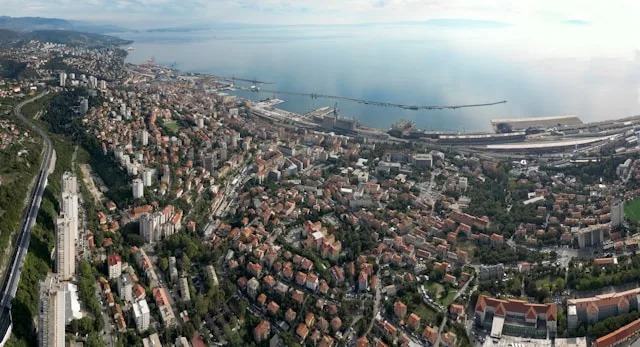
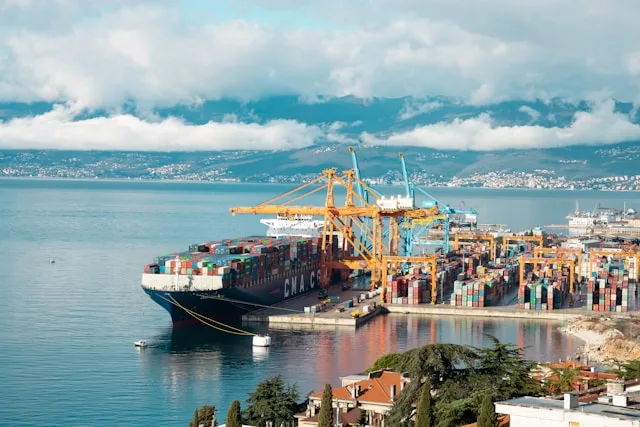
Croatia's only fully integrated petroleum logistics chain sits on a strip of Adriatic coastline between the Port of Rijeka and the hills above Kostrena. INA's Urinj refinery, JANAF's Omisalj crude oil terminal, 1.2 million cubic metres of interconnected liquid bulk storage, and a network of marine bunkering services together form an energy cluster that handles the majority of Croatia's crude imports and a material share of regional fuel distribution. In 2024, JANAF moved 8.3 million tonnes of crude through Omisalj. The Port of Rijeka processed 1.9 million tonnes of liquid fuel transshipment. The refinery itself ran at roughly 78% utilisation, constrained less by demand than by maintenance cycles and the economics of high-sulphur fuel oil in a post-IMO 2020 world.
The cluster is investing heavily. INA has committed approximately €500 million to refinery modernisation through 2040. The second phase of the Residue Upgrading Project is designed to lift middle distillate yield by 15%. Feasibility studies for co-processing up to 20% renewable feedstocks are underway. JANAF is assessing carbon capture readiness at Omisalj. The Port of Rijeka plans operational LNG bunkering by Q4 2026. Every one of these initiatives demands technical talent that did not exist in Rijeka's labour market five years ago, and still does not exist in sufficient numbers today.
Yet the very investments intended to secure this cluster's future are compressing the career horizon that would attract the next generation of specialists. What follows is a ground-level analysis of why Rijeka's petroleum and energy cluster faces a hiring challenge that money alone cannot resolve, where the real constraints sit, and what organisations competing for this talent must do differently before the demographic window closes entirely.
The Cluster's Architecture: Why Rijeka Is Irreplaceable and Exposed
The Urinj refinery, the Omisalj terminal, and the Port of Rijeka's liquid cargo operations do not merely coexist. They form a single operational chain. Crude arrives at Omisalj via tanker, moves through the 12-inch Adria pipeline to Urinj for processing, and exits either as refined product via road and rail or as marine bunker fuel through the port's bunkering fleet. Remove any single link and the chain breaks.
This integration is Rijeka's strategic value. It is also its vulnerability.
The Adria Pipeline and Single-Point Dependency
JANAF's Adria pipeline, connecting Omisalj to Urinj, is over 40 years old. Any disruption to this line severs crude supply to Croatia's primary refinery. The Omisalj terminal's 20-metre draft restriction prevents Very Large Crude Carriers from docking, maintaining cost inefficiencies that Northern European refineries with deeper water access do not face. These are not problems that new hires solve. They are the structural context in which every hiring decision in this cluster is made. A senior process engineer evaluating a move to Urinj is not just assessing compensation. That engineer is assessing the long-term viability of an asset tethered to ageing infrastructure.
Employment Scale and the Contractor Layer
INA employs approximately 850 personnel directly at Urinj, with a further 400 contracted maintenance and logistics specialists rotating through the site. JANAF's Omisalj terminal and tank farm employ around 320, split operationally between Rijeka and Zagreb. Luka Rijeka directly employs 180 in liquid bulk operations. Tehbunker and Brodokomerc Bunkering collectively account for 90 to 110 personnel in fuel quality testing, barge operations, and IMO 2020 compliance coordination. Beyond these anchor employers, 45 to 50 specialised logistics firms, inspection agencies such as SGS and Inspectorate, and maintenance contractors including Qualitas and Dalekovod depend on refinery and terminal activity along the Rijeka-Zagreb corridor.
The total cluster workforce is small by European refining standards. That smallness is precisely what makes each senior vacancy so damaging.
The Transition Paradox: Investment That Deters the Talent It Requires
This is the original synthesis at the heart of this article, and it is the dynamic that separates Rijeka from every other mid-complexity European refinery talent market.
INA's modernisation programme assumes a 15-year operational horizon to 2040. MOL Group classifies Urinj as a "medium complexity, high flexibility" asset in its Strategy 2030+ documentation. The €500 million commitment is real capital, producing real infrastructure. The Residue Upgrading Project, the desulphurisation retrofits, the hydrogen unit modifications for bio-feedstock co-processing: these are not speculative. They are under construction or in advanced feasibility.
And yet the EU's Fit for 55 package targets 55% transport emission reductions by 2030. According to the International Energy Agency's Croatia Energy Policy Review, demand destruction for road transport fuels may accelerate faster than the refinery's depreciation schedule. INA's own net-zero trajectory points to 2050. The explicit bio-refinery transition plans signal that the facility's future is as a processing hub for renewable feedstocks, not as a conventional crude refiner.
A 28-year-old chemical engineering graduate from the University of Rijeka sees both signals simultaneously. The cluster needs hydrocracker and hydrogen unit specialists urgently in 2026. But that same graduate can calculate that the career ceiling for conventional petroleum refining is lower and closer than it was a decade ago. The rational response is to train in renewable energy systems, battery chemistry, or process automation for bio-refineries instead. The specialists Rijeka needs most in 2026 are the specialists whose career logic points away from Rijeka's current operations.
This is not a compensation problem. It is a career horizon problem.
Immediate hiring demand for hydrocracker and hydrogen unit expertise is peaking in 2025 and 2026. The talent pipeline for those exact specialisations is constricting because the next generation perceives long-term obsolescence. The investment that modernises the refinery also advertises its eventual transformation into something different. Recruitment demand rose 34% year-over-year in 2024. The pipeline of chemical engineering graduates from the University of Rijeka produces 30 to 35 per year. Those numbers cannot coexist without structural intervention.
Where the Shortages Bite Hardest
Critical demand in Rijeka's energy cluster concentrates in three categories, each with distinct sourcing challenges.
Hydrocracking and Process Engineering
The most acute shortage sits at the senior process engineer level, specifically professionals with deep expertise in hydrocracking, catalytic reforming, or delayed coking. According to data consistent with the Croatian Employment Service's Skills Shortage Analysis for 2024, INA's Urinj facility maintained a vacancy for a Hydrocracker Unit Manager for 11 months between March 2024 and February 2025. The role was ultimately filled through international executive search after the regional MOL Group network failed to produce a suitable candidate.
This is an 85 to 90% passive candidate market. Qualified professionals with 15 or more years of experience in these units maintain average tenure of 9.4 years. They do not appear on job boards. Applicant-to-hire ratios for specialised roles run below 2:1, compared to a 15:1 market average. The conventional approach of posting a vacancy and waiting for applications reaches almost none of the viable candidate pool. For organisations that rely on traditional recruitment methods to fill senior technical roles, this market delivers a near-zero hit rate.
HSE and Environmental Compliance
EU ETS Phase IV, the Industrial Emissions Directive BAT conclusions, and Croatia's national implementation of the Alternative Fuels Infrastructure Regulation have created a compliance burden that requires dedicated specialist leadership. INA allocated €12 million in 2024 for flue gas desulphurisation retrofits and wastewater treatment plant upgrades alone. The refinery's verified emissions of approximately 1.8 million tonnes CO2 equivalent in 2023, tracked by the European Environment Agency's ETS Emissions Data portal, require ongoing carbon allowance purchases. At €60 to €80 per tonne, this represents €110 to €140 million in annual compliance cost exposure.
Managing that exposure requires HSE managers who understand both the technical and financial dimensions of EU ETS permitting. These professionals are scarce across all European refining markets, not just in Croatia.
Maritime Fuel Logistics
IMO 2020 sulphur caps reshaped marine fuel supply chains globally. In Rijeka, this created demand for logistics coordinators certified in low-sulphur and emerging alternative fuel handling. According to the Croatian Chamber of Economy's Maritime Sector Compensation Survey for 2024, one documented case in 2024 involved Tehbunker securing a candidate from the Port of Ploče's liquid bulk division with a 28% salary premium and guaranteed 13th and 14th month bonuses. The original candidate had accepted a competing offer from a Greek bunkering firm operating in the Adriatic. The marine fuel quality superintendent segment operates at a 75% passive candidate ratio, recruited almost exclusively through specialised headhunting in the maritime energy sector rather than corporate career portals.
The Port of Rijeka's planned LNG bunkering capability by Q4 2026 will intensify this shortage. An estimated 150 to 200 specialised fuel handlers currently focused on petroleum products will require retraining for dual-fuel logistics. The roles needed to lead that retraining do not yet exist in sufficient numbers within the Adriatic talent pool.
Compensation: Closer to Parity, but Still Not Decisive
Compensation for senior technical roles at Urinj has improved materially over the past several years. Process Engineering Managers at the senior specialist level earn base compensation of €68,000 to €85,000 annually, with performance bonuses of 15 to 25% and restricted stock units vesting over three years. Total cash compensation sits 35 to 45% above Croatian manufacturing sector averages.
At the director level, the picture shifts. Refinery Operations Directors command total compensation packages of €190,000 to €260,000, including base salary, short-term incentives, and long-term equity participation in MOL Group shares. This represents a 60% premium over equivalent manufacturing director roles in Zagreb but remains 25 to 30% below Hungarian and Austrian refining sector benchmarks. The gap is material. A Refinery Operations Director considering Rijeka against a comparable role at OMV in Vienna or Slovnaft in Bratislava is looking at a 30 to 50% compensation discount before factoring in cost of living differences.
Compensation at Urinj has converged to 80 to 90% of Zagreb levels and 65 to 70% of Budapest levels. These ratios have improved from 60% and 45% respectively in 2018. The narrowing is real.
It has not changed behaviour.
Exit interview aggregations and LinkedIn talent flow data suggest that out-migration of senior engineers to Austrian and German refineries continues at rates comparable to 2018 to 2020. The narrowing wage differential has not slowed the departure rate. This is the clearest evidence that non-monetary factors dominate location decisions for the most experienced professionals in this market: access to international project portfolios, dual-career spouse opportunities in larger metropolitan areas, and English-language working environments. Salary benchmarking for energy sector roles confirms that Rijeka's compensation is no longer the primary barrier. The barrier is what Rijeka cannot offer beyond the pay packet.
For hiring leaders, the implication is uncomfortable. Raising compensation further will not, on its own, reverse the talent flow. The proposition must address career trajectory, family considerations, and international exposure simultaneously. Organisations that treat this as a compensation problem will keep losing searches to those that treat it as a proposition problem.
The Demographic Cliff Behind the Transition
Approximately 35% of INA's Urinj technical workforce, encompassing process operators and maintenance craftspeople, is aged 55 or older. Concentrated retirement risk sits between 2026 and 2030. The University of Rijeka's Faculty of Engineering produces 30 to 35 chemical engineering graduates annually. Even if every single graduate entered the petroleum refining sector, the numbers would not cover retirements, let alone fill the 120 to 150 new technical positions the cluster will require by end-2026 for bio-feedstock handling, carbon accounting, and dual-fuel logistics.
The arithmetic is blunt. The pipeline produces roughly 30 graduates. The cluster will lose an estimated 80 to 100 experienced technical staff to retirement by 2028 while simultaneously needing 120 to 150 new specialists in areas those retirees never worked in. The deficit runs to more than 150 roles that cannot be sourced locally, even under optimistic assumptions.
Traditional refining automation will reduce headcount in distillation units by an estimated 8 to 10%. This offset is minor against the combined weight of retirements and new technology roles. The cost of failing to fill these roles is not abstract. A refinery operating without its Hydrocracker Unit Manager for 11 months is a refinery making suboptimal yield decisions for 11 months. At Urinj's throughput, even a single percentage point of yield loss translates to millions in foregone margin.
The Three Markets Pulling Talent Away from Rijeka
Rijeka does not compete against a generic "market." It competes against three specific destinations, each appealing to a different segment of its workforce.
Budapest draws senior Croatian engineers through MOL Group's internal mobility programme, offering 30 to 40% compensation premiums and an English-language corporate environment. The pipeline is formal and persistent. MOL Group's Human Capital Development division, as documented in its 2023 Integrated Annual Report, actively recruits from INA's Rijeka technical staff for Budapest-based project roles. When the parent company is also the primary talent competitor, the hiring challenge becomes uniquely difficult.
Zagreb attracts mid-career professionals seeking the transition from shift work to corporate engineering or commercial roles. INA's own headquarters and JANAF's administrative centres are the magnets. Zagreb offers comparable salaries at 90 to 95% of Rijeka refinery premiums, combined with superior dual-career family opportunities and international school access. According to Eurostat regional labour mobility data, this flow is steady rather than dramatic, but it consistently removes professionals at the 8 to 12 year experience mark, precisely when their operational knowledge becomes most valuable.
Vienna and Bratislava represent the premium tier. For process engineers with EU-wide certification, Austrian and Slovak refineries offer salaries 50 to 70% higher than Rijeka equivalents, with structured expatriate packages. According to OMV's Human Resources Report for 2023, these packages include relocation support, language training, and dual-career spouse assistance. Rijeka cannot match these terms on a like-for-like basis.
The competitive pressure is directional. Talent flows out of Rijeka toward all three markets. Very little flows in the opposite direction without active, targeted search efforts that identify and engage candidates where they are, rather than waiting for them to appear.
What This Means for Hiring Leaders in 2026
The Rijeka petroleum cluster in 2026 is a market where the candidates who matter most are the least visible and the least likely to move without a compelling, multi-dimensional proposition. Job advertising in this market reaches fewer than 15% of viable candidates for senior technical roles. Internal referral networks within MOL Group, while valuable, are also the mechanism by which Budapest draws talent away. The conventional executive search playbook, which assumes a large enough pool of passive candidates that a broad approach will surface several qualified options, breaks down when the total addressable population for a specific role type in the Adriatic refining market may number in the dozens.
The organisations that have filled critical roles in this cluster over the past 18 months share a common pattern. They moved fast, defined the proposition before beginning the search, and used direct identification methods that reached passive specialists who were not considering a move. The 11-month vacancy for INA's Hydrocracker Unit Manager was ultimately resolved through international executive search, not through advertising or internal mobility. That timeline is instructive. It represents the cost of trying conventional methods first.
For senior hiring executives responsible for filling technical leadership roles in Croatia's energy sector, the window is narrowing. The demographic cliff is not a 2030 problem. It is producing vacancies now. The bio-feedstock transition and LNG bunkering build-out are creating new role categories faster than the local market can supply them. And the compensation improvements of the past six years, while meaningful, have not altered the directional talent flow toward Budapest, Vienna, and Zagreb.
KiTalent works with energy and industrial organisations facing exactly this combination of constraints: small candidate pools, high passive ratios, and propositions that must compete across borders. With AI-enhanced talent mapping for industrial and manufacturing leadership, a pay-per-interview model that removes upfront retainer risk, and a 96% one-year retention rate for placed candidates, KiTalent delivers interview-ready shortlists within 7 to 10 days. In a market where an 11-month vacancy is a documented reality, that speed differential is not incremental. It is the difference between filling the role and losing the next retirement cycle without a replacement.
For organisations competing for hydrocracking, HSE compliance, or maritime fuel logistics leadership in the Adriatic energy corridor, start a conversation with our executive search team about how we approach markets where conventional sourcing has already failed.
Frequently Asked Questions
What are the hardest roles to fill in Rijeka's petroleum refining cluster?
Senior process engineers with hydrocracking and catalytic reforming expertise represent the most acute shortage. These roles operate in an 85 to 90% passive candidate market, with qualified professionals averaging 9.4 years of tenure and rarely appearing on job boards. HSE managers with EU ETS Phase IV and Industrial Emissions Directive permitting experience are the second-hardest category, followed by maritime fuel logistics coordinators certified for IMO 2020 low-sulphur compliance. The cluster needs 120 to 150 new technical positions filled by end-2026 while losing experienced staff to retirement.
How does compensation for refinery engineers in Rijeka compare to other European markets?
Process Engineering Managers at INA's Urinj facility earn €68,000 to €85,000 base salary with 15 to 25% performance bonuses. Director-level total compensation reaches €190,000 to €260,000 including equity participation. These figures sit 35 to 45% above Croatian manufacturing averages but remain 25 to 30% below Hungarian and Austrian refining benchmarks. Compensation has converged from 45% of Budapest levels in 2018 to roughly 65 to 70% today, though this improvement has not measurably slowed outward talent migration to Vienna, Bratislava, or Budapest.
Why is Rijeka losing senior engineers despite improving pay?
Non-monetary factors dominate relocation decisions for experienced refining professionals. Access to international project portfolios, dual-career spouse opportunities, English-language working environments, and the perceived career horizon of conventional petroleum refining all outweigh narrowing wage differentials. Exit interview data suggests out-migration to Austrian and German refineries continues at 2018 to 2020 rates despite six years of compensation improvement. Organisations hiring in this market must address career trajectory and family proposition alongside salary to attract and retain the specialists that direct headhunting methods can identify.
What is the demographic risk facing Rijeka's energy workforce?
Approximately 35% of INA's Urinj technical workforce is aged 55 or older, with concentrated retirement risk between 2026 and 2030. The University of Rijeka produces only 30 to 35 chemical engineering graduates annually, insufficient to cover retirements while also filling new roles in bio-feedstock handling, carbon accounting, and dual-fuel logistics. The cluster faces a deficit of more than 150 roles that local sourcing cannot address, requiring international search and cross-border talent attraction strategies.
How does executive search work for niche energy roles in Croatia?
Specialised refining and maritime fuel roles in Croatia's energy sector require direct identification of passive candidates, not job advertising. Fewer than 15% of qualified professionals for senior technical roles are visible on public platforms. KiTalent uses AI-enhanced talent mapping to identify qualified specialists across European refining markets, delivering interview-ready candidates within 7 to 10 days. The pay-per-interview model removes upfront retainer risk, and pipeline transparency provides weekly reporting throughout the search process.
What regulatory pressures are reshaping Rijeka's refinery workforce?
EU ETS Phase IV is phasing out free emission allowances, creating annual compliance cost exposure of €110 to €140 million at current carbon prices. The Industrial Emissions Directive BAT conclusions require continuous investment in desulphurisation and wastewater treatment. The EU's ReFuelEU Aviation and FuelEU Maritime initiatives mandate bio-fuel and synthetic fuel blending that demands entirely new technical competencies. These regulations simultaneously increase demand for compliance specialists while accelerating the energy transition timeline that constrains long-term career appeal in conventional refining.