Rijeka's Shipbuilding Yards Have New Equipment and No One to Run It: The Workforce Crisis Behind Croatia's Maritime Revival
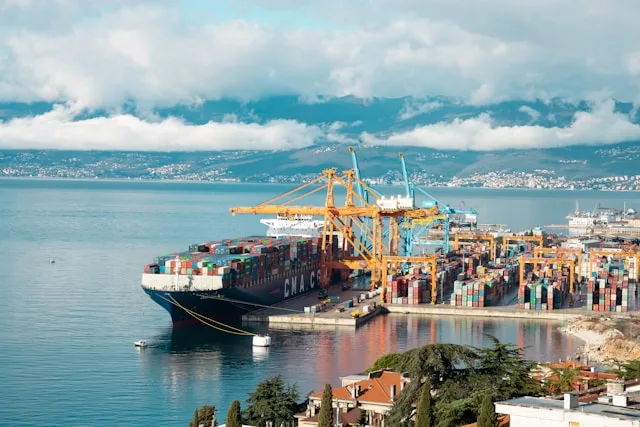
Rijeka's two major shipyards received approximately €45 million in infrastructure investment between 2022 and 2025. New floating docks, CNC cutting lines, and modernised fabrication halls now sit inside a complex that operates at roughly 35 to 40 percent of its 2008 production capacity. The equipment arrived. The workforce did not.
This is not a story about a declining industry struggling to attract attention. It is a story about an industry that secured capital investment, completed EU-mandated restructuring, and positioned itself for a genuine second act in offshore wind fabrication and ship conversion, only to discover that the mid-career engineers and certified welders required to execute that strategy are leaving for Trieste, Kiel, and Hamburg faster than they can be replaced. The Rijeka shipbuilding talent pool is not shrinking because the work disappeared. It is shrinking because the compensation gap with neighbouring markets has widened at precisely the seniority level where the most critical roles sit.
What follows is a structured analysis of the forces reshaping Rijeka's maritime sector, the employers driving that change, the specific roles where hiring has stalled, and what organisations operating in this market need to understand before committing to their next search. The gap between what Rijeka's yards can build and what they can staff is the defining tension of this market in 2026.
A Shipyard Complex Operating at a Fraction of Its Capacity
To understand Rijeka's current hiring crisis, it helps to understand what the city's maritime sector actually looks like today. This is not the 2,400-worker industrial powerhouse of 2014. Brodogradilište 3. Maj, the symbolic anchor of Croatian shipbuilding, employs roughly 850 to 900 workers. It delivered zero newbuild commercial vessels over 5,000 GT in 2024. Its primary function has shifted to ship repair, conversion, and modular fabrication for offshore energy structures.
Viktor Lenac, the specialised repair yard, operates more stably. With 438 direct employees and a fully booked drydock schedule running through the first half of 2026, it represents the healthier half of Rijeka's maritime economy. But "healthier" is relative. The combined repair and conversion turnover across both yards reached approximately €120 to €140 million in 2024, representing 60 percent of Croatia's total maritime repair revenue, according to the Croatian Chamber of Economy's sectoral analysis.
The 2026 outlook carries modest optimism. Offshore wind foundation fabrication, specifically monopiles and transition pieces for North Sea energy projects, has opened a new revenue line for 3. Maj as a subcontractor to larger European fabricators. The City of Rijeka Development Agency's 2024 positioning paper identified this as the yard's most promising growth vector. But fabricating monopiles requires welders certified to standards that fewer than a third of the current workforce hold. The opportunity exists on paper. Staffing it is another matter entirely.
Both major yards completed EU-mandated restructuring by mid-2023, following the European Commission's approval of Croatian state aid under case SA.61257. 3. Maj remains under indirect state control via the Centre for Restructuring and Sale, with privatisation attempts stalled over buyer concerns about legacy liabilities. Viktor Lenac trades publicly on the Zagreb Stock Exchange and operates with independent management. The restructuring phase is over. What remains is the harder question: whether these yards can attract and retain the people needed to make the restructured operations productive.
The Supplier Ecosystem Has Contracted by 40 Percent
A shipyard does not operate in isolation. It depends on a network of metalworking firms, marine coatings suppliers, valve manufacturers, and auxiliary equipment providers. In Rijeka, that network has hollowed out.
From 78 Firms to 47
In 2010, Rijeka hosted 78 registered firms supplying the shipyards with steel processing, valves, and auxiliary equipment. By 2024, that number had fallen to 47, according to the Croatian Bureau of Statistics. The insolvencies of Brodokomplet in 2021 and Rijeka Metal in 2020 alone eliminated 300 specialised jobs. These were not marginal suppliers. They were firms whose workers held certifications and institutional knowledge that cannot be rebuilt by hiring graduates.
The Rijeka Shipbuilding Cluster, formally established in 2017 to coordinate SME suppliers, now counts 14 member firms. It had 23 in 2019. The cluster's own statutory report for 2024 documents this contraction without euphemism.
What Supplier Erosion Means for Hiring
When a supplier network contracts, the shipyard absorbs work it previously outsourced, or it pays premium rates to bring in contractors from elsewhere. Both outcomes increase the demand for skilled workers inside the yard while simultaneously reducing the local labour pool those workers would come from. A welder who lost a job at Brodokomplet in 2021 did not necessarily walk across the street to 3. Maj. According to CES emigration data, a material share of displaced metalworkers left the region entirely, many for German shipyards offering four to five times the net compensation.
This dynamic is what makes Rijeka's talent challenge fundamentally different from a simple supply-demand imbalance. The ecosystem that once trained, employed, and recycled skilled maritime workers across dozens of firms has thinned to the point where each departure creates a gap that the remaining network cannot absorb. A proactive talent pipeline strategy is no longer optional in this market. It is the only way to maintain operational continuity.
The Specific Roles Rijeka Cannot Fill
The Rijeka shipbuilding sector posted 340 job vacancies between January and November 2024. That figure represents a 22 percent increase over 2023 but remains 40 percent below 2018 levels. The vacancy rate for skilled trades stands at 11.3 percent, nearly three times the 4.1 percent rate in Croatia's general manufacturing sector.
Three categories account for the most acute pressure.
Certified Welders: 145 Unfilled Positions
The largest single gap is in certified welders holding EN ISO 9606 qualifications. As of October 2024, 145 positions remained unfilled across Rijeka's yards, according to the Croatian Employment Service's skills mismatch report. The specific certifications in deficit include TIG aluminium welding for LNG containment systems and underwater welding certification to AWS D3.6 standards. These are not entry-level credentials. They take years to acquire and require supervised practical hours that vocational schools alone cannot provide.
Naval Architects: 28 Vacancies at Senior Level
Twenty-eight vacancies for naval architects with seven or more years of experience and offshore platform design exposure were posted through Q4 2024. The University of Rijeka's Faculty of Maritime Studies produces approximately 45 naval architecture and marine engineering graduates annually. Only 30 percent enter the local shipbuilding sector. The rest leave for higher-paying roles in Italy or Germany, or pivot to adjacent industries entirely. The pipeline produces graduates. It does not produce the mid-career specialists these vacancies require.
Marine Electricians: 127 Days to Fill
Thirty-four vacancies for high-voltage marine electricians carried an average time-to-fill of 127 days in 2024. The equivalent figure for general electricians was 45 days. The gap reflects the specificity of the certification required: high-voltage marine systems demand knowledge of classification society standards that general electrical training does not cover.
The pattern across all three categories is consistent. The shortage is not a volume problem. It is a qualification depth problem. Rijeka's yards need workers who combine trade certifications with years of applied experience in maritime-specific contexts. That combination is rare locally and commands a premium that European competitors are willing to pay.
Compensation: The 40 to 60 Percent Discount That Drives Emigration
The compensation data tells a story that no amount of restructuring investment can obscure. Rijeka's shipyard wages sit at a deep discount to every competing geography, and the discount widens at exactly the seniority level where the most critical shortages exist.
A Senior Specialist or Manager level role, such as a Lead Naval Architect or Production Manager, commands gross annual compensation of €32,000 to €42,000 in Rijeka. That translates to approximately €2,100 to €2,750 net monthly. This represents a 15 percent premium over equivalent manufacturing roles in Zagreb, but it is 40 percent below what the same role pays in Trieste and 60 percent below Kiel.
At the Executive or VP level, a Technical Director or Shipyard Manager earns €65,000 to €95,000 gross annually. The upper range is reserved for executives managing EU-funded restructuring or offshore wind transition projects. According to Mercer Croatia's 2024 Industrial Executive Compensation Report, confirmed by Viktor Lenac's AGM disclosures on director remuneration, this upper range still sits materially below Italian and German equivalents.
For welding and quality assurance specialists, the picture is similarly stark. A Lead Welding Engineer with IWT certification earns €24,000 to €30,000 gross annually. A Quality Assurance Director earns €45,000 to €58,000. A 25 percent premium is offered for dual certification combining welding and NDT Level III qualifications, but even that premium does not close the gap with German employers.
Fincantieri's Monfalcone yard, just 90 minutes from Rijeka, actively recruits Croatian speakers and offers 2.5 to 3 times the net compensation for naval architects and senior engineers. German yards in Kiel and Hamburg offer 4 to 5 times net compensation for certified welders and marine engineers, with language training programmes specifically targeting Croatian technical school graduates. The German Federal Employment Agency's 2024 foreign worker recruitment data confirms this pipeline is active and growing.
This is the core structural problem. Rijeka's yards cannot match these offers without fundamentally different revenue models. EU state aid rules under the 2023 to 2027 framework prohibit operating aid and wage subsidies that might narrow the gap. The market benchmarking data is unambiguous: every senior hire in this market is a candidate who has chosen Rijeka over a materially higher offer elsewhere. Understanding what motivates that choice is the only way to recruit successfully here.
The Emigration Paradox: National Trends Mask Sector-Specific Bleeding
Croatia's aggregate emigration data tells a reassuring story. Net outward migration slowed after 2022, partly attributed to Euro adoption in 2023 and gradual wage convergence with Western European averages. The assumption that followed was reasonable: if emigration is slowing nationally, sector-specific retention should be stabilising too.
That assumption is wrong for Rijeka's shipbuilding sector.
The yards report accelerating departures of mid-career engineers aged 35 to 45. This is the most productive cohort: professionals old enough to hold advanced certifications and project leadership experience, young enough to have 20 working years ahead of them, and mobile enough to accept relocation offers from Trieste or Hamburg. The national emigration slowdown appears to be concentrated in service sectors and among younger workers entering a Croatian labour market that now offers Euro-denominated wages. It has not reached the industrial trades, where the absolute wage gap with Germany and Italy remains too wide for currency convergence alone to close.
This is the original analytical claim this article rests on: the investment in infrastructure modernisation at Rijeka's yards has not reduced the workforce deficit. It has changed its character. Capital moved faster than human capital could follow. The €45 million in new equipment requires operators who hold certifications that take five to ten years to acquire. The equipment is ready now. The certified workforce will not be ready for years, if the retention problem is not addressed first. Every CNC line and floating dock that sits underutilised because the certified operators have left for Germany represents a failed sequence in industrial policy: investment in machines without equivalent investment in the humans who run them.
The demographic data compounds this. The median age of Rijeka's shipbuilding workforce is 48.7 years. Twenty-three percent of current skilled tradesworkers are eligible for retirement by 2028. The yard is not only losing mid-career talent to emigration. It is losing senior talent to retirement. Both flows run in the same direction, and neither is being offset by inflow.
What Hiring Leaders in This Market Must Understand
The hiring challenge in Rijeka's maritime sector is not a generic shortage that can be solved by posting more vacancies or offering marginally higher salaries. It requires a fundamentally different approach, one built around three realities that every search in this market confronts.
75 to 80 Percent of Qualified Candidates Are Passive
The HGK Recruitment Difficulty Index for 2024 estimates that 75 to 80 percent of qualified Senior Naval Architects and Certified Welding Inspectors in the Rijeka region are employed and not actively applying to public vacancies. For welding inspectors specifically, the ratio of active to passive candidates is approximately 1:4. A conventional job posting reaches at most one in five potential hires.
This means that a search for a Senior Welding Coordinator or a Lead Naval Architect in Rijeka requires direct identification and approach of candidates who are not looking. They will not appear on job boards. They will not respond to advertisements. They must be found, assessed, and engaged individually. A search firm that relies on applicant flow will fail in this market every time.
The Competition Is Not Other Croatian Employers
A hiring leader at 3. Maj or Viktor Lenac is not primarily competing with Brodosplit in Pula or the Vukovar Shipyard. Those Croatian competitors offer 10 to 15 percent wage premiums. The real competition is Fincantieri in Monfalcone offering 2.5 times the salary, and ThyssenKrupp Marine Systems in Kiel offering 4 times.
This changes the nature of the offer. Compensation alone cannot close a 300 percent gap. The successful hires in this market, those who stay in Rijeka despite lower pay, are motivated by factors that a standard offer letter does not capture: proximity to family, property ownership, aversion to relocation risk, and professional autonomy that a much larger organisation cannot provide. Identifying which candidates hold these motivations requires intelligence that goes far beyond a CV review. It requires the kind of deep talent mapping that reveals not just who is qualified but who is likely to accept and stay.
According to reporting by Jutarnji List in June 2024, Viktor Lenac secured a Senior Project Manager in naval architecture from a competing Croatian yard by offering a €12,000 net signing bonus and company housing accommodation. This unusual arrangement for the local market signals both the intensity of competition and the creative structuring required to close senior hires. The risk of counteroffers from current employers or competing geographies is present at every stage.
The Regulatory Environment Constrains What Employers Can Offer
EU state aid rules under the SA.10067 framework prohibit operating aid and limit restructuring aid to ten-year windows. This prevents Rijeka's state-connected yards from using subsidised employment guarantees or wage subsidies as recruitment tools. The European Commission's state aid guidelines for shipbuilding effectively cap the financial incentives that publicly supported yards can deploy, creating a constraint that privately held competitors in Italy and Germany do not face.
Additionally, the Industrial Emissions Directive requires €15 to €20 million in remediation investment at the 3. Maj site by 2027 to continue sandblasting and coating operations. This financing requirement competes directly with the capital that might otherwise fund wage increases or signing incentives. The regulatory environment does not merely set standards. It shapes what employers can afford to pay, and in this market, that directly determines who they can hire.
How KiTalent Approaches This Market
Rijeka's shipbuilding sector requires a search methodology built for markets where the candidate pool is small, passive, and under active pressure from higher-paying geographies. Conventional retained search firms that rely on database matching and advertised response rates will produce the same thin shortlists that have left critical roles unfilled for 6 to 11 months.
KiTalent's approach to executive hiring in industrial and manufacturing sectors begins with AI-powered talent mapping that identifies the full universe of qualified candidates across Croatia, Slovenia, and the broader Adriatic region, including those who have emigrated and may be open to return under the right conditions. The model reaches the 75 to 80 percent of senior marine engineers and certified inspectors who are not visible on any job board.
Interview-ready candidates are delivered within 7 to 10 days. Clients pay per interview, not through an upfront retainer, which means organisations in a cost-constrained market like Rijeka only invest when they are meeting qualified professionals. With a 96 percent one-year retention rate across 1,450 executive placements, and an average client relationship exceeding eight years, the model is designed for markets where the hidden cost of a wrong hire is measured not just in salary but in months of lost production capacity on equipment that cannot operate without the right person.
For organisations hiring senior naval architects, welding leadership, or automation engineers in Rijeka's maritime sector, where the candidates who can run the equipment your investment paid for are not looking and the compensation gap with Germany means every offer must be structured with precision, start a conversation with our industrial search team about how we find the people this market cannot surface on its own.
Frequently Asked Questions
What is the current state of Rijeka's shipbuilding industry in 2026?
Rijeka's two major yards, 3. Maj and Viktor Lenac, operate at approximately 35 to 40 percent of 2008 capacity. Newbuild activity is minimal. The sector's focus has shifted to ship repair, conversion, and offshore wind component fabrication. Combined repair and conversion turnover reached €120 to €140 million in 2024. Both yards completed EU-mandated restructuring by mid-2023. Viktor Lenac maintains a fully booked drydock schedule into 2026, while 3. Maj is positioning as a subcontractor for North Sea offshore wind fabrication. The sector employs roughly 1,300 direct workers across the two anchor yards.
Why is it so hard to hire welders and naval architects in Rijeka?
Three factors converge. First, 75 to 80 percent of qualified candidates are passive and not responding to job postings. Second, German and Italian shipyards offer two to five times the net compensation, actively recruiting Croatian speakers with language training and relocation packages. Third, the median workforce age of 48.7 years means retirements are accelerating while the University of Rijeka's annual graduate output sends only 30 percent into local shipbuilding. Firms using direct headhunting rather than job advertising are the only ones consistently reaching qualified candidates in this market.
What do shipbuilding executives earn in Rijeka compared to Western Europe?
A Technical Director or Shipyard Manager in Rijeka earns €65,000 to €95,000 gross annually. The equivalent role in Trieste pays approximately 40 percent more. In Kiel, it pays 60 percent more. At the specialist level, a Lead Naval Architect earns €32,000 to €42,000 gross in Rijeka versus roughly €80,000 to €100,000 in Germany. This persistent discount is the primary driver of mid-career emigration and makes every senior search in the Rijeka market a retention challenge as much as a recruitment challenge.
How does EU state aid regulation affect shipyard hiring in Croatia?
The 2023 to 2027 EU State Aid Guidelines for Shipbuilding prohibit operating aid and limit restructuring support. This prevents state-connected yards like 3. Maj from offering subsidised employment guarantees or wage top-ups to attract talent back from emigration. Environmental compliance requirements under the Industrial Emissions Directive add further capital pressure. The regulatory framework effectively constrains the financial tools available to Croatian shipyards, making creative compensation structuring and non-monetary value propositions essential in executive recruitment.
What offshore wind opportunities exist for Rijeka's shipyards?
The 2026 outlook includes offshore wind foundation fabrication, specifically monopiles and transition pieces for North Sea energy projects. The City of Rijeka Development Agency has identified this as 3. Maj's most promising growth vector. The yard is positioned as a subcontractor to larger European fabricators. However, executing this work requires welders certified to standards that much of the current workforce does not hold. The opportunity is real but contingent on solving the workforce qualification gap that currently limits the yard to operating well below its installed capacity.
Can KiTalent help with shipbuilding and marine engineering recruitment in Croatia?
KiTalent delivers interview-ready candidates for senior shipbuilding and marine engineering roles within 7 to 10 days, using AI-enhanced executive search methodology that reaches the passive candidate pool conventional job advertising misses. The pay-per-interview model means clients in cost-sensitive markets like Rijeka invest only when meeting qualified professionals. With sector expertise across industrial and manufacturing leadership, KiTalent maps the full candidate universe including Croatian professionals working abroad who may be open to return under the right conditions.