Rijeka Port Operations Hiring: Why a €280 Million Terminal Expansion Has Deepened the Talent Crisis It Was Supposed to Solve
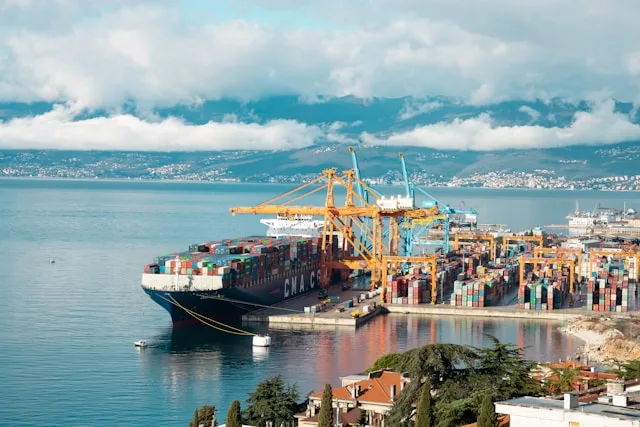
Rijeka's port cluster is now handling more capital investment than at any point in its modern history. The Rijeka Gateway deep-water terminal at Zagreb Pier, a €280 million joint venture between DP World and the Croatian government, reached 65% completion through early 2025 and is commissioning its first phase in early 2026. When operational, it will more than double the port's container capacity to approximately 1.2 million TEU annually. Combined with €142 million in EU Cohesion Fund investment to electrify and upgrade the Rijeka-Zagreb rail corridor, the physical infrastructure required to position Rijeka as a credible Adriatic container hub is, for the first time, being built at scale.
The problem is not concrete, steel, or rail gauge. It is people. The port cluster's training pipeline produces roughly 40 certified equipment operators per year. The new terminal alone requires 85 to 90. Senior Terminal Operating System specialists, the professionals who configure and run the Navis N4 platforms that make a modern container terminal function, take 8 to 11 months to recruit in this market. Certified STS crane operators exist in such small numbers that one employer poaching three from a rival port triggered a formal government complaint. The capital has moved. The human capital has not followed.
What follows is an analysis of the forces reshaping Rijeka's port and logistics sector, the specific roles where supply has failed to match demand, and what hiring leaders responsible for staffing Croatia's most ambitious infrastructure project need to understand before their next search.
The Cluster That Looks Integrated but Operates in Silos
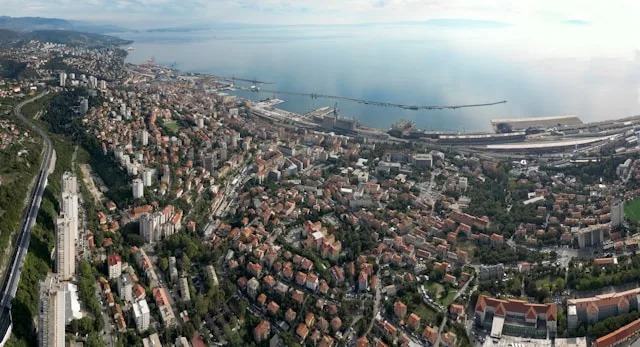
Rijeka's port operations span a geographic arc from Bakar in the east to Omišalj on the island of Krk, with the core container and passenger facilities at Rijeka proper. On a map, it looks like a coherent logistics hub. In practice, it operates as a fragmented collection of distinct businesses with limited workforce mobility between them.
Luka Rijeka d.d., listed on the Zagreb Stock Exchange, serves as the anchor landlord and operator of the Bakar bulk terminal, reporting consolidated revenues of HRK 461.8 million (€61.4 million) in 2023 with operating margins of 18.4%. Jadranski Terminali, an APM Terminals subsidiary, runs the existing Brajdica container terminal with 285 direct employees. DP World's Rijeka Gateway project is pre-operational with 45 project staff and active recruitment for 180 operational personnel. Jadrolinija, the state-owned ferry operator headquartered in Rijeka, employs 890 people locally. Dozens of customs brokers, freight forwarders, and intermodal operators fill the gaps between these anchor employers.
A Hinterland Port, Not a Transshipment Hub
A common misconception about Rijeka treats it as a transshipment node. The data says otherwise. Approximately 70% of cargo passing through the port is import or export freight destined for the Croatian, Hungarian, and Austrian hinterland. Only 30% is pure transshipment. The Rijeka-Zagreb-Budapest rail corridor, part of the TEN-T Rhine-Danube Core Network, carried 4.2 million tonnes of containerised rail cargo in 2023, a 15% year-on-year increase according to Croatian Railways cargo division statistics.
This hinterland orientation has direct implications for the talent profile the cluster needs. Transshipment ports require deep specialisation in vessel operations and yard management. Hinterland ports require something broader: professionals who understand the full chain from quayside to rail yard to inland distribution centre, often across three or four regulatory jurisdictions. That combined skill set is rare. It is also the skill set in shortest supply.
The Infrastructure Surge and Its Human Capital Blind Spot
The scale of physical investment flowing into Rijeka is genuinely unusual for a Croatian port. The Rijeka Gateway project alone represents the largest single port investment in Croatian history. Phase 1, targeting 600,000 TEU annual capacity, will feature Liebherr STS cranes with 22-container reach and automated gate systems. When combined with Brajdica's existing 248,000 TEU throughput (2023 figures, down 12% from 2022 due to Adriatic route restructuring), the port's total capacity will reach levels competitive with Koper and Trieste.
The Brajdica terminal itself is under strain. It operated at 85% berth utilisation through 2024, with yard density reaching 6,200 TEU per hectare in Q3, well above the 5,000 TEU threshold considered optimal for efficient stacking. These are not abstract metrics. They translate into slower truck turnaround times, longer vessel waiting periods, and the kind of operational friction that drives shipping lines to route cargo elsewhere.
Where the Bottleneck Is Shifting
Here is the analytical claim that the investment data alone does not make obvious: the capacity constraint in Rijeka is not moving from old infrastructure to new infrastructure. It is moving from physical infrastructure to human infrastructure. The €280 million terminal will be ready. The rail upgrades will be ready. The question is whether the 90 certified equipment operators, the TOS implementation team, and the senior terminal management will be in place when the cranes arrive.
This pattern is not unique to ports. It appears wherever capital investment in automation and physical plant races ahead of the workforce development required to operate it. But in Rijeka, the gap is unusually measurable. Training institutions graduate 40 specialists per year. The new terminal requires 85 to 90 by late 2026. Current fill times for senior systems managers run 8 to 11 months. These are not projections that might materialise. They are constraints already visible in the recruitment data.
The organisations that staff Rijeka Gateway on time will not do so by waiting for the local pipeline to catch up. They will do so by finding talent that is not looking for them, in markets they are not accustomed to searching.
Three Talent Shortages Defining the Market
The Rijeka port labour market is tight across nearly every operational category. But three specific shortage areas stand out for their severity, their resistance to conventional recruitment, and their direct impact on whether the cluster's expansion plans actually deliver.
Terminal Operating System Specialists
Demand for professionals who can implement, configure, and optimise Terminal Operating Systems has increased 140% year-on-year in the Rijeka market. The trigger is straightforward: both Rijeka Gateway and Brajdica are upgrading to Navis N4 and automated gate platforms simultaneously. The supply of qualified professionals is not straightforward at all.
A Senior Terminal Systems Manager with five or more years of TOS experience takes 8 to 11 months to recruit in Rijeka. According to reporting by Poslovni Dnevnik, Jadranski Terminali maintained a vacancy for a Terminal Operations Systems Manager responsible for Navis N4 integration for nine months between February and November 2024. The position was ultimately filled through internal transfer of a Croatian national from APM Terminals' Algeciras facility, requiring a relocation package exceeding €25,000 plus a housing allowance.
That outcome illustrates the real dynamics of this market. The talent exists globally within port operator networks. It does not exist locally. Recruiting it requires reaching into passive candidate pools at international port operations in Spain, the Netherlands, the UAE, and Southeast Asia, then constructing a proposition that makes Rijeka competitive against locations with higher salaries and more established operations.
Certified Equipment Operators
The numbers here are stark. Twelve certified STS crane operators are available in the Rijeka region. Thirty-four positions need filling across existing and planned terminals. The Maritime High School Rijeka, the primary regional training institution, certifies 15 to 20 operators annually. Even at maximum output, the training pipeline will not close this gap before the new terminal requires full staffing.
The competitive intensity this creates is already visible. According to reports in Jutarnji List and Slobodna Dalmacija, Luka Rijeka recruited three senior crane operators from the Port of Ploče in March 2024 by offering 35% salary premiums, moving base pay from HRK 14,000 to HRK 18,900 per month, plus signing bonuses of HRK 30,000. The episode was notable enough that Ploče port management filed a formal complaint with the Ministry of Transport regarding what they characterised as predatory recruitment.
When a single hire triggers a ministerial complaint, the market has moved beyond normal competition. The implications for any organisation planning to staff a new terminal with 180 operational personnel are severe. The cost of getting these hires wrong compounds in an environment where every qualified operator is already known, already employed, and already receiving competing approaches.
Intermodal and Supply Chain Leadership
Senior professionals who combine sea, rail, and road logistics expertise with Croatian, English, and German language proficiency show a 23% vacancy rate across major employers in the Primorje-Gorski Kotar region. The typical fill time for a senior intermodal manager role in Rijeka runs 4 to 6 months, compared to 2 to 3 months for equivalent positions in Zagreb.
Sixty percent of such positions filled in 2024 required international recruitment, drawing candidates from Serbia, Bosnia, or Slovenia rather than local markets. The language requirement is a compounding factor: the Rijeka-Zagreb-Budapest corridor serves Austrian and Hungarian hinterland customers, making German proficiency not a preference but an operational necessity. The pool of logistics leaders who speak Croatian, English, and German fluently, understand EU Customs Code compliance, and have operational experience in containerised rail freight is vanishingly small.
Compensation: What Roles Pay and Why the Gaps Matter
The compensation structure in Rijeka's port sector reveals a market stratified by specialism, with executive-level premiums that have widened materially over the past two years.
A Terminal Operations Manager with 5 to 8 years of experience earns HRK 25,000 to 32,000 per month (€3,330 to €4,260), plus performance bonuses of 15 to 20%. At the executive level, a Terminal Director or Managing Director overseeing container or bulk operations commands HRK 55,000 to 78,000 monthly (€7,330 to €10,400 base), with total packages reaching HRK 1.2 to 1.5 million annually (€160,000 to €200,000).
Technology leadership follows a different curve. An IT Systems Manager with port or TOS specialisation earns HRK 20,000 to 28,000 monthly. A Chief Information Officer or Digital Operations Director reaches HRK 45,000 to 60,000, but these roles show limited local availability. Employers recruiting CIOs from Zagreb or Ljubljana markets pay 20 to 25% premiums above these bands to secure relocation. The gap between Rijeka's local compensation benchmarks and what is required to move talent from competitor markets is where many searches break down.
The Geographic Pay Gap That Drives Attrition
Rijeka's compensation disadvantage against its competitor markets is not closing. Zagreb offers supply chain directors HRK 45,000 per month against Rijeka's HRK 33,000 for equivalent roles, a 35% premium. That gap alone explains much of the senior talent drain toward the capital, where multinational logistics headquarters (DHL, Kuehne+Nagel regional operations) offer clearer career trajectories.
The cross-border comparison is sharper still. Koper, barely 100 kilometres north, offers net salaries 40 to 50% higher after accounting for Slovenia's lower income tax rates. Trieste pays Terminal Managers €75,000 to €95,000 against Rijeka's €55,000 to €70,000 equivalent. Trieste's higher cost of living (40% above Rijeka per Eurostat data) partially offsets the wage premium, but only partially.
Budapest has emerged as a newer competitive threat for rail logistics and intermodal planning specialists, offering 35 to 40% salary premiums plus access to the growing Eastern European logistics ecosystem. Hungarian rail freight companies including CER Cargo and Rail Cargo Hungary actively recruit Croatian-speaking planners from Rijeka. For a mid-career intermodal specialist weighing their options, the economic case for staying in Rijeka requires something beyond salary: a role with scope and complexity that cannot be found elsewhere. Building that case is precisely the challenge hiring leaders face when they attempt to move passive candidates who are already comfortable and well compensated.
The Green Transition Squeeze on Bulk Operations
Rijeka's port cluster faces a revenue transition that will reshape its workforce requirements over the next three to five years. Luka Rijeka's Bakar Terminal derived 45% of its revenue from coal and iron ore handling as recently as 2024, contributing HRK 180 million annually to group revenues. But coal throughput declined 23% in 2024 alone, falling to 1.6 million tonnes, driven by Croatia's National Energy and Climate Plan coal phase-out mandates.
Grain and general cargo volumes rose 18% over the same period, suggesting partial success in diversifying the cargo mix. Partial is the operative word. The grain and general cargo volumes do not yet replace the coal revenue they are intended to substitute, and the timeline for coal phase-out is not negotiable.
Simultaneously, the full implementation of the EU Emissions Trading System for maritime transport in 2026 imposes carbon cost liabilities estimated at €8 to €12 per TEU for Rijeka operators. Shore power investments at Brajdica alone are estimated at €18 million. Total annual ETS compliance costs for Rijeka operators are projected at €3.2 million by 2026.
This is not merely a financial constraint. It is a talent constraint. The professionals who manage coal terminals are not the same professionals who manage grain logistics, biomass handling, or carbon compliance reporting. The Bakar Terminal's workforce will need to transition from heavy bulk commodity handling toward diversified cargo management and environmental compliance, requiring retraining programmes that do not yet exist at the scale needed. Meanwhile, carbon compliance officers and environmental engineers with port operations experience represent yet another thin talent category in a market already stretched across multiple fronts.
The organisations that treat this transition as purely an infrastructure problem will discover that the harder problem is finding the people qualified to run the new operations once the old ones wind down.
Structural Constraints That Conventional Recruitment Cannot Overcome
Several embedded features of the Rijeka market make traditional hiring approaches unreliable for critical roles.
Rail Capacity and Its Talent Implications
The single-track section between Rijeka and Moravice, spanning 60 kilometres, limits rail capacity to 12 trains daily despite demand for 20 or more daily services to serve expanded container operations. The €142 million rail upgrade will not complete until Q4 2026. Until then, the intermodal value proposition that justifies Rijeka's hinterland strategy remains constrained by physical rail throughput.
This has a direct effect on talent. Intermodal logistics managers evaluate employers partly on operational credibility. A port that cannot offer its customers reliable daily rail service to Budapest is a harder sell to a senior rail logistics specialist than one that can. The rail bottleneck constrains hiring not through compensation but through career proposition.
Labour Market Rigidity
Croatian Labour Act restrictions on temporary employment and strict dismissal protections create hiring hesitancy for cyclical port operations. According to the World Bank's Doing Business assessment for Croatia, redundancy costs average 8.5 months' salary for senior operational staff. For a terminal operator experiencing seasonal fluctuation between peak summer throughput and winter slowdown, this rigidity makes permanent hiring decisions high-stakes. The result is slower hiring cycles, longer vacancy durations, and a preference for contracted stevedoring arrangements that offer flexibility but limit workforce development.
The Aging Operator Workforce
Thirty-four percent of current port equipment operators at Luka Rijeka are over 55 years old. Mandatory retirement will create replacement demand for 120 operators by 2030, against a training capacity of 15 to 20 annual certifications. This is not a future problem. It is a problem that is already compounding. Every year that passes without expanding the certification pipeline increases the severity of the replacement wave that arrives at the end of the decade.
A market where 90 to 95% of senior terminal operations professionals are passive candidates, where average tenure in current roles runs 7.2 years, and where active applicants often signal career distress rather than ambition is not a market that responds to job postings. It is a market that requires systematic identification of candidates who are not looking, approached with propositions tailored to what would actually move them.
What This Means for Hiring Leaders in Rijeka's Port Cluster
The convergence of infrastructure expansion, green transition pressure, aging workforce demographics, and geographic pay disadvantage creates a hiring environment where speed and method determine outcomes more than budget alone. A salary premium can move a crane operator from Ploče. It cannot produce a TOS implementation specialist who does not exist in the local market. It cannot accelerate the Maritime High School's annual output from 40 to 90 certifications overnight.
Hiring leaders staffing the Rijeka Gateway launch or managing the Bakar Terminal's cargo transition face a specific set of requirements. They need access to passive candidates across international port operator networks. They need talent mapping that identifies the 12 certified STS operators in the region and the 200 more across the Mediterranean and Northern Europe. They need search processes that complete within the 7 to 10 day window before a qualified candidate accepts a competing approach from Koper, Trieste, or Budapest.
KiTalent's executive search methodology is built for exactly this market profile: specialised, passive-dominant, and geographically constrained. With a 96% one-year retention rate across 1,450 placements and a pay-per-interview model that eliminates upfront retainer risk, the approach matches the economics of a market where the cost of a failed search is measured not in fees but in terminal commissioning delays.
For organisations building leadership teams to staff Rijeka's port expansion, where TOS specialists take nine months to find through conventional methods and certified crane operators are the subject of ministerial complaints, speak with our executive search team about how we approach this market differently.
Frequently Asked Questions
What is the current container capacity at the Port of Rijeka?
The existing Brajdica terminal, operated by Jadranski Terminali (APM Terminals), handled 248,000 TEU in 2023 and operates at approximately 85% berth utilisation. With the Rijeka Gateway Phase 1 terminal commissioning in early 2026, total port capacity will reach approximately 1.2 million TEU annually. Forecasts indicate throughput of 450,000 to 500,000 TEU in 2026, contingent on successful rail interoperability testing on the Rijeka-Zagreb corridor and the completion of rail capacity upgrades.
Why is it so difficult to hire port equipment operators in Rijeka?
The Rijeka region has only 12 certified STS crane operators available against demand for 34 positions across existing and planned terminals. The Maritime High School Rijeka, the primary training institution, graduates 15 to 20 certified operators annually, far below the 85 to 90 new specialists needed by late 2026 to staff the Rijeka Gateway terminal. These supply constraints mean that 90 to 95% of qualified candidates are passive, already employed, and require direct headhunting approaches rather than job advertising.
How do Rijeka port salaries compare to competing markets?
Rijeka's port operations salaries sit 25 to 35% below Zagreb for equivalent logistics leadership roles, and 40 to 50% below Koper, Slovenia, after adjusting for income tax differences. Terminal Directors in Rijeka earn €160,000 to €200,000 in total annual compensation, compared to €75,000 to €95,000 base salary alone for Terminal Managers in Trieste. Budapest has also emerged as a competitor, offering 35 to 40% premiums for rail logistics specialists with Croatian language skills.
What impact will the EU Emissions Trading System have on Rijeka port operations?
Full implementation of the EU ETS for maritime transport in 2026 imposes carbon cost liabilities of approximately €8 to €12 per TEU for Rijeka operators. Shore power infrastructure investment at Brajdica terminal alone is estimated at €18 million, with total annual compliance costs for the port cluster projected at €3.2 million. These costs accelerate the need for environmental compliance specialists and carbon management professionals, a talent category with very limited availability in Croatia's maritime sector.
What are the most in-demand executive roles in Rijeka's port sector?
The three highest-demand categories are Terminal Operating System specialists (particularly those with Navis N4 configuration experience), certified STS crane and RTG operators, and senior intermodal logistics managers with Croatian, English, and German language skills. TOS specialist vacancies average 8 to 11 months to fill. Intermodal manager roles take 4 to 6 months, with 60% filled through international recruitment. KiTalent's AI-enhanced talent mapping identifies qualified candidates across these categories within international operator networks, delivering interview-ready shortlists within 7 to 10 days.
Is Rijeka's port expansion at risk due to workforce shortages?
The risk is measurable. Rijeka Gateway requires 180 operational personnel for its 2026 launch, including 85 to 90 certified equipment operators, in a market where training institutions produce fewer than half that number annually. Without aggressive international recruitment and proactive talent pipeline development, the terminal faces the possibility of commissioning physical infrastructure before the workforce required to operate it at capacity is in place.