Zadar's Maritime Sector Is Expanding Fast. Its Talent Pipeline Is Pointed in the Wrong Direction
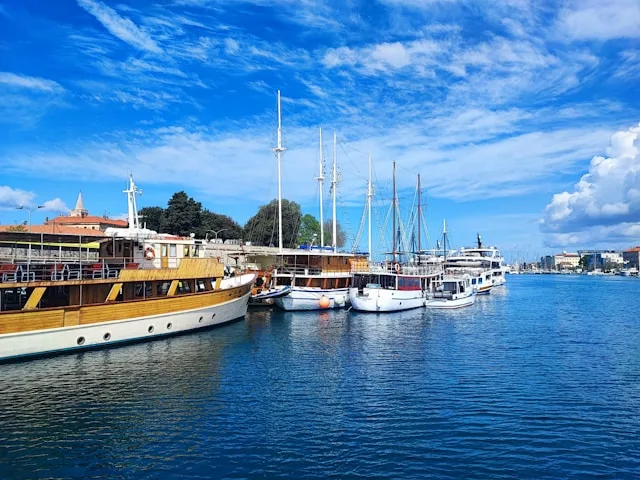
Zadar County now hosts 1,400 registered charter vessels, a deep-water port handling nearly 300,000 cruise passengers a year, and a ship repair yard running at near-full seasonal capacity. D-Marin Dalmacija is investing €12 million to add 150 superyacht berths. Jadrolinija is deploying two newbuild Ro-Pax vessels on the Zadar to Ancona route. The infrastructure story, on the surface, looks like a market accelerating toward a bigger, more profitable future.
The talent story tells a different version. The pool of certified Croatian maritime professionals in Zadar County has contracted by 18% since 2019, driven by emigration to Ireland and Germany. Only 32% of required marine engineer certifications for the Zadar catchment are issued domestically. The University of Zadar and the local Maritime High School together graduated over 200 students in 2024. Yet both Jadrolinija and Tesy d.o.o. report persistent shortages of engineers and officers ready to work on day one. The pipeline exists. It is producing the wrong output.
What follows is an analysis of the forces pulling Zadar's maritime sector apart: expanding physical capacity on one side, shrinking and misaligned human capital on the other. This article examines the specific roles where shortages are most acute, why the local training infrastructure is failing to close the gap, what the compensation environment looks like for hiring leaders competing in this market, and what it takes to recruit the passive, certified professionals that every employer in this corridor needs and almost none can find through conventional channels.
The Port of Zadar in 2026: Bigger Capacity, Fewer People to Run It
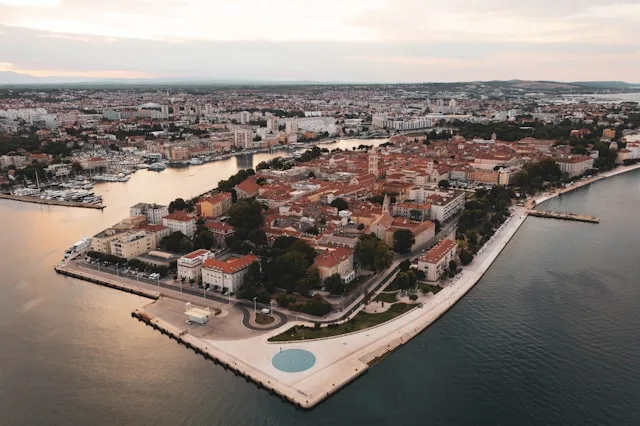
The relocation of commercial traffic from Zadar's historic city port to the Gaženica deep-water facility in 2015 was the defining infrastructure decision of the past decade. Today, 100% of cruise calls and 95% of ferry traffic concentrate at Gaženica. In 2024, the port recorded 187 cruise ship calls and 298,000 cruise passengers, a 12% increase over 2023 but still 8% below the 2019 peak. Ferry traffic reached 4.2 million passengers and 1.1 million vehicles.
The 2026 outlook projects 195 to 210 cruise calls, with a deliberate shift toward smaller luxury expedition vessels carrying under 250 passengers. Zadar is actively limiting mega-ship calls as part of destination management policy. This is not contraction. It is a higher-margin pivot that demands more specialised handling per vessel rather than less.
Luka Zadar d.o.o., the state-owned port authority, maintains 145 permanent employees and scales to 220 with seasonal stevedores. The problem sits at the management layer. The port's own 2024 HR assessment found only two specialised cruise operations managers available locally. Retention rates for these roles sit below 60%. A port operations manager with cruise logistics experience is not a commodity hire. The role requires fluency in English and Italian, ISPS certification, and practical experience coordinating waste management, shore power connections, and turnaround logistics for vessels with radically different operational profiles.
Across Croatia, only 12 individuals meet these combined criteria. All of them are currently employed.
The Training Pipeline Problem: 200 Graduates, Not Enough Ready Engineers
This is the tension at the core of Zadar's maritime talent market, and it is the point most hiring leaders outside the sector misunderstand. The numbers suggest a healthy pipeline. The University of Zadar's Maritime Department graduated 85 students in 2024. The Maritime High School graduated another 120 maritime technicians. Combined, these institutions produced more than 200 professionals entering the Zadar maritime employment market in a single year.
And yet Jadrolinija and Tesy d.o.o. cannot fill 40 to 50 marine engineer positions annually in the Zadar catchment. The Croatian Maritime Administration's seafarer statistics confirm the mismatch: only 32% of required STCW III/1 and III/2 engineer certifications are issued domestically for this region.
Curriculum Design vs Employer Need
The explanation is not volume. It is alignment. Zadar's maritime training programmes remain heavily oriented toward navigation theory. Employers need diesel-electric propulsion maintenance. They need LNG handling competence for the new fuel requirements arriving under the Mediterranean Emission Control Area designation. They need cruise logistics coordination skills that did not exist as a discipline when the current curricula were designed. No public data indicates a timeline for curriculum reform to close this gap.
The result is a paradox that should concern every hiring executive in this sector. The city is producing maritime graduates at a reasonable rate. Those graduates are not equipped with the certifications and practical skills that the market's largest employers actually require. This is not a hiring problem. It is a knowledge production problem. You cannot recruit experience and certifications that the local education system does not yet produce in sufficient quantity.
The Emigration Drain
The gap widens further when you account for where graduates go after qualifying. Croatia's EU accession opened labour mobility across the bloc. The 18% decline in certified maritime professionals in Zadar County since 2019 is not driven by retirement. It is driven by emigration to Ireland and Germany, where net wages for equivalent roles are materially higher and career progression is faster. The students who do acquire the right certifications often leave before the local market can retain them.
For organisations hiring in this market, the implication is direct. Waiting for the local pipeline to solve the shortage is not a viable strategy in 2026 or in any foreseeable planning horizon.
Where the Money Goes: Compensation in Zadar's Maritime Sector
Compensation in Zadar's maritime sector is shaped by an unusual split between state-owned and private employers. Public sector salary caps constrain what Luka Zadar and Jadrolinija can offer, while private operators like D-Marin and the charter management cluster face no such ceiling. The result is a two-tier market where the most prestigious institutional employers often pay less than the private firms competing for the same certified professionals.
At the port operations manager level, Luka Zadar's public salary scales place the range at €42,000 to €58,000 for a senior specialist. The Port Director role is capped by Croatian state-owned enterprise remuneration rules at €78,000 to €95,000. These figures are fixed by regulation, not by market clearing price.
Jadrolinija's collective agreement sets fleet superintendent compensation at €55,000 to €72,000, with a Technical Director for the Zadar region earning €85,000 to €110,000 plus a performance bonus. These are competitive within Croatia's public transport sector. They are not competitive against Italian or Montenegrin alternatives.
In the private yacht charter and management segment, a Charter Fleet Manager earns €38,000 to €52,000 plus commission. A General Manager at a charter company commands €65,000 to €85,000 plus profit share. Ship repair sits in between, with Tesy's Production Manager roles at €48,000 to €62,000 and a Managing Director position reaching €70,000 to €90,000.
The critical gap is international. Italian yacht management firms in Genoa and Viareggio offer 40% to 60% higher base salaries for MYBA-certified brokers and fleet managers. Montenegro's Porto Montenegro and Porto Novi compete for marina operations staff with a 10% flat income tax against Croatia's 25%+ rate. Slovenian and Trieste-based employers poach Croatian welders and pipefitters from yards like Tesy with net wage premiums of 25% to 35%.
This is the compensation reality that makes salary benchmarking for maritime leadership roles essential before launching any senior search in this market. Zadar's employers are not only competing with each other. They are competing with a Mediterranean corridor that consistently outbids them at the exact seniority levels where shortages are most acute.
The Passive Candidate Challenge: Why Job Boards Cannot Reach This Market
The most important hiring insight in Zadar's maritime sector is structural. The candidates that employers most urgently need are overwhelmingly passive. They are employed. They are not looking. And the channels most organisations use to recruit do not reach them.
Consider three role categories that define the hiring challenge.
Master Mariners qualified for yachts over 500GT: 85% of qualified candidates in the Zadar catchment are already contracted to vessels or management companies. Average tenure in their current role is 3.5 years. The small number who are actively seeking work often lack current certification or hold restricted licences.
Port Operations Directors with cruise experience: the total population meeting the combined criteria of English and Italian fluency, cruise turnaround experience, and ISPS certification is 12 individuals in all of Croatia. Every one of them is currently employed.
MYBA-certified yacht brokers with established client books: fewer than 20 exist in Zadar. They operate on commission-based stability and do not respond to job advertisements. They move through network-based recruitment with six to twelve month non-compete negotiations.
The active candidate market exists only at entry level. Deckhands, hospitality crew, and seasonal stevedores see off-season unemployment rates exceeding 15%. For any role requiring certification, management experience, or established commercial relationships, the market is passive by default.
This is where the mathematics of traditional recruitment break down. A job posting on Posao.hr or a charter industry aggregator reaches the 15% who are looking. It misses the 85% who are not. The distinction between active and passive search approaches is not theoretical in this market. It is the difference between assembling a shortlist and assembling an empty folder.
Regulatory Pressure and the Cost of Standing Still
Two regulatory forces are compressing Zadar's maritime labour market from the outside, adding urgency to an already tight environment.
Mediterranean Emission Control Area Compliance
The Mediterranean Sea ECA designation took effect in May 2025, requiring ferry and cruise operators to switch to 0.1% sulphur fuel or install exhaust scrubbers. Zadar lacks LNG bunkering infrastructure. Vessels calling at Gaženica must carry additional fuel or accept operational constraints. Compliance costs for Jadrolinija's Zadar-based fleet alone are estimated at €2.5 to €4 million annually, according to the Croatian Ministry of Maritime Affairs' ECA Implementation Plan.
The talent implication is direct. Operating under ECA rules demands marine engineers trained in scrubber maintenance, LNG fuel handling, and emissions monitoring systems. These are precisely the skills that Zadar's training pipeline does not produce. Every vessel calling at Zadar now needs crew and shore-side technical staff with competencies that were optional two years ago and are now mandatory.
Cruise Passenger Caps Under Discussion
Venice-style daily passenger limits are under active discussion for Zadar's historic centre. The proposed cap of 8,000 daily cruise passengers, against current peaks of 12,000, would reduce port revenues by an estimated 30% and eliminate 200 to 250 seasonal jobs. The Zadar Tourist Board's Destination Management Plan for 2025 to 2030 frames this as an environmental and quality-of-life measure.
For hiring leaders, a cap does not simplify the talent problem. It reshapes it. Fewer passengers per vessel means higher service expectations per passenger. The shift toward luxury expedition vessels under 250 passengers reinforces this. The port needs fewer stevedores and more specialised hospitality coordinators, multilingual ground operations managers, and technical staff capable of servicing boutique expedition ships with non-standard configurations.
The regulatory trajectory points in one direction. Zadar's maritime sector is moving toward a smaller, higher-skill, higher-value operating model. The talent market has not caught up with this shift, and organisations that delay adapting their search methods will find the gap widening rather than closing.
The Competitive Corridor: Where Zadar's Talent Goes and Why
Zadar does not exist in isolation. It sits within a Mediterranean corridor that actively competes for the same certified maritime professionals. Understanding where talent flows out of Zadar is essential for any organisation trying to bring it in.
For certified marine engineers and deck officers, Split is the primary competitor. It offers 15% to 20% salary premiums for equivalent Jadrolinija routes, lower travel costs to home bases for officers who reside in Split-Dalmatia County, and faster promotion trajectories through Jadrolinija's larger Split-based fleet. Zadar-posted positions for Second Engineers under STCW III/2 certification have historically remained unfilled for six to nine months, with roles eventually filled by Filipino or Ukrainian contract officers after Croatian officers declined in favour of Split or Rijeka routes.
Rijeka attracts logistics and port operations talent with integrated cargo-port career paths and better rail connectivity. Port operations managers in Rijeka earn €5,000 to €8,000 annual premiums over equivalent Zadar roles.
The international pull is stronger still. According to industry reporting in Novi List, Tesy d.o.o. recruited three senior marine electricians from Brodosplit in Split during the 2024 winter refit season by offering 20% salary premiums and accommodation allowances, following a four-month local search that produced no viable candidates. When Zadar's ship repair yard must poach from Split to fill specialist roles, the underlying market signal is clear: local supply has functionally collapsed for certain skill categories.
For yacht management executives, Italy is the destination. Senior charter managers with three to five years of Zadar experience routinely move to Genoa or Viareggio for 40% to 60% salary increases. Montenegro competes for marina operations staff with tax-advantaged packages. Slovenia and Trieste attract welders and pipefitters with net wage premiums of 25% to 35%.
Zadar's cost of living advantage, while real, does not offset these differentials at the seniority levels that matter most. A €48,000 production manager role in Zadar loses to a €62,000 role in Koper when the candidate calculates net income after tax. The organisations that retain senior maritime talent in Zadar are those that offer something beyond compensation: operational autonomy, profit participation, or a quality-of-life argument tied to the Adriatic lifestyle. Articulating that value proposition requires a level of candidate engagement that transactional recruitment cannot deliver.
What This Means for Hiring Leaders in Zadar's Maritime Sector
The core analytical conclusion from this market is counter-intuitive. Zadar's maritime talent crisis is not primarily a shortage crisis. It is an alignment crisis. The city produces maritime graduates. It invests in infrastructure. It expands berth capacity and modernises its fleet. But the human capital system and the physical capital system are pointed in different directions. The training pipeline produces navigators in a market that needs propulsion engineers. The compensation structure is regulated in a market that competes against unregulated Italian and Montenegrin alternatives. The recruitment culture relies on job postings in a market where 85% of qualified candidates are passive.
Capital moved faster than human capital could follow. The €12 million D-Marin expansion, the Jadrolinija fleet renewal, the ECA compliance mandate: each of these investments creates demand for professionals who do not yet exist in sufficient numbers within the Zadar catchment. The organisations that recognise this misalignment and adjust their hiring approach accordingly will fill their roles. Those that wait for the pipeline to correct itself will wait longer than the market gives them.
For organisations competing for leadership talent across maritime and industrial sectors in the Adriatic, conventional recruitment methods reach a fraction of the viable candidate pool. The certified engineers, yacht management executives, and port operations leaders that Zadar's employers need are employed, passive, and distributed across a competitive Mediterranean corridor. Reaching them requires direct headhunting methodology designed for exactly this market profile: small candidate pools, high certification barriers, and passive professionals who do not respond to advertisements.
KiTalent delivers interview-ready executive candidates within 7 to 10 days through AI-powered talent mapping that identifies the professionals no job board reaches. With a 96% one-year retention rate across 1,450+ executive placements, and a pay-per-interview model that eliminates upfront retainer risk, the approach is built for markets where the candidate pool is small, specialised, and invisible to conventional search.
For hiring leaders working to fill certified maritime engineers, fleet operations managers, or yacht management executives in the Zadar corridor, speak with our executive search team about how we identify and engage the passive candidates this market demands.
Frequently Asked Questions
What are the hardest maritime roles to fill in Zadar in 2026?
Certified marine engineers holding STCW III/1 and III/2 qualifications are the most persistently difficult to recruit. Only 32% of required engineer certifications for the Zadar catchment are issued domestically. Port operations managers with cruise logistics experience and ISPS certification are equally scarce, with only 12 qualified individuals in all of Croatia, all currently employed. MYBA-certified yacht brokers with established client books represent a third acute shortage, with fewer than 20 in the Zadar market and none responsive to conventional job advertising.
Why does Zadar struggle to retain maritime talent compared to Split or Rijeka?
Split offers 15% to 20% salary premiums for equivalent ferry routes and faster promotion through Jadrolinija's larger fleet. Rijeka attracts port operations professionals with integrated cargo career paths and €5,000 to €8,000 annual premiums. Internationally, Italian yacht management firms pay 40% to 60% more than Zadar equivalents, while Montenegro competes with a 10% flat income tax. Zadar's quality-of-life advantages are real but insufficient to offset these differentials at senior levels without a structured executive compensation and retention strategy.
What does a port operations manager earn in Zadar?
At Luka Zadar, a senior port operations manager earns €42,000 to €58,000 under public salary scales with a 15% seniority premium. The Port Director role is capped at €78,000 to €95,000 by Croatian state-owned enterprise remuneration regulations. Private marina executives, such as those at D-Marin Dalmacija, may earn 30% to 40% premiums above public sector equivalents, though these figures are not publicly disclosed.
How does the Mediterranean Emission Control Area affect Zadar's maritime hiring?
The Mediterranean ECA designation, effective from May 2025, requires vessels to use 0.1% sulphur fuel or install scrubbers. Zadar lacks LNG bunkering infrastructure, forcing operational adjustments. Compliance costs for Jadrolinija's Zadar fleet run €2.5 to €4 million annually. The talent impact is direct: marine engineers must now hold competencies in scrubber maintenance, LNG fuel handling, and emissions monitoring that Zadar's training institutions do not yet produce at scale.
How can companies hire passive maritime professionals in Croatia?
In Zadar's maritime sector, 85% of qualified Master Mariners and all 12 port operations directors meeting cruise experience criteria are currently employed and not actively seeking new roles. Job postings reach only the active minority. Engaging these candidates requires direct executive search methods that combine AI-powered talent mapping with confidential, network-based outreach. KiTalent's approach identifies and engages these passive professionals, delivering interview-ready candidates within 7 to 10 days.
Is Zadar's maritime training pipeline sufficient for future demand?
The University of Zadar's Maritime Department and the local Maritime High School graduated over 200 students in 2024. However, curricula remain oriented toward navigation theory rather than the diesel-electric propulsion maintenance, LNG handling, and cruise logistics skills employers need. Graduates who do acquire relevant certifications frequently emigrate to Ireland or Germany for higher wages. The pipeline produces volume but not alignment, making external recruitment essential for specialised and senior roles across the Zadar maritime corridor.