Zenica's Logistics Corridor Is Expanding. The Workforce to Run It Is Not.
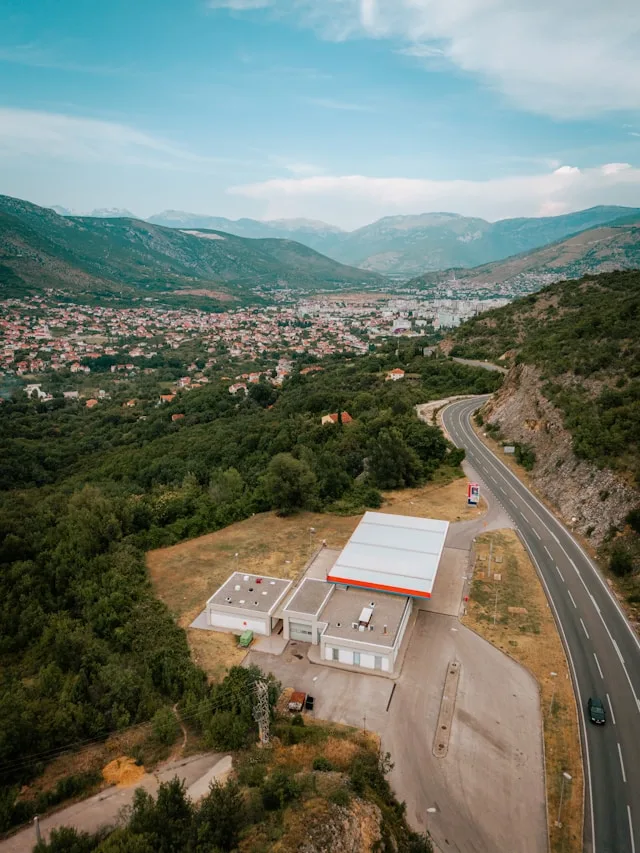
More than €120 million in EU Connecting Europe Facility funds is flowing into the rail and road corridors that pass through Zenica. Junction upgrades on the Sarajevo-Doboj line are projected to increase rail freight capacity by 25%. New motorway segments on Corridor Vc have already pushed heavy goods vehicle density up 12% in a single year. By every infrastructure measure, Zenica in 2026 is a logistics node gaining strategic weight.
The problem is not the infrastructure. It is the people. Bosnia and Herzegovina loses between 15,000 and 20,000 working-age citizens annually, with logistics and engineering professionals overrepresented in that outflow. In Zenica's haulage sector, a qualified international truck driver with ADR hazardous goods certification takes six to twelve months to recruit. A senior rail signalling engineer takes longer. Aggregate vacancy rates across the freight and industrial services sector sit 40% above the Federation of BiH average. The corridor is being built. The workforce to operate it is migrating to Zagreb, Ljubljana, and Munich.
What follows is an analysis of the force reshaping Zenica's logistics sector: the collision between infrastructure investment and human capital depletion. It examines where the gaps are deepest, what the ArcelorMittal green transition means for freight composition, how compensation dynamics are failing to retain critical talent, and what hiring leaders operating in this market must understand before committing to searches that conventional methods cannot close.
The Corridor Vc Effect: Physical Capacity Outpacing Human Capacity
Zenica sits at the intersection of two Pan-European transport corridors. Corridor Vc runs north-south, connecting Budapest to the Adriatic port of Ploče through Sarajevo and Zenica. Corridor Xc runs east-west along the Sarajevo-Doboj railway line. This dual positioning makes Zenica one of the few inland logistics nodes in the Western Balkans with both road and rail connectivity to EU markets.
The investment flowing into these corridors is real. JP Autoceste FBIH traffic census data from 2023 showed HGV density on the Zenica motorway section rising 12% year-on-year, driven by steel exports heading to Adriatic ports and construction logistics for further Corridor Vc completion. The European Commission's 2023 report on Bosnia and Herzegovina confirmed CEF funding for Zenica rail junction upgrades designed to lift throughput capacity by a quarter.
Yet the analytical tension in this data is striking. The same EU candidacy process that unlocked corridor funding is also accelerating the labour mobility that drains the logistics and industrial workforce Zenica needs. EU candidate status opens pre-accession mobility pathways. Germany's Fachkräfteeinwanderungsgesetz (Skilled Workers Immigration Act) specifically targets the transport and logistics qualifications that Zenica cannot afford to lose. The infrastructure is being built for a workforce that, in material part, is leaving.
This is the core tension of the Zenica logistics market in 2026. Capital is moving faster than human capital can follow. Physical corridor capacity is expanding into what risks becoming ghost capacity: transport networks with upgraded junctions, modernised signalling, and insufficient qualified operators to run them.
ArcelorMittal's Green Transition and the Freight Composition Shift
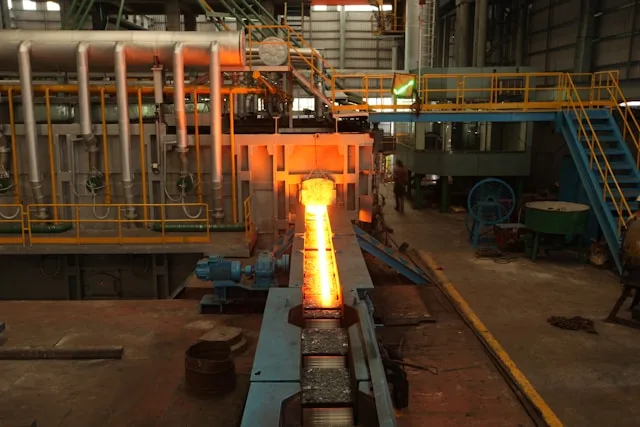
ArcelorMittal Zenica is not merely the city's largest employer at 2,800 to 3,000 workers. It is the gravitational centre of the entire logistics ecosystem. The steelworks generates approximately 1.2 to 1.5 million tonnes of annual freight movement, split between inbound raw materials and outbound finished steel. This volume sustains a network of 40-plus certified local suppliers providing maintenance, transport, and technical services.
From Bulk Volume to High-Value Precision
The company's planned transition to electric arc furnace technology will change what moves through Zenica's corridors. EAF production reduces reliance on imported coal and iron ore. The inbound bulk commodity flow that currently sustains volume-based haulage will contract. In its place, the outbound mix shifts toward higher-value finished steel products requiring specialised flatbed transport and precision warehousing.
For Zenica's haulage SMEs, most of which operate fleets of five to twenty vehicles, this is not an incremental change. It is a structural market shift from volume to value. The specialised equipment, temperature-controlled flatbeds, and precision logistics capabilities required for high-value finished steel transport demand capital investment that many local operators lack. The risk is that international freight forwarders with Sarajevo-based operations absorb the high-margin work while local firms compete for a shrinking pool of bulk contracts.
The Supply Chain Manager Gap
The transition also rewrites the talent specification for supply chain leadership at every firm in ArcelorMittal's ecosystem. A logistics manager who spent a career optimising bulk commodity throughput does not automatically possess the skills to manage value-added logistics chains with tighter tolerances, EU customs compliance requirements, and just-in-time delivery metrics. The FBiH Employers' Association's Skills Gap Analysis from 2024 documented the inability of Zenica firms to secure supply chain managers experienced in TIR carnet procedures and EU transit customs (NCTS). Searches for these roles typically fail outright or require relocation packages from Sarajevo.
This is where the original analytical claim becomes clear. The investment in ArcelorMittal's modernisation and in corridor infrastructure has not reduced the workforce requirement. It has replaced one kind of worker with another that does not yet exist in sufficient numbers locally. Bulk haulage operators are becoming redundant while precision logistics specialists remain unavailable. Capital moved faster than human capital could follow, and the gap is widening rather than closing.
Three Talent Shortages That Define This Market
The freight and industrial services sector in Zenica faces shortages in three categories that are not independent of one another. Each compounds the others, and solving any one in isolation does not resolve the operational constraint.
ADR-Certified International Truck Drivers
Haulage SMEs in the Zenica-Doboj corridor report six to twelve month vacancy periods for drivers qualified for hazardous goods transport. The FBiH Chamber of Commerce confirms that 60% of transport firms in the corridor cite this as their primary operational constraint. These are not entry-level roles. Category C/E licensing with ADR certification requires years of training and supervised driving. The driver who qualifies in Zenica can earn 2.5 to 3.5 times the local salary by crossing into Croatia or Slovenia, both EU member states with acute driver shortages of their own.
The Federal Employment Service lists this specialism on its shortage occupations register. The pipeline of new qualifications is not keeping pace with emigration. Every driver who leaves for an EU employer removes a qualification that took years to produce and cannot be replaced in under twelve months.
Rail Operations and Signalling Engineers
The transition to EU-compliant ERTMS signalling systems has created a bottleneck with near-zero national unemployment in the specialism. Željeznički prevoz and infrastructure operators need technicians capable of maintaining both legacy systems and new digital installations simultaneously. A typical recruitment cycle for a Senior Rail Traffic Controller extends eight to ten months. The BiH Railways Corporation's Human Resources Development Plan for 2023 to 2025 acknowledged this gap explicitly.
This shortage is particularly consequential because the corridor upgrades funded by CEF are themselves signalling modernisation projects. The infrastructure investment creates the demand for the very talent that does not exist in sufficient supply to operate it. Hiring leaders responsible for rail operations in this corridor face a circular problem: the upgrade that was supposed to improve capacity requires staff that the upgrade's own timeline does not allow enough time to train.
Supply Chain Managers with EU Customs Expertise
As Corridor Vc integrates with EU transport networks, the procedural complexity of cross-border logistics increases. TIR carnet management, NCTS transit customs documentation, and EU roadworthiness compliance are not skills that can be acquired through on-the-job observation. They require formal training and, ideally, operational experience within an EU-regulated environment.
Zenica firms competing for this talent are competing against Sarajevo, where international freight forwarders such as Kuehne+Nagel and Schenker maintain regional headquarters and offer 25 to 35% salary premiums. The candidates who possess EU customs expertise and are willing to work in Zenica rather than Sarajevo represent a fraction of an already small qualified pool.
For hiring leaders attempting to fill any of these three categories through conventional job advertising, the mathematics are stark. Active jobseekers represent less than 15% of the qualified talent pool for senior supply chain, rail infrastructure, and HSE logistics roles. The remaining 85% of successful placements occur through direct headhunting from incumbent positions.
Compensation: Competitive Locally, Irrelevant Regionally
Zenica's compensation structure for logistics professionals reflects a market that is internally coherent but externally uncompetitive. A Senior Logistics Manager with ten or more years of experience earns BAM 4,200 to 6,500 gross monthly, equivalent to roughly €2,150 to €3,320. This represents an 80 to 120% premium over the FBiH average wage of BAM 2,340, making it an attractive salary within Zenica's cost-of-living context.
At the Director of Logistics or VP Operations level, compensation ranges from BAM 8,500 to 14,000 gross monthly, with total compensation at ArcelorMittal or equivalent large industrials potentially reaching BAM 18,000 when performance bonuses tied to OTIF delivery metrics and inventory turnover are included. By Zenica standards, these are premium packages.
The problem is that Zenica does not compete against itself. It competes against Sarajevo, where equivalent roles pay 25 to 35% more. It competes against Zagreb and Rijeka, where EU membership and wage differentials of 2.5 to 3.5 times Zenica rates make emigration financially rational for any qualified professional willing to relocate. It competes against Ljubljana, Munich, and Vienna, where the same qualifications command multiples that no Zenica employer can match on base salary alone.
An estimated 15% of BiH's qualified logistics workforce has migrated to EU markets since 2020, according to the World Bank's Bosnia and Herzegovina Migration and Labour Market Report. The retention factors that historically kept talent in Zenica, primarily lower living costs at 20 to 25% below Sarajevo and seniority-based stability at ArcelorMittal, are eroding as EU mobility pathways expand.
The compensation gap is not closing. It is widening fastest at exactly the seniority level where the most critical roles sit. A senior logistics executive weighing a counteroffer from a Zenica employer against an offer from a Zagreb-based multinational is not comparing two numbers. They are comparing two career trajectories, two regulatory environments, and two sets of long-term economic prospects.
For organisations attempting to benchmark their offers against regional competitors, this means that competitive compensation in Zenica requires something beyond salary. It requires non-monetary differentiation: scope of responsibility, capital investment commitment, career progression within a modernising operation, and the tangible evidence that the employer is investing in the future rather than managing decline.
Regulatory Complexity as a Hiring Multiplier
Bosnia and Herzegovina's regulatory environment adds a layer of friction that amplifies every talent shortage. Entity-level differences in transport licensing between the Federation of BiH and Republika Srpska create administrative burdens for any logistics firm operating across internal boundaries. Customs procedures at the BiH-Croatia border average four to six hours for heavy goods vehicles, directly undermining just-in-time logistics competitiveness.
The pending adoption of EU transport regulations under the acquis alignment process will compound the compliance demand. Roadworthiness standards, cabotage rules, and driver working time regulations all require adaptation by Zenica's haulage SMEs before 2026 harmonisation deadlines. Each regulation creates a compliance role or function that must be staffed by someone who understands both the current BiH framework and the incoming EU standard.
This regulatory complexity is not a background condition. It is a hiring multiplier. Every EU compliance requirement that a Zenica logistics firm must meet generates demand for talent that the local market does not produce in sufficient volume. The firms that fail to hire compliance-capable managers do not merely lose efficiency. They risk losing their operating licences for international freight forwarding.
For executive hiring in industrial and manufacturing sectors across the Western Balkans, regulatory alignment with EU standards is creating a parallel talent market: professionals who understand both pre-accession and EU-compliant operating environments. These individuals are scarce everywhere in the region. In Zenica, they are nearly absent.
What This Means for Hiring Leaders in Zenica's Logistics Sector
The market intelligence in this analysis points to a single conclusion. Zenica's logistics sector is undergoing two simultaneous transitions: a physical infrastructure upgrade that expands capacity, and a workforce depletion that constrains the ability to use it. The ArcelorMittal green transition adds a third vector by shifting freight composition from bulk volume to high-value precision, demanding skills the current workforce does not possess.
Hiring leaders operating in this market face a set of conditions where traditional recruitment methods consistently underperform. The passive candidate ratio of 85% for senior logistics roles means that job postings, even on specialist platforms, reach at most one in seven qualified professionals. The geographic competition from Sarajevo, Zagreb, and EU markets means that the strongest candidates are not looking for new roles. They are being retained or recruited by employers offering materially better terms.
In this environment, the search method matters as much as the compensation package. A direct headhunting approach that maps the full talent pool across Zenica, Sarajevo, Tuzla, and regional competitors identifies candidates that no job board surfaces. Talent mapping across industrial corridors reveals where the qualified supply chain directors, rail signalling engineers, and ADR-certified operations leaders actually sit, rather than where they happen to be looking.
KiTalent's approach to executive search in markets where passive talent dominates is built for exactly this profile: small, highly specialised talent pools where 85% of qualified candidates must be found rather than attracted. With a pay-per-interview model that eliminates upfront retainer risk and a 96% one-year retention rate for placed candidates, the methodology is designed for markets where a failed search carries operational consequences measured in months of lost capacity.
The corridor is being built. The junctions are being upgraded. The freight composition is shifting toward higher-value, higher-margin logistics. The question for every logistics employer in the Zenica corridor is not whether the market opportunity exists. It is whether they can find and retain the people required to capture it.
For organisations competing for logistics leadership talent in the Zenica-Sarajevo corridor, where the qualified pool is small, predominantly passive, and increasingly mobile toward EU markets, start a conversation with our executive search team about how a targeted approach to international executive search reaches the candidates this market's conventional methods cannot.
Frequently Asked Questions
What are the biggest logistics talent shortages in Zenica in 2026?
Three categories define the shortage: ADR-certified international truck drivers, where vacancy periods run six to twelve months; rail signalling engineers qualified for both legacy and ERTMS systems, where national unemployment in the specialism is near zero; and supply chain managers with EU customs expertise in TIR carnet and NCTS procedures. Aggregate vacancy rates across the freight and industrial services sector sit 40% above the Federation of BiH average. These shortages compound one another because a logistics operation missing any one of the three cannot function at full capacity.
How does ArcelorMittal's green transition affect Zenica's logistics sector?
ArcelorMittal's shift to electric arc furnace technology reduces inbound bulk raw material volumes while increasing outbound high-value finished steel output. This changes the freight profile from volume-based bulk haulage to precision logistics requiring specialised flatbed transport and tighter delivery tolerances. Local haulage SMEs operating five to twenty vehicle fleets face a capital investment requirement to service the new freight mix, while the supply chain management skills needed for value-added logistics differ materially from those developed in bulk commodity operations.
What do senior logistics roles pay in Zenica?
A Senior Logistics Manager with ten-plus years of experience earns BAM 4,200 to 6,500 gross monthly, approximately €2,150 to €3,320. Director or VP-level operations roles range from BAM 8,500 to 14,000, with total compensation at large industrials reaching BAM 18,000 including performance bonuses. These figures represent 80 to 120% premiums over the FBiH average wage but remain 25 to 35% below Sarajevo equivalents and 2.5 to 3.5 times below EU markets in Croatia and Slovenia.
Why is hiring logistics talent in Zenica harder than job postings suggest?
For senior supply chain, rail infrastructure, and HSE logistics roles, active jobseekers represent less than 15% of the qualified talent pool. The remaining 85% are employed in incumbent positions at ArcelorMittal, Željeznički prevoz, or regional competitors and must be identified and approached through direct headhunting rather than job advertising. Emigration to EU markets has further reduced the available pool, with an estimated 15% of BiH's qualified logistics workforce migrating since 2020.
How does EU candidate status affect logistics hiring in Bosnia and Herzegovina?
EU candidacy creates simultaneous opportunity and constraint. Connecting Europe Facility funds are financing Corridor Vc and Xc modernisation, including Zenica rail junction upgrades. However, the same accession process requires adoption of EU transport regulations on roadworthiness, cabotage, and driver working time, generating new compliance hiring needs. Pre-accession mobility pathways also accelerate emigration of qualified professionals to higher-paying EU markets, tightening the domestic talent pool at exactly the moment demand is rising.
Can an executive search firm help with logistics hiring in Bosnia's industrial corridor?
In a market where 85% of senior logistics talent is passive and geographic competition from Sarajevo, Zagreb, and EU capitals is intensifying, a specialist executive search approach reaches candidates that job boards and conventional recruitment cannot surface. KiTalent delivers interview-ready candidates within seven to ten days through AI-enhanced talent mapping that identifies qualified professionals across the full regional corridor, supported by a pay-per-interview model that removes upfront retainer risk for employers operating in constrained markets.