Why Germany requires a different search approach
Germany's executive market is more complex than its reputation for order and efficiency suggests. Corporate power is dispersed across sixteen Bundesländer, each with a distinct industrial base, regulatory posture and talent pool. No single city dominates. An automotive VP in Stuttgart, a fintech CTO in Berlin and a logistics director in Hamburg operate in labour markets that share a currency but little else in daily practice. Treating Germany as a single hiring environment is the fastest route to a failed search.
Germany's skilled worker shortage extends well beyond the factory floor. Employer surveys from industry associations such as VDI and VDMA cite engineering and digital talent scarcity as a binding constraint on growth. Hundreds of thousands of skilled vacancies remain unfilled across the economy. At the senior level, the pressure is acute for roles combining German industrial domain knowledge with digital fluency: heads of digital manufacturing, CTOs for IIoT platforms, and supply chain leaders for European reshoring programmes. The working-age population is on a declining trajectory that migration alone cannot offset, according to Destatis projections. Every year, the pool of qualified candidates for leadership positions in German industry gets smaller.
This is precisely the environment where reaching the hidden 80% of passive talent determines whether a mandate succeeds or stalls. A VP of Power Electronics at Infineon in Dresden or a Head of Supply Chain at Bosch in Stuttgart is not responding to job advertisements. Direct identification and discreet outreach are the only viable approach.
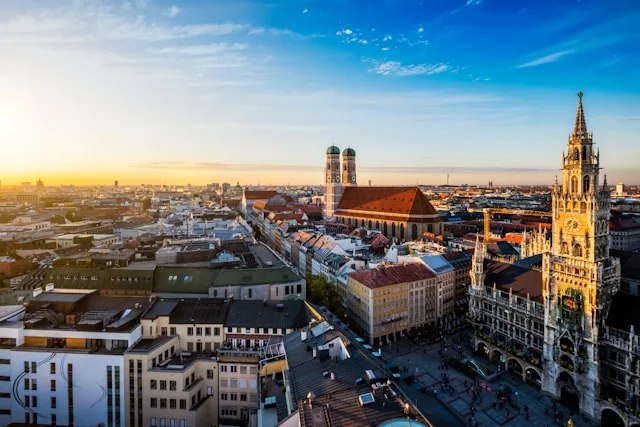
Germany's federal structure creates real operational complexity for executive search. Bavaria and Baden-Württemberg concentrate automotive and precision engineering talent. North Rhine-Westphalia anchors chemicals, heavy industry and logistics. Saxony is emerging as a semiconductor corridor. Berlin draws software engineers and AI researchers. Frankfurt houses the financial infrastructure. Munich blends corporate headquarters with deep R&D capability. Each Land has its own works council conventions, co-determination norms and compensation benchmarks. A search designed for one region often fails when transposed to another.
The Mitbestimmung system means that works councils and employee representatives sit on supervisory boards of large companies. This affects executive hiring at a level that many international clients underestimate. Board composition, reporting structures and even interview processes differ from markets without co-determination. Search firms that do not understand this dynamic waste time presenting candidates who cannot operate within it, or structuring mandates that ignore the supervisory board's role in leadership appointments.
KiTalent's Go-To Partner approach is built for this complexity. Operating from our European headquarters in Turin, we coordinate German mandates across multiple Bundesländer, matching sector-native consultants to each search. The firm's proximity to German industrial clients and its continuous presence in the market allow us to map talent across Hamburg, Düsseldorf and the southern manufacturing belt simultaneously, rather than treating each city as an isolated engagement.