
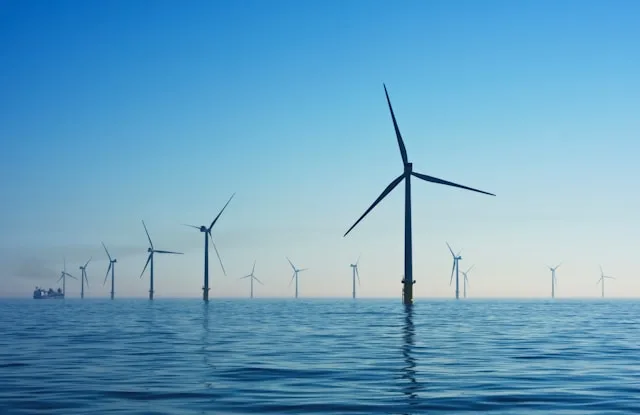
The buyer question
We need offshore-wind fabrication, component-manufacturing or energy-engineering leadership in Aalborg; what does the verified record say about this market and how should a mandate here be structured?
What the public record shows
The verified public record for Aalborg is anchored by the city and university articles. Aalborg is Denmark's fourth-largest city behind Copenhagen, Aarhus and Odense, with a town-proper population of 119,862 and an urban population of 143,598 at the 1 July 2022 vintage. Its position at the narrowest point on the Limfjord made it an important medieval harbour and later a large industrial centre; today the city presents itself as in transition from a working-class industrial area to a knowledge-based community.
The offshore-wind anchors are documented at company level: Aalborg's business interests include Siemens Gamesa Renewable Energy, Alfa Laval and Aalborg Portland, and these companies have become global producers of wind turbine rotors, marine boilers and cement; Bladt Industries - the offshore-steel name - is headquartered in the city and provides foundations and substations for offshore wind projects. The city's exporting base of grain, cement and liquors is the industrial inheritance those employers grew out of.
The pipeline institution is precisely described: Aalborg University, founded in 1974, is North Jutland's largest university with 19,410 students and 820 doctoral candidates at its 2021 figures vintage, operating campuses in Aalborg, Esbjerg and Copenhagen, organised to include a Department of Energy, and built on the cross-disciplinary, problem-based approach known internationally as the Aalborg Model. What the verified record does not contain is any per-capita engineer-production claim, graduation counts by discipline, yard-capacity utilisation, port tonnage, vacancy rates, time-to-fill or named-employer FTE figures - the paradox narrative must be argued from the documented structure, not quoted.
What changes in this market
An Aalborg offshore-wind mandate is a fabrication-and-rotor mandate inside a transitioning industrial city. The employers are global producers of wind-turbine rotors and offshore-steel structures operating from a Limfjord harbour city of 143,598 urban inhabitants, and the pipeline is a 1974-founded university whose project-organised model - and dedicated energy department - produces graduates already accustomed to industry problems. Candidates prove themselves through heavy-steel and offshore-certified delivery under export-project discipline; the practical assessment problem is verifying offshore certification currency and project-completion records, because titles alone travel badly from adjacent industries. Copenhagen, 412 road-kilometres away without ferries, is less a daily competitor than Esbjerg - the university's own western campus city and Denmark's other offshore hub - which is where the same profiles are recruited hardest.
KiTalent's mandate analysis
- Offshore-steel fabrication leadership: with Bladt Industries' documented Aalborg offshore-steel production and a heavy-industrial Limfjord inheritance, fabrication mandates should screen for offshore-certified welding management, coating and load-out records rather than onshore structural careers.
- Component and rotor manufacturing: the documented presence of Siemens Gamesa as a global rotor producer supports manufacturing-leadership mandates at export-project scale; candidates need serial-production quality records under customer-verification regimes.
- Energy-engineering pipeline roles: the university's Department of Energy and the Aalborg Model's project-organised semesters mean graduates arrive industry-adjacent; mandates should build thesis-project and internship channels into the university rather than relying on the open market.
- Esbjerg-corridor benchmarking: with the university's Esbjerg campus anchoring Denmark's other offshore cluster, offers should be tested against Esbjerg - not just Aalborg - scales, and expect relocation friction between the two hubs - a benchmark to verify, not a floor the record proves.
- Certification-verification discipline: offshore roles live on valid certifications and medicals; the assessment process should verify them at shortlist stage, because lapsed papers disqualify otherwise-strong candidates at the last step.
Where the public record stops
Claims beyond the dated public record are not repeated on this page. The verified record above - the 2022 population figures, the Siemens Gamesa-Alfa Laval-Aalborg Portland roster, Bladt's documented Aalborg offshore-steel production and the university's 1974 founding with 19,410 students and a Department of Energy - supports the structural argument without invented capacity, tonnage, vacancy or headcount statistics.
Sources
- Wikipedia - Aalborg (city and industry record)
- Wikipedia - Aalborg University (pipeline record)
- Wikipedia - Bladt Industries (offshore-steel record)
Related KiTalent research
- The Market Map Is Not the Shortlist: helps a buyer decide whether an Aalborg offshore-wind mandate is really an offshore-steel-fabrication, rotor-manufacturing or energy-pipeline search, and how to benchmark it against the Esbjerg cluster
- How to Assess a Leader Beyond Competencies: shows how to gather decisional evidence for this mandate - the research method behind testing offshore-certification verification, export-project quality records, university-pipeline channels and Esbjerg-scale offers - with candidate evidence assessed conversation by conversation