
The buyer question
Can a Berat heritage-tourism mandate - guesthouse operations, guiding or heritage hospitality management - be filled in this UNESCO city, and what does the public record actually prove?
What the public record shows
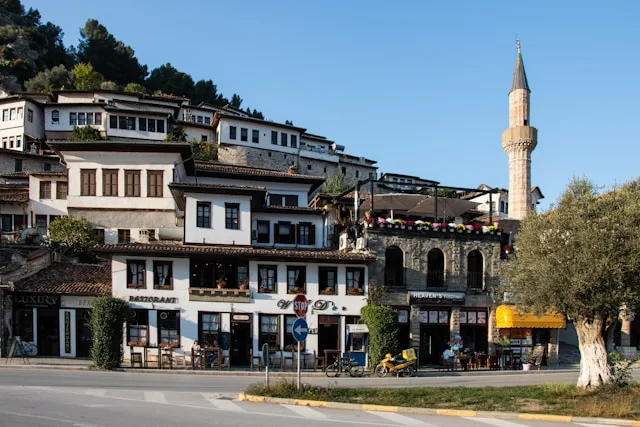
The verified public record for Berat is anchored by the city's Wikipedia article and the UNESCO World Heritage inscription record. Berat, the ninth most populous city of Albania, lies on the right bank of the river Osum, with its old centre in three parts - Kalaja on the castle hill, Mangalem at its foot, and Gorica across the river - and shares with Gjirokastra the UNESCO World Heritage inscription of the Historic Centres of Berat and Gjirokastra (cultural criteria iii and iv): the site was inscribed in 2005 and extended to cover Berat in 2008.
Read alongside the Albanian records on this site - the Durrës mass-beach analysis and the Tirana ICT records - Berat is the heritage pole of the same national tourism economy: a UNESCO old town whose demand is cultural rather than coastal, recruiting hospitality professionals inside a small riverside city whose wages the record does not carry.
Neither the UNESCO inscription nor the city's rank measures what a hiring leader needs to know: whether guesthouse operators, certified guides or heritage-hospitality managers are available at a given season and seniority, or how heritage demand converts into year-round employment. That requires a search with contacted, assessed and validated candidates.
What changes in this market
Employers in Berat's heritage-tourism sector prove themselves differently from Durrës's beach market and from Tirana's urban hotels: a UNESCO-inscribed old town of three quarters - castle, Mangalem and Gorica - runs guesthouse and guiding businesses inside protected fabric, season concentrates into the summer months the national market shares, and capital-region wages in Tirana pull trained managers away between seasons. Each function, phase and stage of a mandate here - guesthouse operations, guiding, heritage hospitality management - proves itself against that protected-quarter structure rather than against a national average.
KiTalent's mandate analysis
- Frame the mandate by season exposure before the search: seasonal guesthouse operations, year-round management and guiding roles recruit on different calendars inside the same small-city pool.
- Treat the UNESCO buffer as the operating constraint: building and renovation rules inside a World Heritage site shape what operations can expand - a mandate's premises plan must respect them from day one.
- Recruit against the Tirana pull explicitly: trained hospitality managers benchmark against capital wages - decide the mandate's stance before launch.
- Ask any search partner for contacted, assessed and validated candidates per function and season before accepting demand statistics as evidence of workforce availability.
Where the public record stops
No located primary public record verifies nightly rates, rate-growth percentages, occupancy figures or property-value increases. What the city's public record can prove stands above.
Sources
- UNESCO World Heritage Centre - Historic Centres of Berat and Gjirokastra (inscription 2005, extension 2008)
- Wikipedia - Berat (city record)
Related KiTalent research
- The Market Map Is Not the Shortlist: helps a buyer choose between testing the Berat heritage-tourism market and commissioning a search with contacted, assessed and validated candidates
- How to Assess a Leader Beyond Competencies: shows how to gather decisional evidence for this mandate - the research method behind testing season exposure, UNESCO-constraint planning and Tirana-pull pricing - with candidate evidence assessed conversation by conversation