
The buyer question
We need senior maritime, port-operations or export-logistics leadership in Gothenburg; what does the verified record say about this market and how should a mandate here be structured?
What the public record shows
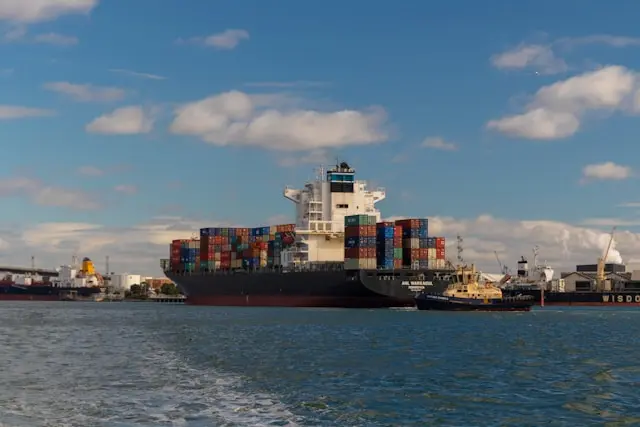
The verified public record for Gothenburg is anchored by the port authority and city records. The municipally owned Port of Gothenburg is the largest port in the Nordic countries, with over 11,000 ship visits per year from over 140 destinations worldwide; it is the only Swedish port able to take the very largest ocean-going container ships, and Gothenburg handles nearly 30% of Sweden's foreign trade, comprising 39 million tonnes of freight per year. Dated vintages matter here: Wikipedia's infobox records 762,902 TEU in 2019, and the same article notes that in 2013 the port handled approximately 860,000 containers and 160,000 new cars, with 24 scheduled rail freight shuttles serving Norway and Sweden.
The city's industrial record explains the shape of today's maritime labour market. From its founding until the late 1970s Gothenburg was a world leader in shipbuilding, home to Eriksbergs Mekaniska Verkstad, Götaverken, Arendalsvarvet and Lindholmens varv; that era ended, and the modern maritime economy concentrates on port operations, ro-ro and vehicle exports, energy terminals and maritime service suppliers rather than new-build yards.
The anchor customers of the port economy remain headquartered on the spot. Volvo was founded in Gothenburg in 1927, and both Volvo Cars and Volvo Group (trucks, buses and marine engines) are still headquartered on the island of Hisingen; other key companies in the area are AstraZeneca, Ericsson and SKF. Automotive export flows and the port's vehicle terminals are therefore not an abstraction but the daily business of the city's largest employers.
What changes in this market
A Gothenburg maritime mandate does not compete in a generic Nordic logistics market. It competes in a single dominant deep-water node that Sweden's container trade funnels through, against employers - vehicle manufacturers, shipping lines, energy terminals and the port's own operating companies - who recruit the same operations and terminal-management people across Scandinavia. Candidates prove themselves through unionised, collectively-bargained employers with long tenures, so offers are judged on terms, role scope and relocation practicality rather than on volume hiring; that is a different assessment problem from a multi-tenant port city where talent moves between competing terminals.
KiTalent's mandate analysis
- Port-operations leadership: terminal, ro-ro and vehicle-export operations at the largest Nordic port demand candidates who have run high-utilisation, single-facility operations; the verified record (one port handling nearly 30% of Swedish foreign trade) supports a search that screens for scale-specific operating experience rather than general logistics titles.
- Marine services and systems: the new-build yard era ended in the late 1970s, and the repair successor Götaverken Cityvarvet - under Damen from 2000 - closed in 2015; a mandate here is scoped to currently active employers, such as the Volvo Group's marine-engine business on Hisingen, shipping lines and energy-terminal operators, and is mapped by named employer rather than advertised to a broad marine-engineering market.
- Automotive export logistics: with Volvo Cars and Volvo Group headquartered on Hisingen and 160,000 new cars handled in the last fully-dated year on record, vehicle-flow coordination roles sit at the intersection of manufacturer and port; the right candidates already work inside that interface.
- Cross-border Scandinavian competition: the same port-operations competence is traded across Norway, Denmark and Sweden, and the port's rail shuttles themselves serve Norway; a Gothenburg mandate is priced against Oslo and Copenhagen alternatives, so the search must be regional from day one.
- Public-employer sensitivities: the port is municipally owned and several large employers are unionised Swedish institutions; leadership mandates here involve works-council and collective-agreement fluency, which should be an explicit screening criterion rather than an afterthought.
Where the public record stops
Claims beyond the dated public record are not repeated on this page. What survives is the dated, sourced record above: Nordic-largest port status, nearly 30% of foreign trade, 39 million tonnes, 762,902 TEU (2019), roughly 860,000 containers and 160,000 cars (2013), and 24 scheduled rail freight shuttles.
Sources
- Wikipedia - Port of Gothenburg (port record)
- Wikipedia - Gothenburg (city and industry record)
- Wikipedia - Götaverken (shipyard-succession record)
Related KiTalent research
- The Market Map Is Not the Shortlist: helps a buyer decide whether a Gothenburg maritime leadership mandate is really a port-operations, marine-services or automotive-logistics search, and whether it should be scoped regionally across Scandinavia
- How to Assess a Leader Beyond Competencies: shows how to gather decisional evidence for this mandate - the research method behind testing single-node scale, heritage-supplier concentration, manufacturer-port interfaces and collective-agreement fluency - with candidate evidence assessed conversation by conversation