
The buyer question
For a Kiel shipbuilding mandate, which programme and boundary does the role own — submarine production in the 212CD programme at the Kiel site, surface-vessel work, or capacity ramp-up around the record order book — and which delivery outcomes will the candidate personally own?
What the public record shows
The programme scale is company record: on 30 January 2026 in Oslo the Norwegian government approved the procurement of two additional Class 212CD submarines, taking its planned total to six, and with the official contract signing TKMS received a comprehensive order extension in the ongoing 212CD programme. The company states its record order book will keep production running at full capacity for the next few years.
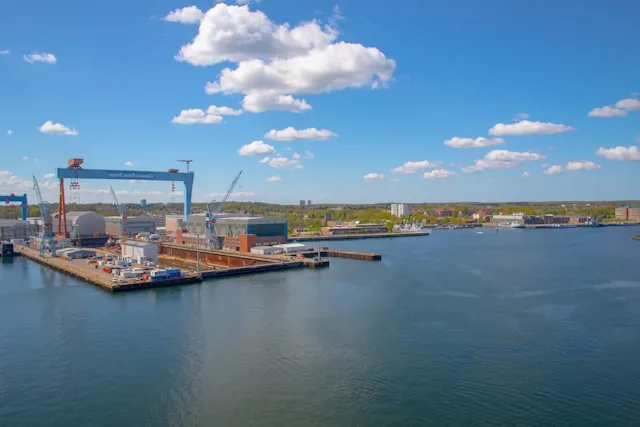
The site structure is documented in the same record: TKMS is one of the world’s leading naval companies with more than 9,100 employees (including temporary workers) at three shipyards in Kiel, Wismar and Itajaí (Brazil), and around 3,300 employees work at the Kiel site. Capacity is expanding nearby: around 140 new employees began work at Wismar on 5 January 2026 (over 400 total), with up to 1,500 jobs to be created there by end-2029 depending on the order situation, to build 212CD option boats for Germany and possible F127 frigate work. Programme and site facts document the workload; they say nothing about candidate pools, wages or vacancy duration for a particular Kiel mandate.
What changes in this market
Kiel shipbuilding mandates split by programme and boundary, and evidence does not transfer. Submarine-production mandates prove themselves in boats and sections delivered under naval quality regimes — the 212CD programme is the local benchmark. Surface-vessel mandates carry different build evidence. Capacity ramp-up mandates prove themselves in production lines installed and people made productive, the Wismar pattern. Engineering and design mandates prove themselves in design milestones carried through review. Security constraints attach differently across these boundaries and must be stated in the brief; 'shipbuilding experience in Kiel' selects none of these tests until programme, boundary and owned outcomes are named.
KiTalent's mandate analysis
- Name the programme and boundary — submarine production, surface vessels, capacity ramp-up, or engineering design — because delivery evidence differs completely.
- For submarine mandates, ask for boats or sections delivered under naval QA with personally owned scope.
- For ramp-up mandates, ask for lines installed and new hires made productive, benchmarked against the Wismar pattern.
- For engineering mandates, ask for design milestones carried through formal reviews.
- Treat order-book and site-headcount figures as workload facts; test compensation, security eligibility and availability against the live mandate.
Where the public record stops
The cited sources are TKMS's official news pages on the Oslo 212CD contract signing and the Wismar ramp-up. They document order volume, workforce and site structure — not candidate availability, compensation or time-to-hire for any Kiel employer. Test those points against the live mandate.
Sources
- TKMS: Norway signs for two additional 212CD submarines
- TKMS: company and Kiel site scale
- TKMS: Wismar capacity ramp-up
- TKMS: record order book
Related KiTalent research
- The Market Map Is Not the Shortlist: why market coverage and candidate assessment are separate decisions in an executive-search mandate
- How to Assess a Leader Beyond Competencies: a practical framework for testing judgment, evidence and operating context after the brief is defined
