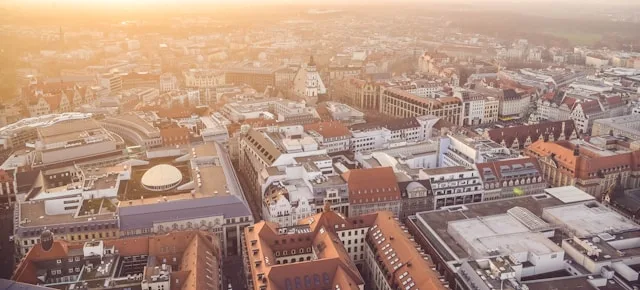
It is also a capital working against a frozen funding baseline. The Rundfunkbeitrag licence fee has stood at €18.36 per month since 2021; the increase recommended by the KEF commission has not taken effect, and ZDF's 2026 budget closes a €48.1 million shortfall in its operating plan — an overall result of minus €105.4 million — by drawing on reserves. That combination, a large public anchor on public-sector-oriented pay bands under a funding freeze, is the context in which every specialist hire in this market is now made.
Our read of this market, from KiTalent's mandate work across German media hubs, is that Mainz's broadcasting cluster is not short of people in aggregate. It is short of very specific profiles: the virtual-production, streaming-platform, AI-adjacent and HDR specialists a streaming-first public broadcaster now needs. ZDF's own strategy, published in October 2025, names the recruitment of qualified professionals among its six strategic challenges and commits the broadcaster to attracting and retaining "the most creative and intelligent minds in the media sector". The tension between that ambition and the funding and pay realities above is what this analysis examines.
What follows is a ground-level view of how Mainz's broadcasting sector is structured, which roles sit on each side of the split, what the compensation dynamics look like where public-sector-oriented bands meet global streaming-platform competition, and what organisations hiring in this space need to understand before they commission their next search. Where public statistics do not measure this niche, we say so explicitly rather than estimate.
A Broadcasting Capital Built Around a Single Anchor
Mainz's identity as a media city rests almost entirely on one institution. ZDF's headquarters occupy the Lerchenberg campus, from which the broadcaster runs its programme operations, its news production and its digital playout. The published workforce numbers describe an anchor of unusual weight: 3,658 full-time-equivalent employees on average in 2024, a headcount that grew while spending on freelance honoraria fell by €6.3 million to €80.0 million, a shift the annual accounts attribute to converting freelance engagements into permanent, properly classified positions.
Around that anchor sits a small ring of affiliated institutions, all in Mainz. 3sat, the culture channel ZDF operates jointly with ARD, ORF and SRF, is produced from the city. ZDF Studios — formerly ZDF Enterprises — distributes and co-produces content internationally from Erich-Dombrowski-Straße, a stone's throw from the campus. ZDF Digital Medienproduktion, the group's production-services subsidiary, runs technical production for broadcast, web and livestream formats from Isaac-Fulda-Allee. The cluster's centre of gravity is public, not commercial.
The private production layer is thin by comparison. The nearest producer of scale in the wider Rhineland broadcast market — the Banijay label filmpool entertainment, known for long-running daily drama — is seated not in Mainz but in Hürth, on the Cologne side of the region; Germany's independent production weight sits in Cologne, Munich, Berlin and Hamburg, and the suppliers that do operate in Mainz work largely in the orbit of ZDF commissioning rather than as an independent creative cluster. No official statistic we could find breaks down audiovisual employment or revenue in Mainz by firm size against those hubs — a genuine gap for anyone benchmarking this market — but the structural point stands: remove ZDF and its affiliates, and the local production economy changes beyond recognition.
That concentration defines the talent market in ways that extend well beyond simple supply and demand. When ZDF's strategy shifts budget priorities, the local ecosystem pivots with it. When ZDF's pay bands cannot fund a competitive offer for a scarce digital profile, the shortage is not ZDF's alone. It ripples through every supplier that hires against the same anchor.
The Bifurcation Driving Every Hiring Decision in This Market
Two labour markets operate inside this cluster under one industry label. On one side sit traditional broadcast engineering, offline editing, production coordination and studio operations roles — occupations with training pipelines, established local supply and a public anchor that still converts freelance engagement into permanent contracts. On the other side sit the profiles a streaming-first, AI-aware broadcaster now competes for: virtual-production specialists, platform and streaming operations engineers, data and AI-adjacent content roles, HDR and colour-science experts. For these, the relevant labour market is not Mainz. It is Germany's platform economy, the European streaming hubs and, in the borderless cases, the global market.
Public statistics do not yet measure that split. The Bundesagentur für Arbeit's annual Engpassanalyse identified 163 bottleneck occupations Germany-wide in 2024, but it works in broad occupational classes and publishes no Mainz-region breakdown for audiovisual technical roles. No official time-to-fill series exists for broadcast specialisms in this city, and no public dataset counts passive versus active candidates in this niche. Any precise fill-day averages or passive-candidate percentages quoted for this market should be treated as estimates, not measurements — including figures presented by a search partner. What can be established is structural: the employer side of this niche is dominated by an institution whose pay follows public-sector systematics, while the alternative employers for the same profiles price against technology-market benchmarks.
That asymmetry is the forecasting problem aggregate salary data creates for hiring organisations. Collective-agreement statistics for the German media sector capture the tariff base — the majority of employment in this cluster — but they will not price a niche specialist whom a streaming platform can hire in Amsterdam or Berlin without a tariff anchor. Any HR leader benchmarking a digital transformation hire in Mainz against industry-wide salary surveys is working from data that describes a different workforce from the one they are trying to hire.
The honest position, and the one we work from: for the specialist side of this market, calibrated evidence comes from mandate-level market mapping, not from published aggregates. That is a method statement, not a measurement claim — and it is why we treat unmeasured numbers in this niche as open questions rather than inputs.
What ZDF's Modernisation Programme Means for the Local Talent Pool
The Shift to Streaming-First Production
The modernisation is real and datable. On 18 March 2025 the ZDFmediathek was relaunched as a full streaming portal with personalised recommendations — no longer a catch-up window but a destination product. In September 2024 management launched what it called the broadcaster's largest reform process in 25 years, reorganising responsibilities into a new directorate. In October 2025 the strategy "Ein ZDF für alle" added an Audience directorate charged with connecting distribution channels and building reach across linear and digital. In July 2025 an automated studio went into operation for live online news output. Every one of these moves shifts demand toward exactly the profiles that are hardest to source locally: platform engineering, data-informed audience work, automated and virtualised production.
The funding reality moves in the opposite direction. ZDF's 2026 budget was drawn up on the assumption of the KEF-recommended contribution of €18.94 per month — an increase that has not taken effect. The result is a €48.1 million deficit in the operating plan and an overall result of minus €105.4 million, balanced by drawing on reserves. The budget assumes a collective pay increase of 1.52 percent from August 2026; personnel costs excluding pensions already account for 14.9 percent of total expenditures. Under those parameters, specialist hiring at ZDF competes with reserve preservation and programme spending — which is precisely why scarce-profile searches in this cluster are contested, slow and price-sensitive rather than routine.
The AI Employment Paradox
Two regulatory and market forces now shape what AI means for staffing in this cluster. The first is the EU AI Act. Its transparency obligations — including disclosure duties for synthetic media — apply from 2 August 2026. The European Audiovisual Observatory mapped the legal landscape for the sector in an October 2024 report; what no public source provides is a reliable compliance-cost estimate per production company. That number does not yet exist at European level, and we treat it as an open question rather than quote one. What the obligations clearly do is add a new skills demand: production and post-production teams that can document, disclose and quality-control AI-assisted workflows.
The second force is automation itself. Broadcasters across Germany are automating logging, tagging and localisation workflows; what that does to specific headcounts at ZDF is not published at a role-by-role level, and we do not assert numbers we cannot source. The direction, however, is unambiguous: routine production tasks consolidate, and oversight, data-curation and quality-control profiles grow. The local pipeline question — how many graduates of the region's design and media programmes stay in Mainz, and with which skills — is likewise not answered by any published statistic we could verify. It is a question worth answering with data before it is answered with assumptions.
The pattern repeating across this cluster's digital initiatives is therefore not job destruction or job creation in aggregate. It is substitution: capital and platforms move faster than the local skill base can be retrained, and the new profiles are hired from outside while the displaced ones are absorbed slowly, if at all.
Compensation in a Market Where Public Sector Bands Meet Global Competition
Mainz's compensation structure is under tension from three directions simultaneously. Public-sector-oriented pay frameworks anchor what ZDF can offer. Private production houses price against ZDF's bands with limited margin headroom. And the global streaming platforms that define the top of the market are not based in Mainz at all.
ZDF publishes its pay structure, and it follows public-sector systematics: Entgeltgruppen with seniority steps, collectively negotiated with ver.di — an orientation to the TVöD logic rather than to technology-market benchmarking. That structure is transparent, predictable and completely unprepared for a bidding contest with a global platform. For the private suppliers around ZDF, the anchor works as a ceiling: they hire in the shadow of the public bands, with margins that do not fund counter-offers when a platform calls.
Specific euro bands for Mainz broadcast leadership roles are not published in any verifiable source, and we will not invent them. In KiTalent's mandate work in German media hubs, the recurring pattern is this: the public bands price the local labour market for traditional roles competently; they underprice digital-specialist roles decisively; and the gap shows up not in advertised salaries — which barely exist for the scarce profiles — but in search outcomes, counter-offer failures and the geographic breadth a mandate must cover before it succeeds.
The most concrete external benchmark sits two hours away by air. Netflix runs its EMEA headquarters from Amsterdam, housing content, legal, finance, marketing and talent teams, in English-language working environments, under a Dutch expatriate tax ruling that stands at 30 percent through 2026 and is legislated to settle at a fixed 27 percent from 2027. For an AI or platform specialist choosing between a public-band role in Mainz and an EMEA-scale role in Amsterdam, the comparison is not close on paper — and German-language requirements for many ZDF operations narrow the international funnel further.
How Mainz Compares to Competitor Markets
No verified city-to-city salary delta for broadcast leadership roles between Mainz, Munich and Berlin exists in public sources. What can be said is structural. Relocation mathematics still matter for senior moves — the federal Deutschlandatlas asking-rent mapping shows how sharply German housing costs diverge between metropolitan and lower-cost regions — but cost-of-living offsets are a weak instrument in a market where the competing offer comes from Amsterdam, London or a remote-first platform. Remote-work-capable roles dissolve the local discount entirely: a specialist who can price a Berlin or Leipzig rent against a platform salary has no reason to accept a Mainz premium that does not exist.
For hiring organisations, the practical consequence is that cross-city benchmarking by percentage deltas is the wrong instrument in this niche. The comparison that predicts outcomes is total-package-versus-total-package, including platform equity or bonus structures, remote-work terms and the candidate's outside options. That is mandate-level work, not survey work.
The Freelance Market That Feeds the Cluster
A Pool in Structural Transition
The published numbers describe a freelance base being absorbed, not expanding. ZDF's 2024 annual accounts show spending on freelance honoraria falling €6.3 million to €80.0 million while permanent headcount grew — the conversion of freelance engagements into fixed positions that the accounts themselves cite as the driver. For freelancers, an anchor that internalises is an anchor that offers fewer, longer and more institutionalised engagements. At the industry level, the October 2024 collective agreement negotiated by ver.di covering more than 25,000 freelance workers in German film and television signals the same trajectory: conditions are being formalised, and the informal middle of the freelance market is shrinking.
What no published source provides is a census of the Mainz-Wiesbaden freelance pool: its size, age structure, discipline mix or ZDF dependency share. Those figures are sometimes quoted with confidence; they are not measured anywhere we could verify. For a hiring organisation the verified trend is enough to plan against: the local freelance market is consolidating around the anchor, mid-career specialists with portable skills price nationally, and the categories most in demand — VFX, virtual production, colour science — are exactly the categories a local freelance call will not fill.
Day Rates: No Reliable Local Benchmark
No published day-rate series exists for Mainz freelance editors, colourists or VFX supervisors. National German freelance rate benchmarks exist only in fragments, and platform-rate comparisons change with each commissioning cycle. The operational consequence for a hiring organisation is straightforward: benchmark day rates by project type and national comparison, not by local precedent, and expect the scarce categories to price against the international market rather than the regional one. Where a budget is built on locally remembered rates, the search will fail on price before it fails on supply.
Structural Risks That Shape Every Executive Search
The Broadcasting Fee Question
The funding risk is concrete and current. The Rundfunkbeitrag has been frozen at €18.36 per month; the KEF's recommended increase to €18.94 did not take effect, and ZDF's 2026 budget — built on that recommendation — shows the consequence: a €48.1 million operating deficit, an overall minus of €105.4 million and a reserve drawdown to balance. In December 2025 the KEF's interim assessment pointed toward a smaller increase, around 28 cents to €18.64, from 2027. For a cluster whose centre of gravity is one publicly funded institution, contribution policy is hiring policy: commissioning budgets, conversion of freelance contracts and the pace of specialist recruitment all transmit the fee decision directly into the local labour market.
No published scenario quantifies what a continued freeze would do to ZDF's external commissions, and we do not manufacture one. The transmission mechanism, however, is visible in the budget documents themselves: when reserves rather than income fund the plan, discretionary spending — commissions, conversions, new specialist roles — is where adjustment lands first.
Infrastructure and Virtual Production Capacity
ZDF itself operates advanced production technology at Lerchenberg: the virtual-studio rebuild of its news programmes and, from July 2025, an automated studio for live online output. What the public record does not show is the region's commercial virtual-production capacity — whether Mainz has, or needs, LED-volume stages beyond the broadcaster's own facilities, and what productions rent where. No location analysis we could verify answers that question. The planning point for hiring organisations stands regardless of the answer: virtual-production talent follows sustained commissioning volume and the infrastructure built for it, so a cluster that wants those specialists resident must give them facilities and pipeline, not only vacancies.
EU AI Act Obligations and Platform Retrenchment
Two pressures converge on smaller suppliers. The AI Act's transparency obligations apply from 2 August 2026, and the European Audiovisual Observatory's October 2024 legal report maps what the sector must comply with — though, as noted, no verified compliance-cost figure exists yet. For small production companies, the cost of building disclosure-capable workflows is regressive: fixed cost, thin margins.
The second pressure is the streamer correction. According to Ampere Analysis data reported by MEEDIA in August 2025, the major international services commissioned 44 percent fewer series in Western Europe in the first half of 2025 than in the prior-year period — 57 formats against 102 — while global commissions fell 24 percent, with Amazon's Prime Video roughly halving its originals. German policy is moving the other way: the federal government has been pressing streamers toward a voluntary investment commitment, with 20 percent of German net revenue under discussion. For Mainz producers positioned between public commissioning and platform co-production, both lines of that policy ledger land on their order books — and on the specialist roles they can afford to hire.
What This Means for Executive Hiring in Mainz's Broadcast Sector
The traditional approach to filling leadership roles in this market relied on proximity and familiarity. ZDF's commissioning editors work in Mainz. The producers who win commissions tend to have Mainz relationships. The senior pool was small enough that most hiring happened through known networks. That approach still works for roles where the candidate pool is local and tariff-anchored.
It does not work for the roles that now matter most. Virtual-production leadership, platform operations, AI-adjacent content engineering and senior colour science sit in candidate pools that are largely employed, rarely scanning job boards and priced against international comparators. Job postings reach the minority that is already looking; in a niche this thin, that minority is close to empty. Reaching the rest requires direct identification and approach through structured market mapping — not advertisement.
Speed compounds method. In a market where the anchor institution is balancing its budget with reserves and the scarce profiles have platform alternatives, a sequential search process — shortlist, wait, re-shortlist — loses candidates to faster competitors and to counter-offers the public bands cannot fund. The cost of a slow search shows up as institutional knowledge that leaves, retention bonuses that recur and mandates that restart.
For organisations competing for virtual production leadership, AI content engineering talent, or senior creative producers in a market where the qualified pool numbers in the dozens rather than the hundreds, speak with our executive search team about how we approach this market differently.
Frequently Asked Questions
What is the average time to fill specialist broadcasting roles in Mainz?
No official time-to-fill series exists for broadcast specialisms in Mainz, and we do not quote one. The Bundesagentur für Arbeit's Engpassanalyse works in broad occupational classes and publishes no Mainz audiovisual breakdown. What the verified record does show is structural: ZDF's 2026 budget closes a €48.1 million operating-plan gap with reserves, and the specialist profiles the broadcaster's own strategy prioritises — virtual production, streaming, AI-adjacent — compete against platform employers outside the tariff system. Fill times in such conditions are a function of search method; direct market mapping of passive candidates, not advertising, is what moves them.
How much do senior broadcasting executives earn in Mainz compared to Munich and Berlin?
No verified public source publishes city-to-city salary deltas for Mainz broadcast leadership roles, and invented figures circulate. What is verifiable: ZDF's pay follows public-sector Entgeltgruppen systematics negotiated with ver.di; the private suppliers around it hire in the shadow of those bands; and the competing employers for digital specialists are platform-scale firms — Netflix's EMEA headquarters in Amsterdam alone houses content, marketing and talent teams under English working language and the Dutch expatriate ruling (30 percent through 2026, fixed 27 percent from 2027). Benchmarking a digital-specialist mandate here is total-package work, not survey work.
Why is Mainz's broadcasting talent market so dependent on ZDF?
Because the cluster's measurable weight is ZDF. The broadcaster employed an average of 3,658 people on a full-time-equivalent basis in 2024, runs its headquarters, news production and digital playout from Lerchenberg, and is flanked in the city by 3sat, ZDF Studios and ZDF Digital Medienproduktion. The private production layer is thin — even the nearest Banijay daily-drama label of scale, filmpool entertainment, sits in Hürth near Cologne rather than in Mainz — while Germany's independent production weight sits in Cologne, Munich, Berlin and Hamburg. No official statistic quantifies the dependency share, but the structure alone means ZDF's budget decisions, hiring waves and strategy shifts move the whole local market.
What specialist skills are hardest to recruit in Mainz's broadcasting sector?
The categories that follow from ZDF's verified strategy and modernisation record: virtual production and automated-studio expertise, streaming-platform operations, AI-adjacent content and compliance roles ahead of the EU AI Act's 2 August 2026 transparency deadline, and HDR colour science for streaming deliverables. The Bundesagentur für Arbeit publishes no Mainz-region bottleneck share for audiovisual technical roles, so demand pressure in this niche is evidenced by employer behaviour — strategy documents, budget priorities and search mandates — rather than by official statistics.
How does KiTalent approach executive search in specialist broadcasting markets?
KiTalent uses continuous market mapping to identify and approach passive candidates who dominate the qualified pool in specialist broadcasting roles.
Are there enough graduates entering Mainz's broadcasting talent pipeline?
No published statistic answers this for the Mainz region — neither the annual output of the region's design and media programmes nor the share of graduates who stay. We treat it as an open question. The verified direction of travel is elsewhere: ZDF converted freelance engagements into permanent positions through 2024, the industry formalised freelance conditions in the October 2024 ver.di agreement covering more than 25,000 film and television freelancers, and the growth roles in this cluster are precisely the digital and technical ones a local pipeline would have to supply. Answering the pipeline question with data is a precondition for growing the cluster beyond its current structure.
Related Links
- Mainz
- Germany
- Ai Technology
- Stuttgart Automotive: Separate Market Context from Hiring Evidence
- Lübeck's Medtech Cluster Is Growing at the Centre and Hollowing at the Edges: What That Means for Executive Hiring
- Karlsruhe Cybersecurity Hiring: Define the Mandate Before the Search
- Quebec City's Insurance Sector Cut Hundreds of Jobs and Still Cannot Hire the People It Needs

Published March 2026, updated 2026-04-12. Based on primary market sources and KiTalent's market-intelligence process.
How this page was produced
This page combines KiTalent market intelligence, direct-search methodology, and primary market sources where available.
Related Market Reads
Articles tied to the same hiring geography or market context.
Stuttgart Automotive: Separate Market Context from Hiring Evidence
For a Stuttgart automotive factory mandate, which industrialisation, production and operating-performance decisions must the successful candidate own?
Lubeck Medtech: Define the Mandate Before Mapping
For a Lubeck Medtech mandate, which life sciences and healthcare decisions, operating boundaries and results must the successful candidate own?
Karlsruhe Cybersecurity Hiring: Define the Mandate Before the Search
What the verified public record establishes about Karlsruhe - once Germany's internet capital, now seat of KIT, the FZI and Fraunhofer IOSB with a dated over-22,000-job high-tech record - and where a mandate needs contacted, assessed and validated candidates.
Nearby Market Signals
Lateral reads from adjacent cities, sectors, or themes.
Quebec City's Insurance Sector Cut Hundreds of Jobs and Still Cannot Hire the People It Needs
Quebec City's two largest insurers eliminated 450 administrative positions over a two year integration cycle. The headlines told a story of contraction. The recruitment data...
Milan Financial Services: Define the Regulated Business Mandate
Which regulated entity, product, control function and decision rights define a Milan financial-services mandate?
Los Angeles Entertainment Hiring: Define the Mandate Before the Search
Which studio-production, games-and-interactive or music-and-recording responsibility actually defines an LA entertainment mandate?
From the Archive
Evergreen background reading that still sharpens current hiring decisions.
Hamburg Media Creative Digital: Define the Mandate Before Mapping
For a Hamburg Media Creative Digital mandate, begin with the product, platform, data or security boundary.
Hamburg Aerospace Certification: Define the Mandate Before Mapping
For a Hamburg Aerospace Certification mandate, which aerospace and aviation decisions, operating boundaries and results must the successful candidate own?
Erfurt Manufacturing: Define the Mandate Before Mapping
For an Erfurt Manufacturing mandate, which industrial and advanced manufacturing decisions, operating boundaries and results must the successful candidate own?