
The buyer question
We need container-terminal, chemical-logistics or Rhine-corridor distribution leadership in Mainz; what does the verified record say about this market and how should a mandate here be structured?
What the public record shows
The verified public record for Mainz is anchored by the city's Wikipedia article. Mainz is the capital and largest city of Rhineland-Palatinate, with around 223,000 inhabitants - Germany's 35th-largest city - located at the northern end of the Upper Rhine Plain on the left bank of the Rhine. It lies in the Rhine-Main Metropolitan Region, Germany's third-largest after Rhine-Ruhr and Berlin-Brandenburg, encompassing Frankfurt, Wiesbaden, Darmstadt, Offenbach and Hanau, with an area population of 5.9 million; Frankfurt International Airport is thirty minutes away by commuter railway.
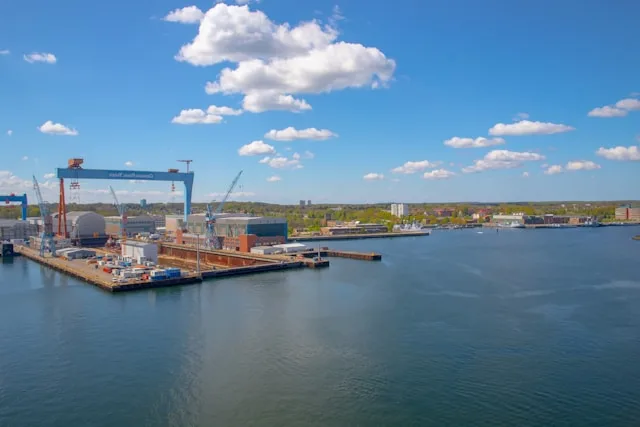
The port itself is documented in the record's own words: the river port of Mainz is located on the Rhine and thus on one of the most important waterways in Germany, with the container port hub north of the town centre. The city's deeper inheritance frames its institutional character - Roman Mogontiacum, the birthplace of Johannes Gutenberg and his printing press, the UNESCO ShUM-site listing of 2021, and a rebuilding history after more than thirty air raids destroyed around half of the old town in the Second World War.
What the verified record does not contain is any TEU throughput, investment totals, terminal capacities, port-related employment, posting statistics or economic-zone characterisations. The structure - a state capital of 223,000 whose river port sits on the Rhine waterway inside a 5.9-million-person metropolitan region with a thirty-minute airport link - is verifiable; the infrastructure-versus-people arithmetic must be argued from structure, not quoted.
What changes in this market
A Mainz port mandate is a metropolitan-river-port mandate in a state capital. The port's economics are defined by its two verified positions: on the Rhine - one of Germany's most important waterways, the inland artery to Rotterdam and Antwerp - and inside the Rhine-Main region of 5.9 million with Frankfurt's airport and logistics complex thirty minutes away, which means Mainz competes as a satellite-and-distribution node rather than a deep-sea alternative. Candidates prove themselves through barge-and-container intermodal operations, dangerous-goods and chemical-logistics competence, and corridor scheduling toward the seaports; the labour market is one market with Frankfurt-and-Wiesbaden employers - Wiesbaden faces Mainz across the Rhine - so offers should be tested against Rhine-Main scales while selling the smaller-city living case - a benchmark to verify, not a floor the record proves.
KiTalent's mandate analysis
- Container-terminal leadership: mandates should screen for inland-terminal operations records - barge interfaces, rail connections, yard systems - rather than deep-sea careers alone.
- Chemical and dangerous-goods logistics: the corridor's chemical flows make ADR-and-tank-container competence a scarce, safety-critical specialism; certification verification belongs at shortlist.
- Rhine-corridor commercial roles: serving the Rhine-Main hinterland rewards planners fluent in barge-rail-road combinations toward Rotterdam and Antwerp; corridor references matter more than local ones.
- Metropolitan benchmarking: offers should be tested against Frankfurt-and-Wiesbaden logistics scales - a benchmark to verify, not a floor the record proves; the retention case rests on Mainz's state-capital character and riverside living quality.
- Airport-corridor integration: with Frankfurt International thirty minutes away, mandates should treat airfreight-feeding flows as part of the design space and screen candidates on multimodal literacy.
Where the public record stops
Claims beyond the dated public record are not repeated on this page. The verified record above - the 223,000-inhabitant state capital on the Rhine's left bank, the 5.9-million Rhine-Main region as Germany's third-largest, the thirty-minute airport link, and the river port on one of Germany's most important waterways with its container hub north of centre - supports the structural argument without invented throughput, investment or employment statistics.
Sources
Related KiTalent research
- The Market Map Is Not the Shortlist: helps a buyer decide whether a Mainz mandate is really an inland-terminal, chemical-logistics or Rhine-corridor search, and how to price it inside the Rhine-Main market
- How to Assess a Leader Beyond Competencies: shows how to gather decisional evidence for this mandate - the research method behind testing barge-rail intermodal records, dangerous-goods certification, corridor fluency and multimodal literacy - with candidate evidence assessed conversation by conversation