
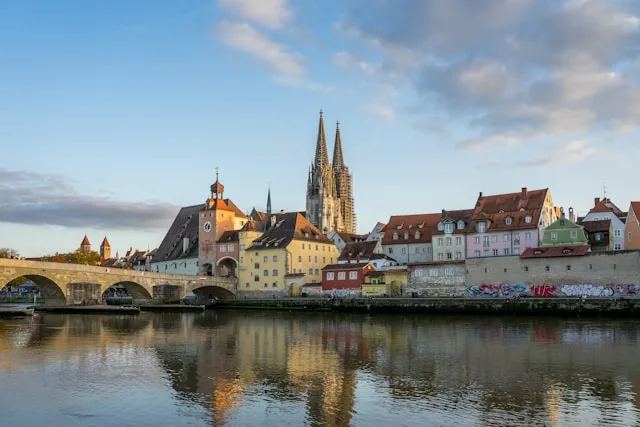
The buyer question
Can a Regensburg semiconductor mandate - process engineering, wafer-fab operations or SiC development - be filled in this Bavarian cluster, and what does the public record actually prove?
What the public record shows
The verified public record for Regensburg's semiconductor base is anchored by the city's Wikipedia article. Since the 1990s several well-known high-tech companies have been based in Regensburg, including Infineon and OSRAM, contributing to the city's current wealth; the same record's employer map names Osram Opto-Semiconductors, SGB-SMIT, Siemens and Infineon - described as the former Siemens semiconductor branch - alongside Continental's car-component headquarters, the BMW plant and Toshiba, GE Aviation and Schneider Electric sites as providers of a high level of innovation and technical development.
Read alongside the German engineering-city records on this site - the Ulm transition analysis - Regensburg is the semiconductor pole of the same Bavarian system: a mid-sized UNESCO-old-town city whose high-tech wealth grew from Infineon's and Osram's presence beside automotive manufacturing, recruiting process and development engineers from the whole Danube-corridor pool.
Neither the employer map nor the high-tech description measures what a hiring leader needs to know: whether semiconductor process engineers, fab-operations specialists or silicon-carbide developers are available at a given seniority in a given quarter, or how capacity ramps gate hiring. That requires a search with contacted, assessed and validated candidates.
What changes in this market
Employers in Regensburg's semiconductor base prove themselves differently from Dresden's larger fab cluster and from Munich's corporate market: a city whose high-tech wealth grew from Infineon and Osram Opto-Semiconductors recruits cleanroom and process specialists inside the same labour pool as BMW's plant and Continental's component headquarters, and southern-German wage bargaining sets floors that semiconductor mandates must clear to move anyone. Each function, phase and stage of a mandate here - process engineering, wafer-fab operations, SiC development - proves itself against that cluster structure rather than against a national average.
KiTalent's mandate analysis
- Frame the mandate by fab function before the search: process engineering, fab operations and compound-semiconductor development certify differently and draw on different segments of the Bavarian pool.
- Treat the co-located employers as the competitive map: where Infineon, Osram Opto-Semiconductors, Siemens, Continental and BMW operate in one city, the rival bidder for technical talent may already be local - verify from candidate offer histories.
- Benchmark against Dresden deliberately: Germany's larger semiconductor cluster prices the same specialists - decide the mandate's stance before launch.
- Ask any search partner for contacted, assessed and validated candidates per fab function before accepting ramp statistics as evidence of workforce availability.
Where the public record stops
No located primary public record verifies investment totals, utilisation rates, posting-growth percentages or time-to-fill durations. What the city's public record can prove stands above.
Sources
Related KiTalent research
- The Market Map Is Not the Shortlist: helps a buyer choose between testing the Regensburg semiconductor market and commissioning a search with contacted, assessed and validated candidates
- How to Assess a Leader Beyond Competencies: shows how to gather decisional evidence for this mandate - the research method behind testing fab function, co-located-employer competition and Dresden benchmarking - with candidate evidence assessed conversation by conversation