
The buyer question
Can a Split ICT mandate - software development, maritime-tech product or IT services - be filled in this Adriatic second city, and what does the public record actually prove?
What the public record shows
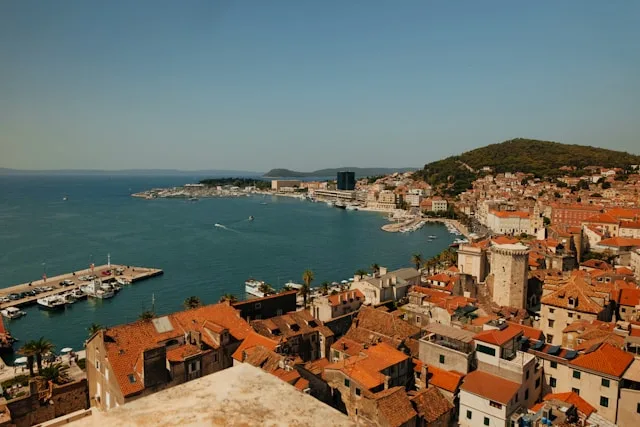
The verified public record for Split is anchored by the city's Wikipedia article. Split is the second-largest city in Croatia after Zagreb, on the eastern shore of the Adriatic; the administrative seat of Split-Dalmatia County and the largest Croatian coastal city, a key economic, cultural and transportation hub for the region. The same record pairs its two modern anchors: the Port of Split is one of the busiest passenger ports in the Mediterranean and the gateway to the southern Adriatic islands, while the University of Split reinforces the city's role as a major educational and research centre - with a Yugoslav-era industrial base, shipbuilding above all, now largely transformed toward tourism and services.
Read alongside the Croatian records on this site - the Rijeka port analyses and the Zagreb electrical-engineering record - Split is the coastal-south counterpart: a passenger-port and university city whose technology sector grew after industrial decline, recruiting ICT professionals from a single university in a tourism-priced labour market.
Neither the city's rank nor the university record measures what a hiring leader needs to know: whether software engineers, maritime-tech product specialists or IT-services professionals are available at a given seniority in a given quarter, or how graduate output converts into retained professionals. That requires a search with contacted, assessed and validated candidates.
What changes in this market
Employers in Split's ICT market prove themselves differently from Zagreb's capital market and from Rijeka's cargo-port economy: a second city whose passenger port and island-gateway tourism set the local wage floor in summer, a single university defines the technical pipeline, and senior ICT professionals price against Zagreb and EU remote bands by default. Each function, phase and stage of a mandate here - software development, maritime-tech product, IT services - proves itself against that tourism-priced university-city structure rather than against a national average.
KiTalent's mandate analysis
- Frame the mandate by seniority economics before the search: a single-university pipeline with tourism-priced competition means junior and senior mandates are different searches here.
- Treat seasonality as a wage factor: the summer passenger-port peak prices service labour upward exactly when relocation decisions get made - plan offers around it.
- Price the Zagreb pull and the remote band explicitly: senior technologists compare against the capital and EU remote work in the same conversation.
- Ask any search partner for contacted, assessed and validated candidates per specialism before accepting graduate-output statistics as evidence of senior availability.
Where the public record stops
No located primary public record verifies graduate counts, unfilled-position totals, park-occupancy rates or EU-funding claims. What the city's public record can prove stands above.
Sources
Related KiTalent research
- The Market Map Is Not the Shortlist: helps a buyer choose between testing the Split ICT market and commissioning a search with contacted, assessed and validated candidates
- How to Assess a Leader Beyond Competencies: shows how to gather decisional evidence for this mandate - the research method behind testing seniority economics, seasonal wage pricing and Zagreb/remote benchmarking - with candidate evidence assessed conversation by conversation