The buyer question
We need artisanal-brand, brewery-and-chocolate experience or port-adjacent food-logistics leadership in Bruges; what does the verified record say about this market and how should a mandate here be structured?
What the public record shows
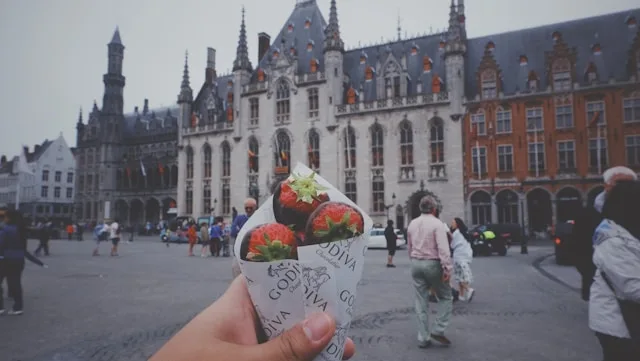
The verified public record for Bruges is anchored by the city's Wikipedia article. Bruges is the capital and largest city of the province of West Flanders in the Flemish Region of Belgium and the sixth most populous city in the country after Brussels, Antwerp, Charleroi, Liège and Ghent; its population was 117,073 on 1 January 2008, within a commuter-zone metropolitan area of 255,844 at the same vintage. The Historic Centre of Brugge has been a UNESCO World Heritage Site since 2000, with a 410-hectare protected core and a 168-hectare buffer zone - the planning fact that shapes every production-location decision in the food sector.
The visitor economy is documented at scale: after the restorations of the medieval city from 1965 onward, international tourism boomed, Bruges was European Capital of Culture in 2002, and the city attracts some eight million tourists annually. The artisanal food identity is verified in its own texture - the city's non-municipal museums include the Brewery Museum and Choco-Story, the chocolate museum, and several beers are named after the city even though only two of them, Brugse Zot and Brugse Straffe Hendrik, are actually brewed in the city itself, which states the production-versus-heritage pattern precisely.
The port pole is equally documented: the port of Bruges is Zeebrugge - Flemish for Bruges-on-Sea - the outer harbour on the coast, historically the departure point of British ferries and the site of the 1987 Herald of Free Enterprise disaster. What the verified record does not contain is any unemployment rate, tourist-spending total, median age, logistics-cost differential, frozen-food tonnage or headcount for the port's cold-chain operations - the two-markets narrative must be argued from the UNESCO core, the eight-million-tourist scale and the Zeebrugge split, not quoted as statistics.
What changes in this market
A Bruges food-and-beverage mandate is a heritage-versus-port mandate. One labour market lives inside the UNESCO core and its buffer: chocolate retail, brewery experiences and experiential dining built on eight million annual visitors, with production necessarily pushed to the periphery because the protected centre cannot absorb industrial expansion - the verified fact that only two city-named beers are brewed in the city itself is the pattern in miniature. The other lives at Zeebrugge's outer harbour, where cold-chain and perishables logistics run to industrial rhythms. Candidates prove themselves either as brand-and-experience leaders who can operate under heritage constraints or as industrial food-logistics managers; the two profiles are not interchangeable, and a mandate that recruits from one pool for the other role fails by construction.
KiTalent's mandate analysis
- Artisanal brand and experience leadership: chocolate and brewery-experience mandates should screen for visitor-economy commercial records and heritage-constraint fluency - sourcing, licensing and event operations inside a protected core.
- Production leadership on the periphery: because protected-centre rules push production out of the core, plant and operations mandates sit in peripheral zones; candidates need multi-site coordination and brand-consistency records rather than single-factory careers.
- Port-adjacent cold-chain logistics: Zeebrugge's harbour roles demand industrial food-safety, temperature-controlled and ferry-corridor experience; screening should test port-and-perishables records rather than artisanal-sector exposure.
- Two-pool sourcing discipline: the artisanal and industrial pools barely overlap; mandates should name which pool they are hiring from and avoid hybrid role designs that neither pool can fill.
- Commuter-zone pricing: with 255,844 people in the wider commuter zone and hourly rail service to Belgium's major cities, offers must be priced for West-Flemish labour scarcity and for competition from the Ghent employers already documented in this corpus.
Where the public record stops
Claims beyond the dated public record are not repeated on this page. The verified record above - the UNESCO core and buffer hectares, the some-eight-million annual tourists, the two in-city breweries among many city-named beers, and the Zeebrugge port identity - supports the two-markets argument without invented unemployment, spending, age or tonnage statistics.
Sources
- Wikipedia - Bruges (city and heritage-tourism record)
- Wikipedia - Bruges (artisanal-sector and port record)
Related KiTalent research
- The Market Map Is Not the Shortlist: helps a buyer decide whether a Bruges food mandate belongs to the heritage-artisanal pool or the Zeebrugge industrial pool, and how to price it within the West-Flemish commuter zone
- How to Assess a Leader Beyond Competencies: shows how to gather decisional evidence for this mandate - the research method behind testing heritage-constraint fluency, peripheral-production coordination, cold-chain records and explicit pool selection - with candidate evidence assessed conversation by conversation