
The buyer question
Can a Burgas tourism, hospitality or aviation mandate - hotel leadership, resort and F&B management, seasonal operations or airport technical roles - be filled in this Black Sea market, and what does the public record actually prove?
What the public record shows
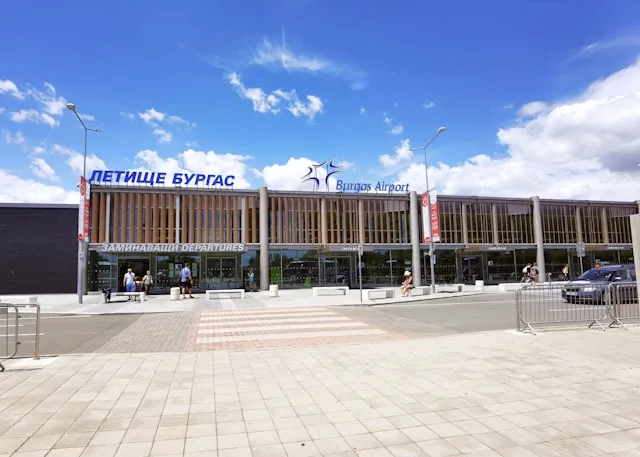
The verified public record for Burgas's tourism and aviation economy is anchored by the city's and the airport's Wikipedia records. Burgas Airport is the second largest airport in the country and the second most important in Bulgaria, and it principally serves Burgas and the seaside resorts of the southern Black Sea coast, which attract many tourists during the summer leisure season.
The airport's traffic record runs 1,848,058 passengers in 2023 (+12.4%) and 1,808,236 in 2024 (-2.2%), against an all-time high of 3,277,229 in 2018 - a recovering season, but 2024 ended below 2023 and roughly 45% below the record year.
The route record shows the source-market shift in the network itself: Wizz Air flies from Polish and UK cities including Katowice, Warsaw, Gdańsk, Lublin and London Luton; Ryanair adds seasonal routes across Polish, Irish, UK, Austrian, Slovak and Italian cities; TUI Airways flies from UK airports; Eurowings connects German cities and Prague.
The labour-market record contradicts the story of an idle winter workforce: the district's unemployment rate (population 15-64, annual average) was 4.40% in 2024 - more favourable than the national average - and the Bulgarian Industrial Association's regional labour-market report records 3.9% in 2023, below the national coefficient, with the unoccupied but economically active contingent described as limited and the reserve for further growth constrained by the demographic profile and the migration of qualified staff.
Aviation economics add a fixed frame: under the EU's ReFuelEU Aviation rules, fuel suppliers must blend 2% sustainable aviation fuel from 2025, rising to 6% by 2030 - a cost factor carried by a network of predominantly low-cost and leisure routes.
What changes in this market
Employers in Burgas's tourism and aviation base prove themselves against a different structure from Sofia or year-round industrial markets: the airport record shows a calendar concentrated in a summer leisure season, the airline table shows route economics set by low-cost and leisure carriers, and the labour record shows a thin general reserve - unemployment below the national average and a limited economically active contingent - alongside a demographic profile and qualified-staff outflow that constrain the pipeline. Scarcity here is a property of the qualified segment, not of headcount: the same record that rules out a standby workforce rules out screening a mandate from one.
KiTalent's mandate analysis
- Size the mandate by season before the search: the traffic record compresses the year into a summer leisure season, so year-round leadership roles and peak-season roles must be briefed, priced and assessed differently.
- Treat the route mix as the demand anchor: Polish, UK, German and Czech source markets set the language coverage and service profile a property's guest-facing leadership must actually run.
- Read the labour record correctly: unemployment below the national average with a limited active contingent means competition for qualified people - budget, proposition and sequencing must reflect scarcity rather than a reserve pool.
- Ask any search partner for contacted, assessed and validated candidates per role profile before accepting traffic, investment or unemployment figures as evidence of workforce availability.
Where the public record stops
No located primary public record verifies the investment programmes, employment counts, vacancy durations, licence issuances, occupancy rates, bed counts, revenue shares or salary bands that circulate in this market's hiring narrative. What the public record can prove stands above, with its dates attached.
Sources
- Wikipedia - Burgas Airport (traffic and route record)
- Wikipedia - Burgas (city record)
- Regional Profiles - Burgas district profile (labour-market record)
- Bulgarian Industrial Association - Regional labour-market report for Burgas district (2025)
- European Commission - ReFuelEU Aviation (SAF blending mandate)
Related KiTalent research
- The Market Map Is Not the Shortlist: helps a buyer choose between testing the Burgas tourism and aviation market and commissioning a search with contacted, assessed and validated candidates
- How to Assess a Leader Beyond Competencies: shows how to gather decisional evidence for this mandate - the research method behind testing seasonality, route economics and labour-market structure - with candidate evidence assessed conversation by conversation