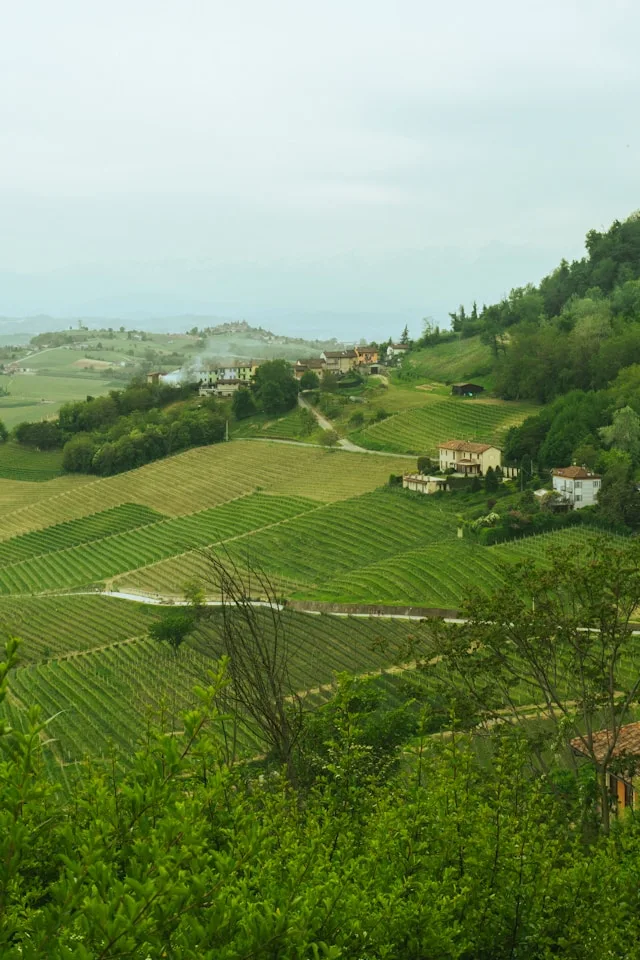
A Province Built on Two Models That Require Different People
These two sectors share a province, share a university pipeline, and share a labour market with 2.8% unemployment (2024) — among the lowest rates in Italy. They do not share a talent strategy, a compensation structure, or a career trajectory. The result is a hiring environment where industrial employers cannot find specialists fast enough and artisanal producers cannot compete for the graduates trained in their own traditions. The tension is not theoretical. It is costing firms real money in stalled certifications, shelved expansion plans, and searches that restart again and again.
What follows is a structured analysis of the forces shaping Cuneo's agri-food talent market in 2026, the specific roles where hiring is breaking down, and what organisations operating in this province need to understand before they commit to a search for senior food processing, supply chain, or regulatory leadership.
The popular image of Cuneo's food economy centres on Slow Food, DOP cheese caves, and the Alba white truffle market. That image is not wrong. It is incomplete. The wage mass of the sector is concentrated on the industrial side: Ferrero's confectionery operations and the large cooperative dairies generate the majority of agri-food wages in the province, while the artisanal sector that defines the province's brand employs a fraction of its workforce.
This bifurcation matters for anyone trying to hire in the province because it means the talent market in Cuneo does not function as a single system. It functions as two overlapping systems with fundamentally different dynamics.
The Industrial Side: Scale, Speed, and Global Compliance
Confectionery and hazelnut processing form the largest block of the sector's turnover, anchored by Ferrero and its network of mid-tier suppliers across the province. These operations require food technologists with tree-nut processing specialisation, automation engineers who can programme PLC systems for fragile product packaging, and supply chain directors capable of managing relationships with fragmented hazelnut cooperatives across the Langhe.
The industrial side also faces a new regulatory burden. The EU Deforestation Regulation, whose main obligations begin to apply from 30 December 2026, requires geolocation-verified due diligence for the commodities it covers — including the cocoa that anchors the province's confectionery supply chains. This has created immediate demand for sustainability compliance officers with expertise in EUDR due diligence, Scope 3 agricultural carbon footprinting, and recyclable packaging material science under the Packaging and Packaging Waste Regulation. These roles barely existed in the province three years ago.
The Artisanal Side: Heritage Knowledge With No Succession Plan
Dairy and cheese production is dominated by cooperative structures producing Castelmagno DOP and Toma Piemontese, and meat processing is concentrated around Saluzzo (white capon) and Bra (Fassona beef). These operations depend on specialists whose expertise cannot be compressed into a degree programme. A master cheesemaker, or _Maestro Casaro_ , typically requires more than a decade of apprenticeship combining traditional craft knowledge with microbiological safety management. The market for these professionals is 100% passive. Recruitment occurs through guild networks, direct approaches to specific ageing facilities, or family succession.
The challenge for artisanal producers is not simply finding these people. It is that the compensation and career structures available in a 10-person cheesemaking operation cannot match what the industrial side of the province offers. A senior food technologist in Cuneo earns €48,000 to €62,000. An R&D Director or Chief Quality Officer earns €95,000 to €135,000. At Ferrero, total rewards packages run approximately 25 to 30% above even those benchmarks. The artisanal side cannot compete on compensation, and the knowledge it needs cannot be produced faster than tradition allows.
The Original Synthesis: Capital Has Moved Faster Than Human Capital Can Follow
The most important dynamic in Cuneo's agri-food market is not the shortage itself. It is the acceleration gap between investment and workforce readiness. Ferrero's hazelnut research and innovation hub in Alba, the growth of its agronomy programmes across Italian hazelnut regions, and the acceleration of automation capital expenditure among the province's food processing SMEs all represent capital being deployed at speed into systems that require people who do not yet exist in sufficient numbers.
The automation wave here is not primarily a cost play: investment is rising precisely because skilled labour is unavailable. But automation does not eliminate the need for people. It replaces one kind of worker with another. A hazelnut roasting facility that automates its production line still needs a production manager who understands both artisanal roasting profiles and industrial HACCP protocols. The search duration for that hybrid role runs six to nine months, compared to two to three months for a general food production manager. The investment moved. The people did not.
This acceleration gap is widening. The University of Gastronomic Sciences at Pollenzo, in the province's own orbit, adds roughly 150 graduates a year in the gastronomic sciences — the closest thing the province has to a dedicated local pipeline of people who understand food as both craft and industry. They are not enough, and they are being pulled in two directions by employers whose needs are increasingly divergent.
The firms that recognise this gap are already acting differently. They are not posting roles and waiting. They are building relationships with the small number of professionals who hold the hybrid knowledge their operations require. The firms that have not recognised the gap are running the same searches repeatedly and losing each time to competitors who moved earlier.
Where Searches Break Down: Three Roles That Define the Problem
Not every hire in Cuneo's agri-food sector is difficult. Junior quality technicians and sustainability officers remain predominantly active markets, with candidates available through university pipelines and contract-based roles. The difficulty concentrates in three specific role categories where supply constraints, passive candidate dynamics, and hybrid skill requirements converge.
Quality Assurance Managers for DOP Export Markets
This is the role where the artisanal and industrial demands collide most directly. A QA manager for a Cuneo dairy exporter must understand traditional _affinatura_ techniques, the ageing protocols that give Castelmagno and Toma their protected characteristics, while simultaneously holding BRC/IFS Global Standards certification and navigating FDA registration for US market access and Chinese customs protocols for meat products. The average time-to-fill for these roles is 127 days, compared to 54 days for general QA positions.
The consequence of this gap is not abstract. When a dairy exporter cannot secure qualified QA leadership, certification cycles stall and expansion plans are shelved. That is not a hiring inconvenience. It is a strategic ceiling imposed by talent availability.
Production Managers With Hazelnut Processing Expertise
Mid-tier suppliers to Ferrero, typically firms with 20 to 50 employees, report search durations of six to nine months for _Responsabili di Produzione_ with specific expertise in hazelnut roasting and pasteurisation. These roles require a combination that formal education does not produce in one package: knowledge of artisanal roasting profiles, industrial HACCP compliance, and the ability to manage a production line that serves a client whose quality standards are set by a global R&D organisation.
The candidate pool for these roles is estimated at 85% passive. Professionals who hold this combination of skills receive unsolicited recruitment approaches regularly and are aggressively retained by current employers through non-compete clauses and retention bonuses. A traditional search process that relies on posted vacancies and inbound applications reaches, at best, 15% of the viable market.
Automation Engineers for Food Processing Plants
The intersection of mechanical engineering and food safety regulation creates one of the smallest and most contested talent pools in the province. Food automation engineers, specifically those with PLC programming expertise for packaging lines handling fragile products like chocolate and aged cheese, operate in a 70% passive market. Employers retain them with non-compete agreements and loyalty bonuses because the cost of replacement is measured not just in recruitment fees but in production line downtime during the transition.
As the province's SMEs accelerate their automation investment in response to persistent labour shortages, the demand for these engineers is rising at precisely the moment when the existing pool is already locked in by retention mechanisms. The hidden cost of a failed hire in this category extends beyond the vacant role itself. It stalls the automation investment that the firm made to solve its broader labour problem.
Compensation: The Three-Way Pull That Cuneo Cannot Win on Price Alone
Executive compensation in Cuneo's agri-food sector sits in a specific and uncomfortable position. It is above Southern Italian agri-food clusters but meaningfully below the three competing geographies that pull senior talent away from the province.
An Operations Director or Supply Chain VP at a large industrial group in Cuneo earns €110,000 to €160,000 annually, with top-tier packages above €140,000 typically reserved for Ferrero or multinational beverage operations. An Agricultural Supply Chain Director earns €85,000 to €115,000. A Senior Agronomist with hazelnut or dairy specialisation earns €42,000 to €55,000.
The Food Valley Premium
The first competitor is Emilia-Romagna's "Food Valley," centred on Parma, Reggio Emilia, and Modena. This cluster offers compensation premiums of 35 to 45% above Cuneo levels for food technologists and QA executives, driven by the concentration of multinational headquarters including Barilla, Parmalat, and Mutti. More damaging than the compensation gap is the career progression gap. Mid-career professionals leave Cuneo for Food Valley with the promise of faster vertical advancement and exposure to global category management. The talent does not flow back.
The Turin Proximity Effect
Turin sits roughly 60 kilometres away and offers 12 to 18% salary premiums for supply chain and sustainability roles within its broader industrial base spanning automotive, aerospace, and technology. The compensation differential alone would not be decisive. What makes Turin genuinely competitive is infrastructure. International schooling options, public transport, cultural amenities, and dual-career employment opportunities all favour Turin for the households where both partners hold professional roles. This is a working abroad consideration in reverse: candidates are not moving countries, but they are making the same lifestyle calculation that international relocations involve.
The Swiss Ceiling
For the most senior R&D and regulatory affairs executives, Swiss multinationals in the Geneva and Lausanne corridor, including Nestlé and Firmenich, offer total compensation packages 80 to 120% above Cuneo levels. French and German language requirements and cost-of-living differentials limit this outflow to the most internationally mobile profiles, but those are precisely the profiles that Cuneo's largest employers most need.
The implication for executive compensation benchmarking in this market is clear. Cuneo employers cannot win a pure compensation bidding war against any of their three competitors. The proposition that moves a senior candidate to Cuneo, or retains one already there, must be built on something other than salary. Role scope, quality of life in the Langhe, proximity to raw material innovation, and the unique intellectual challenge of working at the intersection of artisanal tradition and industrial scale are the differentiators. But those differentiators only work if the candidate hears about them, which requires a search process that reaches passive candidates directly rather than waiting for them to apply.
The Regulatory Compression: New Roles With No Existing Talent Pool
Two regulatory frameworks are creating immediate hiring pressure in Cuneo's agri-food sector, and neither maps neatly onto the province's existing workforce.
EUDR Compliance and Traceability
The EU Deforestation Regulation applies to the cocoa that feeds the province's confectionery lines, requiring geolocation-verified due diligence once its main obligations begin to apply from the end of 2026; hazelnut sourcing itself falls outside the regulation's scope. For Ferrero, with its dedicated R&D centre and global compliance infrastructure, this is a complex but manageable operational challenge. For the province's many smaller food enterprises, the traceability requirement represents a systemic problem: SMEs lacking digital traceability infrastructure face potential market exclusion.
The human capital requirement is specific. These firms need sustainability compliance officers who understand not just the regulation itself but the agricultural reality of fragmented smallholder supply chains in Alpine terrain. This is not a role that can be filled by a generic compliance professional from Milan's financial services sector. It requires sector-specific knowledge that the province's educational institutions are only beginning to produce.
Packaging Innovation Under PPWR
The Packaging and Packaging Waste Regulation adds a second compliance layer, demanding packaging innovation specialists who can redesign materials for recyclability while maintaining the protective requirements of fragile food products. Aged cheese and premium chocolate both require packaging that manages moisture, temperature, and physical impact. Replacing existing materials with PPWR-compliant alternatives without compromising product integrity is a materials science challenge, not an administrative one.
Together, EUDR and PPWR are compressing the timeline within which Cuneo's agri-food firms must hire talent in specialisms that did not have dedicated headcount two years ago. The firms that begin their search processes now will face a smaller but less contested candidate pool. The firms that wait until enforcement penalties arrive will compete against every other food processing cluster in the EU for the same limited professionals. Understanding how executive search outperforms traditional recruitment methods becomes material when the viable candidate pool for a role can be measured in dozens rather than hundreds.
The Demographic Constraint Behind Every Other Constraint
Every hiring challenge described in this analysis sits on top of a deeper structural reality. ISTAT's demographic projections point to a steadily shrinking working-age population nationally over the coming decades, and regional planning documents flag the same reduction for Piedmont. This is not a distant risk. It is a trajectory already visible in the province's 2.8% unemployment rate (2024) — among the lowest in Italy — which leaves almost no slack in the local labour market.
The acceleration of automation investment across the province's food processing SMEs is in large part a direct response to this constraint. Firms are automating because they cannot hire, not because automation is cheaper in absolute terms. But as noted earlier, automation does not eliminate the need for skilled people. It shifts that need toward a different and scarcer set of competencies. A province that cannot fill its current roles with the current workforce profile will face an even more acute mismatch as the roles themselves evolve toward higher technical complexity.
The demographic decline also affects the seasonal labour market. Every harvest season depends on seasonal workers, and accommodation and permit bottlenecks have already forced the prefecture and local authorities into recurring reception protocols — a constraint with no near-term resolution. For the talent pipeline planning that senior leaders in this sector need to undertake, the planning horizon is not the next quarter. It is the next five years, and the numbers do not improve without deliberate intervention.
What This Market Requires From a Search Process
The characteristics of Cuneo's agri-food talent market make conventional hiring methods insufficient for the roles that matter most. A province with 2.8% unemployment, a 100% passive market for master cheesemakers, an 85% passive market for hazelnut processing specialists, and a 70% passive market for food automation engineers is not a market where job advertising produces results at senior level.
The candidates who can fill the most critical roles in this province are employed, retained by non-compete clauses and loyalty bonuses, and not monitoring job boards. They are known within guild networks, recognised by industry consortia, and identifiable through systematic talent mapping that combines sector intelligence with direct identification. They will not respond to a posted vacancy. They may respond to a direct, well-informed approach that demonstrates understanding of their specific expertise and offers a proposition that addresses the reasons they might consider moving.
For organisations competing for senior leadership in food and agricultural processing, the search methodology matters as much as the compensation package.
The counteroffer risk in Cuneo's agri-food sector is particularly acute. Employers who lose a search to a counteroffer do not simply restart. They re-enter a candidate pool that has already been largely exhausted. The difference between a search that closes and one that stalls is often the quality of the initial approach and the speed of the process from first contact to offer.
For organisations seeking to fill R&D directors, supply chain leaders, QA executives, or sustainability compliance officers in Cuneo's agri-food market, where the viable candidate pool is measured in dozens and the cost of a vacant role is measured in stalled export plans and shelved automation programmes, start a conversation with our executive search team about how we approach markets where traditional methods consistently fall short.
Frequently Asked Questions
What is the average salary for an agri-food executive in Cuneo province?
Executive compensation in Cuneo's agri-food sector varies considerably by function. An Operations Director or Supply Chain VP earns €110,000 to €160,000 annually, with top packages exceeding €140,000 at Ferrero or multinational beverage operations. R&D Directors and Chief Quality Officers earn €95,000 to €135,000, carrying a 15 to 20% premium above provincial manufacturing averages due to specialised regulatory knowledge. Agricultural Supply Chain Directors earn €85,000 to €115,000. Ferrero, as a private family-owned entity, is understood to offer total rewards approximately 25 to 30% above these benchmarks for equivalent roles, based on industry compensation surveys. These figures place Cuneo above Southern Italian agri-food clusters but below Emilia-Romagna's Food Valley by 35 to 45%.
Why is it so difficult to hire food technologists in Cuneo?
The difficulty centres on specialisation. Hazelnut processing expertise is concentrated in a small slice of the regional graduate pool, and Ferrero's pull on that slice never stops. Mid-tier suppliers report six to nine-month search durations for production managers who combine artisanal roasting knowledge with industrial HACCP compliance. An estimated 85% of qualified candidates are passive, meaning they are employed and not responding to job postings. Reaching them requires direct headhunting approaches through industry networks rather than conventional advertising.
What regulatory changes are affecting agri-food hiring in Cuneo in 2026?
Two EU regulations are creating immediate demand for new specialisms. The EU Deforestation Regulation requires geolocation-verified due diligence for the commodities it covers — including the cocoa behind the province's confectionery — with obligations applying from the end of 2026, driving demand for sustainability compliance officers familiar with agricultural traceability in fragmented smallholder supply chains. The Packaging and Packaging Waste Regulation requires packaging redesign for recyclability while maintaining protection for fragile products like aged cheese and chocolate. Together, these regulations are creating roles that did not exist in the province two years ago and for which the local talent pipeline is only beginning to produce candidates.
How does Cuneo compete with Emilia-Romagna's Food Valley for agri-food talent?
Cuneo cannot compete on compensation alone. The Food Valley offers 35 to 45% salary premiums for food technologists and QA executives, along with faster career progression at multinational headquarters. Cuneo's competitive advantages are different: proximity to raw material innovation, quality of life in the Langhe, and the intellectual challenge of working at the intersection of artisanal tradition and industrial scale. For employers, the implication is that the candidate proposition must be carefully constructed around these differentiators, communicated directly to passive candidates rather than assumed to be self-evident.
What role does KiTalent play in agri-food executive recruitment in Italy?
KiTalent uses continuous market mapping combined with direct headhunting to identify and approach senior candidates who are not active in advertised channels.
What is the employment outlook for Cuneo's agri-food sector through 2026?
The provincial agri-food chain turns over on the order of €5 billion a year, and food and beverage manufacturing alone carries more than a third of the province's exports. Employment faces countervailing pressures: automation investment is accelerating in response to labour scarcity, while demographic projections point to a shrinking working-age population. The University of Gastronomic Sciences adds only roughly 150 graduates a year to the local pipeline, while demand for food technologists and commercial leadership keeps widening. Net demand for senior and specialised roles is expected to intensify even as lower-skilled positions are automated.
Related Links
- Cuneo
- Italy
- Food Beverage Fmcg
- Milan Professional Services: Define the Practice and Delivery Mandate
- Milan Financial Services: Define the Regulated Business Mandate
- Milan Fashion Hiring: Separate Brand, Industrial and Supply-Chain Leadership
- Quebec City's Insurance Sector Cut Hundreds of Jobs and Still Cannot Hire the People It Needs

Published March 2026, updated 2026-04-12. Based on primary market sources and KiTalent's market-intelligence process.
Related Market Reads
Articles tied to the same hiring geography or market context.
Milan Professional Services: Define the Practice and Delivery Mandate
How should a Milan professional-services firm define a mandate across regulated assurance, advisory, legal practice, data delivery and partnership economics?
Milan Financial Services: Define the Regulated Business Mandate
Which regulated entity, product, control function and decision rights define a Milan financial-services mandate?
Milan Fashion Hiring: Separate Brand, Industrial and Supply-Chain Leadership
How should a Milan fashion mandate distinguish brand-headquarters leadership from industrial and supply-chain capability?
Nearby Market Signals
Lateral reads from adjacent cities, sectors, or themes.
Quebec City's Insurance Sector Cut Hundreds of Jobs and Still Cannot Hire the People It Needs
Quebec City's two largest insurers eliminated 450 administrative positions over a two year integration cycle. The headlines told a story of contraction. The recruitment data...
Los Angeles Entertainment Hiring: Define the Mandate Before the Search
Which studio-production, games-and-interactive or music-and-recording responsibility actually defines an LA entertainment mandate?
Dallas Telecom and Digital Infrastructure: Define the Network Mandate
Which network, facility or deployment decisions define the Dallas telecom and digital-infrastructure mandate?
From the Archive
Evergreen background reading that still sharpens current hiring decisions.
Varese Aerospace Hiring: Define the Mandate Before the Search
Which helicopter-programmes, trainer-aircraft or supplier responsibility actually defines a Varese aerospace mandate?
Turin's Aerospace Sector Is Investing Hundreds of Millions in New Facilities. It Cannot Find the Engineers to Staff Them.
Turin's three largest aerospace employers have committed €340 million in facility expansions between 2024 and 2026. New cleanrooms. New additive manufacturing centres. New...
Treviso Appliance Manufacturing Hiring: Define the Mandate Before the Search
What the verified public record establishes about Treviso's headquartered-brand economy, the De'Longhi appliance anchor founded in 1902, and where a mandate needs contacted, assessed and validated candidates.