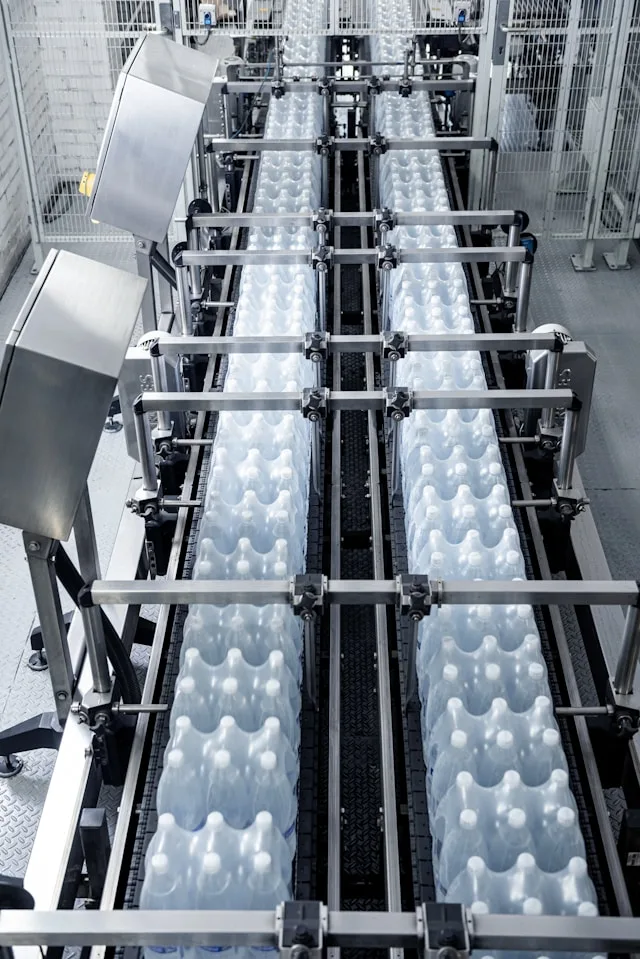
The Automation Paradox: More Machines, Fewer Qualified People
This is the central paradox now defining Debrecen's food and agribusiness sector. A production base that spans dairy processing, grain milling, meat processing and condiment manufacturing is racing to modernise while the pool of technicians who can run modern lines refuses to grow. The county's processors face three pressures at once: a shrinking and ageing regional workforce, cross-sector competition for the same electromechanical talent, and a new wave of EU compliance obligations. The talent required to sustain the transition is vanishingly scarce.
What follows is an analysis of the forces reshaping Debrecen's food processing sector, the specific roles and skills that are hardest to secure, what those roles pay at the executive level, and what organisations operating in this market need to understand before they attempt their next senior hire.
The investment thesis behind Debrecen's food processing automation wave is sound in principle. With an ageing regional workforce and a shrinking pool of younger replacements, replacing departing workers with automated systems is not a strategic choice. It is a demographic inevitability.
The investment is visible across the county's production base. Alföldi Tej Kft., one of Hungary's largest dairy processors, produces cheese and milk powder at its Debrecen plant and has expanded capacity there more than once. Krones, the German bottling and packaging machinery group, has built its largest Hungarian factory in Debrecen's Southern Economic Zone, with some 500 jobs planned. The intent behind such investment is clear: fewer workers doing higher-value tasks, supported by machines handling the repetitive, labour-intensive sorting, cutting, and packing that accounts for the majority of floor-level headcount.
The problem is what happened next. Each of these automated systems requires electromechanical technicians with PLC programming skills and, critically, food industry hygiene awareness. This is not a generic manufacturing role. A PLC technician from the automotive sector cannot walk onto a food processing floor without additional certification in hygienic design, allergen management, and clean-in-place protocols. The talent pool is not merely small. It is a subset of a subset.
BMW and the Cross-Sector Talent Drain
The timing could not be worse. BMW Group's Debrecen plant entered series production of the iX3 in late October 2025 with a workforce that already exceeded 2,000 people, and it has continued to expand. The plant draws from the same electromechanical talent pool that food processors depend on, but automotive employers in the city offer premiums commonly estimated at 20 to 30% above food industry norms. A PLC programmer earning HUF 600,000 per month at a meat processing plant can cross the city to an automotive supplier and earn HUF 780,000 for work that does not involve hairnets, temperature-controlled environments, or weekend harvest shifts.
Employers in Debrecen's food sector report paying well above their standard wage grids to hold onto these profiles. The retention premium is not solving the problem. It is delaying it.
This is the insight that the automation investment narrative misses: capital investment in food processing automation has not reduced the workforce requirement. It has replaced one category of worker with another that does not yet exist in sufficient numbers. The sector traded a quantity shortage for a quality shortage, and the quality shortage is harder to fix because training pipelines for food-grade automation technicians are measured in years, not months.
What the Sector Looks Like in 2026
Debrecen's agribusiness sector sits at the intersection of several forces that are difficult to appreciate individually but powerful in combination. Understanding the full picture requires looking at each one.
The production base remains substantial. Dairy, milling, meat processing and condiment manufacturing all maintain significant operations in and around Debrecen, clustered across the city's industrial zones, including the Southern Economic Zone, with the cold-chain and logistics infrastructure to serve the whole Eastern Hungarian plain.
Wages in the sector have climbed steeply in recent years, pushed upward by minimum wage hikes and retention pressures rather than productivity gains alone. For context, they still lag the automotive sector materially, which is why cross-sector poaching is a structural problem rather than an episodic one.
The Major Employers Driving the Market
The employer base is anchored by a handful of consequential players. Alföldi Tej Kft. runs its cheese and milk-powder plant in Debrecen and ranks among Hungary's largest dairy processors. Hajdú Gabona Zrt., headquartered in downtown Debrecen, is one of the country's four largest flour millers, with milling operations in Debrecen and Hajdúnánás. Hajdúhús 2000 Kft. processes meat at scale in the city for retail and industrial customers. Around these anchors sits a network of regional grain traders, feed producers and packaging suppliers serving the Eastern Hungarian plain.
These are not small operations. But they compete for talent against each other, against the automotive sector, and increasingly against Budapest, where equivalent food safety and R&D roles pay 35 to 45% more. The cost of living differential (Budapest runs 60% higher) partially offsets the salary gap, but only partially. For a mid-career food safety director weighing an offer from a Budapest-based multinational against a Debrecen-based processor, the salary differential is hard to ignore.
Regulation Is Creating a New Category of Scarce Executive
Two EU regulatory frameworks are now reshaping the compliance burden on Debrecen's food processors, and each one is generating demand for talent that barely existed five years ago.
The EU Deforestation Regulation (EUDR), whose core obligations apply from 30 December 2026, requires companies placing cattle, cocoa, coffee, palm oil, rubber, soya and derived products on the EU market to prove their supply chains are deforestation-free. For Debrecen's agri-food firms, anyone trading soya or soya-derived feed and food inputs is inside that perimeter, which means investing in geolocation data management, satellite verification, and traceability IT systems. These systems do not run themselves. They require professionals who understand both supply chain traceability technology and the regulatory framework mandating it.
The Corporate Sustainability Reporting Directive (CSRD) adds a further layer for the region's larger processors: the first reporting waves cover large companies, with the next wave's obligations postponed to 2028 under the EU's stop-the-clock directive, but the direction of travel is unmistakable: audited sustainability data, third-party assurance, internal process redesign, and professionals capable of managing multi-framework compliance simultaneously.
FSSC 22000 and the Quality Assurance Bottleneck
The regulatory pressure extends beyond EU-level directives. Food safety and quality assurance managers requiring FSSC 22000 certification, HACCP audit experience, and business-level English represent one of the most acutely scarce profiles in the entire Eastern Hungarian food sector. Processors across Eastern Hungary consistently report severe difficulty filling these roles. Positions commonly remain advertised for five to six months.
The scarcity is not mysterious. Very few of these professionals are ever on the open market, and the majority of placements in these roles happen through direct approaches rather than job board applications. These professionals are employed, stable, and not looking. Moving them requires understanding what they value, what their current employer cannot offer, and what proposition would justify the disruption. A job posting will not reach them.
The convergence of EUDR compliance, CSRD reporting, and intensifying food safety certification requirements means Debrecen's processors need more regulatory and compliance talent at exactly the moment when the existing pool is fully employed and not expanding. Each new regulation creates a new seniority requirement that the local market cannot fill from within.
The Graduate Leakage Problem
The University of Debrecen trains agricultural and food scientists in the city, and the county's education institutions supply a steady flow of food-science graduates into the local market. On paper, the talent pipeline looks healthy.
In practice, the pipeline leaks badly at the mid-career stage. Employers across the county report severe shortages not of entry-level technologists but of mid-level production managers and plant supervisors with five to ten years of experience. The University produces graduates. Debrecen retains many of them for their first two or three roles. Then Budapest, or the automotive sector, or a multinational with a broader career path, pulls them away before they reach the management level where processors need them most.
This pattern is visible in the compensation data. A senior food technologist with ten-plus years of experience earns HUF 950,000 to 1,350,000 gross per month in Debrecen (€2,400 to €3,450). The same profile in Budapest commands materially more, with access to innovation-focused roles at multinational headquarters that Debrecen's production-oriented employers cannot replicate. The career trajectory argument favours the capital. Debrecen's processors are, in effect, funding the first phase of talent development and losing the return on that investment to geographic competitors.
University-industry cooperation may help retain some of the highest-calibre graduates by offering research-adjacent career paths within the city. But the impact will be gradual. The mid-level management deficit will persist for years.
What Executive Roles Pay in Debrecen's Food Sector
Compensation benchmarking matters because senior hiring leaders in food and industrial manufacturing consistently report that their biggest obstacle to closing executive searches is misaligned expectations. Candidates underestimate the total package available. Employers underestimate what the market now demands.
Plant Director and General Manager roles carry the broadest scope in Debrecen's food processing sector: P&L responsibility for facilities of 200-plus employees, regulatory compliance oversight, and investor relations. At the operations manager level (eight-plus years of experience), compensation runs HUF 1,800,000 to 2,400,000 gross per month (€4,600 to €6,100). At the plant director or country operations lead level, the range is HUF 3,500,000 to 5,500,000 gross per month (€8,900 to €14,000), with variable bonuses of 20 to 40%.
Head of Food Technology and R&D Director roles are priced according to whether the organisation positions R&D as a cost centre or a growth driver. Senior food technologists earn HUF 950,000 to 1,350,000. Technical directors or CTOs of food divisions earn HUF 2,800,000 to 4,200,000 (€7,100 to €10,700), frequently supplemented by innovation bonuses tied to new product launches or process efficiency gains.
Quality Assurance and Food Safety Directors command HUF 1,200,000 to 1,600,000 at the QA manager level (with FSSC 22000 lead auditor credentials). At the Group QA Director level, compensation reaches HUF 2,500,000 to 3,800,000 (€6,400 to €9,700). The premium for EUDR-specific compliance experience is rising but not yet separately benchmarked. Professionals who can manage both traditional food safety frameworks and the newer sustainability reporting requirements command offers at the top of these ranges.
These figures position Debrecen's executive food processing compensation below Budapest by roughly 35 to 45% but meaningfully above smaller Hungarian cities. The city occupies a middle tier: high enough to attract talent from rural Hungary, not high enough to compete with the capital or with the automotive sector's executive packages for candidates who could work in either industry.
The Seasonal Dimension and What It Does to Retention
One structural feature of Debrecen's food processing sector receives insufficient attention in standard market analysis: the extreme seasonality of labour demand. Grain and produce processing peaks hard in late summer and autumn, when processors run extended shifts and lean heavily on temporary workers to get the harvest through the plant.
This is not merely an operational inconvenience. It creates a retention problem at every level of seniority. Production managers and plant supervisors experience acute workload spikes during harvest season that test the limits of what fixed compensation can justify. The professionals most likely to leave are often those who have just endured their fifth or sixth harvest cycle and conclude that the pattern is unsustainable. The counteroffer that arrives when they resign typically addresses the salary dimension but not the structural one.
For organisations competing for senior talent in this sector, the lesson is direct. The proposition required to secure and retain a plant director or quality assurance leader in Debrecen must address seasonal workload management explicitly. Candidates at this level are not naive about what the role involves. They want evidence that the employer has invested in the staffing, automation, and process design needed to prevent annual burnout cycles. A compensation package alone is insufficient.
Energy costs add another layer of pressure, falling hardest on dairy and meat processors with high thermal demands. These costs compress margins and limit the compensation increases that mid-sized processors can offer. The result is a market where the need for executive talent is rising and the financial capacity to pay for it is constrained.
What This Means for Hiring Strategy
The talent dynamics described above converge on a single practical conclusion: conventional hiring methods do not work for the roles that matter most in Debrecen's food processing sector.
Technical and quality assurance openings in the county routinely stay open for months, while comparable administrative positions fill in weeks. For senior quality assurance and food safety roles, the timeline stretches longest of all. These are not numbers that respond to more aggressive job advertising.
The reason is structural. For food safety directors, automation engineers, and senior agronomists with digital competencies, only a small fraction of viable candidates are actively job-hunting at any given time; by most recruitment-market estimates, the overwhelming majority must be proactively sourced. They are employed. They are not on job boards. They are not registered with generalist recruitment agencies. Reaching them requires talent mapping that identifies where they work, what would motivate a move, and what proposition would be credible enough to warrant a conversation.
Cross-border competition adds complexity. Győr's Audi automotive cluster and Kecskemét's Mercedes and Phoenix Mecano operations draw automation engineers with manufacturing premiums. Slovak and Romanian border regions add further competition for industrial labour. Even within Hungary, the competitive field extends well beyond the food sector.
For organisations attempting to fill executive roles in this market, the cost of a slow or failed search is not abstract. A plant director vacancy during a harvest cycle means operational decisions default to someone without P&L authority. A quality assurance director gap during an EUDR compliance audit means regulatory exposure that no amount of retrospective hiring can correct. The hidden cost of a wrong executive appointment compounds further when the replacement search enters a market where viable candidates number in the dozens rather than the hundreds.
How Direct Executive Search Changes the Equation
When the vast majority of the candidates who can fill a role are not actively seeking one, the search methodology must start from identification, not attraction. This is the distinction between posting a vacancy and mapping a market.
Continuous market mapping can identify professionals with the certifications, experience and language skills required by Debrecen food processors before seasonal deadlines make a vacancy harder to manage.
KiTalent's 96% one-year retention rate for placed candidates reflects the depth of candidate assessment that direct search enables. When a candidate is identified, approached, and evaluated against the full context of the role, the organisation, and the market, the resulting match is more durable than one produced by inbound applications.
For organisations competing for plant directors, food safety leaders, or automation specialists in Debrecen's constrained and intensely competitive food processing talent market, speak with our executive search team about how we approach searches that conventional methods cannot reach.
Frequently Asked Questions
What are the hardest food processing roles to fill in Debrecen?
Food safety and quality assurance directors requiring FSSC 22000 certification and business-level English are the most persistently scarce. These roles commonly remain open for five to six months. Automation maintenance technicians with PLC programming skills and food hygiene awareness are the second-hardest category, subject to aggressive poaching from Debrecen's growing automotive sector. For both categories, the overwhelming majority of qualified candidates are passive and must be proactively sourced through direct headhunting methods rather than job advertising.
What does a plant director earn in Debrecen's food sector?
A plant director or country operations lead in Debrecen's food processing sector earns HUF 3,500,000 to 5,500,000 gross per month (€8,900 to €14,000), with variable bonuses of 20 to 40%. Operations managers with eight-plus years of experience earn HUF 1,800,000 to 2,400,000 gross per month. These figures sit below Budapest equivalents by 35 to 45% but above smaller Hungarian cities, reflecting Debrecen's position as Eastern Hungary's primary processing hub.
How does BMW's Debrecen plant affect food processing hiring?
BMW Group's Debrecen plant entered series production of the iX3 in late October 2025 with a workforce that already exceeded 2,000 people and has continued to expand. It draws from the same electromechanical and PLC programming talent pool that food processors depend on, offering premiums commonly estimated at 20 to 30% above food industry norms. This cross-sector competition has driven food processors to pay well above their standard wage grids and has made technician retention one of the sector's defining problems.
What impact does the EU Deforestation Regulation have on Debrecen's agribusiness?
The EUDR's core obligations apply from 30 December 2026. It requires operators placing cattle, cocoa, coffee, palm oil, rubber, soya and derived products on the EU market to demonstrate deforestation-free supply chains through geolocation data and satellite verification. The regulation has created demand for a new category of professional who combines supply chain traceability technology expertise with regulatory knowledge, a profile that barely existed in the Hungarian market five years ago.
Why do conventional recruitment methods fail for senior food industry roles in Debrecen?
For senior food safety, automation, and agritech roles in Eastern Hungary, only a small fraction of qualified candidates are actively seeking new roles at any given time. Conventional job postings and recruitment agencies reach only that active slice; the rest are employed, stable, and must be identified through market mapping and direct executive search.
How does Debrecen compare to Budapest for food processing executive careers?
Budapest offers 35 to 45% higher salaries for equivalent food safety and R&D roles, plus access to multinational headquarters with broader career paths. However, Budapest's cost of living runs 60% higher, partially offsetting the salary advantage. Debrecen's strengths include proximity to production, lower living costs, and a growing university-linked research and innovation ecosystem. For candidates weighing both markets, the decision often turns on whether they prioritise career trajectory or total quality of life.
Related Links
- Debrecen
- Hungary
- Industrial Manufacturing
- Székesfehérvár Logistics Talent: What the Verified Record Shows
- Miskolc Metalworking Hiring: Define the Mandate Before the Search
- Miskolc Spa Tourism Hiring: What the Verified Record Shows
- Quebec City's Insurance Sector Cut Hundreds of Jobs and Still Cannot Hire the People It Needs

Published March 2026, updated 2026-04-12. Based on primary market sources and KiTalent's market-intelligence process.
Related Market Reads
Articles tied to the same hiring geography or market context.
Székesfehérvár Logistics Talent: What the Verified Record Shows
The verified public record for Székesfehérvár - a ninth-city road and rail junction on the M7 corridor with a multinational manufacturing hinterland - and what a logistics leadership mandate there must actually cover.
Miskolc Metalworking Hiring: Define the Mandate Before the Search
What the verified public record establishes about Miskolc's steel-city legacy and its 2009 ending, the Bosch plant anchoring today's manufacturing base, and where a metalworking mandate needs contacted, assessed and validated candidates.
Miskolc Spa Tourism Hiring: What the Verified Record Shows
What the verified public record establishes about Miskolc's Cave Bath fire and 2026 reopening, the city's visitor-demand record, and where a hospitality mandate needs contacted, assessed and validated candidates.
Nearby Market Signals
Lateral reads from adjacent cities, sectors, or themes.
Quebec City's Insurance Sector Cut Hundreds of Jobs and Still Cannot Hire the People It Needs
Quebec City's two largest insurers eliminated 450 administrative positions over a two year integration cycle. The headlines told a story of contraction. The recruitment data...
Milan Financial Services: Define the Regulated Business Mandate
Which regulated entity, product, control function and decision rights define a Milan financial-services mandate?
Los Angeles Entertainment Hiring: Define the Mandate Before the Search
Which studio-production, games-and-interactive or music-and-recording responsibility actually defines an LA entertainment mandate?
From the Archive
Evergreen background reading that still sharpens current hiring decisions.
Kecskemét Automotive Hiring: Define the Mandate Before the Search
What the verified public record establishes about Kecskemét's Mercedes-anchored automotive cluster, its dated employer ladder, and where a hiring mandate needs contacted, assessed and validated candidates.
Székesfehérvár Automotive Hiring: Define the Mandate Before the Search
What the verified public record establishes about Székesfehérvár's transition-era FDI wave - Ford, IBM, Denso, Alcoa - and its socialist industrial heritage, and where a mandate needs contacted, assessed and validated candidates.
Székesfehérvár EMS Talent: What the Verified Record Shows
The verified public record for Székesfehérvár's electronics-manufacturing economy - the 1938-founded Videoton EMS group and the city's documented multinational-plant inheritance - and what a contract-manufacturing mandate there must actually cover.