
The buyer question
We need construction-site, joinery-and-craft or renovation leadership around Echternach; what does the verified record say about this market and how should a mandate here be structured?
What the public record shows
The verified public record for Echternach is anchored by the town's Wikipedia article. Echternach is a commune with city status in the canton of Echternach in eastern Luxembourg, lying near the border with Germany, and it is the oldest town in Luxembourg, with 5,936 inhabitants at its 2025 municipal vintage. The river Sauer flows past the town and now forms the border between Luxembourg and Germany - the physical fact behind every cross-border labour flow the market relies on.
The town's institutional inheritance is documented: it grew around the Abbey of Echternach, founded in 698 by St Willibrord, the Northumbrian monk who became the first bishop of Utrecht and served as the monastery's abbot until his death in 739; the abbey's library and scriptorium had a European reputation, the monks were displaced by the canons of Trier between 859 and 971, Willibrord's buildings burned in 1017, and the Romanesque basilica still houses his tomb in its crypt. The Dancing Procession of Echternach takes place annually on Whit Tuesday in his honour - a standing event economy in a town of six thousand.
What the verified record does not contain is any permit counts, capacity utilisation, subsidy-driven growth rates, wage-premium percentages, cross-border commuter shares or wage-growth comparisons. The structure - a border-river town of 5,936 whose craft sector necessarily draws on German labour across the Sauer while selling into Luxembourg's wage-and-price economy - is verifiable; the premium-compression arithmetic must be argued from structure, not quoted.
What changes in this market
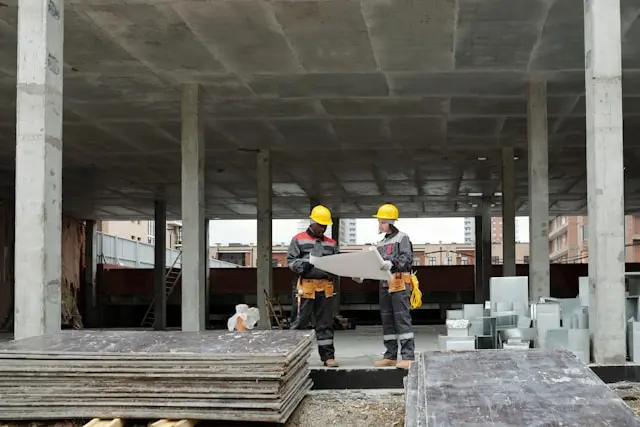
An Echternach construction mandate is a border-river craft mandate in Luxembourg's oldest town. The labour-market geometry is fixed by geography: a six-thousand-person town on the Sauer, with the German Eifel region across the bridge, means the trades have always been cross-border - German craftspeople commuting into Luxembourg wage conditions, and Luxembourg projects priced for that flow - so any mandate's sourcing, pricing and retention design must treat the German border as the primary market fact rather than a footnote. Candidates prove themselves through bilingual German-French working ability, cross-border social-security-and-tax fluency, and craft quality under Luxembourg's renovation-and-heritage expectations; offers compete with both Luxembourg-city construction wages and the improving German-side terms the record's structure implies, so commuter economics - fuel, time, taxation - belong inside the offer conversation, not after it.
KiTalent's mandate analysis
- Site-and-project leadership: mandates should screen for small-town residential-and-renovation project records with cross-border crew management, not large-site careers alone.
- Joinery-and-craft workshop roles: the heritage-and-basilica context sustains restoration-grade craft work; candidates need conservation-adjacent references alongside modern trade certification.
- Cross-border employment design: social-security, tax and commuting arrangements define the reachable pool; leaders fluent in frontier-worker frameworks hold a structural advantage the grid should test.
- Bilingual verification: German-and-French working ability is the operating language of crews, clients and authorities alike; verification belongs at shortlist.
- Event-and-heritage interface: the Whit Tuesday Dancing Procession and the basilica's standing mean some projects interface with heritage-and-event regimes; stakeholder patience is a named criterion.
Where the public record stops
Claims beyond the dated public record are not repeated on this page. The verified record above - the oldest-town standing, the 698 abbey founding by Willibrord with the 739-859-971-1017 milestones, the Romanesque basilica and Dancing Procession, the Sauer border geography and the 5,936 population - supports the structural argument without invented permit, utilisation, commuter or wage statistics.
Sources
Related KiTalent research
- The Market Map Is Not the Shortlist: helps a buyer decide whether an Echternach mandate is really a site-leadership, craft-workshop or cross-border-workforce search, and how to design commuter economics into the offer
- How to Assess a Leader Beyond Competencies: shows how to gather decisional evidence for this mandate - the research method behind testing frontier-worker fluency, bilingual verification, conservation-adjacent craft references and heritage-interface patience - with candidate evidence assessed conversation by conversation