
The buyer question
We need distribution, wholesale or construction-materials logistics leadership in Ferizaj; what does the verified record say about this market and how should a mandate here be structured?
What the public record shows
The verified public record for Ferizaj is anchored by the city and motorway articles. Ferizaj is the third largest city of Kosovo by population and the seat of Ferizaj Municipality and the Ferizaj District; according to the 2024 census the municipality has 109,255 inhabitants. The city is located in south-eastern Kosovo about halfway between Pristina and Skopje - 35 kilometres south of Pristina and 55 kilometres north of Skopje - and its very existence is logistic: it grew around a station built on the Mitrovica-Skopje railway, and during the Ottoman period it served as a trading centre on the route between Belgrade and Thessaloniki.
The modern corridor is precisely identified. The R 6 motorway, named Arbën Xhaferi, is part of European route E65, runs 60 kilometres, serves Pristina, Lipjan and Ferizaj, and terminates in the south at Hani i Elezit on the North Macedonian border; the Ferizaj infobox lists the R 6 among the municipality's motorways. This is the axis any south-Kosovo distribution or cross-border freight operation sits on - and it is an E65 corridor, not the Corridor X the inherited market commentary claimed.
What the verified record does not contain is any motorway traffic census, warehousing stock, wholesale-company count, turnover range, housing-programme budget, emigration rate, technical-school output, driver-pay multiple or transit-time saving. The structure - a third city on a railway-and-motorway axis halfway between two capitals, with a documented trading-centre past - is verifiable; the sector-expansion arithmetic attached to it must be argued from structure, not quoted.
What changes in this market
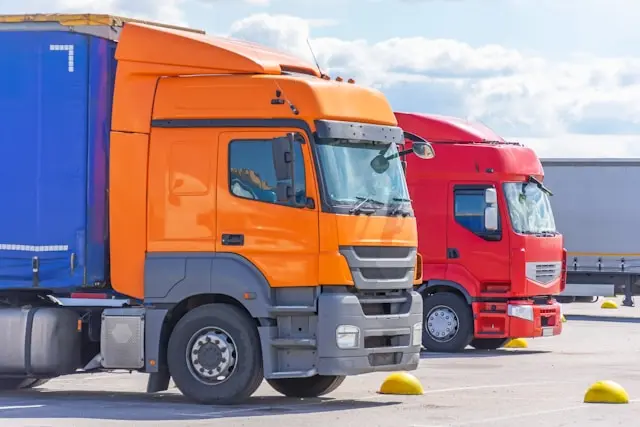
A Ferizaj logistics mandate is a corridor-and-hinterland mandate in a third-city market. The city exists because freight moved through it - first the Mitrovica-Skopje railway, then the Ottoman Belgrade-Thessaloniki trading route, now the E65 R 6 motorway to the Macedonian border at Hani i Elezit - so wholesale trade, construction-materials distribution and cross-border trucking are the market's historical core, not a new cluster. Candidates prove themselves through cross-border customs fluency (Kosovo-Serbia-North Macedonia triangle), fleet and warehouse generalism in a small-firm economy, and endurance-retention management for drivers whose certified skills are priced in the German and Dutch markets; offer design that ignores emigration pull fails on arrival.
KiTalent's mandate analysis
- Wholesale and distribution leadership: the trading-centre inheritance supports distribution mandates built on family-firm consolidation; candidates need formalisation records - systems, controls, governance - rather than only market-stall scaling experience.
- Cross-border freight operations: on the E65 axis toward Hani i Elezit and Skopje 55 kilometres south, fleet and forwarding roles demand customs-procedure fluency across the Kosovo-North Macedonia and Kosovo-Serbia interfaces; that fluency is the first-order screen.
- Construction-materials logistics: cement, aggregates and finished products move by road in weight-constrained loads; candidates should show heavy-goods compliance and routing records rather than parcel-network experience.
- Driver-pool retention design: certified HGV drivers are the emigration-exposed population in every Kosovar market this corpus documents; retention planning - pay structure, route quality, home-time - belongs inside the mandate, not after it.
- Rail-freight optionality: the city's railway-station origin is a reminder that rail interfaces exist; mandates serving bulk flows should assess candidates' rail-and-intermodal literacy rather than assuming road-only operations.
Where the public record stops
Claims beyond the dated public record are not repeated on this page. The verified record above - third-city rank, the 2024 census population, the 35/55-kilometre Pristina-Skopje position, the railway and Ottoman trading origins, and the R 6's E65 routing and 60-kilometre length - supports the structural argument without invented traffic, stock, company or emigration statistics.
Sources
- Wikipedia - Ferizaj (city and trading-origin record)
- Wikipedia - R 6 motorway Kosovo (corridor record)
Related KiTalent research
- The Market Map Is Not the Shortlist: helps a buyer decide whether a Ferizaj mandate is really a wholesale-distribution, cross-border-freight or construction-materials search, and how to design retention against emigration pull
- How to Assess a Leader Beyond Competencies: shows how to gather decisional evidence for this mandate - the research method behind testing customs-triangle fluency, formalisation records, heavy-goods compliance and driver-retention design - with candidate evidence assessed conversation by conversation