The buyer question
We are hiring hotel, festival-season or destination leadership in Galway; what does official evidence actually establish about this market, and how should the mandate be scoped?
What the public record shows
None of the statistics cited here measures Galway's own visitor volumes, hotel occupancy or hospitality staffing. What the national structure does establish is the institutional frame: Fáilte Ireland delivers tourism supports by sector, which defines how the industry is organised, and the demand a Galway mandate serves must be evidenced locally at search time.
The national institutional structure is documented: Fáilte Ireland, the national tourism development authority, delivers its supports by sector — accommodation, activities and attractions, business events and travel trade, festivals and events, and food and beverage — alongside funding, training, research and tourism-data programmes. Galway's festival calendar and the city's census population (85,910 in 2022) are public facts; neither is a measurement of hospitality labour supply, vacancy rates or wage levels.
What changes in this market
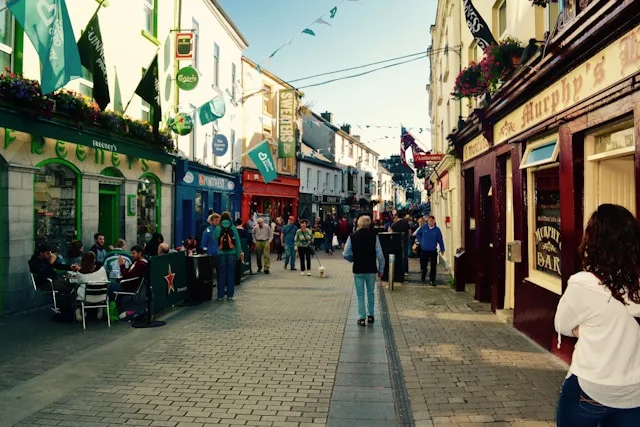
The useful analysis for a Galway hospitality mandate is structural. The city combines a university-population base, a compressed festival-and-summer peak, and a visitor offer that national policy groups under accommodation, food-and-beverage and festivals — so a mandate's first decision is which of those businesses the hire leads. A city hotel running festival surges, a food-and-beverage operation, and a festival-and-events organisation recruit different pools and reward different evidence; treating 'Galway hospitality' as one labour market hides that.
KiTalent's mandate analysis
- Do not accept vacancy-rate, staffing-deficit or time-to-fill figures for Galway without a dated, method-transparent source checked during the search; none appear in the official record cited here. Frame candidate availability as a live research question.
- For hotel leadership, ask for genuine festival-surge and city-premium records — peak staffing, rate management, event coordination — rather than resort generalism.
- For food-and-beverage roles, test local-supplier and season management together; the national support structure treats food and beverage as its own sector, and the evidence should match that.
- For festival-and-events mandates, ask which festivals, what attendance scale, and what licensing and crowd-management responsibilities the candidate personally carried.
- Plan senior searches as national-and-regional campaigns: the official record documents nothing about the size of the local senior pool, and a small-city market distant from the capital argues for wider sourcing rather than assumption.
- Benchmark against Dublin and the western resort corridor as a live comparison at shortlist stage, not as a premise about candidate behaviour.
Where the public record stops
The evidence cited here describes the national tourism-support structure and the city's population base. It does not establish hotel-construction volumes, visitor numbers for Galway, staffing deficits, vacancy rates, executive time-to-fill or the size of any candidate pool. Those facts must be established during a live mandate, against the specific role and season.
Sources
Related KiTalent research
- The Market Map Is Not the Shortlist: helps a buyer see which parts of a Galway hospitality mandate the official record can and cannot ground, and to structure the search around the actual business being led
- How to Assess a Leader Beyond Competencies: shows what evidence to demand from candidates — surge records, sector-specific management, festival logistics — and what market claims to re-verify rather than assume