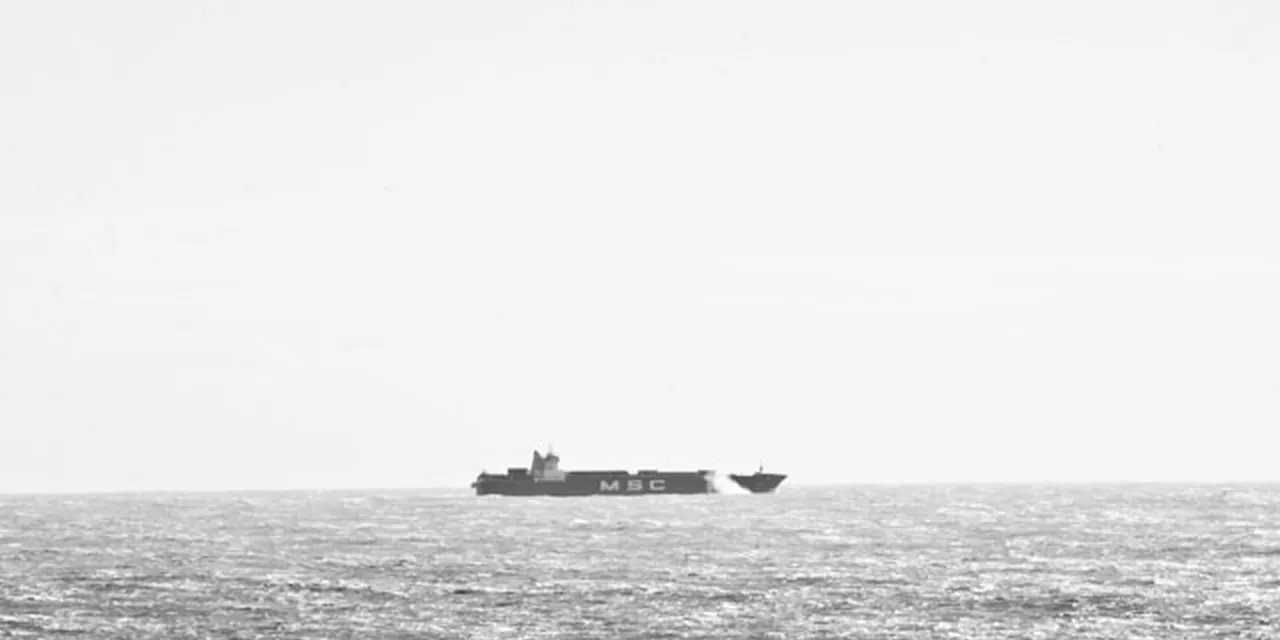
A Port Expanding Into a Workforce That Does Not Yet Exist
Poland's transport and storage sector entered 2026 with a job vacancy rate of 1.4% in enterprises with ten or more employees, against an economy-wide average of 0.7%, and the sector's open vacancies climbed from roughly 6,800 to nearly 9,900 between late 2024 and late 2025. A port that has just expanded its container capacity by half is hiring into that arithmetic. The hiring-market specifics that circulate about Gdańsk — vacancy durations, pool sizes, salary premiums — trace to no published source; the account below is built from what is: port and terminal records, EU regulation and national statistics, plus what our own searches in this market confirm.
What follows is a ground-level analysis of the forces reshaping Gdańsk's port logistics sector: the expansion that is actually verifiable, the roles and skills in shortest supply, what is known and not known about what they pay, and what organisations operating in this market need to do differently to fill positions that job boards cannot reach.
The investment case is unusually well documented. The Port of Gdańsk handled 53.2 million tonnes in 2021, 68.2 million in 2022 and close to 81 million in 2023, growth the port authority describes as the fastest of any European port over the last decade, at 167%. Its container terminal, Baltic Hub — owned by PSA International (40%), the Polish Development Fund (30%) and IFM's Global Infrastructure Fund (30%), and known until recently as DCT Gdańsk — handled 2,767,287 TEU in 2025, 23% up on the year, including a record 20,962 TEU on a single vessel call. T3, the terminal's third deep-water berth, was declared complete in November 2025: 717 metres of quay at 17.5 metres depth on a 36-hectare reclaimed platform, seven ship-to-shore cranes and twenty automated rail-mounted gantry cranes, roughly PLN 2 billion of investment, and 1.5 million TEU of new annual capacity on top of the terminal's previous three million.
Behind the terminal sits the port authority's own programme. The Central Port project will build roughly 410 hectares of piers and structures in the deep-water part of the port, with terminals planned for containers, ro-ro, chemicals, LNG, cereals and cruise traffic, at an estimated PLN 13 billion; no construction-start date has been published, which makes it a pipeline fact rather than a dated commitment. The one expansion with a stated date is a floating LNG terminal promoted by the gas transmission operator GAZ-SYSTEM in the Gulf of Gdańsk, with a first-phase regasification capacity of 6.1 billion cubic metres and operations planned for the first half of 2028.
None of this investment created the people required to run it.
Gdańsk's expansion plans assume a labour market that does not exist in sufficient depth. The port is not merely short of workers. It is short of workers with a specific combination of skills that this market's growth has invented faster than any training pipeline can produce: a terminal operations manager who works the Navis N4 terminal operating system daily and plans stowage for the world's largest container vessels, which the terminal now receives; an intermodal rail specialist who can plan 750-metre trains across the PKP network into a port that handled 9,362 trains last year; and a customs compliance lead fluent in AEO procedures and the EU's Import Control System 2, whose safety-and-security declarations were still phasing in across transport modes in the mid-2020s. These are not legacy roles with mature talent pools. They are roles whose requirements were rewritten within the last three years by regulatory change, geopolitical shifts and infrastructure investment.
Where Direct Port Employment Actually Sits
A common assumption about port cities is that freight forwarding and logistics parks drive the bulk of regional employment. In Gdańsk, what the public record actually measures is cargo, not job titles — and that is the first finding for any hiring organisation here. The terminal states how many people it employs; what neither it nor the port authority publishes is a role-level breakdown, so the splits that circulate between maritime specialists, rail staff and engineers are estimates, not statistics. What is measurable is where the volume concentrates. Of the port's 37.6 million tonnes of liquid fuels in 2023, 36.6 million moved through the Naftoport terminal; 13.3 million tonnes of coal moved through the coal terminals; and the port's 20.5 million tonnes of containerised cargo is concentrated in a single operator, Baltic Hub, whose 124 hectares and 2.1 kilometres of deep-water quay make it, in its own description, the largest and deepest container terminal in the Baltic Sea. The highest-value employment follows the cargo: it sits at the terminal, not in the parks around it.
The terminal as the employment centre of gravity
That concentration matters for talent strategy. The specialised roles a port expansion actually depends on — vessel and yard planning, rail operations, terminal maintenance, deep-water berth engineering — sit at the terminal and the port authority, and they are not interchangeable with forwarding-sector staff: STCW certification, Baltic navigation experience and terminal-operating-system fluency are not adjacent skills a logistics coordinator can pick up. Baltic Hub's own careers page puts the terminal's workforce at more than 1,400 people, over half of them residents of Gdańsk and the surrounding area, and T3's construction alone employed over 400 people at a peak of nearly 600. What no one publishes is the breakdown: how many of those employees work in planning, rail operations or maintenance, and what the authority's engineering and marine-pilot staffing is. A hiring organisation that needs those numbers has to map them, not assume them.
The logistics park layer
Around the port sits a real logistics-park layer: Goodman has developed warehouse space near the container terminal and near the airport, Panattoni's Gdańsk airport park runs to roughly 110,000 square metres, and global forwarders including C.H. Robinson maintain Gdańsk offices. Nothing in the public record counts the people working across these parks and the Pomeranian Special Economic Zone's logistics sites. What is structurally true, and what our own searches here confirm, is that these facilities hire mainly for pan-European coordination and e-commerce fulfilment — a different talent pool from the terminal-level specialisms the port's expansion depends on. The hiring pressure that matters most for the port's operational capacity sits at the terminal level, where the roles are more specialised, the candidate pools are thinner, and traditional recruitment does not reach the people who are already employed.
The Three Talent Markets Inside One Port
Gdańsk's port logistics workforce is not a single market. It is three distinct markets, each with different dynamics, different levels of scarcity, and fundamentally different approaches required to fill them — and only some of them are measurable.
The executive and specialist tier
At the top sit terminal operations leadership, intermodal rail management and customs compliance. No statistic measures any of these pools: the unemployment rates, tenures, pool sizes and demand-to-supply ratios that circulate for these titles are unsourced. What is verifiable is the pressure underneath. Poland's transport and storage vacancy rate ran above the economy-wide average in every quarter of 2024 and 2025, at 0.9 to 1.4% against 0.7 to 0.8% for the economy as a whole, and the sector's open vacancies rose by nearly half in a year. Layer the port's own trajectory on top — container capacity up by half, train volumes up by more than a thousand trains a year, new customs and emissions obligations in force — and the conclusion is structural rather than statistical: the specialists who can run what Gdańsk has just built are already employed, and the market for them is national and international, not local.
The mid-level management tier
Mid-level management — shift leadership, planning, customer service, customs brokerage supervision — is where Warsaw and Western European employers compete hardest. Mobility data for Gdańsk's logistics managers is not measured publicly, but the mechanics are not in dispute: capital-city employers, German and Dutch port clusters and fully remote roles for Western European companies all bid for the same people without a single resignation ever showing up in a local statistic. In KiTalent's own search work in this market, this is the tier most frequently lost to offers that were never posted anywhere in Poland.
The operational tier: a demographic problem, not a recruitment problem
The operational tier — warehouse, yard and forwarding coordination — is not a recruitment problem but a demographic one. Statistics Poland's long-term projection sees the country's working-age population falling by 6.7 million people by 2060, with the total population possibly as low as 28.4 million. The vacancies that persist in transport and storage are hardest to close in exactly the roles that cannot be automated away quickly. This bifurcation matters because a uniform "talent shortage" narrative misdiagnoses the problem: executive and specialist roles require better search methodology; operational roles require demographic and policy intervention. Treating both as the same problem guarantees failure at both.
What the Port Pays: A Market With No Public Price List
The honest starting point on compensation is that no public benchmark exists for what Gdańsk port logistics roles pay: the terminal, the authority and the sector's employers release no salary data, and no official series isolates port logistics pay in Pomerania. Every salary band an employer is quoted for a Gdańsk terminal manager or rail operations director is a constructed estimate benchmarked by analogy. That is a negotiating environment, not a price list, and it rewards organisations that enter it deliberately.
Three structural forces shape that environment. The first is Warsaw, where corporate headquarters concentrate and career ladders are longer; for a Pomeranian logistics professional, a capital offer is rarely just a salary number. The second is Western Europe's port clusters, which have recruited Baltic maritime talent for years and pay at levels Polish employers do not publish and usually cannot match — the arithmetic of a move west needs no invented percentages to be real. The third is the net-pay comparison with the Baltic neighbours, which is more complicated than the flat-rate story sometimes told: Lithuania's personal income tax is progressive, not flat, running from 20% to 32% from 2026, so net-pay comparisons belong in the diligence phase of a search rather than in market folklore. A mid-career professional in Gdańsk weighing a lateral move is weighing all three alternatives at once, and the proposition required to keep them must account for that. Most offers do not.
Rail Capacity: The Constraint That Determines Everything Else
If a single factor determines whether Gdańsk's expansion translates into growth or stranded volume, it is rail, and the port has already invested accordingly. The EU-backed programme that rebuilt rail access to the port, finished at the end of 2021, laid more than 50 kilometres of track and 165 junctions, put 32 new tracks into the Northern Port and made the network ready for 750-metre trains at 22.5-tonne axle loads, at a cost of over PLN 1.1 billion, almost 40% of it EU-funded through the Connecting Europe Facility. A second EU-backed programme running from 2023 to 2027 is rebuilding four inner-harbour quays totalling 1,916 metres. Baltic Hub handled 9,362 trains in 2025, about 1,100 more than the year before, and rail's modal share at the terminal stood at 33% in spring 2025, a figure from the terminal's own business development management, with Metrans and ÖBB Rail Cargo Group the largest rail operators serving the port complex. The terminal has said it aims to handle 11,000 trains in 2026. What no source publishes is comparative dwell time — how long container trains sit at Gdańsk against other ports — so precise figures quoted for that are estimates.
What is published is the regulatory arithmetic that makes rail strategy existential. Since January 2024 the EU Emissions Trading System has covered CO2 emissions from ships of 5,000 gross tonnage and above, with allowance surrender phasing from 40% of 2024 emissions to 70% of 2025 emissions and 100% from 2027. FuelEU Maritime has applied in full since 1 January 2025 and caps the greenhouse-gas intensity of the energy ships use, tightening from a 2% reduction against a 2020 baseline in 2025 to 6% in 2030 and 80% by 2050, with an onshore-power obligation at berth arriving from 2030. Every one of those rules prices the shipping that calls at Gdańsk and rewards hinterland connections that move boxes by rail. If rail capacity does not keep pace with the berths the port keeps adding, volume is what gives.
This creates a specific talent implication. The professionals who understand intermodal operations, PKP network management, EU rail-freight regulation and the port's train-handling rhythm are not just operationally valuable; they are the difference between Gdańsk's expansion programme succeeding and underdelivering. No published analysis sizes that pool — the figures that circulate are unsourced — but the employers are identifiable: the terminal's own rail operation and its largest serving operators, Metrans and ÖBB Rail Cargo Group, alongside PKP Cargo, DB Cargo Polska and the Lithuania-based LTG Cargo. The pool is plainly thin, and conventional advertising does not reach people who are already employed in it. When the qualified pool for a critical role is a set of known organisations rather than an open market, the search must go to the candidates. They are not coming to you.
The Energy Transition Is Replacing One Cargo Mix With Another
The war redrew Gdańsk's cargo mix faster than any energy policy. In the rerouting that followed the invasion of Ukraine and the EU's sanctions packages, the port's coal volumes reached 13.3 million tonnes in 2023, of which 12.5 million tonnes were imports, and liquid fuels jumped 47% in a single year to 37.6 million tonnes. Coal-handling employment is not in the public record, so what this did to jobs is an open question — but the operational consequence is documented: different origins, different quality grades, different storage and blending, and a compliance load that grew with every sanctions package.
The next commodity transition is already scheduled. GAZ-SYSTEM's floating LNG terminal in the Gulf of Gdańsk — a first phase of 6.1 billion cubic metres of regasification capacity, with operations planned for the first half of 2028 — will make Gdańsk the second pole of Poland's gas import system alongside the existing onshore terminal at Świnoujście. LNG logistics is a certified specialism: hazardous-cargo handling, liquefied-gas terminal operations and safety protocols with no equivalent in dry bulk. The Central Port programme reserves space for LNG and chemical terminals too. One point of precision matters here: the EU's Carbon Border Adjustment Mechanism, definitive since January 2026, covers cement, iron and steel, aluminium, fertilisers, electricity and hydrogen — not biomass. Compliance talent for Gdańsk's cargo mix means CBAM for the covered goods, sanctions and customs rules for the rest, and emissions reporting for the ships themselves.
The capital replaced itself. The workforce did not. The port and its customers invested in new commodity infrastructure and assumed the labour market would follow. Instead they created demand for LNG logistics, customs compliance and emissions reporting competence in a market whose working-age population is shrinking on official projection. For hiring leaders the implication is direct: the roles the energy transition is creating are new enough that proactive talent mapping across adjacent markets and geographies is not optional. It is the only way to build a pipeline for skills the local market has not had time to produce.
What Hiring Leaders in Gdańsk's Port Sector Must Do Differently
The verified record in this article describes a market where the critical roles sit at the intersection of overlapping scarcity: narrow technical qualifications, a national rather than local pool, active international competition for every qualified candidate, and pay pressure with no public benchmark. What our own search work in this market supports is the qualitative claim underneath: the professionals Gdańsk's port sector needs are employed, performing well, and not looking.
No job posting reaches this market. No inbound application strategy produces these candidates. They will not respond to a generic outreach or an uncompetitive package.
Reaching them requires three things. First, a search methodology built for passive-candidate identification: direct research that maps the specific individuals qualified for each role — by system experience, certification and corridor knowledge — rather than a broad advertising campaign. Second, speed: in a market where terminal capacity has just risen by 1.5 million TEU and regulatory deadlines are fixed in law, a search that takes 90 days will consistently lose to one that delivers interview-ready candidates in ten. Third, market intelligence: before the first conversation, the hiring organisation must know what the candidate earns, what Warsaw or a German port cluster would pay, and what the proposition must include beyond base salary to overcome the counteroffer that will inevitably arrive.
For organisations competing for terminal operations leadership, intermodal rail expertise, or customs compliance talent in Gdańsk's port logistics market, speak with our executive search team about how we identify and reach the candidates this market cannot surface on its own.
Frequently Asked Questions
What are the hardest logistics roles to fill in Gdańsk in 2026?
The three most constrained role categories are terminal operations leadership at Baltic Hub and the port's other deep-water facilities; intermodal rail management, in a port that handled 9,362 trains in 2025 and is still adding hinterland capacity; and customs compliance leadership, where AEO and ICS2 obligations meet a cargo mix reshaped by sanctions and rerouting. Vacancy durations and pool sizes for these titles are estimates, not published figures. KiTalent's executive-search methodology is designed to reach passive candidates in exactly these constrained pools.
How does Gdańsk port logistics compensation compare to Hamburg and Warsaw?
No public benchmark exists for Gdańsk port-logistics pay: neither the terminal, the port authority nor the sector's employers publish salary data, and no official series isolates port logistics in Pomerania. Every band quoted for a Gdańsk terminal or rail executive is a constructed estimate. Structurally, the market prices against three alternatives: Warsaw employers with longer career ladders, Western European port clusters that have long recruited Baltic maritime talent, and net-pay comparisons with the Baltic neighbours — remembering that Lithuania's income tax is progressive, 20% to 32% from 2026, not a flat 15%. Hiring organisations in Gdańsk must benchmark against all three when structuring executive packages.
Why is rail capacity the biggest constraint on Gdańsk port growth?
Because the port's growth now runs through rail. Baltic Hub handled 9,362 trains in 2025, about 1,100 more than in 2024, and rail's modal share at the terminal stood at 33% in spring 2025, with a stated aim of 11,000 trains in 2026. The EU-backed programme that rebuilt port rail access — over PLN 1.1 billion, almost 40% of it EU-funded, completed at the end of 2021 — was built for 750-metre trains at 22.5-tonne axle loads. Regulation raises the stakes further: the EU Emissions Trading System has covered large ships since January 2024 with allowance obligations phasing up to 100%, and FuelEU Maritime has capped fleet greenhouse-gas intensity since January 2025. Comparative dwell-time figures are not published; the direction of the requirement is.
What is driving Ukrainian transit growth through the Port of Gdańsk?
Gdańsk's record 2022 and 2023 volumes were driven by rerouted trade after the invasion of Ukraine and the EU's sanctions packages: coal imports alone reached 13.3 million tonnes in 2023 and liquid fuels rose 47% in a year. What share of container volume is Ukrainian transit is not published by the port or the terminal, and the percentages that circulate are unsourced — an open question this article flags rather than invents. The practical hiring consequence is verifiable: sanctions, dual-use and transit customs work has become a year-round specialism at the port.
How does KiTalent approach executive search in port logistics markets?
KiTalent uses continuous market mapping to identify passive candidates in markets where the qualified professionals are employed and not actively searching. In port logistics this means direct identification and approach of terminal operations leaders, intermodal rail specialists and customs compliance professionals across Baltic and Central European markets, screened for the specifics this port runs on — terminal operating systems, STCW and AEO certification, EU emissions and customs rules.
What impact will the Central Port project have on Gdańsk hiring demand?
The Central Port programme — roughly 410 hectares of new deep-water structures at an estimated PLN 13 billion, with terminals planned for containers, ro-ro, chemicals, LNG, cereals and cruise traffic — is a multi-year pipeline with no published construction-start or first-berth dates; anyone quoting a completion year for its first phase is quoting an estimate. Its hiring demand will be real when it moves: port infrastructure engineers, deep-water construction specialists and additional terminal leadership. The dated facts are T3's — complete since November 2025, 1.5 million TEU of added capacity, a construction workforce that peaked near 600 — and the FSRU terminal planned for the first half of 2028. Together they anchor Gdańsk's demand for specialised port talent well into the next decade.