
The buyer question
Can a Gdańsk refining mandate - process engineering, renewable-hydrogen projects or petrochemical operations - be filled in this Baltic refinery complex, and what does the public record actually prove?
What the public record shows
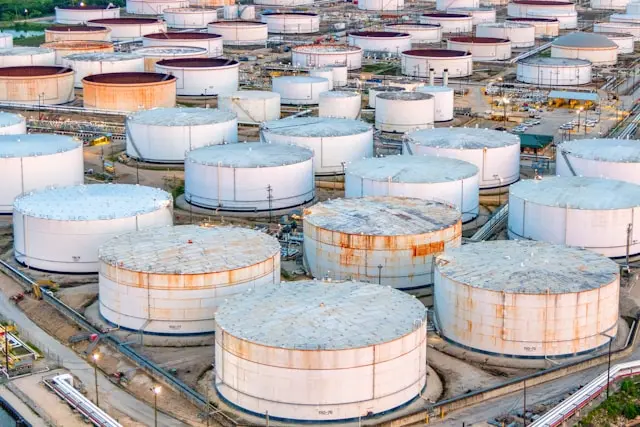
The public record for Gdańsk's refining base is itself a lesson in dated facts. Wikipedia's Grupa LOTOS article still states that the Gdańsk refinery "refines 6 million tons of crude oil per year". The plant's own record disagrees: the dedicated Gdańsk Refinery article records a 10.5-million-tonne-per-year refinery (210,000 barrels per day) after its 2011 expansion, and Rafineria Gdańska Sp. z o.o. - the single entity into which Gdańsk's refining operations were consolidated in November 2021 - states a processing capacity of over 10 million tons of oil per year and a workforce of more than 1,350 people.
The 2022 record: ORLEN announced the European Commission's clearance of its LOTOS acquisition in June 2022, executed the remedy agreements - Aramco Overseas joining the refinery company at a 30 percent equity stake, Hungary's MOL buying 417 of roughly 8,000 Polish fuel stations, Unimot acquiring nine fuel terminals - and completed the merger on 1 August 2022, the final step registered by the District Court of Łódź, with guaranteed employment for Grupa LOTOS staff for 48 months. The investment record: the PLN 2.3 billion EFRA coking complex came on stream at the end of 2019, and in June 2025 the LOTOS Green H2 vehicle secured part of PLN 1.7 billion in National Recovery Plan funding for a planned 100 MW electrolyser with energy storage to supply renewable hydrogen to fuel production at the Gdańsk refinery.
Read alongside the refining records on this site - the Burgas and Rijeka analyses - Gdańsk is the northern counterpart: a national-champion refinery consolidated into a multi-site group, in a port city whose shipbuilding and logistics markets the sibling analyses cover separately.
Neither the capacity record nor the merger history measures what a hiring leader needs to know: whether process engineers, hydrogen-project specialists or petrochemical operations staff are available at a given seniority in a given quarter, or how consolidation changed the technical bench. That requires a search with contacted, assessed and validated candidates.
What changes in this market
Employers in Gdańsk's refining sector prove themselves differently from Burgas's single-anchor coast and from Rijeka's liquid-bulk port: a refinery processing over 10 million tons a year, run since November 2021 as a single entity inside an ORLEN-majority joint venture with a 30 percent Aramco stake, recruits process and operations professionals inside a corporate structure spanning multiple Polish sites, and consolidation itself re-shapes the technical bench in ways only candidate evidence can size. Each function, phase and stage of a mandate here - process engineering, renewable-hydrogen projects, petrochemical operations - proves itself against that consolidated-group structure rather than against a national average.
KiTalent's mandate analysis
- Frame the mandate by process function before the search: process engineering, hydrogen-project delivery and petrochemical operations certify differently and draw on different segments of the Baltic-coastal pool.
- Treat the group structure as the market: post-merger, specialists sit on a multi-site grid - a Gdańsk mandate competes with, and can draw from, the whole group.
- Verify transition programmes independently: where a mandate's premise is a specific retrofit, that programme must be sourced to its own primary record before hiring plans are built on it.
- Ask any search partner for contacted, assessed and validated candidates per specialism before accepting consolidation narratives as evidence of workforce availability.
Where the public record stops
No located primary public record verifies synergy totals, redundancy counts, salary bands or candidate-availability ratios for this site - and the capacity record above shows why dates matter even for the figures that do exist. What the company record can prove stands above, with its dates attached.
Sources
- Wikipedia - Grupa Lotos (the dated 6-million-ton capacity record)
- Wikipedia - Gdańsk Refinery (10.5 million tonnes per year; Orlen 70% / Aramco 30%)
- Rafineria Gdańska - About company (capacity, employment, joint-venture structure, EFRA)
- ORLEN - PKN ORLEN closing its merger with LOTOS Group, 20 June 2022 (Commission clearance; Aramco, MOL and Unimot remedy agreements)
- ORLEN - ORLEN-LOTOS merger completed, 1 August 2022 (court registration; employment guarantees)
- ORLEN - Over PLN 1.7 billion from the National Recovery Plan for hydrogen projects, 17 June 2025 (Green H2 100 MW electrolyser)
Related KiTalent research
- The Market Map Is Not the Shortlist: helps a buyer choose between testing the Gdańsk refining market and commissioning a search with contacted, assessed and validated candidates
- How to Assess a Leader Beyond Competencies: shows how to gather decisional evidence for this mandate - the research method behind testing process function, group-structure recruiting and independent programme verification - with candidate evidence assessed conversation by conversation