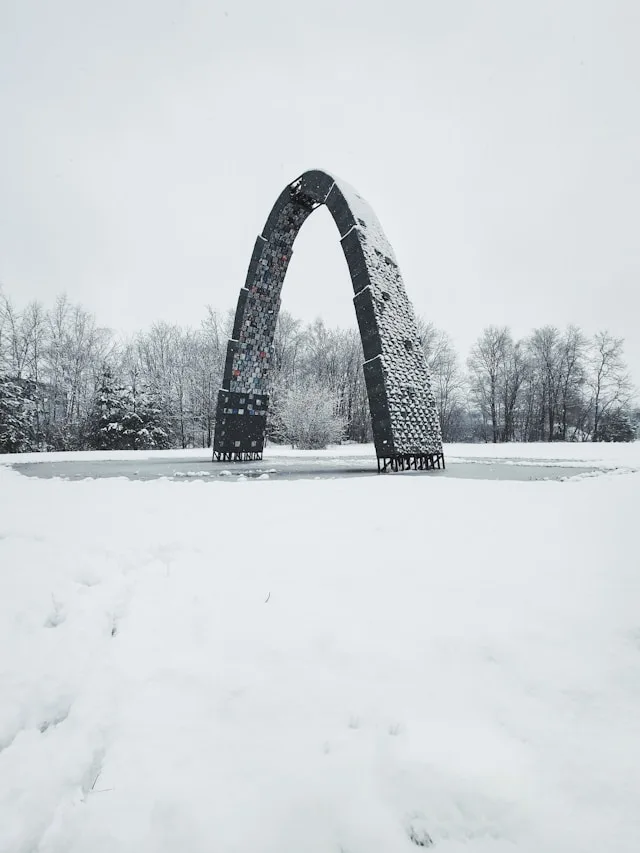
The C-mine Hub: Infrastructure Without Gravity
This is the central tension facing every hiring leader in Genk's creative economy. The city has spent a quarter of a century converting the Winterslag coal mine into creative infrastructure: the municipality bought the site in 2001, an initial €9 million programme restored its protected buildings, and a €217 million Flemish grant in 2014 carried the redevelopment of Genk's former mining sites. The site now carries a university arts campus, a business incubator, co-working space, a VR mining museum, theatres and exhibition halls, and drew 220,000 visitors across its exhibitions and cultural centre in 2024. What it does not carry is studio-scale creative employment.
What follows is a structured analysis of the forces shaping Genk's creative sector in 2026: the investment that flowed in, the talent that flows out, the roles that cannot be filled from job boards, and what organisations operating in this market need to understand before they make their next senior hire.
C-mine occupies the rehabilitated Winterslag coal mine, which closed in 1988 and left 7,000 miners out of work. The City of Genk bought the site in 2001; the renovation of the main building was completed in 2010; the municipality remains the site's main responsible authority, operating it through a Director-Intendant model in a public-private partnership. C-mine's own published count for the site today is 42 companies and organisations, accounting for a little over 330 jobs — of which about 200 jobs sit in 33 creative companies. Its incubator, the C-mine Crib, runs a community of around 50 businesses spanning design, video, photography, marketing, architecture, gaming, fashion, AI and IT, with offices from 16 to 250 square metres.
These are respectable numbers for a mid-sized Flemish city. The problem is not the hub's physical performance. It is the hub's gravitational pull on career trajectories. Roughly 200 creative jobs on site, across 33 companies, averages six jobs per employer. A creative incubator succeeds when its alumni stay in the ecosystem, hire locally, and become the next generation of mid-sized employers. Genk's cluster has not produced that next generation: there is no Genk-based studio at the scale of Larian, the Ghent-headquartered developer of Baldur's Gate 3 with roughly 450 to 500 staff worldwide, and no pathway from a C-mine Crib desk to a several-hundred-person agency without leaving the city. Brussels offers that pathway through international agency networks. Ghent offers it through gaming studios with global distribution. Genk does not.
Gaming and immersive technology is one of the verticals the Crib itself lists among its core sectors, alongside design, video and AI. But the studios are small, the projects are often publicly supported, and when a developer outgrows the incubator, the next rung on the ladder is almost always in another city. Even this growth has not created the talent density that turns a cluster into a self-reinforcing ecosystem.
The Graduate Retention Problem Genk Has Not Solved
LUCA School of Arts runs its Genk campus on the C-mine site, teaching animation film, photography, television and film, product design, and communication and multimedia design with interaction and game design. The institution as a whole counts more than 4,000 students and 800 staff across its campuses in Brussels, Genk, Ghent and Leuven, and it is Flanders' dedicated School of Arts. What no public source records is how many graduates the Genk campus produces each year, or where they go: neither the school nor the public labour-market statistics publish a per-campus graduate flow. The disciplines taught at C-mine are precisely the ones the site's resident companies need — and precisely the ones whose careers scale fastest elsewhere.
The arithmetic that matters to a hiring leader is structural. The site's entire creative employment base — about 200 jobs — is smaller than a single mid-sized studio elsewhere in Flanders. A graduate choosing between a four-person studio in Genk and a forty-person studio in Ghent — with stronger industry event networks, deeper peer communities, and clearer career progression — will, in most cases, choose Ghent. Proximity to an educational institution does not ensure labour-market retention when ecosystem density is thin. Brussels, Ghent, and Eindhoven each offer something Genk does not: a critical mass of employers large enough to build a career without leaving the city.
The Compensation Gap That Accelerates the Drain
The retention problem is compounded by compensation differentials that widen at exactly the seniority levels where Genk most needs to hold onto talent.
On KiTalent's benchmark estimates for this market, a Creative Director role in Genk commands €85,000 to €110,000, against €120,000 to €150,000 for the equivalent role in Brussels. At CTO or Technical Director level in immersive tech, Genk-based studios offer €95,000 to €130,000, with studios serving German or Dutch clients typically paying above those serving a purely domestic market.
For mid-level talent, the cross-border competition is harder still. Eindhoven's Brainport ecosystem recruits technical artists and interactive designers internationally, and the Dutch 30% ruling — which lets employers pay part of a highly skilled migrant's salary tax-free, at up to 30% through 2026 before dropping to 27% for rulings starting in 2027 — is aimed precisely at that internationally mobile layer, since it generally requires the employee to have lived more than 150 kilometres from the Dutch border. Genk studios rarely compete at that level of package; the practical effect is that the most mobile technical creatives in the region are priced by a different market than the local one.
The result is a compensation structure that works against retention at every career stage. Juniors leave for ecosystem density. Mid-levels leave for cross-border packages. Seniors leave for compensation premiums and international career pathways. The pipeline fills at the bottom and empties at every exit point above it.
The Roles That Cannot Be Filled from Job Boards
Genk's creative labour market is bifurcated. Traditional graphic design and cultural mediation roles draw on a deep regional graduate pool — LUCA's Genk campus and PXL-MAD in Hasselt both feed it — and junior graphic designers face an active candidate market in which, by KiTalent's market-intelligence estimates, a clear majority of qualified professionals are actively job-seeking.
The opposite is true for technical creative roles, and it is in these roles that Genk's hiring challenge is most acute. VDAB's live counters show ICT vacancies across all of Limburg province in the low hundreds at any given time; within that total, engine and real-time graphics specialists are a small, contested sliver that the published statistics do not separate out. The scarcity shows up in search practice instead.
Unreal Engine and Unity Developers
By KiTalent's market-intelligence estimates, the passive candidate ratio for Unity and Unreal developers in this market sits between 75% and 80%: these professionals are not browsing job boards. They are typically identified through GitHub portfolio reviews, game jam participation, or direct headhunting from studios in Ghent and Leuven. A typical search for an Unreal Engine Technical Artist at a C-mine Crib resident studio runs eight to eleven months, and typically stalls after initial candidate screening, where portfolio depth in real-time rendering optimisation proves insufficient. The candidates who do possess the required skill level are overwhelmingly employed and not looking.
Technical Artists and Shader Specialists
The passive ratio for technical artists specialising in shader and render pipeline work exceeds 85% on the same estimates, with average tenure in current roles measured in years and mobility typically triggered by project cancellation or studio closure rather than by external offers. Conventional recruitment that relies on active candidate pools reaches fewer than one in five viable candidates.
When C-mine resident studios do recruit successfully in this category, they frequently draw from industrial visualisation firms in Eindhoven, paying an estimated 15 to 20% salary premium; on KiTalent's benchmark estimates, a median offer for a 3D Environment Artist relocating from Eindhoven to Genk sits near €75,000, against roughly €64,000 at origin. The premium is necessary not because the role is worth more in Genk, but because the candidate must be compensated for moving from a larger ecosystem to a smaller one.
Cultural Project Managers
A less visible but equally consequential shortage exists at the intersection of artistic programming and EU funding expertise. Cultural Project Manager roles that require both EU funding acquisition skills and artistic programming experience are hard to fill because no single degree programme produces the combination. It develops through experience in organisations that run Creative Europe or Horizon Europe-funded projects, and those organisations are disproportionately located in Brussels.
Funding Dependency: The Subsidy Structure That Shapes Every Hire
C-mine exists because of public money, and its resident companies operate inside that structure. The site's redevelopment was financed by an initial €9 million programme under the Limburg Objective 2 and Flanders RCE programmes, followed in 2014 by a €217 million Flemish grant for Genk's former mining sites, with European structural funds woven through; the hub records a programme of tax incentives and subsidies used to attract creative businesses, alongside ticket and venue-rental revenue. Flemish screen production adds the VAF and the federal tax shelter — the incentive that lets Belgian companies shelter income invested in audiovisual works — as the standard private co-financing mechanisms. No published figure puts a share on how many resident productions depend on them; the structural argument does not need one.
That structure creates a specific form of organisational behaviour. Organisations whose project revenue follows subsidy calendars cannot make permanent hires against projected income that may not materialise. The result is more fixed-term contracts, more project-based staffing, and a deeper entrenchment of the precarity that makes creative roles in Genk less attractive than permanent positions elsewhere.
Belgian labour law then sets the boundary conditions. Successive fixed-term contracts are permitted only on narrow grounds — replacement, a clearly defined work package, or genuinely recurring seasonal work — and the total duration of a contract chain is capped at two years, extendable to three only with official approval; beyond that, the contract converts to indefinite employment by law. For an organisation like the team behind Genk on Stage, the free city festival that draws well over 100,000 visitors each June, or C-mine's own cultural programming, that cap is a compliance constraint on exactly the seasonal, project-based staffing the funding structure pushes them towards. Larger organisations in Brussels can absorb the administration; smaller Genk-based employers cannot.
This is not merely a budgeting challenge. It is the mechanism by which the sector's most promising talent is pushed toward permanent employment in larger cities, because Genk's funding-dependent SMEs cannot offer the contract stability that keeps a candidate from accepting a counteroffer from a Brussels agency.
The Virtual Production Question Genk Has Not Answered
The most consequential open question in this market is whether C-mine's build-out playbook — public capital converting heritage industrial space — moves next into virtual production. LED volume stages are a growing segment of European content production, and the facilities that exist at scale today are in London, Amsterdam and around Babelsberg. No confirmed LED volume project at C-mine is on the public record as of this analysis; the site's published 2026-27 programme is performances, concerts and exhibitions. If Genk does move there, it would be following its own proven playbook — and walking straight into the market's hardest hiring problem.
Operating an LED volume stage demands a convergence of skills that does not currently exist in sufficient numbers within commuting distance of Genk: real-time 3D pipeline management in Unreal Engine 5 or Unity 6, spatial audio design, projection and camera-tracking calibration, and the technical coordination experience that comes from working on high-end productions. These are not skills that arts graduates possess at entry level. They develop through years of production experience, typically in facilities that already exist in London, Amsterdam or Babelsberg — not in a region whose creative employer base averages six jobs per company.
The labour market around Genk compounds the challenge in a different way than commonly assumed. Genk is not an old city: 68,000 people live there, its youth share is in line with Flanders, and its job-seeker rate of 9.2% runs well above the Flemish 6.6%, with an employment rate eight points below the regional average. The problem is not people; it is that the roughly 38,000 employee jobs located in Genk are not in these specialisations. Any virtual production build-out would be sourcing experienced specialists from international talent markets — and offering them a city whose creative brand, as a place to build a career rather than visit, is still far smaller than C-mine's national reputation as a best-practice heritage conversion.
Any such expansion will succeed or fail based on whether organisations can source experienced virtual production specialists from international talent markets and offer a proposition compelling enough to outweigh the ecosystem advantages of larger cities.
What Hiring Leaders in This Market Must Do Differently
The conventional hiring playbook fails in Genk's creative sector for specific reasons. The passive candidate ratio for the roles that matter most sits, on KiTalent's estimates, between 75% and 85%. Searches for technical artists and engine developers run several times longer than routine vacancies. And the compensation gap with Brussels and Eindhoven means that the standard approach of posting a role, waiting for applications, and interviewing the resulting shortlist reaches a small fraction of viable candidates.
For organisations operating in or expanding into Genk's creative cluster, three adjustments are necessary.
First, senior technical hires in gaming, immersive tech, and virtual production must be treated as direct search assignments, not job postings. The candidates who can operate an LED volume stage or optimise a real-time render pipeline are employed, not looking, and reachable only through proactive identification. This requires talent mapping across competing ecosystems in Ghent, Eindhoven, and increasingly further afield.
Second, the proposition must address the ecosystem gap directly. A candidate leaving a forty-person studio in Ghent for a six-person studio in Genk is not making a lateral move. The offer must compensate for reduced career optionality. This means either a compensation premium that closes the gap with competing markets, or a role with genuine creative autonomy and technical challenge that the candidate cannot find in a larger, more structured environment.
Third, organisations dependent on subsidy funding must build talent pipeline strategies that extend beyond the current project cycle. The fixed-term, project-based employment model that dominates this sector is a rational response to funding uncertainty, but it makes every hire a short-term transaction. The studios that will win the best technical talent are those that can offer continuity, even if that continuity requires creative structuring around multiple funded projects rather than a single production.
KiTalent works with organisations across the creative, technology, and cultural sectors facing this challenge: markets where the best candidates are outside active applicant channels, where the competition is cross-border, and where the cost of a failed senior hire is measured in months of lost production capacity.
For organisations competing for senior technical and creative leadership in Flanders' immersive tech sector — or positioning ahead of the virtual production capacity this region does not yet have — speak with our executive search team about how we identify and engage the passive candidates this market demands.
Frequently Asked Questions
What are the hardest creative roles to fill in Genk in 2026?
Unreal Engine Technical Artists and Unity developers are the most difficult roles to fill, with typical search durations of eight to eleven months for C-mine-based studios on KiTalent's market-intelligence estimates. The passive candidate ratio for these roles sits between 75% and 85%, meaning the large majority of qualified professionals are employed and not actively seeking new positions. Cultural Project Managers with EU funding expertise face a different scarcity: a hybrid competency that no single degree programme produces.
How does Genk's creative sector compensation compare to Brussels and Ghent?
On KiTalent's benchmark estimates, Brussels pays a substantial premium over Genk for equivalent Creative Director roles — €120,000 to €150,000 against Genk's €85,000 to €110,000 — and Ghent offers higher compensation than Genk for Unity developers, with stronger remote and hybrid work policies. Cross-border competition from Eindhoven adds further pressure: the Dutch 30% ruling lets employers pay part of a highly skilled migrant's salary tax-free, up to 30% through 2026 and 27% for rulings starting in 2027, which hardens competition for the internationally mobile technical creatives this region most needs. These differentials widen at senior levels, making retention of experienced creative leaders especially challenging.
What is C-mine and why does it matter for creative hiring in Genk?
C-mine is a creative hub occupying the rehabilitated Winterslag coal mine, which the City of Genk bought in 2001 after the mine closed in 1988. Its own published count puts 42 companies and organisations on the site, accounting for just over 330 jobs, of which about 200 are in 33 creative companies. The C-mine Crib incubator runs a community of around 50 businesses spanning design, video, photography, marketing, gaming, fashion, AI and IT. The site drew 220,000 visitors across its exhibitions and cultural centre in 2024. Its significance for hiring is structural: it is the anchor of Genk's creative employer base, and that base is micro-scale — which is why senior creative careers in this region are usually built across at least two cities.
Why do creative graduates leave Genk despite LUCA School of Arts being based there?
LUCA School of Arts' Genk campus sits on the C-mine site and teaches animation film, photography, television and film, product design, and interaction and game design — but neither the school nor the public statistics publish how many graduates the campus produces each year or where they go. The retention problem is structural rather than educational: Genk's creative employers are predominantly micro-enterprises, and the site's entire creative employment base is smaller than a single mid-sized studio. Brussels offers pathways into international agency networks. Ghent offers a critical mass of gaming studios — Larian, the developer of Baldur's Gate 3, is headquartered there with several hundred staff worldwide. Eindhoven offers a larger technical community and cross-border packages. A graduate who wants studio-scale career progression finds it outside Genk.
How can organisations in Genk's creative sector attract passive technical talent?
KiTalent's approach uses continuous market mapping and direct headhunting to identify and engage candidates who are currently employed in competing ecosystems across Ghent, Eindhoven, and beyond. For the technical roles this market is short of, where the candidate pool is small and geographically dispersed, this direct search methodology reaches the professionals who may not appear on job boards.
What risks should hiring leaders consider when building teams in Genk's creative sector?
Three risks require attention. First, funding dependency: C-mine was built and is sustained by public programmes and subsidy-dependent project revenue, and organisations hiring against subsidy calendars cannot offer the contract stability senior candidates seek. Second, contract-structure regulation: Belgian law caps chains of fixed-term contracts at two years in total, on narrow permitted grounds, constraining exactly the seasonal, project-based staffing this sector runs on. Third, ecosystem competition: the compensation and career-density advantages of Brussels, Ghent and Eindhoven are structural, and any senior proposition built in Genk has to answer them directly.
Related Links
- Genk
- Belgium
- Leuven Nanoelectronics Hiring: What the Verified Record Shows
- Hasselt's Retail and Hospitality Market Is Splitting in Two: What It Means for Every Senior Hire in 2026
- Hasselt ICT Hiring: What the Verified Record Shows
- Milan Fashion Hiring: Separate Brand, Industrial and Supply-Chain Leadership
Related Market Reads
Articles tied to the same hiring geography or market context.
Leuven Nanoelectronics Hiring: What the Verified Record Shows
The verified public record for Leuven's nanoelectronics cluster - imec at €1.034 billion 2024 revenue with a 6,500-strong team, Europe's largest EU-backed 300mm pilot line, and a capital-raising spin-out generation - and what a semiconductor hiring mandate there must actually cover.
Hasselt's Retail and Hospitality Market Is Splitting in Two: What It Means for Every Senior Hire in 2026
Hasselt's city centre tells two stories at once. Walk the Demerstraat and you will count vacant shopfronts at a rate above the Flemish average. Turn toward the Japanese Garden...
Hasselt ICT Hiring: What the Verified Record Shows
The verified public record for Hasselt's ICT market - the Corda Campus concentration on a former Philips site, Cegeka's headquarters base, the UHasselt and EnergyVille research pipeline in Limburg, and what a technology leadership mandate there must actually cover.
Nearby Market Signals
Lateral reads from adjacent cities, sectors, or themes.
Milan Fashion Hiring: Separate Brand, Industrial and Supply-Chain Leadership
How should a Milan fashion mandate distinguish brand-headquarters leadership from industrial and supply-chain capability?
Wroclaw Shared Services Hiring: Define the Mandate Before the Search
Which centre-run, centre-build or specialised-services responsibility actually defines a Wroclaw shared-services mandate?
Valencia Hospitality Volume: Define the Mandate Before Mapping
For a Valencia Hospitality Volume mandate, begin with the property, portfolio, guest segment and service model.
From the Archive
Evergreen background reading that still sharpens current hiring decisions.
Zeebrugge Maritime and Logistics Hiring: Define the Mandate Before the Search
What the verified public record establishes about the Port of Zeebrugge - Europe's leading RoRo port and largest LNG terminal, directly employing over 11,000 people - and where a mandate needs contacted, assessed and validated candidates.
Namur River Logistics Talent: What the Verified Record Shows
The verified public record for Namur - Wallonia's capital at the Sambre-Meuse confluence, on the inland waterway chain that links Antwerp and Rotterdam to the upstream industrial towns - and what a river-logistics mandate there must actually cover.
Namur's Visitor Economy Is Outgrowing Its Hospitality Workforce
Namur's €10 million cable car and €19 million concert hall brought the visitors back — 105,428 at the Citadel in 2025 alone. The sector that must serve them posts Belgium's highest job-vacancy rate.