The Cluster That Blurs Every Sector Boundary
The problem is not economic output. It is the gap between what Horsens manufacturers need to build next and the people available to build it. Denmark's national job vacancy rate stood at 2.3 percent in the third quarter of 2025, with roughly 48,000 open positions across the private sector, and Danish employer organisations project a shortage of close to 100,000 skilled workers by 2030 — a shortfall concentrated precisely in the trades Horsens lives on. On KiTalent's market-intelligence benchmarks, CNC machining roles that filled in weeks now take months. And the roles that would solve this problem—the automation engineers and PLC programmers who could reduce dependence on manual trades—are themselves among the hardest positions to fill in the entire East Jutland region.
What follows is an analysis of the structural forces behind this paradox, who it affects, what it costs, and what leadership teams in Horsens manufacturing need to understand before they commit to their next automation investment or their next senior hire.
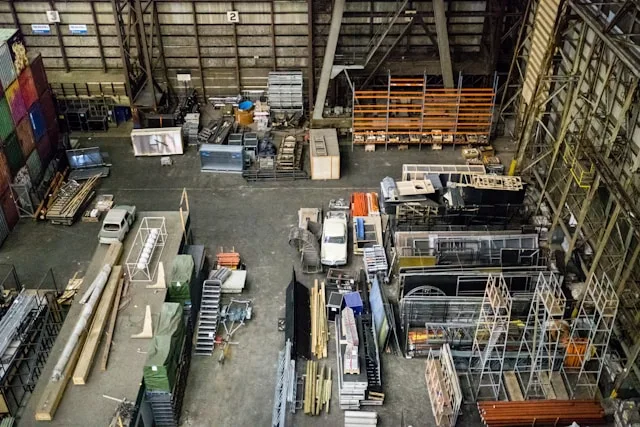
Horsens' advanced manufacturing base is not a single sector. It is a network of interdependent value chains concentrated around the port and the E45 corridor. The Horsens Havn port area hosts heavy metal fabrication and marine contracting: Høj Nordic, a family-owned marine contractor founded in 1958, moved its head office onto the quay in February 2026 to sit beside its eleven vessels. Alongside the port, the municipality's industrial sites — from Industripark Nova at the E45 to the town's long-established machine-shop quarters — house precision machining and subcontracting firms such as CNC-TEAM A/S and BC Smede & Maskinfabrikken, together with generations of smaller subcontractors.
What makes Horsens unusual is the degree to which its food processing anchor shapes demand for its engineering cluster. Danish Crown's Horsens facility is the group's largest pig slaughterhouse: around 1,300 employees when last publicly reported, with the company's own recruitment material more recently citing roughly 1,800 people and 80,000 pigs slaughtered a week. Food processing is not typically classified as "advanced manufacturing." Yet it is a major purchaser of precision maintenance engineering, packaging machinery, and food-grade stainless steel fabrication from the same local SMEs that supply the wind and maritime sectors.
This blurring matters for anyone trying to understand the talent market. A quality manager at a Horsens metal fabricator may spend Monday certifying welds for an offshore wind foundation and Thursday inspecting food-grade surface finishes for a processing line. The skills overlap is real, and it means that demand for certain profiles is higher than any single-sector analysis would suggest.
Three Value Chains, One Labour Pool
The cluster serves three primary markets. Wind energy drives demand for foundation components, hydraulic systems, and nacelle structures: Europe installed 16.4 GW of new wind capacity in 2024 and raised €33 billion of capital for future build-out, and the Danish supply chain Horsens subcontractors feed is anchored by Vestas, whose global headquarters sits in Aarhus. Food and beverage accounts for specialised stainless steel equipment serving the region's processors. Maritime and offshore work draws hydraulic systems and deck equipment through the port's marine contractors. All three value chains draw from the same pool of CNC machinists, certified welders, and automation technicians. When one value chain accelerates, the others feel the pull immediately.
The Automation Paradox at the Centre of Every Hiring Decision
Horsens manufacturing SMEs report acute shortages of CNC machinists and welders. These shortages constrain revenue. The logical response is automation: collaborative robots, automated welding cells, predictive maintenance systems. And Denmark is, in principle, ready for it: the International Federation of Robotics ranks the country among the world's ten most robot-dense manufacturing economies, in an EU whose average is 219 industrial robots per 10,000 manufacturing employees against a world average of 162. But that density is concentrated in Denmark's large industrial groups. Danish industry surveys consistently find that SMEs adopt Industry 4.0 technologies at markedly lower rates than large companies — and Horsens' economy is overwhelmingly an SME economy.
The gap is not primarily about capital. On the accumulated Danish record, the binding constraint is people: Dansk Industri's own argument for "massive" investment in vocational education is that the supply of skilled workers determines whether Danish industry can follow the digital development and deliver the green transition at all. A machine shop that cannot find a welder is usually also a machine shop that cannot find the automation engineer who would make the welder less necessary.
This is a catch-22 that deserves to be stated plainly. Skills shortages are preventing the automation that would alleviate skills shortages. A firm that cannot find a CNC machinist also cannot find the automation engineer who would reduce its dependence on CNC machinists. The investment in automation has not reduced the workforce requirement. It has replaced one kind of worker with another that does not yet exist in sufficient numbers. Capital moved faster than human capital could follow.
This paradox is not theoretical. It is visible in hiring behaviour. Firms that cannot fill manual trades roles cover peaks with Eastern European subcontractors rather than leave roles vacant; KiTalent's market work in East Jutland includes firms whose purchased collaborative robots sit underutilised because the PLC programmers needed to integrate them into production lines could not be hired. The constraint has simply moved up the skills ladder without being resolved.
For any senior leader planning a CAPEX automation programme in this market, the implication is direct: the capital expenditure decision and the talent acquisition strategy must be made simultaneously, not sequentially. Approving the equipment budget without a plan to hire the people who will operate it is a path to expensive idle capacity.
What the Vacancy Data Actually Shows
Denmark's official vacancy statistics are national and regional, not trade-by-trade for a single town — no public series measures Horsens' machinists separately, so any precise local figure should be read as an estimate rather than a statistic. What the official record does show is direction: 48,296 open positions in the private sector in the third quarter of 2025, a national vacancy rate of 2.3 percent, and vacancies falling for two consecutive quarters after the post-pandemic peak. Behind those aggregates sit three specific shortage categories that merit individual attention.
CNC Machinists: The 5-Axis Problem
On KiTalent's market-intelligence benchmarks, CNC machining roles — particularly those requiring 5-axis programming in Siemens NX or Mastercam — now average 45 to 60 days to fill. Metal fabrication SMEs supplying the wind sector report the worst figures: up to 90 to 120 days for roles requiring both programming competence and material-specific experience. Four years ago, comparable roles filled in roughly half that time.
The problem is not that CNC operators do not exist. Entry-level operators with three to five years of experience represent a mixed market, roughly evenly split between active and passive candidates. The acute shortage is at the top end: 5-axis specialists with deep material knowledge. These candidates are overwhelmingly passive, already employed, not browsing job boards, and not responsive to standard advertising.
Certified Welders: A Certification Bottleneck
The welding shortage in Horsens is driven as much by certification requirements as by absolute numbers. Wind energy supply chain work requires EN 1090 and EN ISO 3834 certifications. Not every competent welder holds them. Certified welding inspectors with IWS or IWT credentials are scarcer still and are typically recruited through direct headhunting from competitor operations rather than through any open market process.
Lateral hiring between competitors is a defining feature of a cluster this small. KiTalent's market-intelligence estimate is that somewhere between 15 and 20 percent of skilled trades hires in the Horsens metal cluster in recent years involved recruitment from direct competitors within a 50-kilometre radius, with signing bonuses for master craftsmen in the DKK 25,000 to 50,000 range. That level of lateral poaching is not just expensive. It is destabilising. One firm's solution is another firm's vacancy.
Automation Technicians: The Missing Middle
PLC programming, robotics integration, SCADA system management, and predictive maintenance using vibration analysis represent the fastest-growing skill demands in the cluster. Public statistics do not track unemployment by seniority and occupation for East Jutland, but every structural indicator points the same way: record-high employment, a projected national shortfall of close to 100,000 skilled workers by 2030, and engineering cohorts that are small relative to regional demand. On KiTalent's market-intelligence estimates, the ratio of active to passive candidates for senior automation roles runs at roughly one to four, with average tenure around seven years.
For executive search in technology-intensive manufacturing roles, this passive candidate ratio defines the method required. On KiTalent's market experience, standard job postings yield fewer than 20 percent of qualified applicants for senior technical and leadership positions in this market. The other 80 percent must be identified, approached, and engaged individually. Any organisation relying on inbound applications for these profiles is competing for a fraction of the available talent.
The Aarhus Gravity Well and Other Competitive Pressures
Horsens does not exist in isolation. It sits within the gravitational pull of Aarhus, Denmark's second city, and competes for talent against every employer within commuting distance.
The pull is real. Aarhus hosts Vestas' global headquarters and the region's densest concentration of R&D-heavy engineering employers, and on KiTalent's compensation benchmarks it typically offers a 10 to 15 percent premium for engineers. It provides international schooling options that matter to dual-career households. For Horsens employers, the practical consequence is that the senior engineering pool they draw on is priced and contested in a much larger market.
Vejle, roughly 30 kilometres to the south, offers a different kind of competition: a service-and-knowledge economy with cleaner facilities, more automated work environments, and more obviously corporate career paths. Compensation is broadly comparable to Horsens, but the trajectory feels different to candidates weighing their options.
Hamburg, roughly 300 kilometres south, draws a narrower but consequential segment. On KiTalent's market-intelligence benchmarks, specialised offshore welders working in piping and pressure vessel fabrication can command salaries 20 to 30 percent higher in the German market. The language barrier limits migration, but for the specific profiles most needed in the Horsens Havn cluster, it is a real pull factor.
The competitive picture creates a specific challenge for Horsens-based employers seeking senior leadership. On KiTalent's benchmarks, a Technical Director or VP Operations candidate who could command DKK 1,300,000 to 1,800,000 in Horsens typically earns 8 to 12 percent more for an equivalent role in Aarhus. The gap is not enormous, but it is consistent. And for candidates with school-age children or partners in professional careers, the lifestyle and infrastructure differences compound the salary differential into a material obstacle.
What Horsens offers in return is shorter commutes, lower housing costs, and the chance to lead a business rather than manage a division. For the right candidate, that proposition works. But it must be articulated clearly and matched to the right person. A scattershot approach that treats every passive candidate as interchangeable will consistently lose to Aarhus.
The Pipeline Problem Behind the Vacancy Numbers
The shortage is not cyclical. It is being fed by a structural shortfall in the supply of new entrants. Only about one in five Danish school leavers applies for a vocational education — 19.9 percent of the 2024 cohort, on the trade-union confederation's tally — while labour-market analysts project Denmark short of 99,000 skilled workers by 2030 even as demand for unskilled labour falls. The lines are diverging, not converging. VIA University College's Horsens campus — 2,300 students across 21 programmes, spanning mechanical, production, civil, climate and software engineering — graduates a few hundred engineers and production technologists a year for the entire East Jutland market. The passive majority of senior talent in the local market are not recent graduates. They are mid-career professionals who trained a decade or more ago.
Compounding the pipeline decline is ownership succession. Nearly 40,000 Danish companies face a generational handover, a 2023 Copenhagen Business School analysis estimated, and SMVdanmark reported in 2024 that one in eight of its member companies expects to complete a generational change within five years. In an owner-led SME cluster like Horsens', workforce and ownership age together.
This is not merely a staffing problem. It is a leadership continuity problem. When the owner-manager of a 120-person steel fabrication business retires without a successor, the firm does not smoothly transition. It either sells to a consolidator, often at a discount, or it declines. The skilled workers it employed enter the open market, but the institutional knowledge, the customer relationships, and the production culture disperse.
For hiring leaders at larger firms in the cluster, this dynamic creates both risk and opportunity. The risk is that key suppliers lose continuity. The opportunity is that succession-driven transitions release senior technical talent who would not otherwise have been available. But capturing that talent requires proactive pipeline mapping rather than reactive advertising.
Compensation Realities for Executive and Senior Technical Roles
Understanding what Horsens actually pays, and how that compares to competing markets, is essential for any organisation designing an offer or benchmarking a retained executive. No public source publishes Horsens-specific pay bands; what follows are KiTalent's market-intelligence benchmarks for the Region Midtjylland private sector, anchored to the published national record where one exists.
At the senior specialist and manager level, a Production Manager in a Horsens manufacturing firm with 100 to 500 employees earns DKK 750,000 to 950,000 annually in base salary plus pension, excluding bonus. Senior Automation Engineers sit at DKK 650,000 to 820,000. Quality Managers command DKK 700,000 to 880,000. For orientation, IDA's salary statistics put average total earnings for privately employed engineers at roughly DKK 68,000 a month including pension and benefits.
At the executive level, the ranges widen. A Technical Director at an SME with 100 to 250 employees earns DKK 1,100,000 to 1,450,000. A VP Operations at a mid-cap manufacturer earns DKK 1,300,000 to 1,800,000, typically with a 15 to 25 percent variable bonus component. CEOs of engineering subcontractors with turnover between DKK 300 and 800 million earn DKK 1,500,000 to 2,200,000.
The Horsens discount relative to Aarhus is consistent on the same benchmarks. Horsens executives typically earn 8 to 12 percent less than Aarhus counterparts in equivalent roles, and 5 to 7 percent more than counterparts in Western Jutland markets like Herning and Holstebro. For candidates evaluating offers and negotiating compensation, this positioning matters. Horsens is not the highest-paying market in East Jutland, but it is not the lowest either. The gap with Aarhus is narrow enough that a compelling role, a strong cultural fit, or a shorter commute can close it.
The risk for Horsens employers is not that they cannot compete on compensation. It is that they do not benchmark accurately enough to know where they stand. An offer priced at the bottom of the Horsens range, when the candidate is also considering an Aarhus role at the top of that market's range, creates a 20 to 25 percent gap that no amount of relocation benefit can bridge. Accurate market benchmarking is not optional in this context. It is the difference between a competitive offer and a wasted search.
What Comes Next: The 2026 Investment Cycle and Its Talent Consequences
Two forces are converging on Horsens manufacturing in 2026, and both have direct implications for leadership hiring.
First, the green transition. Denmark's CO2 tax on industry took effect on 1 January 2025 and rises on a fixed schedule toward roughly DKK 750 per tonne by 2030, while EU Innovation Fund allocations continue to channel capital into industrial decarbonisation. Those mechanisms make automation retrofitting and electrification incrementally more attractive every year. What no public document quantifies is how much of that investment lands with Horsens metal fabricators specifically: whether the town sees a defined retrofit wave in this cycle is an open question, and leadership teams should size it against their own order books rather than a published local projection.
Second, the port. Horsens Havn's once-planned expansion into the fjord was shelved by its municipal owner in 2020; what is actually happening is quieter. A masterplan develops the harbour with new workplaces alongside city functions, and marine contractors are moving in — Høj Nordic brought its head office onto the quay in February 2026. For the fabrication cluster, the port's significance in this cycle is as an anchor of maritime and offshore demand rather than a capacity explosion. If offshore wind pre-assembly or heavy marine work materialises there, it will demand exactly the certified welders and heavy fabrication supervisors already in shortest supply.
In KiTalent's market view, mechanical engineering headcount grows modestly through 2026 — contingent on automation reducing per-unit labour costs — while food processing employment stays broadly flat as productivity gains absorb demand growth.
The leadership implication is this: the firms that will capture the green transition investment are the ones that already have their automation leadership in place. A Technical Director who can oversee a CAPEX automation programme. A VP Operations who can coordinate multi-site production including nearshored capacity in Eastern Europe. A Chief Automation Officer, an emerging title in this market, who can lead Industry 4.0 integration in a traditional metal fabrication business. These are not roles that can be filled from a job board or a local network. They require a structured search that reaches passive candidates in comparable roles at competing firms, often in Aarhus, Vejle, or beyond Denmark entirely.
Risks That Complicate the Outlook
The investment narrative is real, but it sits alongside material risks that any senior leader in this market must weigh.
The offshore wind cycle is the most immediate. Horsens subcontractors sit in supply chains ultimately serving OEMs like Vestas and Siemens Gamesa. European wind investment fell back in 2024 — €33 billion of capital raised for 19.9 GW of future capacity, after record offshore investment decisions in 2023 — and Vestas has cut staff repeatedly since late 2024, including about 60 positions in Aarhus in November 2024 and around 900 global office roles announced in late 2025. For firms with concentrated exposure to a single OEM, order volatility arrives as a hiring freeze precisely when the broader market is calling for expansion.
Danish Crown's group-wide restructuring creates a second risk vector. The cooperative has closed slaughterhouses in Sæby (2023) and Ringsted (2024), cut around 500 white-collar roles in late 2024, and continued restructuring into 2026. The Horsens plant has so far been a consolidation winner — it absorbed volume when Sæby closed and recruited hundreds of additional workers — but a group under that much cost pressure eventually redistributes capital expenditure. The firms building and maintaining Danish Crown's processing lines are the same firms supplying the wind and maritime sectors. A pullback in one revenue stream does not reduce their overhead proportionally.
Energy costs remain a structural watch-point, with one nuance that matters: Denmark has for years levied Europe's highest electricity tax while its pre-tax power prices sit among the continent's lowest — the burden is policy rather than physics, and policy is moving, with reductions toward the EU minimum rate agreed for 2026-27. For energy-intensive metal fabrication, relief that arrives late still arrives. The compliance landscape has shifted the other way: the EU's 2026 simplification of the Corporate Sustainability Reporting Directive raised its thresholds to companies with more than 1,000 employees and €450 million in turnover, taking most SMEs out of direct reporting scope. What remains for firms of Horsens' size is the indirect data pull from large customers' value chains — lighter than feared, but not zero.
These risks do not eliminate the case for investment. They make the quality of leadership more consequential. An average operations leader can manage a stable business. Navigating simultaneous expansion, automation, supply chain concentration risk, and regulatory burden requires someone exceptional. The cost of appointing the wrong executive in this environment is measured not just in salary but in missed investment cycles and lost competitive position.
How the Right Search Reaches the Right Candidates in This Market
For executive and senior technical roles in Horsens manufacturing, the candidate market has a clear structure. On KiTalent's market-intelligence benchmarks, roughly 70 to 80 percent of viable candidates for roles like Senior Automation Engineer, Certified Welding Inspector, and Production Manager with Lean Six Sigma certification are employed, not actively looking, and will not respond to a job advertisement. Average tenure in these roles runs around seven years. In a market at record employment, these are people who must be found, not waited for.
Standard job postings reach fewer than 20 percent of qualified applicants for these profiles. The remaining 80 percent require direct identification and individual engagement. In a market this small, where an estimated 15 to 20 percent of skilled trades hires already involve lateral moves between competitors, the search method matters as much as the offer.
KiTalent's approach to this challenge uses continuous market mapping to identify passive candidates across competing operations, matched with direct engagement by experienced search consultants.
For organisations competing for automation leadership and senior engineering talent in Horsens and the broader East Jutland market, where the candidates you need are already employed at firms within a 50-kilometre radius and the cost of a slow search is measured in idle automation equipment and missed green transition funding windows, speak with our executive search team about how we approach this market.
Frequently Asked Questions
What manufacturing roles are hardest to fill in Horsens, Denmark?
The three most acute shortages are CNC machinists with 5-axis programming experience, certified welders holding EN 1090 and EN ISO 3834 qualifications, and automation technicians with PLC programming and robotics integration skills. On KiTalent's market-intelligence benchmarks, CNC roles in the wind energy supply chain take 90 to 120 days to fill. Certified welding inspectors are almost exclusively recruited through direct headhunting rather than open-market advertising. And with Denmark at record employment and a projected national shortfall of close to 100,000 skilled workers by 2030, senior automation engineers are effectively invisible to standard job postings.
How does Horsens manufacturing compensation compare to Aarhus?
On KiTalent's benchmarks, Horsens-based manufacturing executives typically earn 8 to 12 percent less than counterparts in equivalent roles in Aarhus, where comparable positions command a 10 to 15 percent premium. A VP Operations in Horsens earns DKK 1,300,000 to 1,800,000 annually. Horsens executives earn 5 to 7 percent more than those in Western Jutland markets such as Herning. For candidates weighing offers, accurate compensation benchmarking for manufacturing leadership roles is essential to understanding where an offer sits relative to the regional market.
Why is Horsens struggling with automation despite available capital?
The primary barrier is not funding but workforce. Denmark ranks among the world's ten most robot-dense manufacturing economies, yet Danish industry surveys consistently find that SMEs adopt Industry 4.0 technologies at much lower rates than large companies — and Horsens is an SME economy. Employers report they cannot hire the automation engineers needed to programme and maintain collaborative robots and automated welding cells. This creates a paradox: the skills shortage prevents the automation that would alleviate the skills shortage. Resolving it requires simultaneous investment in equipment and in the leadership talent to deploy it.
What is the passive candidate ratio for senior engineering roles in Horsens?
What are the main risks for Horsens manufacturing in 2026?
Three risks stand out. First, offshore wind order volatility: European wind investment fell back in 2024, and Vestas has cut staff repeatedly since late 2024. Second, Danish Crown's group restructuring could eventually reduce capital expenditure among local food equipment suppliers, though the Horsens plant has so far absorbed work from closed sites. Third, Denmark's electricity tax — for years Europe's highest — keeps pressure on energy-intensive fabrication even as reductions toward the EU minimum arrive in 2026-27. All three risks increase the importance of senior leadership quality in managing through volatility.
How does executive search work differently in a small manufacturing cluster like Horsens?
In a market where an estimated 15 to 20 percent of skilled hires already involve competitor poaching within a 50-kilometre radius, traditional job advertising is insufficient. Executive search in Horsens requires direct identification of candidates at specific competing firms, confidential engagement, and an offer strategy benchmarked against Aarhus and Vejle compensation levels. The search must also account for the lifestyle proposition: Horsens offers lower housing costs and shorter commutes than Aarhus, factors that matter to candidates with families but must be articulated deliberately.
Related Links
- Horsens
- Denmark
- Industrial Manufacturing
- Randers Logistics Hiring: Define the Mandate Before the Search
- Randers Manufacturing Hiring: Define the Mandate Before the Search
- Randers Food Processing Hiring: Define the Mandate Before the Search
- Quebec City's Insurance Sector Cut Hundreds of Jobs and Still Cannot Hire the People It Needs
How this page was produced
This page combines KiTalent market intelligence, direct-search methodology, and primary market sources where available.
Related Market Reads
Articles tied to the same hiring geography or market context.
Randers Logistics Hiring: Define the Mandate Before the Search
What the verified public record establishes about Randers' river harbour, its E45 corridor position between Aarhus and Aalborg, and where a logistics mandate needs contacted, assessed and validated candidates.
Randers Manufacturing Hiring: Define the Mandate Before the Search
Which production-plant, automation or industrial-supply responsibility actually defines a Randers manufacturing mandate?
Randers Food Processing Hiring: Define the Mandate Before the Search
What the verified public record establishes about Randers - Danish Crown's headquarters town, the group's Danish restructuring and its automation programme - and where a mandate needs contacted, assessed and validated candidates.
Nearby Market Signals
Lateral reads from adjacent cities, sectors, or themes.
Quebec City's Insurance Sector Cut Hundreds of Jobs and Still Cannot Hire the People It Needs
Quebec City's two largest insurers eliminated 450 administrative positions over a two year integration cycle. The headlines told a story of contraction. The recruitment data...
Milan Financial Services: Define the Regulated Business Mandate
Which regulated entity, product, control function and decision rights define a Milan financial-services mandate?
Los Angeles Entertainment Hiring: Define the Mandate Before the Search
Which studio-production, games-and-interactive or music-and-recording responsibility actually defines an LA entertainment mandate?
From the Archive
Evergreen background reading that still sharpens current hiring decisions.
Odense Offshore Wind Hiring: Define the Mandate Before the Search
Odense Port's 5 October 2023 release reported 3,200 workers and over 100 companies at Lindø, the converted shipyard and offshore-wind production port; current candidate availability still requires live evidence.
Odense Robotics Hiring: Define the Mandate Before the Search
Which robot-builder, systems-integration or end-user automation responsibility actually defines an Odense robotics mandate?
Odense Food Manufacturing Hiring: Define the Mandate Before the Search
Which production-plant, automation or ingredients-supply responsibility actually defines an Odense food-manufacturing mandate?