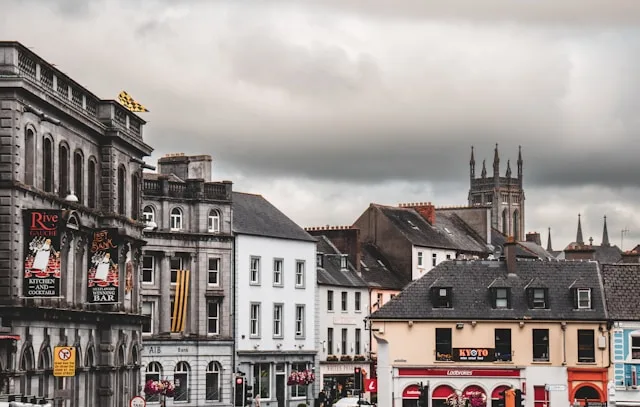
What the county has not produced is a local hiring market for the commercial roles a craft business needs as it grows. The scarce profiles are hybrids: an e-commerce manager who understands why provenance commands a premium, an export sales manager who knows both customs paperwork and ceramic production, a creative director who can protect margin while building an online channel. KiTalent's market mapping puts specialist craft and design searches in Kilkenny at roughly twice the fill time of generalist roles, and the pattern behind that gap is consistent — searches stall, mandates are split into fragments, or the brief is quietly retired. The gap between the county's institutional prestige and its ability to staff its own growth is the central challenge facing every creative business leader in Kilkenny.
What follows is an analysis of the forces reshaping Kilkenny's craft economy, the specific talent categories where searches consistently stall, and what hiring leaders in this sector must understand about a small, specialised market where the candidates they need are mostly employed, geographically dispersed, and invisible to conventional recruitment.
A Craft Capital Built on a Seasonal Visitor Economy
Kilkenny's craft identity is institutional, not incidental. The Kilkenny Design Workshops, established in the 1960s, made the Castle Yard a national centre of design and making until their closure in 1988, and the ecosystem they seeded — the Design & Crafts Council's headquarters, the gallery, the Kilkenny Design Centre, the Made in Kilkenny makers' collective — still anchors the county's reputation. The Kilkenny Craft Strategy 2025–2027, prepared with the support of Kilkenny County Council and Fáilte Ireland, records that the county continues to excel in craft production and development, holding World Crafts Council recognition as a City and Region of Craft since 2021, one of only five locations in Europe.
The commercial base beneath that reputation is small and founder-led. The Fáilte Ireland-commissioned Craft Audit conducted in 2024 identified over 60 existing craft businesses and individuals making a living from their craft practice. For hiring leaders, that scale matters more than the heritage: in a county of just over 104,000 people (Census 2022), the pool of employers who can fund a senior salary is measured in dozens, and almost all of them depend heavily on visitor spending. Fáilte Ireland's destination plan for Kilkenny positions craft as an integral part of the city's tourism identity, and live craft demonstrations at events including the Kilkenny Arts Festival, which runs for ten days each August, are cited in the county's own strategy as providing sustainable income opportunities for local craftspeople.
That income is seasonal. No published series tracks craft-sector revenue by month in Kilkenny — an open question for anyone modelling this market — but the structural dependence on visitor footfall is not in dispute: the customers who buy spongeware at Bennettsbridge or studio glass outside the city arrive in concentrated spring-to-autumn months, and a business whose cash flow peaks in the visitor season must fund a permanent senior role out of that surplus. This arithmetic, more than any single salary benchmark, is what makes ambitious hires hard to justify in the quiet months — and every senior candidate weighs it.
KiTalent's market mapping puts a Studio Production Manager in Kilkenny at roughly €42,000 to €58,000, and a Digital Marketing Manager in the craft and luxury space at roughly €48,000 to €65,000. Within the county, those ranges are coherent. The vulnerability is external, and it compounds at senior level.
The Digital Push and the Provenance Premium
Here is the tension every creative business leader in Kilkenny must reckon with: the sector's development agencies are actively pushing craft businesses toward digital capability, yet scaling through digital channels risks eroding the premium pricing that sustains them.
The push is real and institutional. The DCCI Academy runs business and innovation courses for makers covering marketing, finance, digital strategy and innovation. DCCI and the Local Enterprise Offices have delivered e-commerce bootcamps for craft and design businesses focused on increasing online sales. A design and craft accelerator run with Trinity College Dublin supports craft enterprises with export potential. And the Kilkenny Craft Strategy 2025–2027 identifies a robust digital strategy — online storytelling, virtual tours, interactive craft workshops — as the route to taking Kilkenny's craft offer to a global audience. What does not exist, publicly at least, is adoption data: no published measure tracks how many of the county's makers sell online or how much of the sector's revenue moves through digital channels.
The premium, meanwhile, is experiential. A tourist who visits Nicholas Mosse Pottery at Bennettsbridge, watches craftspeople decorate spongeware by hand with cut sponges, and buys a bowl at the mill shop pays for the visit as much as the object. The same bowl photographed against a white background on a webshop competes on aesthetics with ceramics from anywhere in the world. KiTalent's market mapping suggests that craft businesses which scale online without protecting the in-person provenance story trade away part of their pricing power; the mechanism is visible in every studio shop on the county's craft trail.
This creates a paradox for hiring leaders. The sector needs luxury e-commerce managers, digital marketing specialists, and international logistics coordinators. It needs them urgently. But the people filling those roles must understand something a generalist digital marketer from Dublin or London will not instinctively grasp: the digital channel cannot simply replicate the in-person sales model at scale. It must complement it. The role requires someone who can sell provenance digitally without stripping the provenance of its value.
That profile is rare by construction. It combines luxury brand marketing expertise with a genuine understanding of craft production, export logistics, and the discipline to protect margin rather than chase volume. Kilkenny does not produce this candidate locally. The candidate must be found, approached, and convinced.
The Pipeline Kilkenny Trains — and the One It Does Not
It is a myth, surprisingly persistent, that Kilkenny has no craft education. The county trains makers to a standard the rest of Ireland does not match. The DCCI Academy delivers two honours degrees accredited by the Atlantic Technological University, both in Thomastown: a Bachelor of Arts in Jewellery and Goldsmithing, which commenced in 2024 at Sessions House, and a Bachelor of Arts in Ceramics Skills and Design, which commenced in 2025 in the former Bank of Ireland building — the successor to the pottery skills course run in Kilkenny since 1991. Grennan Mill Craft School, founded in 1981 in an old mill on the River Nore, has carried a two-year Art, Craft and Design programme at Levels 5 and 6 of the National Framework of Qualifications for more than four decades.
None of that is a pipeline for the roles this article is about. The county's craft education is production education — throwing, glaze chemistry, kiln theory, bench skills. It does not train e-commerce managers, export sales directors, brand directors, or the finance leads a scaling studio needs. Designers pursuing broader commercial careers still train primarily at NCAD or IADT in Dublin, or at Munster Technological University in Cork, and Dublin pulls hardest at exactly the career stage where the commercial roles sit. KiTalent's market mapping puts Dublin salaries for equivalent digital and design roles at roughly 25 to 35 percent above Kilkenny's — a mid-level position paying €45,000 to €58,000 in Kilkenny commands roughly €55,000 to €75,000 in the capital.
Housing softens that gap without closing it. Daft.ie's most recent asking-price averages put Dublin City homes around €597,000 against around €396,000 in Kilkenny city — the capital roughly half as much again, not the near-double that salary comparisons alone suggest. For a candidate in their late thirties with children, the net disposable income calculation can favour Kilkenny even at a nominally lower salary. But that advantage only works on candidates already open to relocating, and a 25-year-old graduate optimising for salary over net disposable income will take the Dublin number.
The consequence is a market where the institutions that develop making talent sit locally, and the commercial talent develops about 125 kilometres north by road. Proximity to anchor institutions, it turns out, generates supply only for the roles those institutions actually train.
Where the Candidates Actually Are
No public register measures unemployment, tenure, or passivity among Irish craft practitioners — anyone quoting precise national figures for those is estimating. What can be said, from the structure of the market and KiTalent's own search work in the sector, is more useful than an invented percentage.
The maker base is small. In a county whose audit counts a little over 60 businesses and individuals making a living from craft, every production-grade ceramicist, glassblower and silversmith is known, employed or close to it, and rarely mobile. When a studio needs a master practitioner, the population of plausible candidates is measured in dozens nationally. Advertising a vacancy to that population is a formality, not a strategy; the search only starts when someone goes looking for the people inside their studios.
The commercial roles fail for the opposite reason. Senior creative directors with craft-sector credibility, and export sales managers who combine luxury goods experience with production knowledge, sit at intersections the county cannot staff locally — because nothing in the county trains either discipline at senior level. KiTalent's market mapping indicates that the large majority of suitably senior candidates in these specialisms are employed and not actively seeking; the strongest never apply, and the visible applicant pool skews toward people who need a role rather than people choosing their next one.
The scarce export profile illustrates the intersection problem. Active applicants typically offer either international sales experience or craft sector knowledge, rarely both. When searches fail, the visible consequence is role fragmentation — a single commercial mandate split into part-time or contract pieces, each weaker than the whole. A single Export Sales Manager makes a pricing call on the spot at a US trade show. Two part-time contractors consult each other across time zones.
Compensation Benchmarks and the Geographic Arithmetic
Salary data for Kilkenny's creative sector reveals a market that is internally coherent but externally vulnerable. The benchmarks make sense within the county, but they struggle against every competing geography.
KiTalent's market mapping shows the pattern in indicative ranges. At the specialist and manager level, Studio Production Managers earn a €42,000 to €58,000 base, and Digital Marketing Managers in the luxury and craft space command €48,000 to €65,000, with the upper end reserved for proven international e-commerce track records. At the executive level, Managing Directors of craft manufacturing businesses earn €85,000 to €120,000, with the top of the range tied to businesses with significant export turnover, while Chief Operating Officers at animation and creative digital businesses earn €110,000 to €140,000 — the county's animation studios compete directly with Dublin rates for that tier.
The geography complicates every offer. Dublin pays roughly 25 to 35 percent more for the same digital and design work. Galway and Cork pay roughly 8 to 12 percent more, with larger studios offering clearer career progression. For senior ceramicists and designers, Bristol and London offer premiums of roughly 40 to 60 percent and access to established gallery networks.
There is one counterweight, and it is real. Kilkenny's housing costs sit well below Dublin's — Daft.ie's asking-price averages run about half as much again in the capital — and for a candidate in their late thirties the net disposable income calculation can favour Kilkenny even at a nominally lower salary. But this advantage only applies to candidates already open to relocation. It does nothing to attract candidates who are not yet thinking about moving. The compensation story in this market is not about base salary. It is about the total proposition: lifestyle, creative community, cost of living, and role quality. Communicating that proposition requires a different kind of conversation than a job specification can carry.
The Competitor That Does Not Require Relocation
The most disruptive competitor for Kilkenny's creative talent is not Dublin or Cork. It is the remote work economy — and Kilkenny's own institutions have invited it in.
Kilkenny County Council's digital strategy and its network of remote-working hubs are built to attract remote workers, including people employed by Dublin and international employers, to live in the county. For the county's tax base that is a rational play. For a craft studio trying to hire a digital marketing manager, it means the person with exactly the right skills, living exactly where the studio needs them, may already be working for someone else without leaving their kitchen. Local reporting on the county's co-working hubs describes exactly that flow — Dublin-based buyers and remote workers settling in Kilkenny for the quality of life while keeping the capital's salary.
No published study measures how many of Kilkenny's digital designers work remotely for employers outside the county; the honest position is that the share is unknown but structurally growing. The implication for search methodology does not depend on the exact figure. Traditional talent mapping based on location assumes that candidates living in a geography are available to employers in that geography. Where a meaningful share of the local digital workforce is employed remotely from elsewhere, that assumption fails silently. Identifying who is genuinely available requires direct research into current employment arrangements, not just current addresses.
Structural Costs That Shape Every Search
Beyond talent scarcity itself, three structural constraints shape hiring in this market.
Commercial rates are rising again. Kilkenny County Council held rates flat in its 2024 budget, then approved 4 percent increases in each of the 2025 and 2026 budgets, with the county's Chamber chief executive warning that some retailers were already only barely hanging on. For the gallery and studio spaces on High Street and the Medieval Mile that drive the visitor economy, rates are a fixed cost that rises regardless of how the season performs.
Growth capital is scarce by design. A sector whose audit counts a little over 60 livelihood-scale businesses is a sector of founder-led micro-enterprises. Businesses of that scale fund senior roles from trading surpluses, not from external capital, and the circularity is difficult to escape: the role that would drive growth is the hardest to justify before it arrives.
Post-Brexit export friction is now a permanent operating condition rather than a shock. The UK remains a natural first export market for Irish craft, and customs formalities now attach administrative work to every shipment that previously moved freely. The cost is not prohibitive; it is accumulative — an hour of paperwork is an hour not spent on production or sales, and for an Export Sales Manager, post-Brexit compliance knowledge has become a baseline requirement rather than a differentiator.
What This Market Requires from a Hiring Strategy
The macro direction of the sector is not in doubt. The Design & Crafts Council's own economic assessment, conducted by Grant Thornton, put the gross value added of design and craft-intensive sectors at €2.9 billion in 2019 — more than double its 2012 level — and the Council's subsequent annual reporting records further growth since. Nationally, craft and design is a growing, export-oriented sector. Kilkenny, with the national agency, the gallery, the degrees, the designation and the maker base concentrated in one small county, holds more of that sector's institutional infrastructure than anywhere else in Ireland.
What the county lacks is the commercial layer, and that lack is precisely where the hiring challenge sits. The people who can run e-commerce for a luxury ceramics brand, manage export compliance for handmade goods, or lead a digital transformation that does not destroy the authenticity premium are not reading job advertisements in the South East. An Export Sales Manager with luxury goods experience and craft sector knowledge might be working for a premium homewares brand in Copenhagen. A luxury e-commerce specialist who understands international payment logistics and provenance-driven marketing might be running digital for a small fashion house in Milan. A Senior Creative Director with the credibility to lead a traditional craft studio through digital change might be in Bristol, well-compensated, and not considering Ireland until someone presents a specific proposition.
Finding these candidates requires direct, research-led identification across international markets. KiTalent's continuous market mapping identifies candidates at the intersection of multiple skill requirements, including professionals who may not surface through conventional job advertising. In a market where the maker base is measured in dozens and the commercial talent is trained elsewhere, the difference between a successful search and a stalled one is method.
For organisations in Kilkenny's craft and design sector facing the specific challenge of filling hybrid roles that span craft expertise and digital capability — where the candidates you need are employed, passive, and distributed across international markets — start a conversation with our executive search team about how we identify and reach the talent this market cannot surface on its own.
Frequently Asked Questions
What is the average salary for a Creative Director in Kilkenny's design sector?
KiTalent's market mapping puts Creative Director compensation in Kilkenny's craft and design studios at roughly €75,000 to €95,000, with equity participation in larger operations, and Managing Directors of craft manufacturing businesses with significant export turnover at roughly €85,000 to €120,000. These figures are coherent within the South East region, but Dublin pays roughly 25 to 35 percent more for comparable digital and design roles. The compensation gap between Kilkenny and competing geographies is a material factor in every senior search.
Why is it so hard to hire specialist craft and design talent in Kilkenny?
Three structural factors converge. First, the maker base is small: the Fáilte Ireland-commissioned Craft Audit reported through the county's craft strategy identified a little over 60 craft businesses and individuals making a living from craft in Kilkenny, so every master practitioner is known and mostly employed. Second, the county's craft education is production education — the DCCI Academy's ceramics and jewellery degrees and Grennan Mill Craft School's programmes train makers, not the e-commerce, export sales and brand leadership roles that growing studios need. Third, Dublin's salary premium and the remote work economy pull the commercial talent that does live in the county toward employers elsewhere.
How long does it take to fill a specialist creative role in Kilkenny?
KiTalent's market mapping puts specialist craft and design searches in Kilkenny at roughly twice the fill time of generalist roles, and niche roles at the intersection of craft knowledge and digital or export expertise take longer still. Direct headhunting approaches consistently outperform job advertising in markets structured like this one, where the plausible candidate pool for any specialist brief is small, employed, and largely invisible to conventional channels.
What digital skills are most in demand in Kilkenny's creative sector?
The highest demand is for professionals who combine technical digital capability with craft sector understanding. Luxury e-commerce management, including international payment logistics, tops the list — a priority visible in the DCCI Academy's business programmes, the e-commerce bootcamps run with the Local Enterprise Offices, and the county strategy's emphasis on online storytelling and virtual experiences. Digital marketing managers who understand provenance-based brand positioning for handmade goods are the scarcest profile of all.
How does Kilkenny's craft sector compare to Dublin for creative employment?
Dublin offers roughly 25 to 35 percent higher salaries for equivalent digital and design roles, particularly in UX design and creative technology. However, Daft.ie's asking-price averages put Dublin City housing roughly 50 percent above Kilkenny city's, which partially offsets the premium. Kilkenny's advantage lies in creative community density, lower living costs, and proximity to the sector's national institutions. The challenge is that these lifestyle advantages only attract candidates who are already aware of them. Reaching passive talent in Dublin, Cork, or international markets requires proactive identification and a compelling total proposition that extends well beyond base salary.
What role does KiTalent play in creative sector executive search?
KiTalent uses continuous market mapping to identify candidates at the intersection of multiple skill requirements, which is precisely the profile Kilkenny's craft sector needs most.
Related Links
- Kilkenny
- Ireland
- Ai Technology
- Dublin Cloud and Data Centre Hiring: Define the Mandate Before the Search
- Waterford Port and Logistics Hiring: Define the Mandate Before the Search
- Waterford's MedTech Expansion Has Hit a Ceiling That Money Cannot Raise
- Quebec City's Insurance Sector Cut Hundreds of Jobs and Still Cannot Hire the People It Needs
Related Market Reads
Articles tied to the same hiring geography or market context.
Dublin Cloud and Data Centre Hiring: Define the Mandate Before the Search
What the verified public record establishes about Dublin's hyperscaler presence - Microsoft, Google, Amazon among the companies with European headquarters or operational bases - and where a mandate needs contacted, assessed and validated candidates.
Waterford Port and Logistics Hiring: Define the Mandate Before the Search
What the verified public record establishes about Waterford's Suir-side maritime history, its major-port standing and its glassmaking legacy, and where a mandate needs contacted, assessed and validated candidates.
Waterford's MedTech Expansion Has Hit a Ceiling That Money Cannot Raise
Waterford's medtech sector entered 2026 with a paradox embedded in its foundation. The physical infrastructure is expanding. Boston Scientific's €50 million cleanroom expansion...
Nearby Market Signals
Lateral reads from adjacent cities, sectors, or themes.
Quebec City's Insurance Sector Cut Hundreds of Jobs and Still Cannot Hire the People It Needs
Quebec City's two largest insurers eliminated 450 administrative positions over a two year integration cycle. The headlines told a story of contraction. The recruitment data...
Milan Professional Services: Define the Practice and Delivery Mandate
How should a Milan professional-services firm define a mandate across regulated assurance, advisory, legal practice, data delivery and partnership economics?
Los Angeles Entertainment Hiring: Define the Mandate Before the Search
Which studio-production, games-and-interactive or music-and-recording responsibility actually defines an LA entertainment mandate?
From the Archive
Evergreen background reading that still sharpens current hiring decisions.
Waterford Tourism Hiring in 2026: A Growing Visitor Economy That Cannot Staff Its Own Growth
Waterford's tourism economy generated an estimated €320 million in direct revenue in 2024, supported 8,200 jobs, and recorded 1.1 million trips on the Greenway alone. By every...
Sligo's ICT Sector Is Growing on Paper and Hollowing Out in Practice: The Remote Work Paradox Hiring Leaders Must Confront
Almost 30,400 people were at work in County Sligo at Census 2022, a 17% rise on 2016, and more than 8,200 of them worked from home at least some of the time. On paper,...
Sligo Tourism in 2026: Why €4.2 Million in New Investment Cannot Find the Workforce to Run It
County Sligo entered 2026 with a contradiction that should concern every tourism operator and investor in the Northwest. Capital is flowing into wellness expansions, glamping...