
The buyer question
Can a Koper maritime mandate - port operations, container handling or cruise and passenger services - be filled at Slovenia's Adriatic gateway, and what does the public record actually prove?
What the public record shows
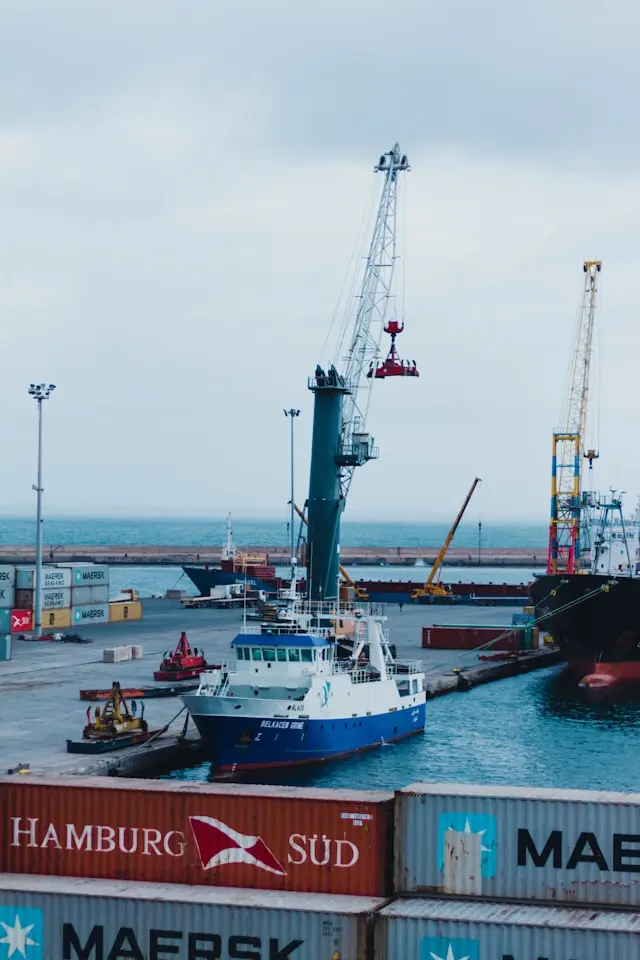
The verified public record for this market is anchored by the Wikipedia article on the Port of Koper. Operated by the public limited company Luka Koper and opened in 1957, the port's own dated 2024 record shows 1,798 sea-ship arrivals, 23.0 million tons of cargo, 1,133,340 TEU of container volume, 125,276 passengers, revenue of €330.1 million, and 2,097 employees - Slovenia's sole commercial seaport.
Read alongside the Adriatic port records on this site - the Rijeka and Trieste-facing analyses - Koper is the smallest-state counterpart: a 1957-founded national gateway that grew into a million-TEU container port, recruiting port professionals inside a two-thousand-employee operation that anchors an entire small country's maritime labour market.
Neither the dated traffic record nor the employee count measures what a hiring leader needs to know: whether container-terminal specialists, cruise-and-passenger staff or port engineers are available at a given certification level in a given quarter. That requires a search with contacted, assessed and validated candidates.
What changes in this market
Employers at the Port of Koper prove themselves differently from Rijeka's Croatian national system and from Trieste's Italian hub: a single national gateway run by one operator of 2,097 employees defines the whole Slovenian maritime profession, Italian-language co-official status extends the recruitment geography across the border, and growth from the record's own 2024 baseline must convert through a fixed small-city labour pool. Each function, phase and stage of a mandate here - port operations, container handling, cruise and passenger services - proves itself against that single-operator structure rather than against a national average.
KiTalent's mandate analysis
- Frame the mandate by terminal function before the search: container operations, general cargo, and cruise and passenger services certify differently inside the same 2,097-employee operation.
- Recruit bilingually and cross-border deliberately: Koper's Italian co-official status and the Trieste labour market next door define the realistic pool - state the geography at mandate start.
- Ask any search partner for contacted, assessed and validated candidates per certification profile before accepting traffic statistics as evidence of workforce availability.
Where the public record stops
No located primary public record verifies superseded 2023 tonnage figures, cruise-call counts, marina-berth statistics or vacancy records. The port's own dated 2024 record supersedes them or they were not verifiable. What remains is what the port record can prove, with its dates attached.
Sources
Related KiTalent research
- The Market Map Is Not the Shortlist: helps a buyer choose between testing the Koper maritime market and commissioning a search with contacted, assessed and validated candidates
- How to Assess a Leader Beyond Competencies: shows how to gather decisional evidence for this mandate - the research method behind testing terminal function, dated-baseline discipline and bilingual cross-border recruiting - with candidate evidence assessed conversation by conversation