
The buyer question
Can a Koper port-logistics mandate - terminal operations, rail intermodal or hinterland freight - be filled at Slovenia's Adriatic gateway, and what does the public record actually prove?
What the public record shows
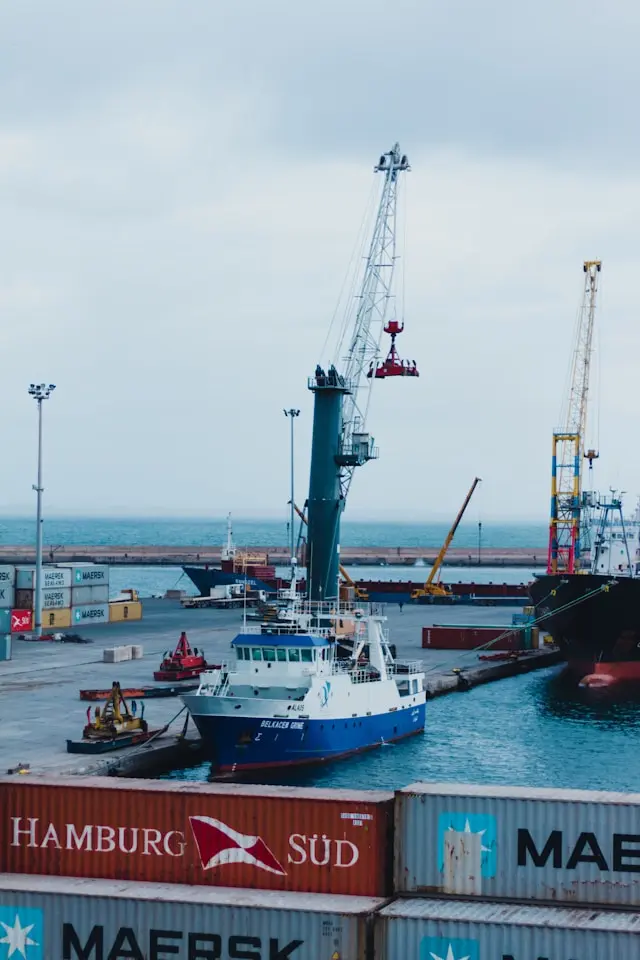
The verified public record for this market is anchored by the Wikipedia article on the Port of Koper, already used across this site's Koper coverage. The port's dated 2024 record shows 1,798 sea-ship arrivals, 23.0 million tons of cargo, 1,133,340 TEU and 2,097 employees under the single Luka Koper operator, opened in 1957. The same record carries the hinterland history that defines the logistics market: transit cargo for Czechoslovakia, Hungary, West Germany, Austria, Italy and Switzerland - a Central-European catchment the port has served since the Yugoslav era, when Koper led the country's ports in perishable-fruit throughput.
Read alongside the sibling analysis on this site of Koper maritime operations, port logistics is the landside layer of the same gateway: container and general-cargo terminals feeding a rail-and-road corridor toward the Central-European hinterland the record documents, recruiting logistics professionals inside the same small-coastal labour market.
Neither the dated traffic record nor the transit history measures what a hiring leader needs to know: whether terminal operators, rail-intermodal coordinators or hinterland-freight specialists are available at a given certification level in a given quarter, or what any terminal-expansion or railway project commits. That requires a search with contacted, assessed and validated candidates.
What changes in this market
Employers in Koper's port-logistics sector prove themselves differently from Rijeka's national-system port and from Trieste's Italian hub: a single-operator gateway of 2,097 employees runs landside logistics toward a Central-European hinterland - the Czech, Hungarian, German and Austrian transit catchment the record has documented for decades - inside a small coastal labour market where Italian co-officiality extends the pool across the border and every expansion converts through the same fixed workforce. Each function, phase and stage of a mandate here - terminal operations, rail intermodal, hinterland freight - proves itself against that single-operator hinterland structure rather than against a national average.
KiTalent's mandate analysis
- Frame the mandate by landside function before the search: terminal operations, rail-intermodal coordination and hinterland-freight management certify differently inside the same operator.
- Treat the transit hinterland as the market definition: a port whose catchment has run to Central Europe for decades recruits logistics professionals against inland-market alternatives, not only Adriatic ones.
- Verify infrastructure projects independently: where a mandate's premise is a specific terminal or railway project, that project must be sourced to its own primary record before hiring plans are built on it.
- Ask any search partner for contacted, assessed and validated candidates per certification profile before accepting infrastructure statistics as evidence of workforce availability.
Where the public record stops
Project budgets sit outside the port's traffic record, but two of them are published on their own primary records: the operator's container-terminal extension, announced in November 2018 at a total value of EUR 235 million, and the Divača-Koper second track, whose 2019 investment programme set the project value at EUR 1.150 billion - a financial framework the project company reports as not exceeded. No located primary record verifies any combined terminal-and-railway investment total. What the port record can prove stands above, with its dates attached.
Sources
- Wikipedia - Port of Koper (2024 record)
- Wikipedia - Port of Koper (transit record)
- Luka Koper - container terminal extension, EUR 235 million programme (November 2018)
- 2TDK - second track investment programme, EUR 1.150 billion (2019 framework)
Related KiTalent research
- The Market Map Is Not the Shortlist: helps a buyer choose between testing the Koper port-logistics market and commissioning a search with contacted, assessed and validated candidates
- How to Assess a Leader Beyond Competencies: shows how to gather decisional evidence for this mandate - the research method behind testing landside function, hinterland-market definition and independent project verification - with candidate evidence assessed conversation by conversation