The Production Base Is Strong. The Processing Layer Is Not.
And yet almost all of that harvest leaves the region as fresh fruit. No public statistic isolates what share of the Korçë apple crop is processed locally into juice, concentrate, or dried product, and the observable signals point to a thin processing layer rather than a deep one: refrigerated storage sized at a fraction of the crop, thousands of tons unsold in a bad year, and growers cutting back orchard area. The gap is not explained by a lack of investment programmes. The EU's IPARD rural-development programme earmarks €112 million for Albanian agriculture, but those funds have been frozen since 2023 over irregularities found in earlier programme management, and as of late 2026 they had still not begun flowing to Albanian beneficiaries. The gap is explained by something harder to fix: the people who know how to run EU-compliant processing lines, manage cold chain logistics across borders, and prepare facilities for BRC or IFS audits do not exist in sufficient numbers in this region. They work in Tirana. They work in Thessaloniki. They are not coming back voluntarily.
What follows is an analysis of the forces keeping Korçë's agro-food sector below its potential, the specific roles that remain unfilled and why, and what organisations operating in this market must understand before they attempt to build the leadership teams required for the next phase of growth.
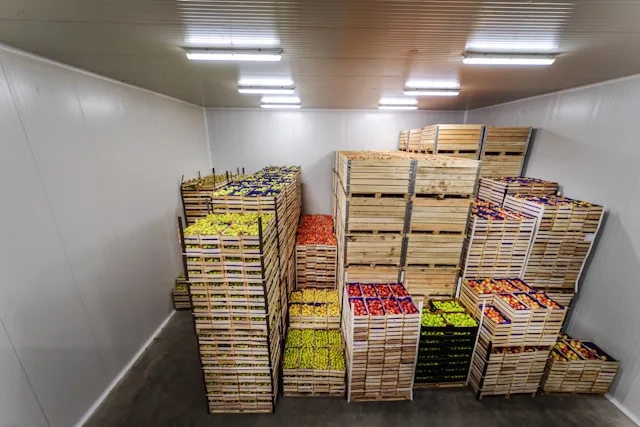
Korçë's agricultural endowment is genuine. INSTAT's statistics for 2023 put the prefecture's share of national apple output at 60.81%, concentrated in the Drenovë and Bilisht growing areas, with Korçë, Maliq and Devoll the leading apple municipalities; the prefecture is also the country's largest fruit producer overall, with 66,178 tons of fruit in 2025, ahead of Elbasan and Fier. What the endowment lacks is the layer above it. Cold storage capacity in the region has been put at around 15,000 tons by regional agriculture-industry figures, an estimate from 2019–2020 — a fraction of the crop — and energy costs weigh on the operators who run it.
The dairy sub-sector is built on small and medium-scale facilities turning milk into white cheese and kashkaval for regional markets. Beekeeping survives in the upland villages but remains artisanal, lacking the industrial processing infrastructure present in the fruit and dairy segments.
Birra Korça, bought in 2004 by businessman Irfan Hysenbelliu's IHB Group, which invested some €15 million in a full renovation, now brews roughly 120,000 hectolitres a year, making it the country's third-largest beer producer and the closest thing the prefecture has to a large-scale, modern food processing operation.
The inputs are there. The question that defines this market in 2026 is whether the human capital required to convert those inputs into exportable, EU-compliant processed goods can be assembled fast enough to match the regulatory and commercial deadlines now arriving.
The Regulatory Clock Is Running
Albania's food safety framework — Law No. 9863/2008 "On Food", which established the National Food Authority and was drafted largely on the EU's General Food Law — is being pushed steadily closer to full EU alignment, with a new law on official controls introducing risk-based inspection, laboratory analysis and border-control rules built on EU practice. For Korçë's small processors this works as a consolidation mechanism: upgraded laboratory and traceability standards carry costs that the smallest operators struggle to absorb, concentrating custom among the smaller group of larger players that can.
HACCP Certification: Progress, But Not Enough
No public register breaks down HACCP certification among Korçë's fruit processors, and this analysis does not invent one. What is verifiable is the shape of the problem: certification requires laboratory equipment, documentation systems and staff who can maintain both — investment measured in tens of thousands of euros per facility — at a moment when the EU support programme that exists to co-finance such upgrades, IPARD, has had its funds frozen since 2023 and, as of late 2026, still had not resumed payments to Albanian beneficiaries. The region's processors are predominantly small and micro-enterprises, the tier where these costs bite hardest.
GlobalGAP and Export Readiness
The gap between domestic food safety compliance and the certification level required for EU retail supply chains is considerable. EU food safety compliance hiring in the agro-food sector depends on professionals who understand not just HACCP but GlobalGAP traceability, BRC audit preparation, and the practical mechanics of phytosanitary documentation and EUR.1 certificate processing. Each of these represents a distinct competency. Finding a single professional who holds all of them in Korçë Prefecture is a search measured in months, when it succeeds at all.
The regulatory consolidation is creating a two-tier market. Compliant processors are gaining market share and export access. Non-compliant operators face elimination. The dividing line between the two tiers is not capital alone. It is the availability of the people who know how to implement and maintain these systems.
Three Roles the Market Cannot Fill
No Albanian statistical series publishes a vacancy rate for agro-food processing at prefecture level; INSTAT's labour-market releases do not descend to that combination of sector and geography. What KiTalent's own mandate flow shows is a market where technical and managerial roles in Korçë agro-food stay open far longer than general production roles, and where the gap is not evenly distributed. It concentrates in three categories that are essential for export-oriented, EU-compliant operations.
Food Safety and Quality Assurance Managers
Roles requiring EU audit experience with HACCP, BRC, or IFS standards stay open for months rather than weeks, while general production roles fill in weeks. Professionals holding BRC or IFS lead auditor certification almost never appear on public job boards. An estimated 80% of successful placements for these roles occur through direct headhunting or targeted outreach rather than advertised vacancies.
In KiTalent's mandate experience, a senior food safety or quality assurance manager in Korçë commands 95,000 to 130,000 ALL per month, equivalent to €900 to €1,230, with professionals holding BRC or IFS auditor certification commanding a premium above that range. In Thessaloniki, a comparable role pays €1,800 to €2,200 monthly net in the firm's benchmarking — a multiple of the Korçë package for the same work. Thessaloniki sits roughly a three-hour drive away, and that proximity, combined with cultural and linguistic ties, makes the cross-border pull systematic rather than occasional.
Cold Chain Logistics Coordinators
International freight forwarding expertise combined with cold chain management is the second acute shortage. Korçë sits roughly 200 kilometres by road from the Port of Durrës, and logistics costs for fresh exports run measurably higher per kilogramme than in coastal processing zones. Border crossing congestion at Kapshtica (Greece) and Qafë Thanë (North Macedonia) compounds the problem. Kapshtica closes for snow in most winters, disrupting just-in-time delivery contracts with Greek supermarket chains.
In KiTalent's searches, cold chain logistics specialists are being recruited away from Tirana-based distributors only at salary premiums of 25% to 30% plus relocation packages. This pattern is typical for senior technical roles in the region. A supply chain or export manager in Korçë earns a 75,000 to 110,000 ALL monthly base (€710 to €1,040), with commission structures for export sales adding 20% to 40%. The gap with Tirana-based equivalents remains 35% to 40%.
Agricultural Engineers in Post-Harvest Technology
Controlled atmosphere storage management, ethylene monitoring, and sorting line automation require agricultural engineers with specialised post-harvest training. The public Agricultural Technology Transfer Centre in Korçë, which runs cultivar trials and extension services for the region's growers, is a thin pipeline relative to demand, and the cost of a prolonged vacancy at this level extends well beyond the unfilled salary line. A facility operating without proper post-harvest handling expertise loses yield quality with each passing week.
The challenge across all three categories is identical. The candidates exist. They are employed. They are not looking. And the proposition required to move them to Korçë must overcome not just a compensation gap but a career trajectory gap, a lifestyle gap, and in many cases, a national border.
The Brain Drain Has Three Directions
Korçë loses technical and managerial talent to three competing markets, each pulling for different reasons. Understanding these pull factors is essential for any organisation attempting to build or retain a senior team in this region.
Tirana offers 35% to 40% higher base compensation for equivalent agro-food management roles in KiTalent's benchmarking. The capital also provides access to corporate headquarters functions, multinational employers, and career trajectory depth that Korçë structurally lacks. Mid-career professionals migrate to Tirana for roles at processors and international trading houses, creating a persistent drain on experienced middle management.
Thessaloniki's pull is more fundamental. Euro-denominated salaries averaging €1,800 to €2,200 monthly net for skilled food technologists, in the firm's benchmarking, are a multiple of the Korçë package for equivalent work. The wider pattern is documented: the World Bank's January 2026 report on migration in the Western Balkans records a region where nearly a quarter of citizens live abroad and emigration feeds growing labour shortages. The Greek industrial zones of Sindos and Oraiokastro absorb precisely the food science graduates and QA specialists that Korçë's processors need most.
The coastal Albanian cities of Durrës and Vlora offer a third path. Logistics cost advantages and coastal wage premiums attract supply chain and logistics professionals away from interior regions. For a cold chain coordinator, the move from Korçë to Durrës shortens the route to port, increases the salary, and adds no meaningful lifestyle downside.
Korçë's retention factors are real but limited. The cost of living sits materially below the capital. Family ties hold significant weight in Albanian career decisions. But these factors alone cannot compensate for a compensation gap that widens at exactly the seniority level where the most critical roles sit. The gap between Korçë and its competitors is not closing. It is widening fastest in food safety, logistics management, and post-harvest engineering, the three functions this sector cannot operate without.
The Skills Mismatch Is the Core Problem
Korçë's agro-food sector does not have a labour shortage. It has a credentials shortage masquerading as a labour shortage.
Nationally, unemployment among 15-to-29-year-olds stood at 21.7% in 2023 according to INSTAT, and the cohort itself is shrinking fast: Albania counted only about 405,000 people aged 15 to 29 in 2024, roughly 45% fewer than at the 2011 census, with emigration the dominant cause. There is no absence of people willing to work. The September-to-November harvest strains local labour supply, but the workforce exists in volume.
What does not exist in volume is the specific set of EU-aligned technical competencies that processors require for export market access. HACCP implementation. BRC audit preparation. TRACES system navigation. Controlled atmosphere storage calibration. Phytosanitary documentation. These are not skills that emerge from general agricultural education programmes. They require specific certification, specific practical experience, and in most cases, specific exposure to an EU-standard facility that has already achieved compliance.
The implication is uncomfortable. You cannot recruit experience that has not yet been created in sufficient quantity within this geography. A small certified base means the pool of facilities where a professional can gain hands-on EU audit experience is small. Those few facilities become both training grounds and poaching targets simultaneously. A QA manager trained at one of Korçë's compliant processors becomes immediately attractive to competitors in Tirana and Thessaloniki, where the salary multiple makes the counteroffer nearly impossible to match.
This is the cycle that conventional job advertising cannot break. The talent pool for critical roles is not hidden. It is structurally undersized. Expanding it requires either training investment with multi-year time horizons or direct recruitment of qualified professionals from outside the region, each approach carrying its own cost and complexity.
What the 2026 Infrastructure Investments Change and What They Do Not
Two infrastructure developments are altering the logistics calculation for Korçë-based processors. The completion of the Kardhiq-Delvinë road segment, 34 kilometres including the new Skërfica tunnel, cuts travel time toward the Port of Sarandë by around 45 minutes. And the Qafë Thanë crossing into North Macedonia, the prefecture's corridor toward Skopje and beyond, now runs joint one-stop border controls that simplify transit.
These improvements matter. Closing the per-kilogramme logistics gap with the coastal baseline would improve processor margins and strengthen the commercial case for local processing over raw commodity export.
But infrastructure improvements do not solve the human capital constraint. A shorter road to port does not produce a food safety manager with BRC audit experience. Faster border crossings do not train a cold chain coordinator in international freight forwarding. The risk for Korçë's processors is that the infrastructure arrives, the regulatory deadlines tighten, and the talent pipeline remains insufficient to take advantage of either.
Any volume growth in processed apple exports, contingent as it is on cold-chain investment, will require more senior technical staff, not fewer. Each incremental step toward EU market access raises the credential bar for the workforce. Growth in this sector is not possible without growth in the specific human capabilities that support it.
Energy costs compound the operational pressure. Refrigerated storage is energy-intensive, and Korçë's operators run at the end of long distribution lines with no offsetting scale. A plant or operations director in Korçë must manage not just production but an energy cost structure that erodes margins before the first case ships.
What Hiring in This Market Actually Requires
The conventional approach to filling technical and managerial roles in a market like Korçë follows a predictable sequence. Post the role. Wait for applications. Screen the applicants. Interview the strongest. Make an offer. In a market where much entry-level and general production hiring flows through public employment services and university career centres, this approach works tolerably well for junior positions.
It does not work for the roles that determine whether a processing facility can export to the EU.
Export managers with established EU buyer networks, professionals holding existing relationships with Italian and German supermarket procurement teams at Conad, Edeka, or Lidl, are almost exclusively passive candidates. Moving them often means buying out notice periods that stretch to several months. Senior food safety managers operate in a market where an estimated 80% of placements come through direct search. The passive majority of senior talent — qualified candidates who never appear on a job board — are not hidden because they are difficult to find. They are hidden because nothing in their current situation compels them to look.
A plant or operations director at the executive level earns 180,000 to 280,000 ALL monthly (€1,700 to €2,650) in Korçë, in KiTalent's mandate experience. At the large-anchor tier, packages trend toward the upper range and include performance bonuses tied to export volume. Family-owned SMEs offer toward the lower end. The spread is wide enough that two facilities separated by five kilometres can offer fundamentally different career propositions for the same role.
For organisations competing in this market, the search methodology matters as much as the compensation package. A talent mapping exercise that identifies the narrow pool of qualified food safety managers currently employed across Albania, Greece, and North Macedonia — a pool KiTalent measures in the tens, not the hundreds — and then approaches them with a specific, fully formed proposition, reaches candidates that no job advertisement will ever surface. The difference between a 45-day search and a 120-day search is not luck. It is method.
KiTalent's approach to executive search in agro-food and FMCG sectors is built for this kind of market: small candidate pools, high passivity rates, and cross-border competition for the same individuals. Continuous market mapping identifies qualified professionals across geographies before a role goes public.
For agro-food processors in Korçë facing EU compliance deadlines with unfilled QA, logistics, or plant leadership roles, where the candidates you need are employed in Tirana or Thessaloniki and will not respond to a job posting, speak with our executive search team about how we identify and approach the specific professionals this market requires.
Frequently Asked Questions
What is the vacancy rate for agro-food technical roles in Korçë?
No published Albanian statistic tracks vacancies for agro-food technical roles at prefecture level. In KiTalent's mandate flow, technical and managerial positions in Korçë's agro-food sector stay open far longer than general production roles, and the concentration is sharpest in food safety and quality assurance roles requiring EU audit experience, which stay open for months rather than weeks. The disparity reflects a credentials gap rather than a general labour shortage: youth unemployment nationally for ages 15 to 29 stood at 21.7% in 2023.
What does a food safety manager earn in Korçë?
In KiTalent's mandate experience, a senior food safety or quality assurance manager in Korçë earns between 95,000 and 130,000 ALL per month, equivalent to approximately €900 to €1,230, with professionals holding BRC or IFS lead auditor certification commanding a premium above that range. For context, an equivalent role in Thessaloniki pays €1,800 to €2,200 monthly net in the firm's benchmarking — a multiple of the Korçë package. This compensation gap is the primary driver of cross-border talent migration from the region.
Why is Korçë losing agro-food talent to Tirana and Greece?
Korçë competes against three talent markets simultaneously. Tirana offers 35% to 40% higher base compensation and access to corporate headquarters functions. Thessaloniki offers Euro-denominated salaries at a multiple of equivalent local pay, with the roughly three-hour drive making the move practical. Coastal Albanian cities offer logistics cost advantages and coastal wage premiums. Korçë's lower cost of living and family ties provide some retention, but cannot fully offset these differentials at senior technical and managerial levels.
How does EU food safety regulation affect Korçë's agro-food processors?
Albania's food safety framework, Law No. 9863/2008 "On Food", is being pushed closer to full EU alignment through a new law on official controls, while the EU's IPARD programme that would co-finance this transition — €112 million earmarked — has been frozen since 2023, with no payments to Albanian beneficiaries as of late 2026. Compliance requires investment measured in tens of thousands of euros per facility for laboratory equipment and traceability systems, hardest to absorb for the small and micro-enterprises that dominate the region's processing base. The expected result is consolidation toward the smaller group of larger compliant operators. For these surviving processors, the critical constraint is hiring professionals with EU food safety implementation experience to maintain and extend their certification.
How can agro-food companies in Korçë hire senior technical talent?
The most critical roles in this market, including food safety managers, cold chain coordinators, and export managers with EU buyer relationships, are filled overwhelmingly through direct search rather than job advertising.
What infrastructure improvements will affect Korçë's agro-food logistics in 2026?
Two developments are reshaping logistics economics. The Kardhiq-Delvinë road completion, 34 kilometres including the new Skërfica tunnel, cuts travel time toward the Port of Sarandë by around 45 minutes. The Qafë Thanë crossing into North Macedonia now runs joint one-stop border controls, simplifying transit on the prefecture's northern corridor. These improvements narrow the cost gap with coastal processing zones, strengthening the business case for Korçë-based processing and potentially attracting further investment in agro-food processing capacity.
Related Links
- Korçë
- Albania
- Food Beverage Fmcg
- Vlore Port Hiring: Define the Mandate Before the Search
- Vlore Hospitality Hiring: Define the Mandate Before the Search
- Vlorë Construction Hiring: Define the Mandate Before the Search
- Milan Financial Services: Define the Regulated Business Mandate

Published March 2026, updated 2026-10-08. Based on primary market sources and KiTalent's market-intelligence process.
Related Market Reads
Articles tied to the same hiring geography or market context.
Vlore Port Hiring: Define the Mandate Before the Search
Which port-operations, industrial-terminal or naval-and-fisheries responsibility actually defines a Vlore maritime mandate?
Vlore Hospitality Hiring: Define the Mandate Before the Search
Which seasonal-resort, city-hotel or food-and-beach responsibility actually defines a Vlore hospitality mandate?
Vlorë Construction Hiring: Define the Mandate Before the Search
What the verified public record establishes about Vlorë - where Albania's Declaration of Independence was signed in 1912, a significant southern city with a 2014-registered labour force of 125,954 - and where a mandate needs contacted, assessed and validated candidates.
Nearby Market Signals
Lateral reads from adjacent cities, sectors, or themes.
Milan Financial Services: Define the Regulated Business Mandate
Which regulated entity, product, control function and decision rights define a Milan financial-services mandate?
Zenica's Metal Fabrication Sector Is Modernising and Shrinking at the Same Time: What That Means for Industrial Hiring Leaders
Zenica's steel and fabrication sector sits at a strange inflection point. ArcelorMittal's €70 million decarbonisation feasibility study for the city's anchor steelworks signals...
Seville Aerospace: Define the Mandate Before Mapping
For a Seville Aerospace mandate, which aerospace and aviation decisions, operating boundaries and results must the successful candidate own?
From the Archive
Evergreen background reading that still sharpens current hiring decisions.
Tirana Construction Hiring: Define the Mandate Before the Search
Which building-construction, infrastructure or development-and-permitting responsibility actually defines a Tirana construction mandate?
Tirana ICT Hiring: Define the Mandate Before the Search
Which outsourcing delivery, product engineering or public-sector systems responsibility actually defines a Tirana ICT mandate?
Tirana Banking Hiring: Define the Mandate Before the Search
Which retail-banking, digital-transformation or supervisory-institution responsibility actually defines a Tirana banking mandate?