
The buyer question
The reader is a senior leader hiring for waste-to-energy operations, environmental engineering or cleantech R&D in Lahti. What can the public record establish about the city, what can it not establish, and how should the mandate be built around that difference?
What the public record establishes
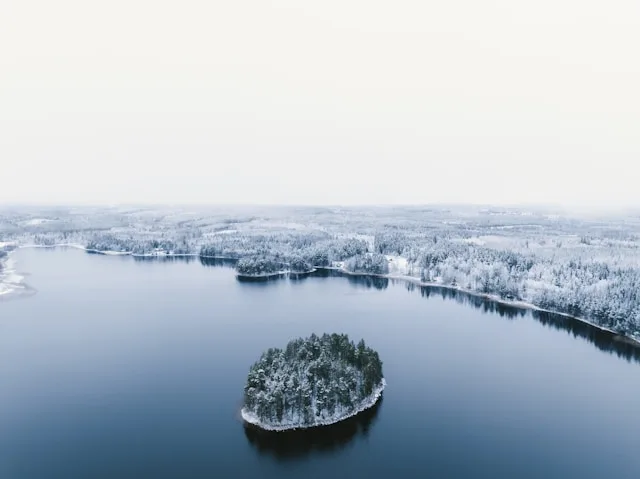
Lahti had about 122,000 inhabitants at the end of 2025. It sits at the southern end of Lake Vesijärvi in the Päijät-Häme region, about 100 kilometres from Helsinki.
The environmental record is documented by the city and by the European Commission. The city's own account dates its green journey to the restoration of Lake Vesijärvi in the 1970s. The Commission's profile describes rapid industrialisation after the Second World War as having led to significant environmental challenges, including the eutrophication of Lake Vesijärvi. The city introduced the first regional circular economy roadmap in Finland in 2017, stopped using coal in spring 2019, and reports greenhouse gas emissions 64% below the 1990 level. The European Commission named Lahti European Green Capital for 2021 and recorded top rankings in air quality, waste, green growth and eco-innovation, and governance. The city notes that it was the first Finnish city to receive the title.
Two further facts bear on hiring. The Salpausselkä UNESCO Global Geopark, designated in April 2022, covers six municipalities including Lahti and is coordinated within Lahti Region Ltd. LUT University runs a campus in Lahti at Mukkulankatu 19, alongside its campus in Lappeenranta.
What the public record does not establish
The sources reviewed for this page do not give current figures for vacancy durations, passive-candidate shares, the age profile of plant staff, salary ranges for local employers, or sector headcount and investment totals. Where a mandate depends on one of those figures, establish it for the specific role before the search is scoped, starting with these questions:
- How long do process-automation and plant-engineering roles stay open at the employers that would compete for the role?
- How many people in Finland hold the plant, fuel-handling or chemical-recycling experience the role needs?
- What do comparable roles pay in Lahti, and how does that compare with Helsinki and Tampere offers for the same profile?
- Which candidates would relocate, commute or work hybrid, and under what conditions?
KiTalent's mandate analysis
- Use the circular-economy roadmap as the brief. A regional roadmap in place since 2017 gives a mandate something concrete to measure. Ask candidates to show what they delivered against a roadmap of that kind: projects, permits, procurement and funding, not general sustainability credentials.
- Name the process, not the sector. Waste-to-energy, waste sorting and material recovery differ in fuel handling, emissions compliance and energy offtake. A mandate should state which of these the role owns and screen for that record.
- Screen for permitting and monitoring fluency. Environmental engineering roles operate under Finnish and EU rules. Candidates should have worked with regulators and be able to describe that work in detail.
- Map the university base alongside employers. LUT's Lahti campus is a source of research and student talent in the city. The sources reviewed for this page do not show how many graduates remain in the region after study, so retention should be tested with candidates rather than assumed.
- Benchmark offers against Helsinki and Tampere, not Lahti alone. Lahti is about 100 kilometres from Helsinki, so the candidate pool and the competing offers are regional. Offer levels should be set against current market data for the role; this page does not provide that data.
- Screen procurement fluency where the employer is public. Where the employing organisation is a municipal or regional body, experience with tenders and public procurement should be a first-order screening criterion.
Sources
- City of Lahti: Facts (Lake Vesijärvi restoration in the 1970s, 2017 circular-economy roadmap, coal phase-out in 2019, emissions compared with 1990, first Finnish city to hold the title)
- European Commission: European Green Capital 2021, Lahti (title and rankings by area; post-war industrialisation and the eutrophication of Lake Vesijärvi)
- Salpausselkä Geopark: official page (2022 designation, management, municipalities)
- LUT University (campuses in Lappeenranta and Lahti; Lahti campus address)
- Wikipedia: Lahti (population at 31 December 2025, position at the southern end of Lake Vesijärvi, the Päijät-Häme region, and distance from Helsinki; secondary, used only for these items)
Related KiTalent research
- The Market Map Is Not the Shortlist: argues that a market map is a hypothesis about who exists, not a validated shortlist; relevant here if the Lahti brief is still uncertain, because it explains when to map the market before a search and when to start one
- How to Assess a Leader Beyond Competencies: argues that competency frameworks measure capability but not identity, and sets out how to assess a senior candidate on both through decisional patterns gathered across several conversations and through reframed reference calls