
The buyer question
We need technical-textile R&D, nanomaterial commercialisation or production engineering leadership in Liberec; what does the verified record say about this market and how should a mandate here be structured?
What the public record shows
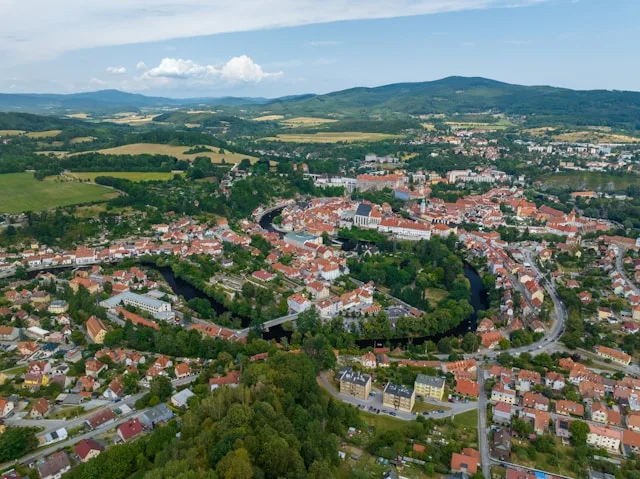
The verified public record for Liberec is anchored by the city and university articles. Liberec - historically Reichenberg - is a city of about 108,000 inhabitants, the fifth largest in the Czech Republic, lying on the Lusatian Neisse River in a basin surrounded by mountains. It was once home to a thriving textile industry and hence nicknamed the 'Manchester of Bohemia', and the Great Depression devastated the area's textile, carpet, glass and other light industry - the inheritance any modern technical-textiles sector builds on.
The institutional anchor is precise. The Technical University of Liberec was founded in 1953 as the Institute of Mechanical Engineering in Liberec, took its current name in 1995 as its subject range widened, and is known especially for its research in the field of textile engineering; it has about 9,000 students, with the first 259 admitted on 1 October 1953. Today it lists seven faculties, from Mechanical Engineering and Textile Engineering to Mechatronics, Informatics and Interdisciplinary Studies, plus the Institute for Nanomaterials, Advanced Technologies and Innovation - part of the university since 2012, whose 19 specialised laboratories orient toward technical industries with research in materials, nanomaterials and engineering emphasizing applications.
What the verified record does not contain is any claim about producing the most textile engineers in Central Europe, public R&D funding totals, spin-out counts, graduate-destination percentages or Saxony salary premiums. The structure - a fifth city with a genuine textile-heritage university carrying a dedicated textile faculty and an applications-oriented nanomaterials institute - is verifiable; the strongest-cluster-and-weakest-pipeline framing must be argued from structure, not quoted.
What changes in this market
A Liberec technical-textiles mandate is a heritage-faculty mandate in a border-basin city. The employer base descends from the Manchester-of-Bohemia textile economy, and the knowledge base is unusual for a city of 108,000: a dedicated Faculty of Textile Engineering and a 19-laboratory nanomaterials institute inside the same university. Candidates prove themselves by bridging laboratory material science with industrial web-handling and finishing processes - the commercialisation gap is a role design problem, not merely a people problem - and offers compete in two directions at once: Prague for capital-city careers and Saxony, across the border, for German-scale pay. A mandate that prices against Czech regional averages alone loses both ends.
KiTalent's mandate analysis
- Technical-textile R&D-and-industrialisation leadership: mandates should screen for pilot-to-production transfer records - web formation, coating, finishing - rather than pure polymer-science credentials.
- Nanomaterial commercialisation roles: the institute's applications emphasis since 2012 supports technology-transfer mandates; candidates need demonstrable product-launch records from laboratory platforms, not only publications.
- Production and machinery engineering: the surviving industry runs on textile-machinery competence that the Mechanical Engineering faculty lineage supplies; maintenance-and-line roles should verify machine-specific references.
- Two-directional offer design: with Prague one way and the Saxon border the other, senior offers must be stress-tested against both capital-market and German-scale alternatives, including cross-border commuting.
- University-channel discipline: with 9,000 students and the specialised faculties of one mid-sized university, thesis-project and internship channels are the reliable junior pipeline; mandates should build them rather than advertise into a thin open market.
Where the public record stops
Claims beyond the dated public record are not repeated on this page. The verified record above - the 108,000-inhabitant fifth city, the Manchester-of-Bohemia nickname and Depression history, the 1953 founding with 259 first students, the dedicated textile faculty among seven, and the 2012 nanomaterials institute with 19 laboratories - supports the structural argument without invented funding, graduate-destination or salary statistics.
Sources
- Wikipedia - Liberec (city record)
- Wikipedia - Technical University of Liberec (institution record)
- Technical University of Liberec - university history record (founding and 1995 renaming)
Related KiTalent research
- The Market Map Is Not the Shortlist: helps a buyer decide whether a Liberec mandate is really an industrialisation-leadership, nanomaterial-commercialisation or production-engineering search, and how to price it between Prague and Saxony
- How to Assess a Leader Beyond Competencies: shows how to gather decisional evidence for this mandate - the research method behind testing pilot-to-production records, laboratory-launch evidence, machine-specific references and two-directional offer design - with candidate evidence assessed conversation by conversation
