
The buyer question
We need metalworking, toolmaking or automated-production leadership in Maribor; what does the verified record say about this market and how should a mandate here be structured?
What the public record shows
The verified public record for Maribor is anchored by the city's Wikipedia article. Maribor is the second-largest city in Slovenia and the largest city of the traditional region of Lower Styria, the seat of the Urban Municipality of Maribor and of the Drava Statistical Region, and the economic, administrative and educational centre of its region, with a population of 97,522 at the 2025 infobox vintage on the Drava river.
Its industrial credentials are long and documented. The Southern Railway was built through the town in 1846, producing great economic growth and territorial expansion; the first electric light in Slovene ethnic territory was installed on Castle Square in 1883; and Nikola Tesla lived in Maribor from 1878 to 1879, receiving his first job there. In World War II the city was a major industrial centre with an extensive armament industry, systematically bombed by the Allies in twenty-nine raids that devastated some 47% of the city area.
What the verified record does not contain is any present-day manufacturing statistics: no count of metalworking entities, no named-employer headcounts, no EU-grant amounts for automation, no vacancy durations and no enterprise counts by statistical classification. The structure - a second city whose industrial identity runs from the 1846 railway through the armament era to modern metalworking, sitting in the Austrian-border region with Graz the historic neighbour - is verifiable; the automation-bet arithmetic must be argued from structure, not quoted.
What changes in this market
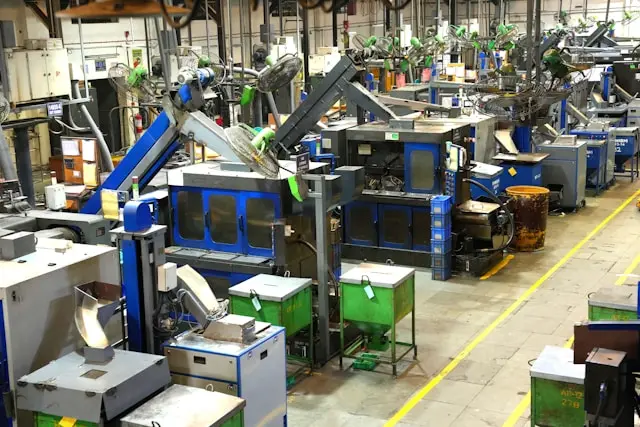
A Maribor manufacturing mandate is a second-city industrial mandate in Austria's shadow. The city's metalworking tradition grew from the railway that reached it in 1846 and survived the devastation of the armament-era bombing; today its employers compete for automation-era skills in a labour market where Graz and the Austrian-corridor employers pay visibly more for the same German-capable technicians. Candidates prove themselves through toolmaking and serial-production discipline inside automotive customer regimes, and bilingual German-Slovene capability is the practical differentiator; the assessment problem is verifying automation-cell competence in a market where formal certification trails the technology, which argues for work-sample and project-records testing over titles.
KiTalent's mandate analysis
- Metalworking and toolmaking leadership: the documented industrial inheritance supports toolmaking and pressed-and-welded component mandates; screening should verify customer-audit experience under automotive quality regimes rather than general machining careers.
- Automation-cell engineering: the claimed EU-funded automation wave, whether or not any individual firm's grant figure is verifiable, makes CNC-programming and robotics-integration the contested profiles; mandates should test delivered-cell experience directly.
- Austrian-corridor pay design: with Graz as the historic neighbouring industrial centre, senior technical offers must be stress-tested against Austrian wages or explicitly structured around cross-border commuting tolerance.
- University-pipeline channels: as the region's educational seat - the University of Maribor anchors that role - mandates should build faculty internship and thesis channels rather than relying on advertised pools.
- Record-silence discipline: no firm counts, grant totals or vacancy durations are publicly verifiable for the metalworking sector; mandate scoping should start from the buyer's own volumes and demand sources for any cluster statistics quoted to them.
Where the public record stops
Claims beyond the dated public record are not repeated on this page. The verified record above - the second-city rank, the 97,522 population, the 1846 railway, Tesla's 1878-79 residence and the documented armament-industry bombing - supports the structural argument without invented grant, employment or vacancy statistics.
Sources
Related KiTalent research
- The Market Map Is Not the Shortlist: helps a buyer decide whether a Maribor mandate is really a toolmaking, automation-engineering or automotive-supplier search, and how to price it against the Austrian corridor
- How to Assess a Leader Beyond Competencies: shows how to gather decisional evidence for this mandate - the research method behind testing automotive-audit records, delivered-cell verification, German-language capability and record-silence discipline - with candidate evidence assessed conversation by conversation