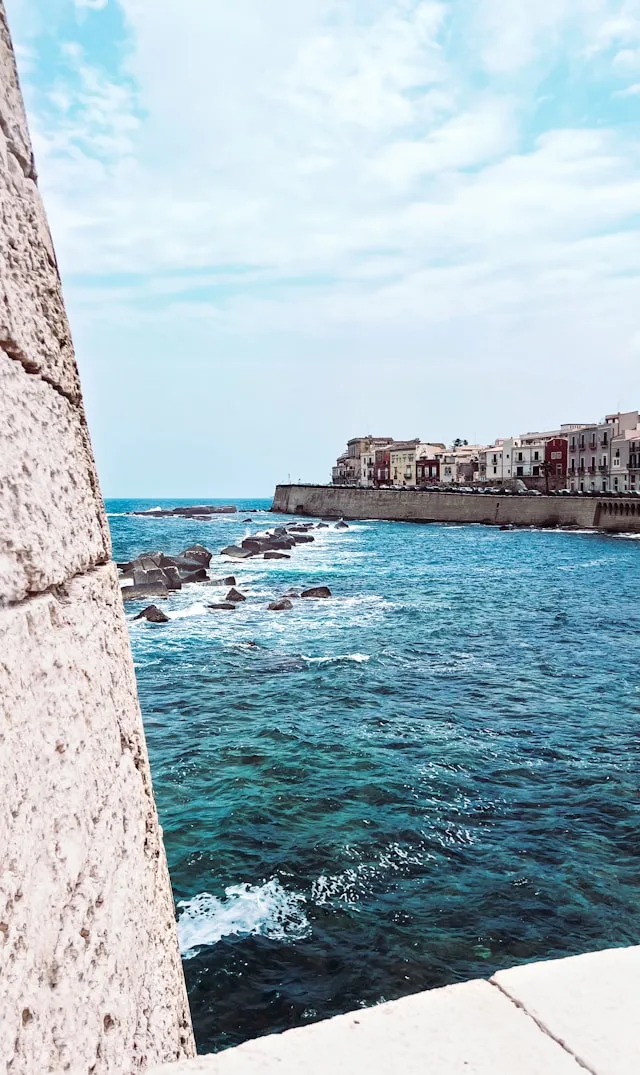
A Transit Hub Mistaken for a Destination
The core tension is not a lack of demand. Åland's ports counted more than two million arriving passengers a year before the pandemic and still counted 1.2 million in 2024. The tension is that most of those travellers never become guests: of the roughly 1.22 million people who arrived in 2024, about 193,000 stayed overnight in commercial accommodation. Converting more of that transit volume into destination spending requires hotel general managers, revenue strategists, sustainability officers and culinary leaders who are scarce in any small labour market, and Mariehamn is a town of about 11,950 residents in an Åland of 30,836. Åland's official labour-market survey shows employers struggling to fill a wide range of occupations, and the tourism strategy the Government adopted in 2024 puts "strengthening the skills of personnel in the tourism industry" at the centre of the sector's next decade.
What follows is an analysis of the forces pulling Mariehamn's visitor economy in opposite directions: a brand built on cultural autonomy and authenticity that simultaneously prevents the labour market flexibility needed to service the tourism it attracts. This is the paradox at the heart of every senior hiring decision in Åland's hospitality sector, and it is one that conventional recruitment methods are structurally unable to solve.
Mariehamn's visitor economy looks different depending on where you measure it. Total guest nights at commercial accommodation reached 416,782 in 2024, about 7 per cent above the 2019 level of roughly 389,000, with hotels alone recording 229,412 nights, 10 per cent above their own 2019 baseline. Arrivals tell the other story: 1.22 million in 2024 against 2.04 million in 2019, because the pre-pandemic scale of tax-free cruise traffic has not returned. Viking Line and Tallink Silja run the regular Stockholm-Turku and Stockholm-Helsinki services that call at Åland's ports, and twelve international cruise ships called at Mariehamn in 2025, with thirteen booked for 2026.
Yet beneath the throughput numbers, the economics tell a different story. Of the roughly 866,000 travellers who arrived from Sweden in 2024, nearly 212,000 of them cruise-liner passengers, most never spend a night ashore: Åland's official fact base describes the majority of arrivals as same-day visitors. That is the ratio that defines the real size of this market, about 193,000 overnight guests against 1.22 million arrivals. And it is a market concentrated into a short season: hotel occupancy of open capacity averaged 47 per cent across 2024, reached about 90 per cent in July, and fell to roughly a quarter in January and February.
This is not a market that needs more passengers. It is a market that needs leaders who can convert passengers into guests. Revenue managers who understand Baltic Sea market segmentation. General managers who can run a mixed business-leisure property through a binary seasonal cycle. Digital marketing strategists who can reach a Stockholm family before they book a Gotland holiday instead. The demand infrastructure exists. The leadership to exploit it does not.
The Åland Government's tourism policy points the same way. The Roadmap for Sustainable Tourism 2030, adopted in 2024 with a first action plan for 2024-2025, and Åland's wider development objectives, which include attracting 300,000 overnight visitors a year by 2030, put season extension, social sustainability and skills supply at the centre of the sector's next decade. Sustainability certification in Åland, through Green Key and the Nordic Swan Ecolabel, is voluntary today; Visit Åland's own directory lists five certified accommodations, three of them under Green Key. The direction of travel adds specialist sustainability competence to a market already short of people.
Why Åland's Greatest Asset Is Also Its Deepest Constraint
Åland's constitutional autonomy gives Mariehamn something no competitor can replicate: a demilitarised, Swedish-speaking archipelago with its own parliament, its own stamps, and its own cultural identity. For visitors, this distinctiveness is the entire value proposition. For employers trying to recruit leadership talent from outside the islands, it is a wall.
The _hembygdsrätt_ , or right of domicile, ties land ownership and business rights to a regional citizenship that requires five years of permanent residence and Finnish citizenship. A newcomer buying a home needs a land acquisition permit from the Åland Government, and for a home of one's own, in a planned residential area or village centre, the Government's official newcomer guide states that such a permit is "generally always granted". The genuine constraints sit elsewhere: full regional status takes five years and Finnish citizenship, so a Swedish or international executive will not hold it at all; property outside planned areas needs a case-by-case permit; and the right to carry on business in Åland is likewise tied to domicile or permit. The policy exists to protect Åland's cultural identity and prevent the kind of property speculation that has hollowed out other island communities. It succeeds at that goal. It also means that every executive search for senior hospitality talent in Mariehamn begins with a conversation about permits, timelines and regional status that a mainland hire never has.
Housing Scarcity Compounds the Barrier
Mariehamn's housing market is small and tight rather than formally closed. Åland completed 132 new dwellings in 2024, 74 of them in Mariehamn, against roughly 14,600 permanently inhabited homes across the islands. Average prices for traded share-of-stock apartments reached €3,469 per square metre in 2024, a spike driven partly by new-build transfers that fell back to €2,846 in 2025, and Mariehamn carries the highest average rents in Åland, at €13.41 per square metre. Housing logistics therefore belong inside the offer conversation for any senior move, and accommodation support is often part of how island hospitality employers compete for scarce people.
The Spousal Employment Problem
Åland's small labour market creates a secondary barrier that rarely appears in job specifications but can decide whether a candidate accepts an offer. A hotel general manager's partner, arriving in a town of about 11,950 people and an economy anchored in shipping, tourism and the public sector, faces a much narrower professional market than in Turku, Stockholm or Helsinki. Mainland employers compete for the same staff with deeper labour markets on both sides of the household, and dual-career planning becomes part of every senior move to the islands rather than an afterthought. The island's autonomy, which creates the brand that attracts tourists, simultaneously narrows the candidate pool for the people who would serve them.
The Roles That Define Mariehamn's Hiring Crisis
Three categories of talent are consistently hard to secure in this market. Each has a different cause, a different competitive dynamic, and a different implication for organisations trying to hire.
Maritime Hospitality Leadership
The most distinctive role family in Mariehamn combines maritime operational expertise with hospitality management capability. A director of maritime hospitality oversees onboard hotel operations for ferry fleets, including procurement, crew management and tax-free retail integration. Viking Line is headquartered in Mariehamn and Tallink Silja's Baltic services call regularly at Åland's ports, and the onboard-management career ladder they anchor is small, specialist and internationally mobile, which is exactly why it is hard to hire into. Åland's official wage statistics are published at sector level, not by role family, so compensation for these positions is benchmarked mandate by mandate. Recruitment in practice runs through direct approaches and internal promotion pipelines rather than open advertising, and the ferry groups' own reporting makes clear that onboard sales, tax-free retail above all, sit at the centre of the business model, tying these leadership roles directly to the regulatory risk discussed below.
In a labour market of 30,836 residents, about 40 per cent of them born outside Åland, the pool for any specialist role is thin by construction, and the market depends on persuading people to move to the islands. That is the structural condition behind every senior hospitality search in Mariehamn.
Digital and Revenue Management Specialists
Mariehamn's hotels have invested in dynamic pricing and channel management alongside the rest of the Nordic hotel sector, and in markets of this size the technology can outpace the people. Swedish and Nordic visitor-economy research identifies labour shortage and skills supply as the main growth barrier in the hospitality industry. In Åland, the specialist layer of revenue management, digital distribution and sustainability reporting is a handful of positions per property, and every vacancy in it is felt immediately.
This is a category where talent mapping across Nordic and Baltic markets becomes essential, because the candidates who would thrive in this environment are not looking for it. They must be found and persuaded individually. A revenue manager in Helsinki has access to international hospitality groups, a metropolitan social infrastructure, and a partner who can find employment easily. An island premium has to be argued, not assumed, which is why senior offers here are built around housing, settlement and scope, not salary alone.
Senior Culinary Leadership
Executive chef positions in Åland's full-service properties combine demands that narrow the pool on their own: service in Swedish, the islands' only official language; high-volume banqueting through the short peak season; and fine-dining quality for the archipelago market. Åland's 2023 labour-market survey shows employers across sectors struggling to fill a wide range of occupations, and no published statistic separates time-to-fill for senior chefs in Mariehamn from mainland Finland. The gap is about the candidate profile itself: the intersection of language, season scale and quality standards makes each hire a search across the whole Nordic market.
The Competitive Geography That Shapes Every Search
A senior hospitality professional considering Mariehamn is also considering Stockholm, Visby, Turku, and Helsinki. Each market exerts a different gravitational pull, and understanding the competitive geometry is essential for any organisation running a leadership search in this sector.
Stockholm offers something Mariehamn cannot: scale. It provides pathways through international hospitality groups and multi-property careers, while a senior hotel career in Mariehamn is more likely to be a single-property, whole-market role unless the executive moves into the maritime side. No published benchmark compares hotel-management compensation between Mariehamn and Stockholm; the real differentiator is trajectory. For a general manager with ambitions beyond a single property, Stockholm represents the route to a bigger title. Mariehamn represents the route to a lifestyle, and to operational scope that a metropolitan property would divide across several roles.
Visby on Gotland is the closest functional competitor: a Swedish island destination with a UNESCO World Heritage old town and a comparable seasonal visitor economy. Sweden's labour-migration rules apply there; Åland's right-of-domicile regime applies in Mariehamn. The two islands compete for the same internationally mobile hospitality professionals under noticeably different settlement conditions, and for a candidate weighing two island careers, the friction of the first five years matters more than a marginal salary difference. No published study ranks the two islands against each other for talent; what matters to a hiring organisation is which market the candidate can be persuaded to commit to.
This competitive context means that Mariehamn's employer value proposition must be articulated with precision. The island offers something no mainland city can: genuine operational autonomy, deep community integration, and a quality of life built around archipelago living. The organisations that successfully recruit leadership talent are the ones that sell the life, not just the job. The organisations that lead with a job specification and wait for applications receive very few.
The Paradox at the Centre: Authenticity That Prevents Its Own Delivery
Åland's visitor economy is caught in a self-reinforcing trap. The cultural autonomy that makes the destination distinctive is the same framework that narrows the labour market servicing that distinctiveness. The _hembygdsrätt_ protects Åland's Swedish-speaking character; it also means every incoming hospitality leader spends their first years as a permit-holder rather than a full regional citizen, with business rights tied to domicile. Housing in Mariehamn is a small, tight market rather than an open one. The strategy targets, 300,000 overnight visitors a year by 2030, assume a visitor economy growing on an island whose total population is 30,836. July shows what the market can do when it fills: hotel occupancy near 90 per cent. January and February, with roughly a quarter of open rooms occupied, show how little of the year that intensity covers. The pressure lands on the operators.
The danger is that this pressure remains invisible until it becomes a crisis. A hotel that cannot hire a revenue manager does not collapse. It simply runs suboptimal pricing for a season. A property that cannot recruit an executive chef does not close its restaurant. It simplifies the menu and reduces covers. The degradation is gradual, incremental, and difficult to measure, because the peak season still delivers: guests are served and July is full. By the time service quality visibly declines, the talent deficit will be deeper and harder to reverse.
This is why the hiring challenge in Mariehamn is not a seasonal staffing problem. It is a leadership deficit that determines whether the visitor economy remains a transit logistics operation or evolves into a genuine destination hospitality market. The difference between a same-day transit economy and a destination economy is not marketing. It is the quality of the people running the properties, designing the pricing, and creating the experiences that give a passenger a reason to step off the ship, and a reason to still be there the next morning.
Risks That Compound the Talent Challenge
The labour market constraints alone would be sufficient to make this a difficult hiring environment. Three additional risks make it more urgent.
Tax-Free Sales Vulnerability
Tax-free retail is the load-bearing wall of the Åland ferry system. Duty-free sales on crossings between Finland, Sweden and Åland rest on the special tax arrangement attached to Åland under Finland's EU terms of membership, and onboard sales have been central to ferry economics on these routes: ÅSUB's analysis of the cross-Baltic passenger system noted fifteen million passengers a year travelling on tax-free routes via Åland when that system was at its height. If the arrangement were ever curtailed, the fare and route structures that carry the overwhelming majority of Åland's visitors would change with it. The visitor economy sits downstream of a tax question decided outside the islands.
Geopolitical Route Volatility
The 2024 Baltic Sea cable incidents, when the BCS East-West Interlink and C-Lion1 cables were severed within a day of each other in November 2024 after the Balticconnector pipeline was damaged in October 2023, together with heightened military activity in the region, have made route and schedule security a standing concern for Baltic operators. Mariehamn's sea connections carry the overwhelming majority of its visitors. The airport has a scheduled Finnair service to Helsinki and no other commercial air links. Sea transport is not just the primary access channel. It is the one the visitor economy is built on.
Climate and Carrying Capacity
Åland's own tourism strategy is built around exactly these pressures: season extension, year-round employment and the environmental limits of a sensitive archipelago. On the regulatory side the direction is set: Viking Line reports that ships will be required to use shore power in port from 2030, and its vessels already run on certified green shore electricity where connections exist. For hiring leaders, the implication is that the next generation of hospitality executives in this market must understand sustainability compliance and reporting. These are the qualifications the sector's own roadmap asks for, not optional extras.
What This Market Requires From Executive Search
Mariehamn's hospitality talent market is small enough that every senior hire is consequential. A single general manager appointment changes how a property prices, staffs and sells an entire season. A single failed search means another year operating below the market's July ceiling, and another year in which most arriving travellers still do not stay.
Conventional recruitment methods reach active candidates. In this market, most senior hospitality leaders are not active anywhere: they are employed, settled, and not scanning job boards. They must be identified, approached, and persuaded individually. The persuasion itself is complex: it involves housing logistics, _hembygdsrätt_ implications, spousal career planning, and a lifestyle proposition that must be tailored to each candidate's circumstances.
The search must also move quickly. Mariehamn's seasonal cycle means that a general manager hired in April can shape the summer season. One hired in August has missed it. Speed and precision in candidate delivery are not merely desirable. They determine whether the investment in the search generates a return in the current year or the next one.
For organisations hiring hospitality and maritime leadership across Åland's visitor economy, where the candidates you need are employed, settled, and not considering a move unless the right opportunity finds them, speak with our executive search team about how we identify and engage the leaders this market cannot reach through conventional channels.
Frequently Asked Questions
What are the biggest hospitality hiring challenges in Mariehamn?
Åland's 2023 labour-market survey shows employers struggling to fill a wide range of occupations, and Nordic visitor-economy research identifies skills supply as the main growth barrier in hospitality. Mariehamn's specific challenges follow from structure: a town of about 11,950 residents in an Åland of 30,836; a right-of-domicile regime that shapes property and business rights for newcomers; a short, intense season, with hotel occupancy near 90 per cent in July and roughly a quarter in January and February; and a thin specialist layer for revenue, digital and sustainability roles.
What do senior hospitality roles pay in Mariehamn and Åland?
No published benchmark exists for senior hospitality compensation in Mariehamn. Åland's official wage statistics are published at sector level rather than by role family; the private-sector monthly median was around €3,400 in 2024. Senior offers are therefore benchmarked per mandate, in a documented island context: Mariehamn's average rents of €13.41 per square metre are the highest in Åland, and traded apartments averaged €3,469 per square metre in 2024. KiTalent builds this benchmarking into each search rather than quoting a generic band.
How does Åland's hembygdsrätt affect hospitality recruitment?
The right of domicile ties land ownership and business rights to a regional citizenship requiring five years of permanent residence and Finnish citizenship. A newcomer arriving to work in hospitality can buy a home, in a planned residential area or village centre or for permanent residence, with a land acquisition permit that the Åland Government states it "generally always grants" for own-home purchases. What newcomers do not hold is the full regional status for five years, or at all without Finnish citizenship; property outside planned areas and business rights require case-by-case permits. For recruitment, this means the move is possible but administratively different from a mainland hire: permits, timelines and settlement planning belong in the offer conversation.
How does KiTalent approach executive search in Nordic island hospitality markets?
KiTalent uses direct headhunting to identify passive candidates across Nordic and Baltic hospitality networks, reaching the professionals who are employed and not responding to job postings. In markets like Mariehamn, where senior-level candidates rarely answer job postings, this methodology for identifying hidden talent is essential.
What risks threaten Mariehamn's visitor economy growth?
Three structural risks shape the market. The Åland tax-free arrangement underpins the ferry economics that carry most visitors, and any change to it would reprice the whole access system. Baltic Sea security incidents, including the November 2024 severing of the BCS East-West Interlink and C-Lion1 cables, keep route reliability a standing concern, and Mariehamn's only scheduled air link is the Finnair service to Helsinki. The sector's own 2030 roadmap raises the bar on sustainability competence, skills supply and season extension, all of which are hiring questions.
Is Mariehamn competitive with Stockholm and Visby for hospitality talent?
Stockholm offers scale, international-group career paths and deeper labour markets; Mariehamn offers whole-market responsibility and a quality of life built around archipelago living. Visby on Gotland is the closest island comparator, with a UNESCO World Heritage old town and a similar seasonal economy, under Swedish rather than Ålandic settlement rules. The organisations that recruit successfully in Mariehamn are those that articulate the life proposition alongside the career proposition, addressing housing, partner employment, and long-term settlement planning as part of the search process.
Related Links
- Mariehamn
- Finland
- Travel Hospitality
- Vaasa Power Electronics Talent: What the Verified Record Shows
- Vaasa Energy Hiring: Define the Mandate Before the Search
- Oulu Embedded Systems Hiring: Define the Mandate Before the Search
- Milan Professional Services: Define the Practice and Delivery Mandate

Published March 2026, updated 2026-10-18. Based on primary market sources and KiTalent's market-intelligence process.
Related Market Reads
Articles tied to the same hiring geography or market context.
Vaasa Power Electronics Talent: What the Verified Record Shows
The verified public record for Vaasa - the bilingual Ostrobothnian capital whose national-scale power infrastructure and multi-institution campus anchor Finland's west-coast energy-technology economy - and what a power-electronics mandate there must actually cover.
Vaasa Energy Hiring: Define the Mandate Before the Search
What the verified public record establishes about Vaasa's energy technology cluster, its bilingual talent pool, and where a hiring mandate needs contacted, assessed and validated candidates.
Oulu Embedded Systems Hiring: Define the Mandate Before the Search
Which telecom-heritage, wireless-research or industrial-IoT responsibility actually defines an Oulu technology mandate?
Nearby Market Signals
Lateral reads from adjacent cities, sectors, or themes.
Milan Professional Services: Define the Practice and Delivery Mandate
How should a Milan professional-services firm define a mandate across regulated assurance, advisory, legal practice, data delivery and partnership economics?
Hangzhou's E-Commerce Talent Market Has Split in Two: Why the Roles That Were Cut Are Not the Roles That Need Filling
Alibaba's "1+6+N" restructuring eliminated or relocated more than 20,000 positions across China between 2023 and 2024. The headlines said Hangzhou's tech sector was contracting...
Zenica's Metal Fabrication Sector Is Modernising and Shrinking at the Same Time: What That Means for Industrial Hiring Leaders
Zenica's steel and fabrication sector sits at a strange inflection point. ArcelorMittal's €70 million decarbonisation feasibility study for the city's anchor steelworks signals...
From the Archive
Evergreen background reading that still sharpens current hiring decisions.
Vantaa's Retail and Hospitality Boom Has Outgrown Helsinki Airport: The Talent Gap No One Planned For
Jumbo Shopping Centre welcomed 17.2 million visitors in 2024. Helsinki Airport, three kilometres away, handled 15.3 million passengers in the same period. The shopping centre...
Vantaa Aviation Hiring: Define the Mandate Before the Search
What the verified public record establishes about Helsinki Airport in Vantaa - by far Finland's busiest, carrying about 90% of its international air traffic and nearly 17 million passengers in 2025 - and where a mandate needs contacted, assessed and validated candidates.
Vantaa Air Cargo in 2026: How €65 Million in Automation Created the Talent Gap It Was Supposed to Close
Vantaa's air cargo sector entered 2026 carrying a contradiction. Across its Aviapolis cluster, its Viinikkala corridor, and the Länsisalmi industrial zone, logistics operators...