The R1 Dependency: How a Single Road Is Splitting the Market in Two
Yet the expansion runs on a thin transport base. Nitra sits about 90 kilometres east of Bratislava, reached by the D1 motorway as far as Trnava and the R1 expressway from there — typically an hour or more by road, and longer for heavy vehicles. The R1's own planned link toward the capital is a post-2040 project in the national road plan, so the corridor Nitra's industrial zones depend on is effectively finished in its present form. Census counting put the southern Nitra bypass at roughly 18,000 to 18,500 vehicles a day as far back as 2015, and the route concessionaire's 2023 reporting shows August peaks above 25,000 vehicles a day. A large share of that flow is freight serving the city's parks. The infrastructure constraint is not a future risk. It is the present condition shaping hiring decisions across the region.
What follows is an analysis of the forces reshaping Nitra's logistics and light manufacturing sector, the employers driving that change, and what senior leaders need to understand before making their next hiring or investment decision in this market. The picture is more bifurcated than the headline numbers suggest, and the talent implications run deeper than a simple shortage story.
Nitra's position in western Slovakia made it attractive to logistics developers for straightforward reasons. The city sits on the R1 expressway corridor toward Trnava and Banská Bystrica, within reach of both the capital and the Hungarian border. Jaguar Land Rover's decision to build a plant here — announced in 2015, opened in October 2018 after a €1.4 billion investment — anchored an automotive supplier ecosystem around the city. The logic was sound. A decade on, the infrastructure that attracted the investment is now constraining its return.
For time-critical automotive sequencing, where minutes matter in just-in-sequence delivery, every peak-hour queue on that corridor erodes Nitra's core value proposition. The Slovak Road Administration's periodic national traffic census — most recently run across 2022 and 2023 — records the intensities behind this pressure. What the current plan does not contain is near-term relief: the R1's missing Bratislava link carries a post-2040 construction horizon.
The rail option that was built — and the uptake question
The structural gap is not the road alone — it is how little of Nitra's freight moves by rail in practice. A public rail terminal at Lužianky, on the northern edge of the city beside the Nitra-Sever industrial park, was completed in 2018 for Železnice Slovenskej republiky at a cost of some €52 million, with four 700-metre station tracks and a direct rail connection — though its first phase was built without the container transshipment area that was to follow. Reporting during its construction noted that Jaguar Land Rover, the park's anchor, had not yet signed a usage contract. How much traffic the terminal moves today is not established by the public record. What is established is the alternative: the country's largest container terminal, METRANS' hub at Dunajská Streda to the south-west, between Nitra and Bratislava, anchors the region's nearest major rail gateway.
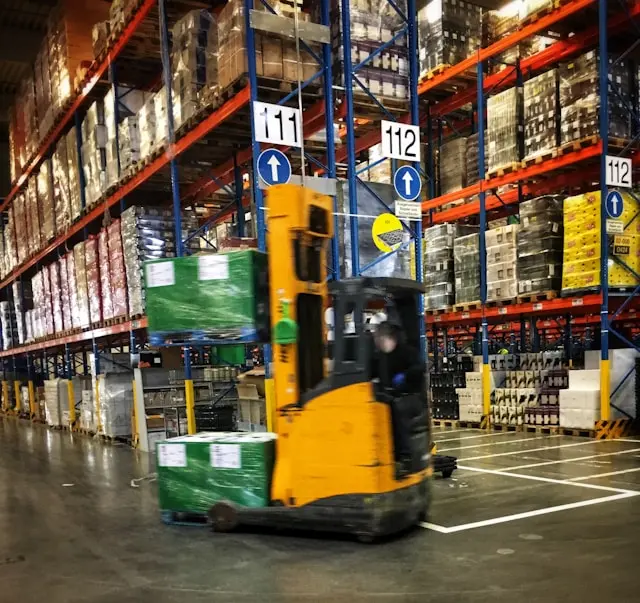
In practice, that leaves 2026 growth road-dependent. The consequence is not abstract. It is a filter. Operations that require heavy inbound materials or high-volume outbound distribution face a hard ceiling. Operations that handle high-value, low-weight goods, precisely the profile of e-commerce fulfilment and light electronics assembly, face no such constraint. The infrastructure is selecting the sector mix, and with it, the talent mix.
What this means for the companies already here
The R1 bottleneck does not affect all employers equally. JLR, as the anchor tenant, sets the operating rhythm that logistics providers plan around, and DHL Supply Chain's distribution operations in the city run to the same automotive-driven calendar. Smaller operators, regional distributors, and new entrants compete for the remaining road capacity. The result is a market where the largest employers absorb a disproportionate share of both infrastructure access and the talent trained to work within automotive-grade logistics standards.
The Automotive Anchor: How JLR Shapes Everything
Jaguar Land Rover Slovakia employs more than 4,800 people at its Nitra plant, according to the company's careers site, on a site designed for an annual capacity of 150,000 vehicles. The localisation of components such as seats and wheels delivered several thousand additional jobs across Slovakia's automotive supply chain, the company reported at the plant's opening. That makes the plant the single largest driver of logistics demand in the region — and the reference point for how local supply chains are run.
This dominance creates a gravitational pull on hiring across Nitra's industrial and manufacturing sector. Supplier operations cluster next to the plant: at CTPark Nitra, immediately north of the city beside the JLR site, automotive interior components supplier Samvardhana Motherson Reydel Companies expanded by 13,000 square metres of new production and warehouse space in 2019–20, on top of the 15,000 square metres it already occupied — a footprint now running to roughly 28,000 square metres. Employers in this ecosystem hire to OEM process vocabulary. VDA 6.3 audit competence, just-in-sequence management, and sequenced line feed operations are not niche skills here. They are baseline requirements. The region's talent pool has been shaped by a single OEM's operating model.
The wage benchmark problem
JLR's presence set a local wage benchmark for semi-skilled industrial work that general logistics operators struggle to match. Slovakia's average nominal monthly wage reached €1,524 in 2024, according to the Statistical Office of the Slovak Republic, and automotive-grade employers in Nitra pay above regional logistics averages to hold their workforces — the precise differentials are the benchmarks KiTalent works from rather than a published survey.
For third-party logistics providers, this creates a recruitment challenge that compensation alone cannot resolve. DHL Supply Chain, which runs distribution centres in Nitra and recruits warehouse, transport and administrative staff there continuously, relies on the automotive-trained workforce for quality standards, yet cannot match an OEM's total compensation package built around shift premiums and manufacturing benefits.
The result is a two-tier labour market within a single geography. The same city produces both talent scarcity for 3PLs unable to match OEM wages and a periodic talent surplus when automotive contractors face cyclical production adjustments. But movement between the two tiers is not fluid. Contract structures, benefit packages, and shift patterns differ enough that a worker trained in JLR's supplier park does not transfer seamlessly into a 3PL role, even when the technical skills overlap.
Land Without Roads: Nitra's Growth Paradox
Nitra's industrial land market is expanding at its edges. At West Park Nitra, a 60-hectare industrial and logistics park by Lužianky on the city's western edge, investor HAGARD:HAL is building a distribution centre and office space in two phases, with new investment reported into 2025. North of the city, the supplier park beside the JLR plant keeps the established demand base in place. The growth is real — and all of it lands on the same road network.
On paper, this is a market with room to grow. In practice, the growth is constrained by the same infrastructure that made the existing stock viable. Every additional square metre of warehouse space generates additional vehicle movements on the R1. Every new facility on the city's periphery sits further from public transport links, making labour access harder for the operative workforce that cannot afford private vehicles.
This is the original analytical tension this article is built around: Nitra's logistics sector did not hit a demand ceiling. It hit an infrastructure ceiling. Capital can still move into the region. Warehouses can still be built. But the operational feasibility of running those warehouses at the service levels that automotive and e-commerce clients require is declining with every percentage point of road capacity consumed. The firms that arrived first, secured the best locations, and locked in the best talent are pulling further ahead. Latecomers face worse road access, worse labour access, and the same premium wage expectations set by JLR.
Investment flowed faster than infrastructure could follow. The talent market now reflects the same asymmetry.
Where the Talent Gaps Are Deepest
Nitra's labour market is tight by any national measure. Slovakia's registered unemployment fell to 5.88 percent in October 2024, its lowest level since records began in 1993, and regional labour-market data for the Nitra region counted 17,839 open vacancies against 15,150 registered jobseekers in April 2026. These aggregate numbers confirm a market where vacancies outnumber jobseekers. The role-level picture is where the pressure is most acute.
Automotive sequencing specialists
Warehouse operations managers with automotive sequencing experience, specifically those holding VDA 6.3 process knowledge and just-in-sequence management capability, are scarce in this market, and in KiTalent's experience searches for them run for months rather than weeks. The gap is not volume. It is specificity. The automotive logistics standards that JLR's ecosystem demands are not transferable from general warehousing without substantial retraining.
This pattern is typical across the major 3PLs' hiring cycles in the region. A search for a cross-dock or fleet manager at any of the large operators typically triggers a poaching cycle, with candidates commanding 15% to 20% salary premiums to switch employers in KiTalent's benchmark experience, a pattern consistent with the dynamics that make counteroffers so damaging in tight specialist markets.
Automation maintenance and robotics
PLC programmers with logistics automation experience represent another acute gap. As warehouse automation and AI-driven logistics systems expand across Nitra's Class A facilities, the demand for engineers who can maintain autonomous mobile robot fleets, integrate warehouse management systems like SAP EWM and Manhattan Associates, and troubleshoot PLC-controlled sorting lines is outstripping the local education pipeline.
Constantine the Philosopher University in Nitra provides a tertiary education base, but its economics and management curricula remain generalist; the supply-chain specialisations this market now demands are concentrated closer to Bratislava's University of Economics. In KiTalent's market work, the gap between what the local pipeline produces and what employers require is widening, not closing.
The bilingual premium
A less visible but equally material constraint is language. Nitra's 3PL operators serve international client companies, and client-facing operations roles requiring Slovak combined with English or German fluency carry a visible salary premium in this market. The bilingual operations manager tier is small, largely passive, and nearly impossible to fill through conventional job advertising.
Compensation: What Nitra Pays and Why It Loses
Understanding the compensation structure in Nitra requires understanding who the candidate is competing against. It is not another employer in Nitra. It is Bratislava, Trnava, Győr, and Brno.
Nitra-specific pay data is limited; the bands that follow are the benchmarks KiTalent works from in this market rather than a measured survey. At the senior specialist and manager level, a logistics operations manager with five to ten years of experience in automotive or e-commerce earns €48,000 to €62,000 gross annually in Nitra. A warehouse manager overseeing a Class A facility with 50-plus full-time employees earns €42,000 to €55,000. A regional transport or fleet manager earns €38,000 to €50,000.
At the executive level, the range broadens considerably. An operations director with multi-site responsibility commanding 200-plus employees earns €85,000 to €110,000, with JLR-scale automotive operations pushing toward €130,000 inclusive of performance bonuses. A VP of supply chain covering end-to-end manufacturing and logistics integration earns €95,000 to €140,000. A managing director of a 3PL country operation or major facility earns €110,000 to €160,000, typically including a car allowance and short-term incentives.
The Bratislava drain
Bratislava sits an hour or so west by road and pays materially more for senior supply chain professionals — 25% to 35% at comparable seniority in KiTalent's benchmark. The capital also offers hybrid and remote flexibility more readily, given its higher white-collar professional density. For a supply chain director weighing two offers, the calculation involves far more than base salary. Career trajectory, international exposure, and working arrangement flexibility all favour Bratislava.
The Győr and Brno pull
Győr, Hungary, to the south, presents a different competitive dynamic. Audi's manufacturing complex and its logistics network draw Slovak-Hungarian bilingual talent, and Hungary's flat 15% personal income tax, against Slovakia's progressive 19-to-25% structure (with higher top brackets from 2026), means senior managers in Győr can net meaningfully more than Nitra equivalents. Brno, in the Czech Republic to the north-west, offers higher absolute salaries and a stronger technology-logistics startup ecosystem. It attracts Nitra's younger automation engineers and supply chain analysts seeking career mobility.
Nitra is not losing a generic competition for talent. It is losing specific competitions at specific seniority levels, to specific cities, for specific and quantifiable reasons. Understanding these cross-border dynamics is a prerequisite for any organisation trying to hire leadership talent in this region.
The Regulatory Pressure Layer
The infrastructure and talent challenges do not exist in isolation. Three regulatory forces are compounding the operational difficulty.
CSRD and Scope 3 emissions reporting
The EU's Corporate Sustainability Reporting Directive reached the largest companies first: reports published from 2025 covering financial year 2024, including value-chain (Scope 3) emissions. Directive (EU) 2025/794 then postponed the next reporting wave by two years, and the 2025 Omnibus agreement narrows the regime toward companies with more than 1,000 employees. For Nitra-based operators reliant on road transport because rail uptake is limited, sustainability reporting of this kind cannot be addressed through fleet electrification alone. The direction of travel penalises the very road dependency that Nitra's infrastructure imposes on its tenants.
Labour law and overtime flexibility
Slovakia's Labour Code, in the version in force since January 2024, caps annual overtime at 400 hours — of which an employer may order at most 150, the remainder requiring the employee's written consent. That flexibility matters for peak-season warehousing. It also lands exactly where the market is tightest: the same weeks when every distribution employer in the region is competing for the same operative workforce.
Zoning and development constraints
Development pressure keeps pushing new logistics space to the city's edges — supplier land north of the JLR plant, parkland by Lužianky — locations with materially worse public transport connections. For employers trying to recruit operative staff who rely on buses or shared transport, geography adds another layer of friction. Amazon's fulfilment centre near Sered, opened in 2017 as a 64,000-square-metre operation with more than 1,000 permanent jobs, competes for exactly this workforce within commuting distance of Nitra.
Why the Standard Search Playbook Fails in This Market
The picture at senior level is consistent across KiTalent's market work in Nitra: supply chain directors and VP-level operations leaders operate in a market with effectively no unemployment at their seniority level. They are employed, stable, and not applying to adverts.
Automation and robotics engineers show the same pattern. The engineers who keep automated facilities running are embedded in their employers and are approached directly — not advertised to — when they move.
A firm posting a VP of supply chain role on a job board in Nitra is not reaching a smaller pool. It is reaching the wrong pool entirely. The candidates with VDA 6.3 certification, SAP EWM fluency, bilingual capability, and multi-site leadership experience are employed. They are not searching. They are not on portals. Their availability is a function of whether someone identifies them, approaches them, and presents a proposition specific enough to make them consider moving.
This is where the distinction between conventional recruitment and direct executive search becomes operationally decisive. The firms that treat a VP-level logistics search in Nitra the same way they treat a mid-level warehouse coordinator search will spend four months reaching candidates who were never going to apply. The firms that begin with systematic talent mapping of the supplier network around the plant, the 3PL operators, and the competitor cities drawing from the same pool will build a shortlist from candidates who exist but are invisible to any conventional process.
The cost of the slow approach is not just time. In a market where a cross-dock manager search triggers a 15% to 20% poaching premium, and where an operations director at JLR-scale commands up to €130,000, a failed search at this level carries direct financial consequences that compound with every month the role sits empty.
What Organisations Hiring in Nitra Need to Do Differently
The market conditions described in this article are not temporary. The R1's missing Bratislava link is a post-2040 project in the national road plan. The rail question at Lužianky remains open. National projections show Slovakia's working-age population declining over the coming decades. None of this corrects itself within a hiring-plan horizon.
Organisations operating in or entering this market face a set of conditions that require a different approach to building and maintaining a leadership talent pipeline.
First, compensation benchmarking must account for cross-border competition. A salary set against Nitra averages alone ignores the Bratislava premium, the Győr tax advantage, and the Brno career trajectory appeal. Every offer to a senior logistics professional in this market is implicitly competing with at least two other geographies.
Second, the search method must match the candidate behaviour. For operative and administrative roles, job boards and staffing agencies function adequately. For operations directors, VP supply chain, automation engineers, and bilingual operations managers, direct headhunting is not a preference but a necessity. The passive candidate ratios in these categories leave no other viable path.
Third, speed matters more here than in markets with deeper talent pools. A months-long vacancy for a sequencing specialist is not just a staffing gap. It is a production risk for the OEM client, a service level failure for the 3PL, and an open invitation for a competitor to approach the same candidate with a better offer.
For organisations competing for operations directors, supply chain VPs, or automation leadership in Nitra's logistics and industrial sector, where the candidates you need are employed, bilingual, and invisible to conventional search, speak with our executive search team about how we approach this market.
Frequently Asked Questions
What is the average salary for a logistics operations director in Nitra, Slovakia?
An operations director with multi-site responsibility overseeing 200 or more employees earns €85,000 to €110,000 gross annually in Nitra. Roles at JLR-scale automotive operations command up to €130,000 including performance bonuses. VP supply chain positions covering end-to-end manufacturing and logistics integration range from €95,000 to €140,000, with material variation between automotive OEM and 3PL employer types. These figures reflect the compensation benchmarks KiTalent works from rather than a measured survey. Benchmarking against Bratislava, which pays 25% to 35% more for comparable roles in our benchmark experience, is essential when structuring an offer for senior talent in this region.
Why is it so difficult to hire warehouse automation engineers in Nitra?
Nitra's automated facilities require PLC programmers and AMR fleet managers with logistics-specific experience, and searches for these profiles run for months rather than weeks. The local university pipeline produces generalist economics and management graduates while the market demands supply-chain specialisations concentrated closer to Bratislava. The candidates are employed and are not actively searching; in KiTalent's market work they are reached through direct candidate identification rather than advertising. Competing markets in Brno and Bratislava offer higher salaries and stronger technology ecosystems, drawing younger engineers away from Nitra.
How does the R1 expressway congestion affect logistics operations in Nitra?
Nitra is linked to Bratislava by the D1 motorway to Trnava and the R1 expressway onward — about 90 kilometres, typically an hour or more by road. Census counting put the southern Nitra bypass at roughly 18,000 to 18,500 vehicles a day as far back as 2015, and the concessionaire's 2023 reporting shows August peaks above 25,000 vehicles a day. The R1's planned direct link toward Bratislava is a post-2040 project, and rail freight at the city's Lužianky terminal remains an open question. For time-critical automotive sequencing and just-in-time delivery, this congestion favours high-value, low-weight operations like e-commerce fulfilment over heavy freight profiles.
Which cities compete with Nitra for logistics talent in Central Europe?
Bratislava, an hour or so west, draws senior supply chain executives with salaries 25% to 35% higher in KiTalent's benchmark and greater hybrid work flexibility. Trnava competes directly for automotive logistics specialists through the Stellantis plant ecosystem. Győr, Hungary, offers competitive net salaries due to a flat 15% income tax versus Slovakia's progressive rates. Brno in the Czech Republic attracts younger automation engineers with higher absolute pay and a stronger technology-logistics startup environment. KiTalent's cross-border executive search capability addresses this multi-market competition by mapping candidates across all four competitor geographies simultaneously.
What types of logistics roles in Nitra require executive search rather than job advertising?
Supply chain directors, VP operations, automation and robotics engineers, and bilingual operations managers all operate as predominantly passive candidate markets in Nitra. In KiTalent's market work, advertised vacancies barely reach these tiers. General warehouse operatives and administrative coordinators remain accessible through standard job advertising, but any role requiring automotive logistics standards, automation expertise, or dual-language capability at the manager level or above will require direct headhunting to reach viable candidates.
What is the outlook for new logistics development in the Nitra region?
At CTPark Nitra, north of the city beside the JLR plant, automotive interior components supplier Samvardhana Motherson Reydel Companies expanded by 13,000 square metres in 2019–20 and now occupies roughly 28,000 square metres. At West Park Nitra by Lužianky, investor HAGARD:HAL is building a distribution centre and office space in two phases, with new investment reported into 2025. National industrial vacancy stood around 4.3 percent at the end of 2024, according to Cushman & Wakefield's market reporting. Growth continues — on the same road corridor, at the city's edges, where public transport access is weakest.
Related Links
- Nitra
- Slovakia
- Real Estate Construction
- Košice IT Hiring: Define the Mandate Before the Search
- Košice Automotive Supplier Hiring: What the Verified Record Shows
- Bratislava Automotive EV Talent: What the Verified Record Shows
- Milan Professional Services: Define the Practice and Delivery Mandate
Related Market Reads
Articles tied to the same hiring geography or market context.
Košice IT Hiring: Define the Mandate Before the Search
What the verified public record establishes about Košice - Deutsche Telekom IT Solutions' 4,545-employee base, the 2007-founded IT Valley association, the Technical University's 16,015 students - and where a mandate needs contacted, assessed and validated candidates.
Košice Automotive Supplier Hiring: What the Verified Record Shows
What the verified public record establishes about the Košice-Kechnec supplier corridor - Magna's powertrain plant and 2022-opened electronics facility, Marelli's two divisions with 1,400 employees, the 2024 Yazaki winding-down in Michalovce - and where an automotive mandate needs contacted, assessed and validated candidates.
Bratislava Automotive EV Talent: What the Verified Record Shows
The verified public record for Bratislava's automotive economy - the 1971-founded plant that became Volkswagen Slovakia, specialist producer of the group's large SUVs - and what an EV-transition mandate there must actually cover.
Nearby Market Signals
Lateral reads from adjacent cities, sectors, or themes.
Milan Professional Services: Define the Practice and Delivery Mandate
How should a Milan professional-services firm define a mandate across regulated assurance, advisory, legal practice, data delivery and partnership economics?
Hangzhou's E-Commerce Talent Market Has Split in Two: Why the Roles That Were Cut Are Not the Roles That Need Filling
Alibaba's "1+6+N" restructuring eliminated or relocated more than 20,000 positions across China between 2023 and 2024. The headlines said Hangzhou's tech sector was contracting...
Wiltz Renewable Energy Talent: What the Verified Record Shows
The verified public record for Wiltz - a 764-documented Ardennes town of 6,145 on the river of the same name, battle-scarred and castle-crowned - and what a renewable-energy mandate in Luxembourg's north must actually cover.
From the Archive
Evergreen background reading that still sharpens current hiring decisions.
Žilina's Precision Engineering Sector Is Investing Millions in Machines Because It Cannot Find the People to Run Them
The Žilina region absorbed €142 million in industrial machinery investment in the first three quarters of 2024 alone, a 23% increase over the previous year. Sixty percent of...
Žilina Logistics Hiring: An Honest Evidence Review
What official transport statistics actually show about the market a Kia-anchored logistics mandate operates in, what they cannot show, and how to scope the hire.
Žilina Automotive Hiring: Define the Mandate Before the Search
What the verified public record establishes about Kia's Žilina anchor plant, its dated production record, and where an EV-transition mandate needs contacted, assessed and validated candidates.