
The buyer question
We need heat-network decarbonisation, commissioning or EU-fund project leadership in Ostrava; what does the verified record say about this market and how should a mandate here be structured?
What the public record shows
The verified public record for Ostrava is anchored by the city's Wikipedia article. Ostrava is the capital of the Moravian-Silesian Region with about 281,000 inhabitants, lying near the Polish border at the confluences of the Oder, Opava, Ostravice and Lučina rivers; it is the third-largest Czech city by population and area and the largest city of historical Czech Silesia. Its wider conurbation - including Bohumín, Havířov, Karviná, Orlová, Petřvald and Rychvald - holds about 500,000 people, the largest urban area in the country apart from Prague.
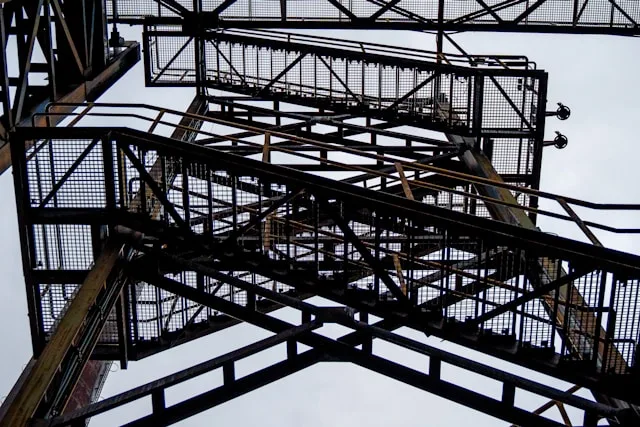
The transition premise is documented as historical fact rather than promise. Ostrava grew at the heart of a major coalfield into an industrial engine of the Austrian empire, and during the twentieth century it was known as the 'steel heart' of Czechoslovakia as a coal-mining and metallurgical centre; after 1989 its industries were thoroughly restructured and the last coal was mined in the city in 1994. The remnants of that past stand in the Lower Vítkovice area - a former coal-mining, coke-production and ironworks complex in the city centre retaining its historic industrial architecture, which has applied for inclusion in the UNESCO World Heritage List.
What the verified record does not contain is any Just Transition Fund or Modernisation Fund allocation, contracting-rate percentages, project-delay durations, heat-network investment totals or vacancy anecdotes. The structure - a half-million-person post-coal conurbation with documented restructuring completed and heritage industrial assets at its centre - is verifiable; the money-versus-people arithmetic must be argued from structure, not quoted.
What changes in this market
An Ostrava energy-transition mandate is a post-coal-conurbation mandate in the country's second urban area. The city's energy economy descends from the coalfield-and-steel complex that made it Czechoslovakia's industrial heart, and its modern problem - heat networks built for industrial demand serving a restructured, smaller industrial base - is the direct inheritance of a transition that began in 1989 and closed its last mine in 1994. Candidates prove themselves through district-heating and industrial-energy engineering at utilities scale, through EU-fund compliance management, and through commissioning discipline on conversion projects; the labour market's reference scales are Prague and Brno for engineering careers and Kraków-and-Katowice, across the Polish border, for energy specialists - the same Silesian industrial culture on both sides. Retention design must assume those pulls from the start.
KiTalent's mandate analysis
- Heat-network decarbonisation leadership: mandates should screen for district-heating conversion records - biomass, waste-heat and heat-pump integration - rather than power-generation-only careers.
- Commissioning and specialist engineering: conversion projects live on commissioning discipline; candidates need demonstrated handover records on EU-co-funded energy projects specifically.
- EU-fund programme management: compliance-and-reporting fluency for structural-fund instruments is a distinct skill from project management generally; screening should test it directly.
- Cross-border benchmarking: with the Polish border at the city's edge and the Czech capital far away, senior offers must be stress-tested against both Prague-Brno and Katowice-Kraków scales.
- Heritage-site interface: the Vítkovice complex's UNESCO candidacy means some energy-and-industrial projects interface with protected heritage; leaders need stakeholder patience for that regime.
Where the public record stops
Claims beyond the dated public record are not repeated on this page. The verified record above - the 281,000-inhabitant city in a 500,000-person conurbation, the coal-to-1994 history, the 'steel heart' standing and the Vítkovice UNESCO candidacy - supports the structural argument without invented allocation, contracting, delay or investment statistics.
Sources
Related KiTalent research
- The Market Map Is Not the Shortlist: helps a buyer decide whether an Ostrava mandate is really a heat-network, commissioning-engineering or EU-programme-management search, and how to price it against Czech and Polish reference markets
- How to Assess a Leader Beyond Competencies: shows how to gather decisional evidence for this mandate - the research method behind testing conversion-project records, fund-compliance fluency, cross-border offer design and heritage-interface patience - with candidate evidence assessed conversation by conversation