The buyer question
We need hotel, resort or destination leadership in Pula; what does the verified record say about this market and how should a mandate here be structured?
What the public record shows
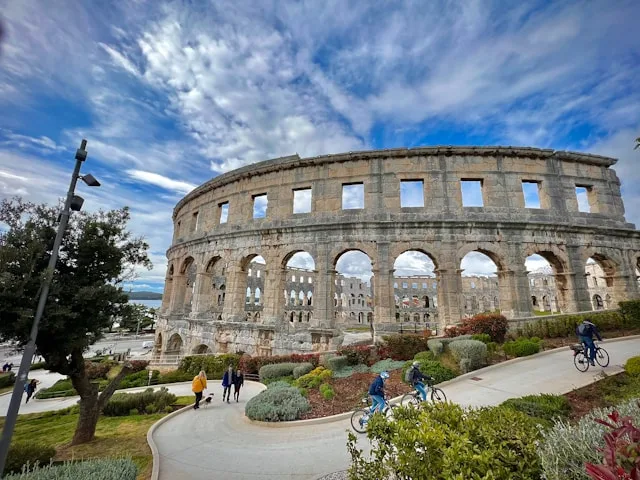
The verified public record for Pula is anchored by the city's Wikipedia article. Pula - Pola in its Italian name - is the largest city of Istria County and Croatia's seventh-largest, at the southern tip of the Istrian peninsula with 52,220 inhabitants at the 2021 census. It is known for its multitude of ancient Roman buildings, most famously the Pula Arena, one of the best-preserved Roman amphitheatres, and it carries a long tradition of wine making, fishing, shipbuilding and tourism.
The historical layers that shape the visitor economy are documented: the town was elevated to colonial rank under Julius Caesar between 46 and 45 BC, reaching a zenith of about 30,000 inhabitants as a significant Roman port; it was sacked repeatedly in the Venetian-Genoese wars; and under Austria-Hungary its port became the main base of the Empire's dreadnought fleet in the First World War, with the Brijuni islands the Habsburg summer resort before their later life as Tito's summer residence and a national park.
The tourism record names the assets rather than the arithmetic: the surrounding countryside and turquoise Adriatic waters make Pula a popular summer destination; the pearl nearby is Brijuni National Park; Roman villas and temples lie buried among farm fields and along the shoreline of dozens of surrounding fishing and farming villages; the coastal waters offer beaches, wreck dives to Roman galleys and First World War warships, cliff diving and sailing; and Pula is the end point of the EuroVelo 9 cycle route from Gdańsk. What the record does not contain is any investment total, accommodation-unit counts, nightly rates, time-to-fill statistics, bed-night shares or cruise-terminal budgets - the upmarket-versus-staffing arithmetic must be argued from structure, not quoted.
What changes in this market
A Pula hospitality mandate is a heritage-arena destination mandate at the top of a peninsula. The demand engine combines the Roman-amphitheatre heritage with a documented four-tradition economy - wine, fishing, shipbuilding, tourism - and a season that peaks on turquoise-water summer months; the competitive set runs up the Istrian coast through Rovinj toward Trieste, with Slovenian and Italian employers within a cross-border commute. Candidates prove themselves through seasonal-luxury operations (upmarket positioning with compressed seasonality), multilingual guest handling in an Italian-Croatian bilingual environment, and heritage-site-adjacent event management the Arena imposes; offers compete with the whole Adriatic-coast wage corridor, so retention design must assume Rovinj-and-beyond mobility inside one Istrian labour market.
KiTalent's mandate analysis
- Hotel and resort leadership: mandates should screen for season-compressed upmarket records - shoulder-season cost discipline with peak-quality delivery - rather than steady-city careers.
- Destination-and-heritage management: the Arena and the buried-Roman-villas hinterland demand leaders who can run visitor flows around protected fabric; heritage-event references matter.
- Wine-and-food experience roles: the documented wine tradition supports gastronomy-led positioning; candidates need producer-network and festival experience, not only hotel F&B.
- Bilingual-and-multilingual screening: the Italian-Croatian inheritance plus international guests makes language range a first-order filter for every client-facing leadership role.
- Adriatic-corridor benchmarking: offers should be tested against the Istrian-and-Slovenian coastal corridor's scales - a benchmark to verify, not a floor the record proves; the retention case rests on the peninsula's living quality rather than pay alone.
Where the public record stops
Claims beyond the dated public record are not repeated on this page. The verified record above - the 52,220 population (2021), the Pula Arena and Roman heritage, the Caesar-era colonial rank with its 30,000-inhabitant zenith, the Austro-Hungarian dreadnought-base era with Brijuni, and the documented tourism assets from wreck dives to EuroVelo 9 - supports the structural argument without invented investment, rate, fill or bed-night statistics.
Sources
Related KiTalent research
- The Market Map Is Not the Shortlist: helps a buyer decide whether a Pula mandate is really a resort-operations, heritage-destination or gastronomy-experience search, and how to price it along the Adriatic corridor
- How to Assess a Leader Beyond Competencies: shows how to gather decisional evidence for this mandate - the research method behind testing season-compressed upmarket records, heritage-event management, producer-network experience and bilingual verification - with candidate evidence assessed conversation by conversation