The buyer question
Can a Reggio Emilia agri-food mandate - dairy production, DOP compliance or export operations - be filled in this PDO province, and what does the public record actually prove?
What the public record shows
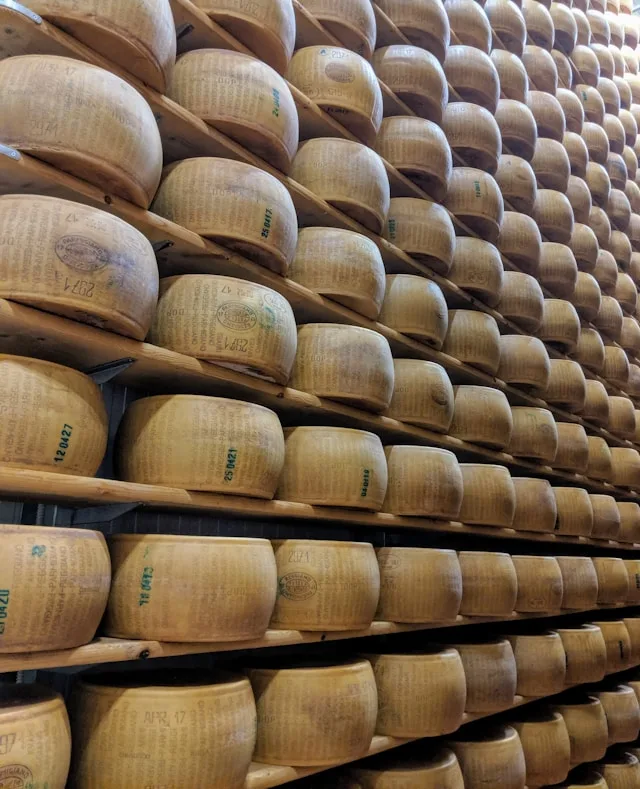
The verified public record for this market is anchored by the Wikipedia articles on Parmigiano-Reggiano and Reggio Emilia. Parmigiano Reggiano is named after two of the areas which produce it - the Italian provinces of Parma and Reggio Emilia, with production also in part of Bologna west of the Reno and in Modena - and the names Parmigiano Reggiano and Parmesan are protected designations of origin (PDO) under Italian and European law for cheeses produced in these provinces. The city record sizes the base: Reggio Emilia's municipality counted 172,518 residents in 2025.
Read alongside the protected-designation records on this site - the Treviso Prosecco DOCG analysis - Reggio Emilia is the hard-cheese counterpart: an export-oriented PDO economy whose production is legally locked to defined provinces, recruiting dairy, compliance and export professionals inside a territorially bounded labour system the record does not size.
Neither the PDO record nor the population census measures what a hiring leader needs to know: whether dairy-production technologists, DOP-compliance specialists or export managers are available at a given seniority in a given season, or what any co-operative's revenues are. That requires a search with contacted, assessed and validated candidates.
What changes in this market
Employers in Reggio Emilia's agri-food sector prove themselves differently from the Treviso Prosecco hills and from Parma's paired province: a PDO cheese economy whose production boundary the law fixes across provinces recruits dairy and compliance professionals from a regional pool shared with the Parma side of the designation, co-operative structures dominate the value chain so mandates serve member organisations rather than single corporate employers, and export demand concentrates quality-control and compliance roles at the designation's legal boundary. Each function, phase and stage of a mandate here - dairy production, DOP compliance, export operations - proves itself against that PDO-boundary structure rather than against a national average.
KiTalent's mandate analysis
- Frame the mandate by chain position before the search: dairy production, DOP compliance and export operations certify differently and draw on different segments of the regional pool.
- Treat the PDO boundary as the market definition: the law fixes where production can occur - a mandate's scale is territory-bounded and its competitor set is the designation's other provinces.
- Recruit across the designation deliberately: Parma, Bologna-west and Modena share the same PDO professions - define the geography at mandate start.
- Ask any search partner for contacted, assessed and validated candidates per specialism before accepting revenue statistics as evidence of workforce availability.
Where the public record stops
No located primary public record verifies co-operative revenue totals, export-growth percentages, price-climb projections or vacancy counts. What the designation and city records can prove stands above, with their dates attached.
Sources
- Wikipedia - Parmigiano-Reggiano (designation record)
- Wikipedia - Parmigiano-Reggiano (PDO record)
- Wikipedia - Reggio Emilia (city record)
Related KiTalent research
- The Market Map Is Not the Shortlist: helps a buyer choose between testing the Reggio Emilia agri-food market and commissioning a search with contacted, assessed and validated candidates
- How to Assess a Leader Beyond Competencies: shows how to gather decisional evidence for this mandate - the research method behind testing chain position, PDO-boundary definition and cross-province recruiting - with candidate evidence assessed conversation by conversation