The Bifurcation That Defines This Market
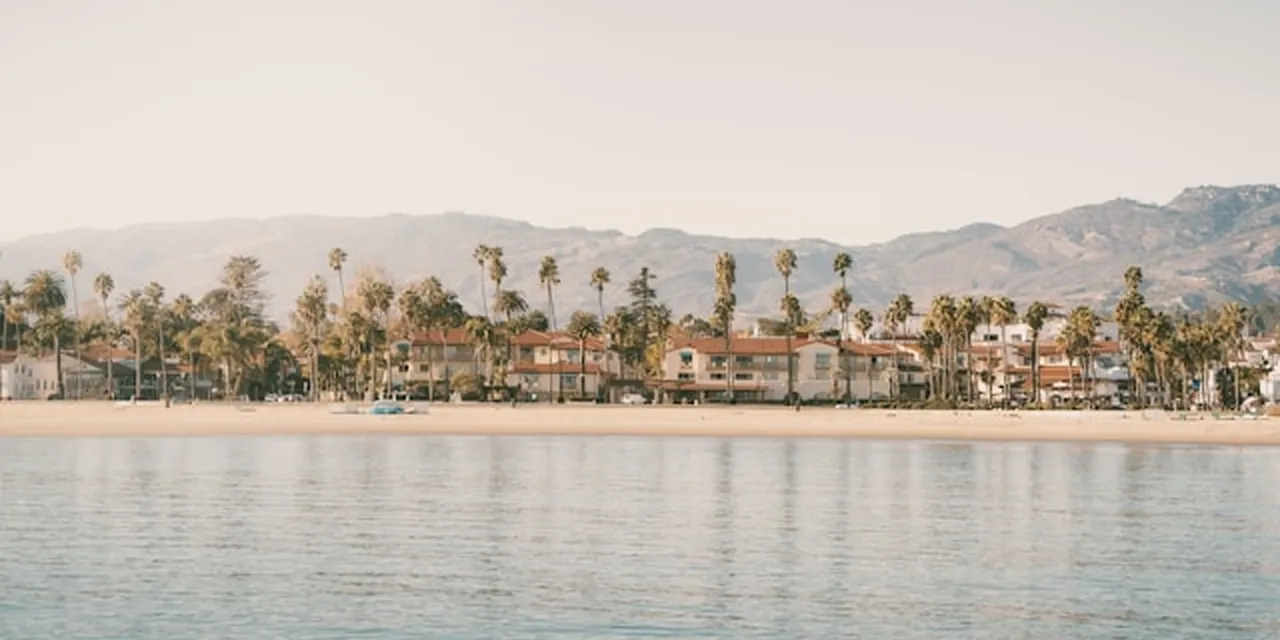
The fracture is physical before it is financial. Santa Barbara Harbor operates four marinas with 1,143 slips, and 42 of them are exclusively designated for commercial fishing. By the city's own certified coastal plan, the slips are typically fully occupied and the Waterfront Department administers waiting lists. The fishing fleet's growth ends where the breakwater does. The research and technology economy grows anyway, because its raw material — graduates, patents, venture capital — does not occupy berths.
What follows is a structured analysis of how this bifurcation affects every senior hiring decision in Santa Barbara's maritime and ocean technology market. It maps the forces driving the split, the specific roles where shortages are most acute, the compensation dynamics shaping candidate behavior, and what organizations on both sides of the divide need to understand before they make their next leadership hire.
The most important dynamic in Santa Barbara's maritime economy is not a shortage. It is a structural split between two sectors that look like one on paper but behave entirely differently in practice.
On one side: ocean-technology and research employers clustered around Goleta and the UCSB corridor — autonomous-underwater-vehicle and marine-instrument developers, environmental consultancies and research groups that grew out of UCSB's Marine Science Institute, feeding a startup pipeline the city and the university support jointly through the Goleta Entrepreneurial Magnet. These employers recruit engineers and data scientists in the same national market as software companies, and the profiles they compete for overlap with it.
On the other side: the commercial fishing fleet, the boatyards, marine chandleries and harbor support services that operate out of Santa Barbara Harbor under the city's Waterfront Department. These are thin-margin businesses facing rising regulatory compliance costs, drawing on a workforce that is visibly aging — statewide reporting on California's commercial fleet in 2026 put the average captain's age at 48, with many operators nearing retirement, and the trades that keep boats working are aging with them.
The split matters for hiring because the two sides barely exchange workers. Capital, talent and infrastructure flow to firms that hire engineers; they do not flow to the boatyards, processors and fishing operations that still form the physical foundation of the harbor economy. Hiring leaders in either sector must first understand which side of this divide a role sits on, because the sourcing strategy, compensation structure and candidate psychology differ completely.
The Harbor's Physical Ceiling
The city's certified Local Coastal Program records the physical facts plainly: the harbor contains four marinas with 1,143 slips, of which 42 are exclusively designated for commercial fishing, plus 44 side and end ties. Due to high demand, the harbor's slips are typically fully occupied, and the Waterfront Department administers waiting lists for new permittees — a system so strained that in 2026 the city replaced its decades-old closed waitlist with an annual lottery.
What the harbor is building next reinforces the ceiling rather than lifting it. The waterfront's capital agenda is adaptation and maintenance — a 30-year waterfront adaptation plan now being drafted, including analysis of whether, and at what cost, the breakwater could be raised, alongside the federal dredging program that keeps the entrance navigable — not new berths. For a fishing fleet whose dedicated slips number 42, there is no physical room to grow out of a workforce problem: even a boatyard that found ten more marine technicians would have nowhere to put the additional vessel throughput they enable.
Three Shortages That Cannot Be Solved by the Same Method
The sector's talent shortages fall into three categories. Each requires a fundamentally different sourcing approach, and conflating them is the most common strategic error hiring leaders in this market make.
Marine Electronics Technicians: A Small Pool Hired Through Networks
Marine electronics technicians — the ABYC- and NMEA-standards specialists who keep integrated bridge systems, navigation electronics and communications working — are needed on both sides of the divide: boatyards, research operators and well-equipped fishing vessels all draw on the same people. The regional training base is narrow. Santa Barbara City College's Marine Diving Technologies program, established in 1968, anchors the local marine-trades pipeline with an Associate in Science degree and a Certificate of Achievement, but electronics specialization is largely built through industry certification and on-the-job depth rather than a local degree track.
This is a segment where the search method matters as much as the money. Marine trades of this kind are network-hired: candidates move on dealer connections, trade-association ties and word of mouth, and the strongest technicians are rarely on the open market. A direct approach that identifies passive candidates through trade networks and alumni connections will consistently outperform a posting-and-waiting strategy.
Ocean Robotics Engineers: Passive, Employed, and Not Looking
The second shortage sits entirely on the ocean-tech side. Engineers who can build and operate autonomous underwater vehicles, marine sensors and telemetry systems are employed, well paid and rarely looking; the local cluster competes for them against national software employers, not only against each other. When one Goleta firm hires from another, the region's total supply does not increase — it redistributes. Every successful hire in this segment creates a vacancy somewhere else in the same corridor.
The supply sources are visible: UCSB's College of Engineering and its Marine Science Institute, which hosts the National Science Foundation's Santa Barbara Coastal Long-Term Ecological Research program. But the university graduates engineers into a national labor market in which general software compensation outbids most ocean-technology employers, and Santa Barbara-trained tradespeople are recruited by marine industries up and down the coast. The only durable paths to supply growth are recruiting from outside the region or building from within. Both take years.
Commercial Fishing Deckhands: A Pipeline That Struggles to Reproduce Itself
The third shortage is the most existential. California's commercial fleet is visibly aging — the average captain statewide is 48, with succession a live concern across the industry — and Santa Barbara's fleet operates inside a hard ceiling of dedicated berths, around Channel Islands marine protected areas that concentrate effort on the remaining open grounds, and ahead of engine-repower obligations that fall due late this decade. Each force raises the cost of entry or the cost of staying.
Unlike the other two shortages, this is an active candidate market with churn. The problem is not that candidates are passive; it is that the economics of crewing a small-boat West Coast fishery no longer compete reliably with the alternatives available to the same people ashore. For hiring leaders in this sector the strategic question is whether guaranteed-wage and year-round-hybrid employment models can rebuild a crew pipeline faster than retirements and attrition remove it.
Compensation in a Divided Market
Compensation across this market has to be read structurally, because the two sides pay on different logics. Harbor-side employers — fishing operations, boatyards, marine services — pay wages and salaries calibrated to thin operating margins and seasonal revenue. Ocean-technology employers pay technology-market packages: base salaries benchmarked against engineering labor markets, plus equity where venture backing exists. A senior technical leader on the ocean-tech side will typically out-earn a comparable harbor-side leader by a wide margin, and that gap follows the divide through every level of the two org charts.
For any organization building a package for a senior maritime or ocean-technology role in Santa Barbara, the relevant benchmark is not the local average on either side. It is the competing offer — from San Diego's port-and-research economy, from Monterey's marine-institution cluster, or from a remote-friendly technology employer — that the same candidate is also considering. Packages that ignore the competing benchmark lose candidates who never counter.
What the Premium Buys and What It Does Not
Santa Barbara's retention advantage is real but narrow. The coast and the quality of life retain early-career marine technologists and researchers more effectively than money alone could; at senior levels, where candidates price total compensation precisely and weigh equity, relocation friction falls quickly. Employers who assume lifestyle will hold a senior hire against a materially stronger competing offer are often the ones who lose the hire within the first year.
Regulatory Pressure Is Rewriting the Workforce Equation
Two regulatory forces are reshaping workforce requirements across both sides of Santa Barbara's maritime divide, and neither has finished working its way through the system.
CARB Compliance and the Repower Deadline
The California Air Resources Board's Commercial Harbor Craft Regulation, amended in 2022 with effect from January 1, 2023, requires most harbor craft to repower to Tier 3 or Tier 4 engines fitted with CARB-verified diesel particulate filters, on in-use deadlines that run from the end of 2023 through 2031 and vary by vessel type and engine model year. Commercial fishing vessels are required to repower to Tier 3 by 2030 through 2032 unless they were already Tier 2 by January 1, 2023. Operators raised cost and feasibility objections throughout the regulatory record, and the rule's enforcement posture is still moving: after the U.S. EPA acted on most elements of the regulation in January 2025, CARB withdrew and is not enforcing two in-use elements.
The workforce implication is direct whichever way enforcement settles. Vessels that cannot carry the investment leave the fishery, taking crew positions with them. Vessels that stay need technicians fluent in emissions-control systems, engine electronics and shore-power interfaces — not the same skills that maintained the previous generation of diesels. The regulation simultaneously shrinks the traditional workforce and changes what the remaining one must know.
Marine Protected Area Restrictions
California's statewide network of 124 marine protected areas — planning completed in 2012 as the country's first statewide, science-based network — covers roughly 16 percent of California's state waters. Around the Channel Islands off Santa Barbara, state reserves in force since 2003 and expanded into federal waters in 2007 place some of the channel's historically productive grounds, including lobster and urchin grounds, off limits or under restriction.
For workforce planning the mechanism matters more than the arithmetic: closures concentrate fishing effort, sharpen the seasonality of income, and raise the capital intensity of the boats that remain. Income instability deters new workforce entrants more effectively than any single regulatory barrier, and California's particular overlay of CARB engine rules, MPA boundaries and Magnuson-Stevens Act fisheries management is a genuine specialty. Candidates who can navigate all three are rare nationally and are not created by broadening a job description.
Why the Workforce Pipeline Cannot Keep Pace
Santa Barbara City College's Marine Diving Technologies program — established in 1968 — is the region's anchor institution for marine-trades training, awarding an Associate in Science degree and a Certificate of Achievement in marine diving. UC Santa Barbara's Marine Science Institute anchors the research side, employing researchers across the marine sciences and hosting the National Science Foundation's Santa Barbara Coastal Long-Term Ecological Research program. Between them they define the local pipeline's shape: strong on commercial diving and marine science, thin on the engineering-technician and electronics specializations the harbor's combined demand draws on.
The structural leak is graduation destination. UCSB engineering graduates enter a national labor market in which general software compensation outbids most ocean-technology employers, and SBCC-trained tradespeople are recruited by marine industries up and down the coast. For senior hiring leaders the implication is blunt: do not plan a hiring strategy around candidates who will become available through natural market turnover. The turnover this market produces does not yield enough qualified replacements. A proactive, direct approach to identifying and engaging passive candidates is not a premium option in this market. It is the baseline requirement.
What This Means for Senior Hiring in Santa Barbara's Maritime Sector
The bifurcation running through Santa Barbara's maritime economy creates two distinct hiring challenges that require two distinct strategies.
On the ocean-tech side, the challenge is a closed loop. The region's ocean-engineering talent circulates among a small set of employers and research groups; poaching redistributes it without increasing supply. Breaking the cycle means recruiting from outside the Santa Barbara-Goleta corridor — San Diego, Monterey, Seattle, or internationally — or building internal development programs that convert adjacent-skill engineers into ocean-robotics specialists. Both take time, and both require a search methodology capable of reaching candidates who are employed, satisfied and not visible on any job board.
On the traditional maritime side, the challenge is generational. An aging workforce, regulatory cost escalation, berths at a physical ceiling and a training pipeline measured in small cohorts combine to create a sector that cannot replace itself organically. Senior leadership hires in this segment — fleet managers, marine superintendents, operations directors — need to be people who can manage contraction intelligently while positioning their organizations for the modernized, CARB-compliant, technology-integrated harbor that Santa Barbara is becoming.
Both sides share one common factor. The candidates who matter most are not looking. Marine electronics technicians are hired through trade networks. Ocean robotics engineers are passive and employed. Licensed USCG masters rely on maritime academy alumni networks rather than job postings. In a market where the most critical talent is invisible to conventional recruitment methods, the search methodology determines the outcome.
For organizations hiring maritime operations leaders, ocean technology executives, or senior technical specialists in the Santa Barbara market, where the candidate pool is small, predominantly passive, and competing offers arrive from San Diego and Seattle before your shortlist is complete, start a conversation with KiTalent's executive search team about how to reach the candidates this market will not show you on its own.
Frequently Asked Questions
What drives a VP of Marine Operations salary in Santa Barbara?
Two different pay logics meet in this title. At harbor-services employers, the package is calibrated to the operating margins of a marine-services business; at venture-backed ocean-technology firms, base pay is benchmarked against engineering labor markets and equity is part of the offer. There is no single local average that spans both, and the benchmark that matters is the competing offer — San Diego, Seattle or remote — that the specific candidate is also weighing. Roles carrying P&L responsibility and fifteen or more years of maritime operations experience command the top of whichever logic the role sits in.
Why is it so hard to hire marine electronics technicians in Santa Barbara?
Because the pool is small, network-hired and geographically dispersed. The region's marine-trades training anchors at Santa Barbara City College's Marine Diving Technologies program, which awards an Associate in Science degree and a Certificate of Achievement in marine diving — but electronics specialization is largely built through industry certification (ABYC, NMEA) and on-the-job depth rather than a local degree track. The strongest technicians are employed, move only for the right opportunity, and are reached through trade networks rather than job boards. Direct sourcing through those networks is the effective instrument.
How does Santa Barbara's maritime job market compare to San Diego's?
San Diego's maritime economy is larger and more institutional — a major commercial and naval port, Scripps Institution of Oceanography, and a defense and unmanned-systems cluster — so it both employs and trains more marine-technology specialists than Santa Barbara. Santa Barbara's advantages are the quality of its research base, anchored by UCSB's Marine Science Institute and the Santa Barbara Coastal LTER, and the lifestyle premium that helps retain early-career people. At senior level, candidates weigh total compensation and equity precisely, so the retention edge narrows exactly where hiring is hardest.
What is the outlook for commercial fishing jobs in Santa Barbara?
Structurally tight. The harbor's dedicated commercial-fishing berths are fixed at 42 slips, California's fleet is aging — the average captain statewide is 48 — and CARB's Commercial Harbor Craft Regulation requires fishing vessels to repower to Tier 3 engines by 2030 through 2032 unless they were already Tier 2, a capital test many small operators will not clear. Marine protected areas around the Channel Islands restrict historically important grounds. The sector is shifting toward a smaller, more technically skilled workforce operating modernized, compliant vessels, and hiring in it means planning for succession rather than expansion.
How can companies find ocean robotics engineers in Santa Barbara?
Candidates can be reached through the institutions and networks where they already work. The local supply connects to UCSB's engineering and marine-science programs and to ocean-technology employers and research groups between Goleta and the harbor. Effective recruitment in this segment combines academic networks, alumni ties and maritime referrals with direct headhunting.
What training programs exist for maritime careers in Santa Barbara?
Two anchors. Santa Barbara City College's Marine Diving Technologies program, established in 1968, awards an Associate in Science degree and a Certificate of Achievement in marine diving and is the region's primary marine-trades institution. UC Santa Barbara's Marine Science Institute anchors the research side and hosts the National Science Foundation's Santa Barbara Coastal Long-Term Ecological Research program. The gap between training output and employer demand is narrowest in commercial diving and marine science, and widest in electronics, robotics and emissions-control specializations — the fastest-growing requirements on both sides of the harbor.
Related Links
- Santa Barbara
- United States
- Tulsa Energy Hiring: Define the Mandate Before the Search
- Los Angeles Entertainment Hiring: Define the Mandate Before the Search
- Dallas Telecom and Digital Infrastructure: Define the Network Mandate
- Milan Fashion Hiring: Separate Brand, Industrial and Supply-Chain Leadership
Related Market Reads
Articles tied to the same hiring geography or market context.
Tulsa Energy Hiring: Define the Mandate Before the Search
Which midstream operations, methane-compliance or post-merger integration responsibility actually defines a Tulsa energy mandate?
Los Angeles Entertainment Hiring: Define the Mandate Before the Search
Which studio-production, games-and-interactive or music-and-recording responsibility actually defines an LA entertainment mandate?
Dallas Telecom and Digital Infrastructure: Define the Network Mandate
Which network, facility or deployment decisions define the Dallas telecom and digital-infrastructure mandate?
Nearby Market Signals
Lateral reads from adjacent cities, sectors, or themes.
Milan Fashion Hiring: Separate Brand, Industrial and Supply-Chain Leadership
How should a Milan fashion mandate distinguish brand-headquarters leadership from industrial and supply-chain capability?
Zenica's Metal Fabrication Sector Is Modernising and Shrinking at the Same Time: What That Means for Industrial Hiring Leaders
Zenica's steel and fabrication sector sits at a strange inflection point. ArcelorMittal's €70 million decarbonisation feasibility study for the city's anchor steelworks signals...
Wroclaw Shared Services Hiring: Define the Mandate Before the Search
Which centre-run, centre-build or specialised-services responsibility actually defines a Wroclaw shared-services mandate?
From the Archive
Evergreen background reading that still sharpens current hiring decisions.
Worcester's Insurance Talent Market in 2026: What Happens When One Carrier Controls the Board
Worcester, Massachusetts, employs roughly 14,200 workers across its finance and insurance sectors. On paper, that figure suggests a diversified market with multiple employers...
Wichita Aerospace: Define the Airframe and Industrial Mandate
Which aircraft, work package, production system and programme decisions define the Wichita aerospace mandate?
Washington DC Development Finance Talent: What the Verified Record Shows
The verified public record for Washington DC's development-finance economy - the twin Bretton Woods institutions headquartered blocks apart on H and 19th Streets - and what a development-finance mandate there must actually cover.