
The buyer question
We need workshop-or-brand leadership, master-craft succession or production management in Vicenza's jewelry sector; what does the verified record say about this market and how should a mandate here be structured?
What the public record shows
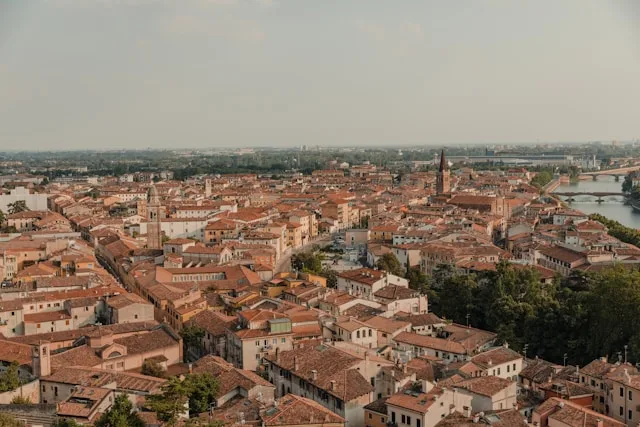
The verified public record for Vicenza is anchored by the city's Wikipedia article. Vicenza is a city of northeastern Italy in the Veneto region at the northern base of Monte Berico, straddling the River Bacchiglione, about 60 kilometres west of Venice and 200 east of Milan, with 111,980 inhabitants at its stated vintage; its historic centre and the Palladian Villas of the Veneto are inscribed as a UNESCO World Heritage Site since 1994 - the City of Vicenza and the Palladian Villas, criteria i and ii, across 218 hectares.
The sector standing is on the record: Vicenza is one of Italy's wealthiest cities, largely due to textile and steel industries employing tens of thousands, and - in the record's own words - about one fifth of the country's gold and jewelry is made in Vicenza, greatly contributing to the city's economy; another important sector is the engineering-and-computer-components industry, the birthplace heritage of Federico Faggin, the microprocessor's co-inventor.
What the verified record does not contain is any export total, enterprise-density figures, trade-fair buyer counts, time-to-fill statistics, posting-or-application series, master-goldsmith ages or succession-plan shares. The structure - a UNESCO Palladian city of 112,000 where one fifth of a nation's gold and jewelry output is made, beside textile-and-steel-and-electronics industries - is verifiable; the aging-workforce arithmetic must be argued from structure, not quoted.
What changes in this market
A Vicenza goldsmithing mandate is a one-fifth-of-a-nation's-output mandate in a UNESCO city. The craft economy runs from the historic centre's workshops to the Chiampo-valley production belt, selling through the trade-fair calendar the sector is known for, and its labour-market reality is generational: the artisan bench skills that Italian jewelry commands premium prices for are learned trades whose transmission is the sector's binding constraint. Candidates prove themselves through bench mastery at luxury tolerance, brand-and-collection commercial sense for the fair calendar, and production management that can pair artisan benches with modern quality-and-CAD workflows; offers compete with the city's own textile-and-steel-and-electronics employers for technical talent, and the succession problem is solved by apprenticeship design, not by senior poaching alone.
KiTalent's mandate analysis
- Workshop-and-brand leadership: mandates should screen for luxury-craft production records with collection-calendar fluency rather than industrial-volume careers.
- Master-craft succession roles: succession is an apprenticeship-design problem; mandates should include bench-training programmes with master-goldsmith mentors rather than expecting market supply.
- Production management: pairing artisan benches with CAD-and-casting workflows demands hybrid craft-and-process records; work-sample verification is essential.
- Cross-sector pay realism: with textiles, steel and electronics as documented local alternatives for technical staff, offers must be designed against Vicenza's whole industrial wage floor.
- Heritage-and-brand stewardship: the UNESCO setting and the fair calendar make brand stewardship part of senior mandates; heritage-marketing fluency belongs on the grid.
Where the public record stops
Claims beyond the dated public record are not repeated on this page. The verified record above - the 111,980-inhabitant UNESCO city between Venice and Milan, the one-fifth-of-Italian-gold-and-jewelry standing, and the documented textile-steel-and-electronics industrial context - supports the structural argument without invented export, density, buyer or vacancy statistics.
Sources
Related KiTalent research
- The Market Map Is Not the Shortlist: helps a buyer decide whether a Vicenza mandate is really a workshop-brand, succession-design or hybrid-production search, and how to build apprenticeship pipelines instead of poaching
- How to Assess a Leader Beyond Competencies: shows how to gather decisional evidence for this mandate - the research method behind testing bench-mastery verification, craft-and-CAD hybridity, cross-sector wage realism and heritage-brand fluency - with candidate evidence assessed conversation by conversation